


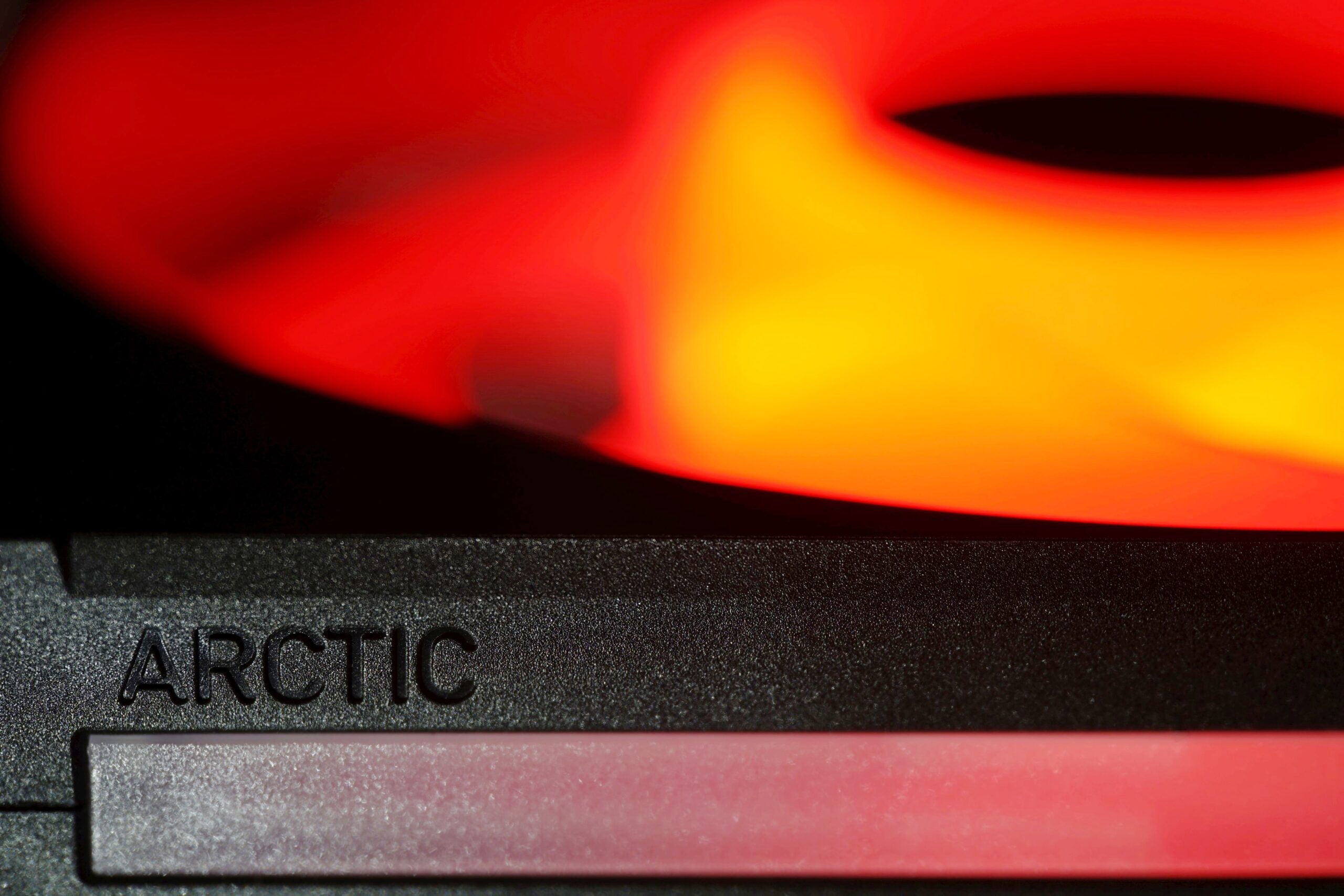
High cooling efficiency is the foundation, but with the BioniX P14 A-RGB fans, Arctic has also made efforts on other fronts. In addition to the clever daisy-chaining method (with the aim of reducing cabling to a minimum), this includes, for example, illumination as intense as possible. The light is guided not only through the entire impeller, but also through the surface of the frame, from the side. There are light guides in these areas as well.
Results: Static pressure through a hexagonal grille
Why is a value sometimes missing for a fan? There can be several reasons. Most commonly, it’s because the fan couldn’t be regulated to the target noise level. Some fans have higher minimum RPM (or they spin slowly but have an excessively noisy motor), or they are simply slower models that can’t reach higher decibel thresholds. Results are also omitted from graphs if the impeller scrapes against the mesh of a nylon filter. In such cases, we classify the combination as incompatible. And of course, a zero in the graphs naturally appears in situations where we record an actual 0.00. This often occurs at extremely low speeds when obstacles are present or during vibration measurements.




And next time, shall we do the Seasonic MaxFlow fan? 🙂
Hey, it might be an issue on my end but several pages of this test don’t load correctly on two devices of mine. Apart from that, thanks a lot for the test. It did perform exceptionally well in the hwbusters-test, too.
Personally, I would like to see a test of the “Noiseblocker NB-eLoop X B14-P ARGB”, since I own several of them. However, testing them probably wouldn’t be interessting to you, since they are really old and I know only of one vendor still selling them
https://www.caseking.de/search?q=eloop+B14&search-button=&lang=de_DE
They used to cost 25 or even 30€ per fan, if I remember correctly. I think, the noiseblocker fans were one of the first to use an outer ring on the impeller.