



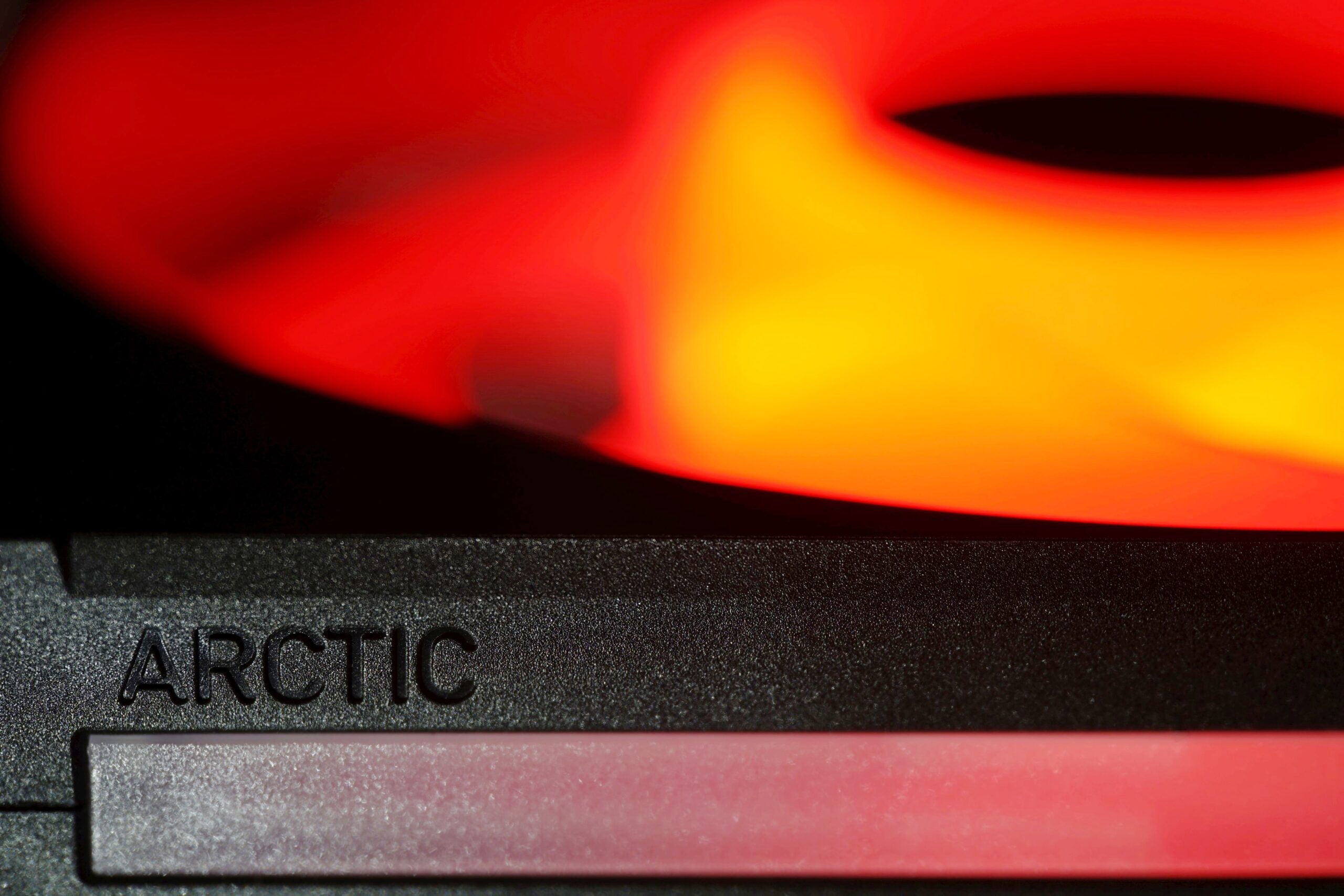
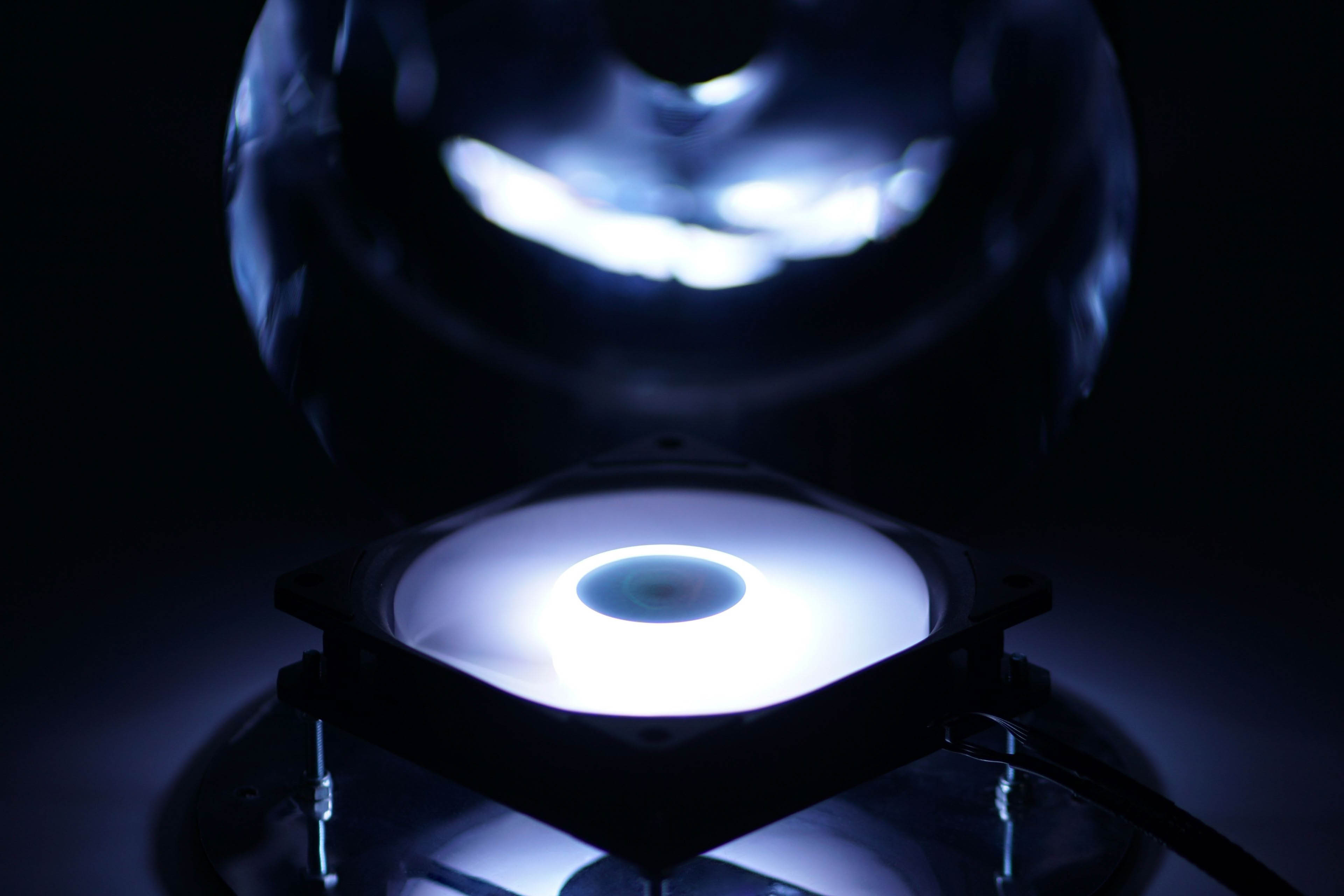
High cooling efficiency is the foundation, but with the BioniX P14 A-RGB fans, Arctic has also made efforts on other fronts. In addition to the clever daisy-chaining method (with the aim of reducing cabling to a minimum), this includes, for example, illumination as intense as possible. The light is guided not only through the entire impeller, but also through the surface of the frame, from the side. There are light guides in these areas as well.
Measuring the intensity (and power consumption) of lighting
Modern fans often include lighting. This is no longer a “cooling” parameter, but for some users the presence of (A)RGB LEDs is important. Therefore, we also measure how intense this lighting is in our tests. These tests are the only ones that take place externally, outside the wind tunnel.
We record the luminosity of the fans in a chamber with reflective walls. This internal arrangement is important to increase the resolution for us to measure anything at all with lower luminosity fans. But also so that the readings do not blend together and it is obvious which fan is emitting more light and which one less.
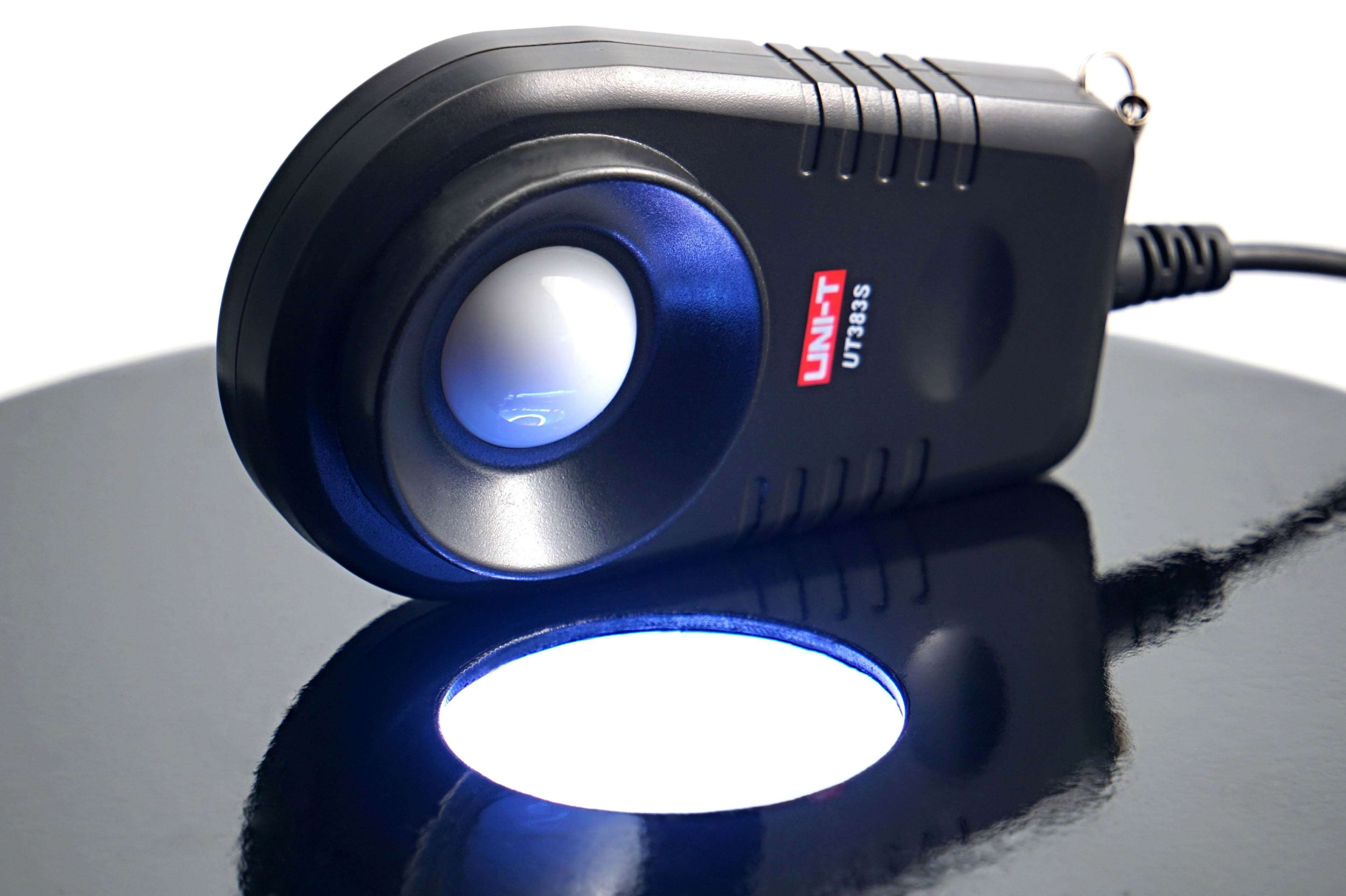
The illumination intensity is measured in the horizontal position of the fan, above which is the lux meter sensor (UNI-T UT383S). This is centered on the illumination intensity sensing chamber.
The illumination is controlled via an IR controller and the hue is set to RGB level 255, 255, 255 (white). We record the brightness at maximum and minimum intensity. According to this, you can easily see if the brightness is high enough, but conversely also if the lower level is low enough for you.
In addition to the brightness intensity, we also measure the power consumption that it requires. This is again through the shunt, which is between the Gophert CPS-3205 power supply and the (A)RGB LED driver. After this we get a reading of the lighting power consumption. In the graphs we show it separately, but also in sum with the motor power consumption as the total maximum fan power.




And next time, shall we do the Seasonic MaxFlow fan? 🙂
Me again. Still none of tables do show up. Instead only error messages show. I did check using three devices and two different browsers. Only your newest Arctic BioniX test is affected.
Could you please give me some examples of pages where the charts aren’t displaying correctly? I’ll take a look afterwards and we’ll incorporate the fix—I’ll fix them. Thanks! 🙂
Hey, it might be an issue on my end but several pages of this test don’t load correctly on two devices of mine. Apart from that, thanks a lot for the test. It did perform exceptionally well in the hwbusters-test, too.
Personally, I would like to see a test of the “Noiseblocker NB-eLoop X B14-P ARGB”, since I own several of them. However, testing them probably wouldn’t be interessting to you, since they are really old and I know only of one vendor still selling them
https://www.caseking.de/search?q=eloop+B14&search-button=&lang=de_DE
They used to cost 25 or even 30€ per fan, if I remember correctly. I think, the noiseblocker fans were one of the first to use an outer ring on the impeller.
Thanks for the contribution. Yeah, there were a few charts that weren’t displaying correctly, or weren’t showing up at all. If you spot anything like that, please let me know. Everything should be there completely now, but…
The NB-eLoop X B14-P ARGB is definitely worth testing, of course, but our capacity… Anyway, one Noiseblocker fan will definitely appear in our tests down the line, as it has been planned for quite some time and we already have the samples. 🙂
The issue regarding the results pages not loading is still ongoing – even without VPN and no ad blocker.
The div-container usually containing the result tables shows:
“Oops! That page can’t be found.
It looks like nothing was found at this location. Maybe try one of the links below or a search?”
Everything should be fine now. The issue was on our end. The charts were being linked to URLs with the wrong month in them, which we’ve corrected (from 08 to 09), and they’re working now, haha. 🙂
Just a small addition: In the case of the three-pack, you can connect only one fan separately to a single motherboard header. But, of course, you can connect all three if the fans are daisy-chained with the tokens. 🙂