HAVN H12: Teeth, protrusions… segmentation everywhere you look

Blades, hub—everywhere there are features disrupting an otherwise smooth design. This kind of detailing defines the HAVN H12 at first glance—and the second impression is just as striking. With the kind of geometry the H12 brings to the table, reaching the absolute top tier is possible. In practice, however, it’s essential to find the right scenarios and fine-tune the right settings to end up truly satisfied.

Results: Cooling performance per watt, static pressure

Explanatory note: Measurements of static pressure at fixed noise levels help determine how efficiently each fan performs under identical acoustic conditions. Since we also record power consumption during these tests, we can determine which fan is not only more effective in terms of cooling but also more energy-efficient. In other words, the data shows which fan produces higher static pressure per unit of power consumed.


Why is a value sometimes missing for a fan? There can be several reasons. Most commonly, it’s because the fan couldn’t be regulated to the target noise level. Some fans have higher minimum RPM (or they spin slowly but have an excessively noisy motor), or they are simply slower models that can’t reach higher decibel thresholds. Results are also omitted from graphs if the impeller scrapes against the mesh of a nylon filter. In such cases, we classify the combination as incompatible. And of course, a zero in the graphs naturally appears in situations where we record an actual 0.00. This often occurs at extremely low speeds when obstacles are present or during vibration measurements.

Contents

Fan frame daisy-chaining trend. When is it (not) helpful

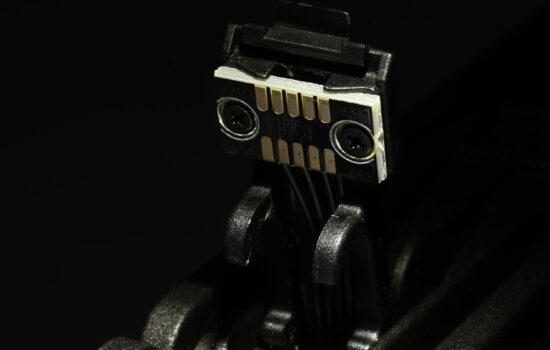
Easier installation? Yes, that’s why it’s done. Daisy-chaining fans using contacts in their frames is great, but it often also comes with pitfalls that reduce “cooling efficiency”. Manufacturers deal with this in different ways. One does it technically one way, another differently. In any case, they know that a frame that is too thick means less space for the blades. And that does not improve airflow per unit of noise. Read more “Fan frame daisy-chaining trend. When is it (not) helpful” »

Contents

Arctic BioniX P14 A-RGB: Elegant daisy chaining is just the beginning

High cooling efficiency is the foundation, but with the BioniX P14 A-RGB fans, Arctic has also made efforts on other fronts. In addition to the clever daisy-chaining method (with the aim of reducing cabling to a minimum), this includes, for example, illumination as intense as possible. The light is guided not only through the entire impeller, but also through the surface of the frame, from the side. There are light guides in these areas as well. Read more “Arctic BioniX P14 A-RGB: Elegant daisy chaining is just the beginning” »

Contents

Arctic BioniX P12 A-RGB: Efficient, inexpensive, illuminated and…

And with very clever daisy‑chaining from one fan to the next. This is what can fill in the ellipsis in the headline. The aerodynamic efficiency remains top‑tier, built on a design that Arctic revised some time ago (with the P12 Pro fans), but which can still be considered “new.” The BioniX P12 A‑RGB fans certainly are (new), and in this in‑depth analysis we focus on how they work. Read more “Arctic BioniX P12 A-RGB: Efficient, inexpensive, illuminated and…” »

Contents

Leave a Reply

Your email address will not be published. Required fields are marked *