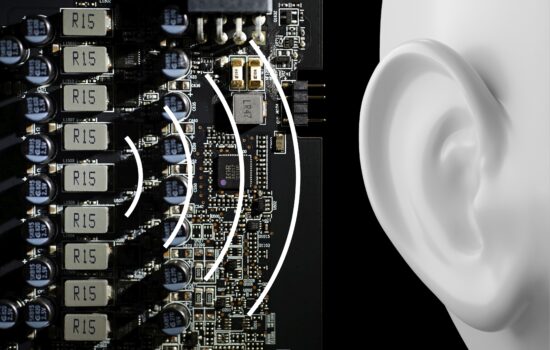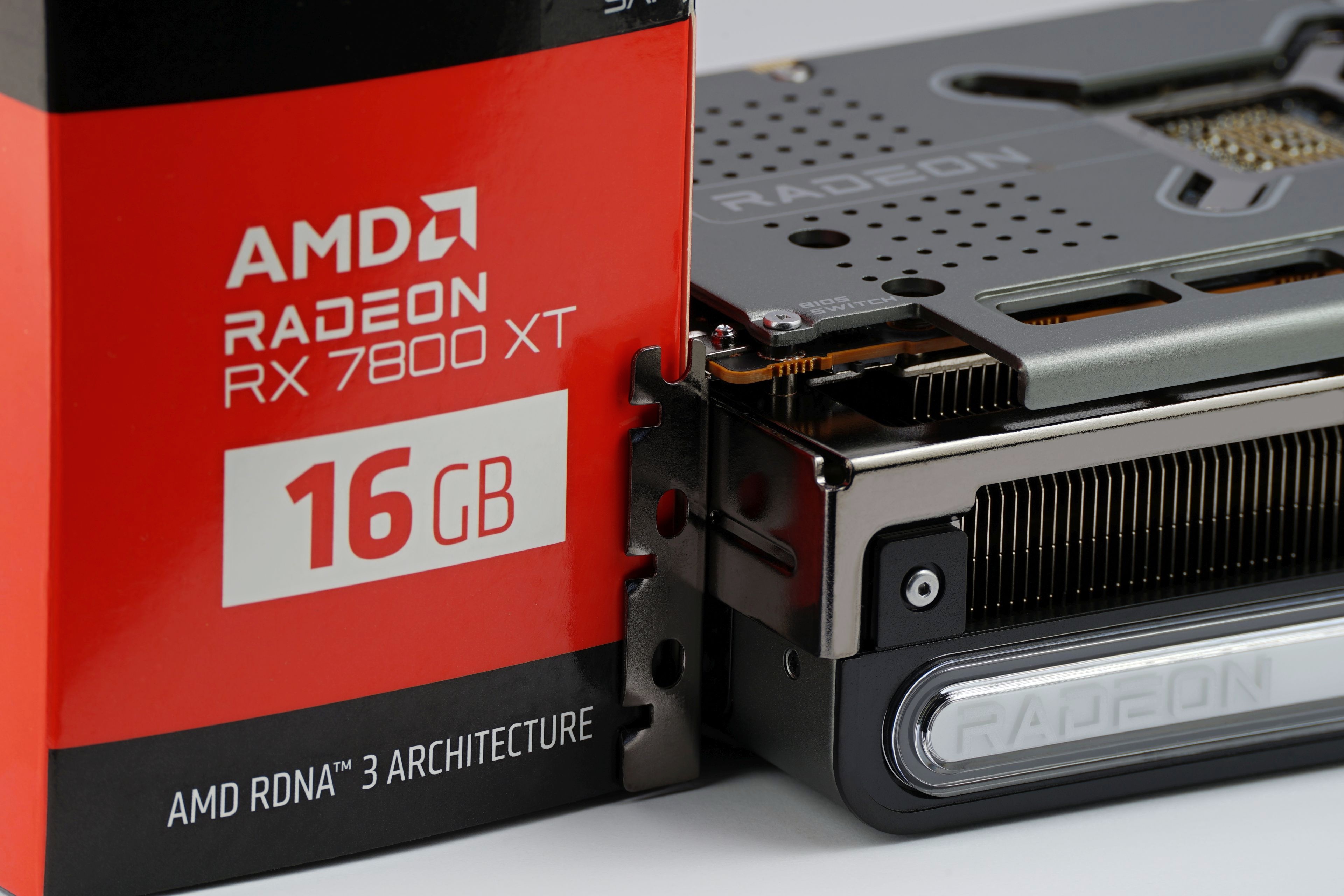
We start our mid-range Radeon 7000 tests with a more powerful model with a fully enabled Navi 32 GPU. The RX 7800 XT is mainly a competitor to the GeForce RTX 4070, which is a more expensive but also lower-power (and efficient) graphics card. However, Sapphire handled the relatively higher power draw exceedingly well, and if you have experience with “noisier Radeons”, that won’t be the case with the RX 7800 XT Nitro+ at all.
| Parameters | Sapphire RX 7800 XT Nitro+ | |
| Asus Dual RTX 4070 12G | ||
| Architecture | RDNA 3 | |
| Die | Navi 32 XT (215-180000006) | |
| Manufacturing node | 5 nm + 6 nm | |
| Die size | 200 mm² + 4× 37 mm² | |
| Transistor count | 28,1 bn. | |
| Compute units | 60 | |
| Shaders/CUDA cores | 3840 | |
| Base Clock | 1295 MHz | |
| Game Clock (AMD) | 2254 MHz | |
| Boost Clock | 2565 MHz | |
| RT units | 60 | |
| AI/tensor cores | – | |
| ROPs | 96 | |
| TMUs | 240 | |
| L2 Cache | 4 MB | |
| Infinity Cache | 64 MB | |
| Interface | PCIe 4.0 ×16 | |
| Multi-GPU interconnect | – | |
| Memory | 16 GB GDDR6 | |
| Memory clock (effective) | 19.5 GHz | |
| Memory bus | 256 bit | |
| Memory bandwidth | 624.0 GB/s | |
| Pixel fillrate | 233.3 Gpx/s | |
| Texture fillrate | 583.2 Gtx/s | |
| FLOPS (FP32) | 37.32 TFLOPS | |
| FLOPS (FP64) | 1166 GFLOPS | |
| FLOPS (FP16) | 74,65 TFLOPS | |
| AI/tensor TOPS (INT8) | – | |
| AI/tensor FLOPS (FP16) | – | |
| TDP | 288 W | |
| Power connectors | 2× 8-pin | |
| Card lenght | 320 mm | |
| Card slots used | 62 mm | |
| Shader Model | 6.7 | |
| DirectX/Feature Level | DX 12 Ultimate (12_2) | |
| OpenGL | 4.6 | |
| Vulkan | 1.3 | |
| OpenCL | 2.2 | |
| CUDA | – | |
| Video encoder engine | VCN 4.0 | |
| Encoding formats | HEVC, H.264, AV1 | |
| Encoding resolution | 8K | |
| Video decoder engine | VCN 4.0 | |
| Decoding formats | HEVC, H.264,VP9, AV1 | |
| Decoding resolution | 8K | |
| Max. Monitor resolution | 7680 × 4320 px | |
| HDMI | 2× v2.1a | |
| DisplayPort | 2× v2.1 (UHBR 13,5) | |
| USB-C | – | |
| MSRP | 599 EUR |