
In January, Nvidia announced DLSS 4.5—a new version of AI upscaling for games with a new AI model and improved frame generation. This can insert up to five artificial frames between two real frames rendered by the game (meaning a sixfold increase of displayed frames). However, the more interesting part may be the addition of a dynamic mode that allows the number of generated frames to be switched on the fly.
This dynamic frame generation, officially called Dynamic Multi Frame Generation, was announced in January during the DLSS 4.5 debut at CES 2026, but it was not yet available at that time. Back then Nvidia indicated that the feature would become accessible sometime in the spring.
Now the company has pre-announced actual availability and we have a specific date: 31 March, which falls on a Tuesday three weeks from now and coincides with the GDC 2026 graphics conference. At that point, owners of Nvidia graphics cards will be able to try dynamic switching of the number of generated frames (assuming they want to use frame generation and have a GPU belonging to the newest generation, as the feature requires a Blackwell architecture / GeForce RTX 5000 GPU).
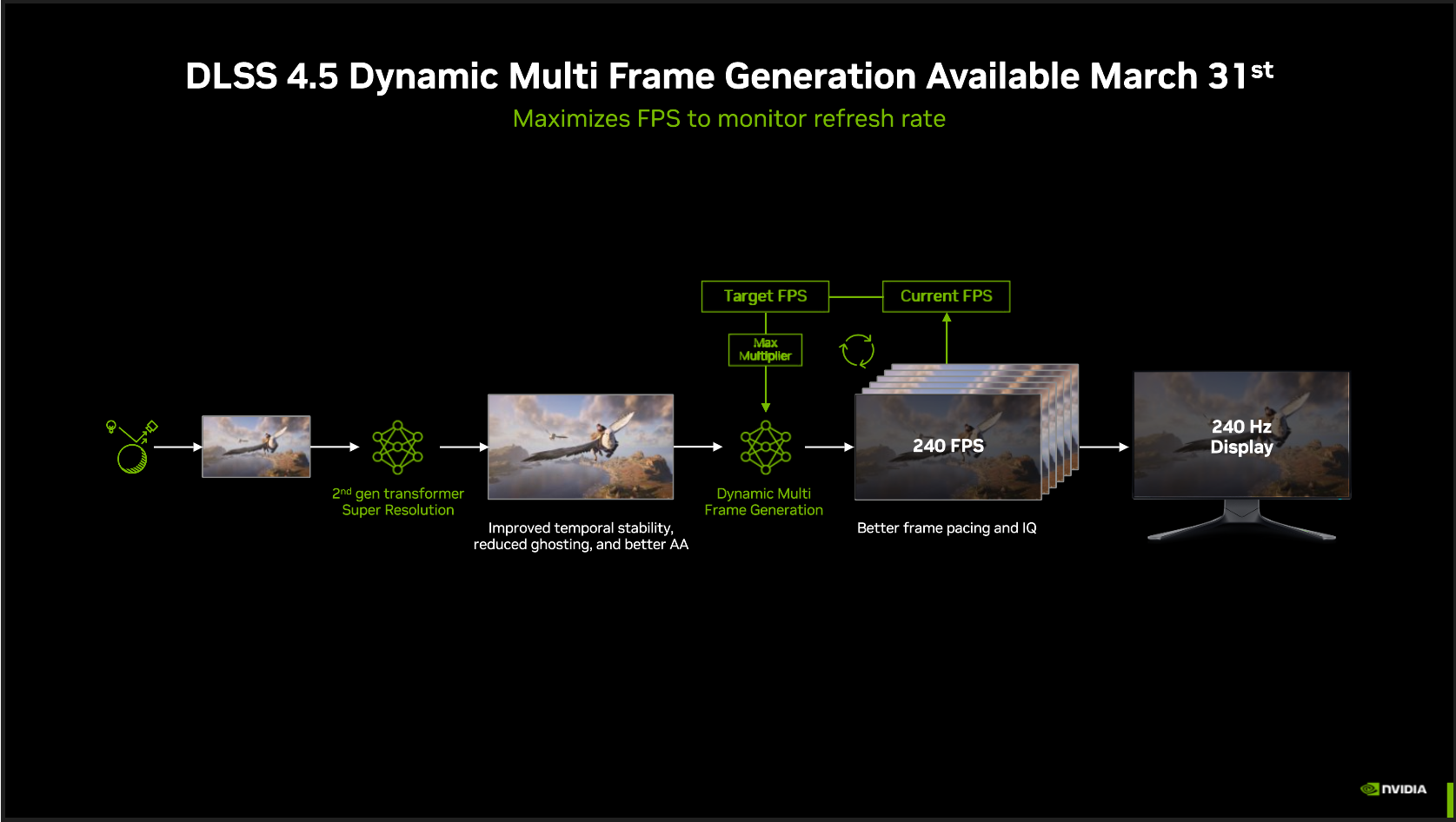
The purpose of this technology is to generate only as many interpolated frames as necessary—for example to reach the refresh rate of a monitor or another frame rate target the player requires. Nvidia gives 240 FPS as an example.
When dynamic generation is enabled, only the number of frames needed to exceed this output frame rate on the monitor is inserted—but no more. For instance, if a “4×” or “6×” mode is unnecessary, the game will switch to “3×” or “2×” instead. This is beneficial because generated frames have lower quality and also consume additional performance—while they increase aparent frame rate and smoothness, the actually rendered frame rate of the game decreases in modes with more generated frames, which worsens responsiveness and latency.
We previously wrote more about DLSS 4.5 and the new dynamic mode in this article:
This dynamic frame generation will likely be unlocked by drivers released on 31 March. However, support may not always be automatic in games. Nvidia stated that at launch, dynamic frame generation will be available in 200 to 250 games. That should represent the majority of titles supporting standard frame generation—but it’s said it will not be all of them. Some games (although likely a small number) may be incompatible with a variable ratio of real and generated frames for certain reasons. It is possible that developers of some titles will fix this later.
Updates in RTX Remix and GeForce Now
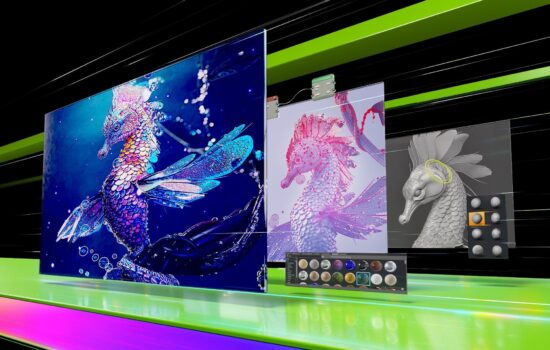
Alongside these updates, Nvidia also presented new capabilities of the RTX Remix tool, which is designed for creating modifications that enhance graphics in older games. The new version of this tool adds the ability to insert various particle effects into games.
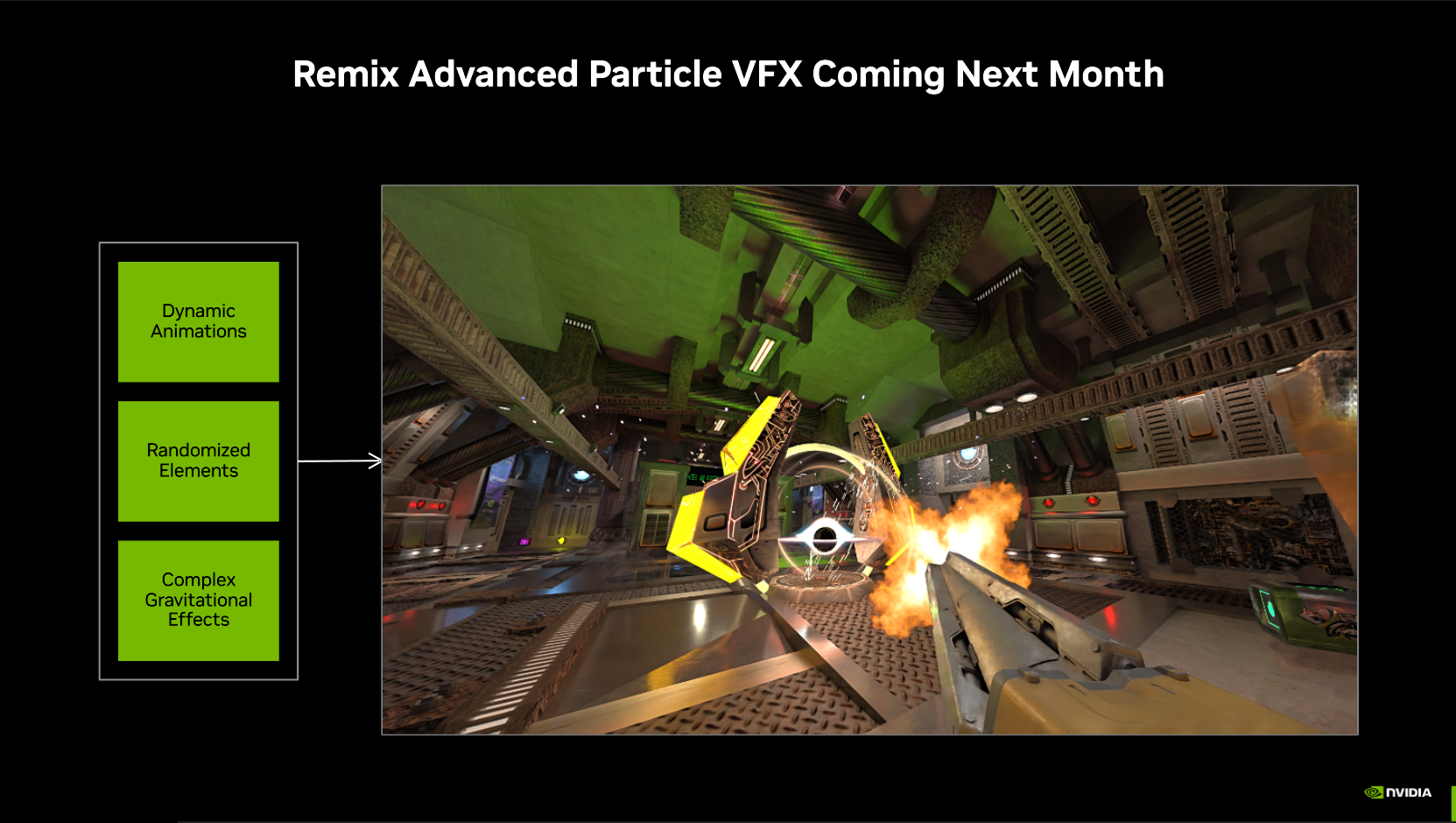
The practical availability of this feature will naturally depend on the developers of such modifications—it is not something that will automatically start working after a driver update.
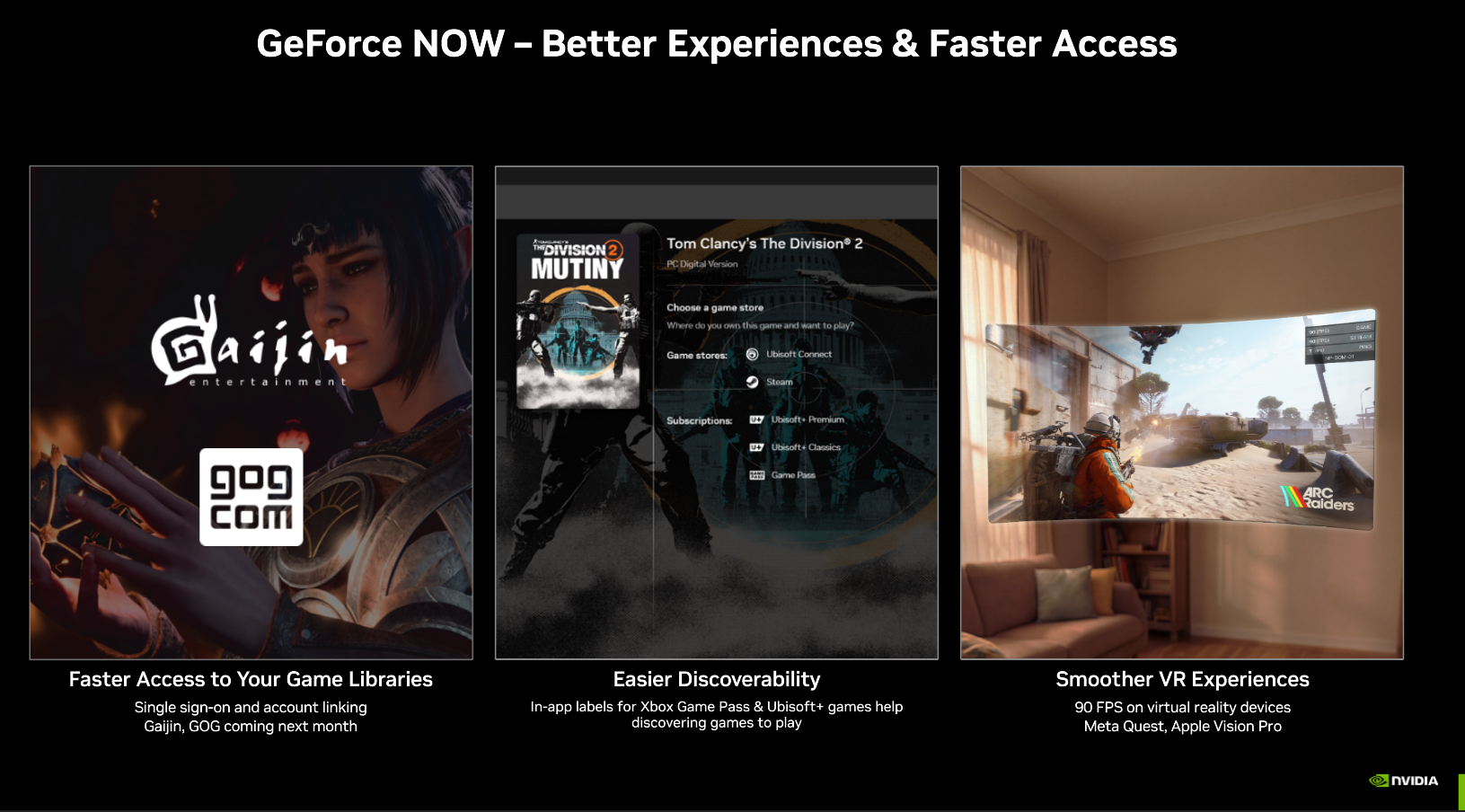
Some updates are also coming to GeForce Now, particularly for VR headset users. Game streaming to these devices should newly support a 90 Hz refresh rate instead of the previous 60 Hz, which should be more comfortable for consumers of VR content, where low refresh rates can be unpleasant. The GeForce Now service should also receive support for the GOG game store, which has so far been missing.
Source: Nvidia
English translation and edit by Jozef Dudáš
⠀