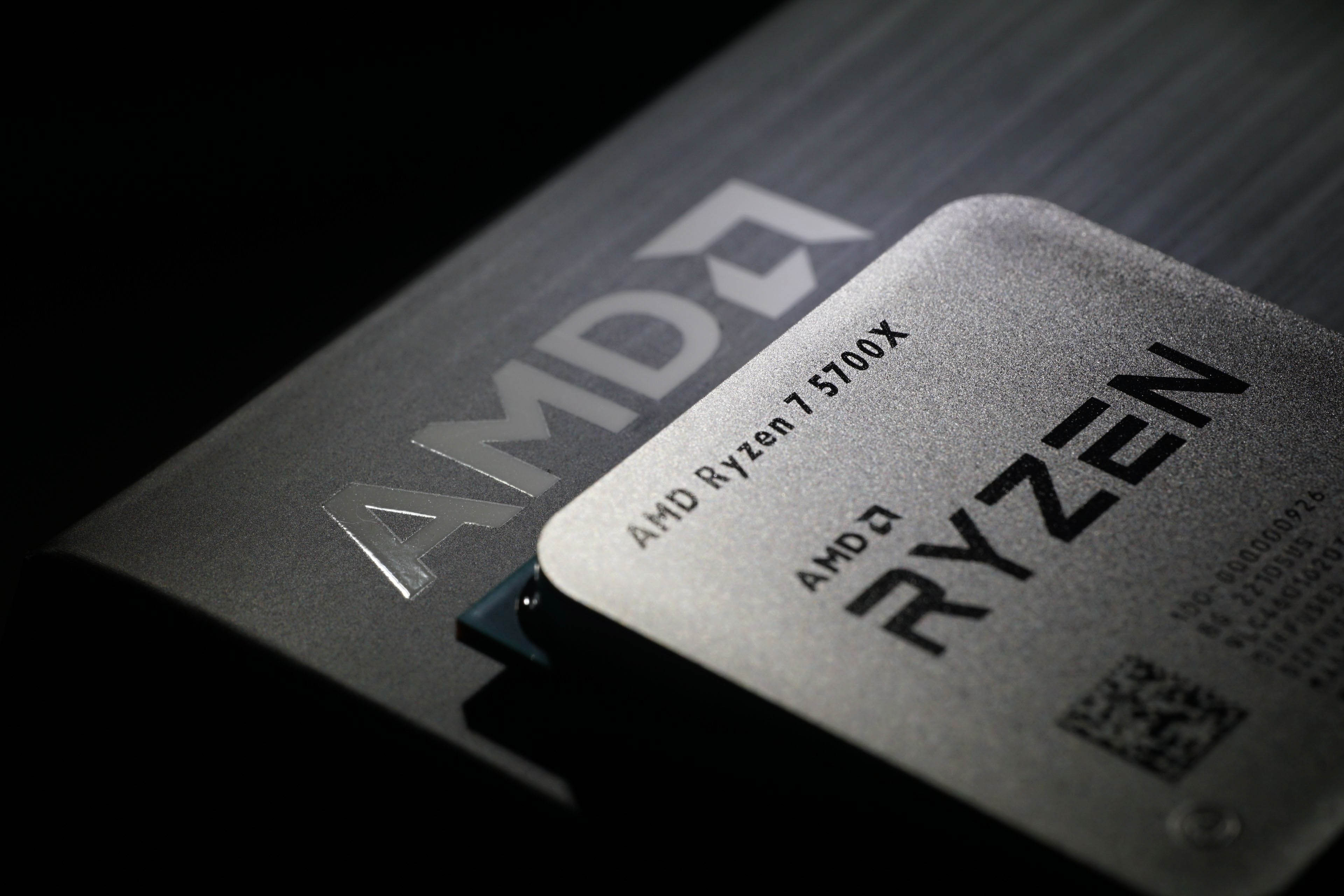
It looks like whole ten years since the time AMD officially launched the AM4 platform (initially for the Excavator architecture and only on the OEM market, in 2016), a new CPU will now be released for this socket. But not a completely new one. AMD has now released two configurations that did not previously exist, but are based on 2020 and 2022 silicon, and the first of them is coming to the older platform using DDR4.
Ryzen 5 5500F: A Better Alternative to the Ryzen 5 5500?
The first of the “new” models is the Ryzen 5500F—a processor with six Zen 3 based cores (and 12 threads). They have a base clock of 3.0 GHz and a maximum boost of 4.4 GHz. It still uses the 7nm manufacturing process like the other Zen 3 processors and is, of course, for motherboards with the AM4 socket, where it supports dual-channel DDR4-3200 memory. The processor is unlocked for overclocking and has a 65W TDP. A fairly important detail is that the chip has only 16 MB of L3 cache, whereas the higher-end models (5600, 5600X) have 32 MB of L3 cache.
The model is named very similarly to the Ryzen 5 5500 (with clocks of 3.6–4.2 GHz), which seems to be selling in surprisingly large numbers into the cheapest gaming PCs market. However, that CPU is a fairly compromised poor man’s choice, however popular it may be. It is based on the originally mobile-focused Cezanne APU with its graphics disabled, which does not support PCI Express 4.0 (it only supports PCIe 3.0). And this is precisely where the difference lies. Despite having only 16 MB of cache instead of 32 MB, the Ryzen 5 5500F is based on the more powerful chiplet-based Vermeer design used in the Ryzen 5 5600 and similar models.

The 5500F’s cache reduction (possibly with the aim of making use of leftover chips with a defect in the SRAM block forming the L3 cache) is quite a shame, because gaming performance is precisely what suffers from this. However, the 5500F could still probably be better than the 5500 in games, because AMD’s APU processors seem to have less powerful memory controllers (there will now be a good opportunity to test the difference between these two SKUs). Importantly though, the Ryzen 5 5500F provides support for the PCI Express 4.0 ×16 interface for the GPU as well as PCI Express 4.0 ×4 for SSDs, which is sorely missing from the Ryzen 5 5500, especially now that graphics cards and SSDs using the PCIe 5.0 interface are already on the market as well.
At the very least, this could make the 5500F a better, less compromised choice for gaming PCs than the Cezanne-based 5500. On the other hand, it will probably have somewhat worse power consumption under load and when idle due to the chiplet design. Incidentally, the 5500F has the same boost clock as the 5600 (which has clocks of 3.5/4.4 GHz), despite the lower base clock.
AMD says the processor is supposed to be sold globally, but we do not yet know the price. Hopefully, it will not be limited to OEM computers, because according to the specifications it will also be sold in a boxed (retail) package with a basic Wraith Stealth cooler. Ideally we’d like its price to be similar to that of the 5500 (which currently starts at 85 EUR in major online stores) and significantly lower than the Ryzen 5 5600 (around 130 €), which does not have the disadvantage of the reduced cache. But we will see how things develop.
Updated: The official price of the processor is 99 USD (105 EUR including VAT in our neck of the woods). This may not be the actual price it eventually reaches in stores—for example, the aforementioned Ryzen 5 5500 still officially has a much higher price tag (159 USD) than what’s the actual street pricing.
Ryzen 5 7500
The second processor is already for the AM5 platform and motherboards requiring DDR5 memory. In this case, the designation is almost the same as that of the Ryzen 5 7500F, which was a cheap and good-value CPU for gaming PCs from the very beginning (especially before the large pricedrops of the 7600, 7600X and 9600X models). It was a 5nm chiplet-based processor with six Zen 4 cores, but it lacked the integrated GPU that all models in this generation otherwise had.

The Ryzen 5 7500 is the same as the Ryzen 5 7500F, but unlike the latter, it retains the integrated GPU with two CUs (128 shaders) based on the RDNA 2 architecture. The clocks are the same: 3.7 GHz base and 5.0 GHz boost, while the processor can be overclocked. The 32 MB L3 cache is also retained, and the TDP is 65W. Like other Ryzen 7000 and 9000 processors, the CPU also supports PCI Express 5.0.

The target audience for the 7500 is therefore apparently users who want a similar cheap processor to the 7500F, but with the option of using it in a computer without a discrete graphics card—for example, when the graphics card is being repaired under warranty, or if you want the option of swapping it from a gaming PC to another, say office PC in the future (so it could, for example, serve as a temporary CPU if you are buying a computer now with the intention of upgrading to Zen 6 later).
The processor is again supposed to be sold globally and exists in a retail package with a Wraith Stealth cooler, so hopefully it could be freely available for purchase. Again, however, we do not know its recommended (or actual) price. For it to make sense to buy, it would of course have to cost less than the 7600, which offers the same features but higher clocks (that one costs around 190 €, which, interestingly, also gets you the faster 7600X SKU these days).
Updated: The official price of the processor is 189 USD (200 EUR including VAT around these parts). Again, however, this may not correspond to actual retail/etail prices once market mechanisms have had their say.
English translation and edit by Jozef Dudáš
⠀