


Nvidia kept the launch of the GeForce RTX 5060 – successor to the popular GeForce RTX 3060 and RTX 4060 series – for Computex. It wasn’t exactly quiet, but the launch was unusual – drivers enabling reviews weren’t released until Monday evening, after sales began. Likely due to backlash over the RTX 5060 still offering only 8GB of memory, four years after the 12GB RTX 3060. As a result, it’s faced a fairly cold reception.
Externally, the cooler shroud is identical to that of the TUF GeForce RTX 5060 Ti we recently reviewed. The transverse-finned heatsink is cooled from above by three fans mounted in a sturdy metallic-gray plastic shroud. The design is accented by silver corner elements that mimic metal.
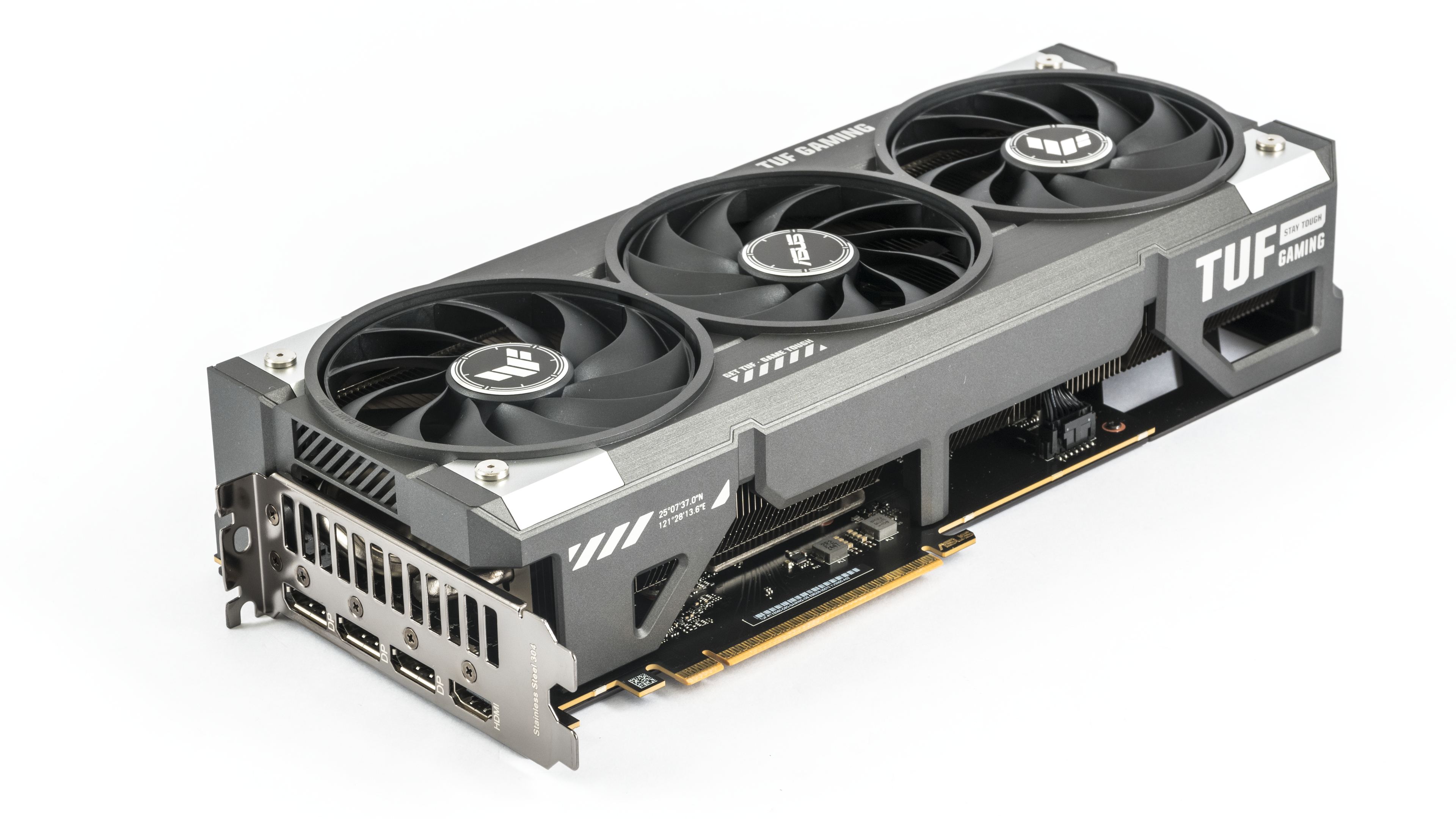
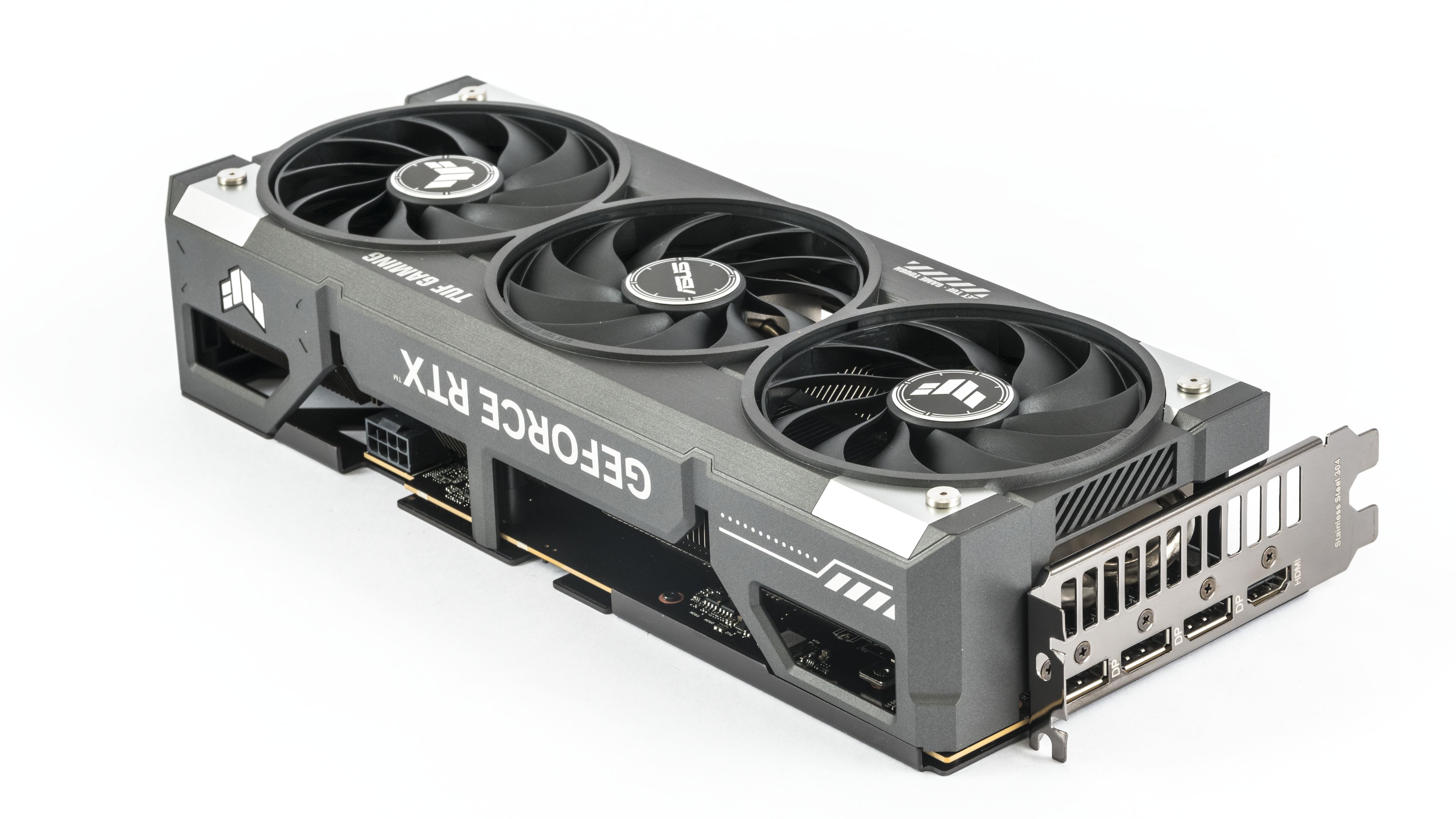
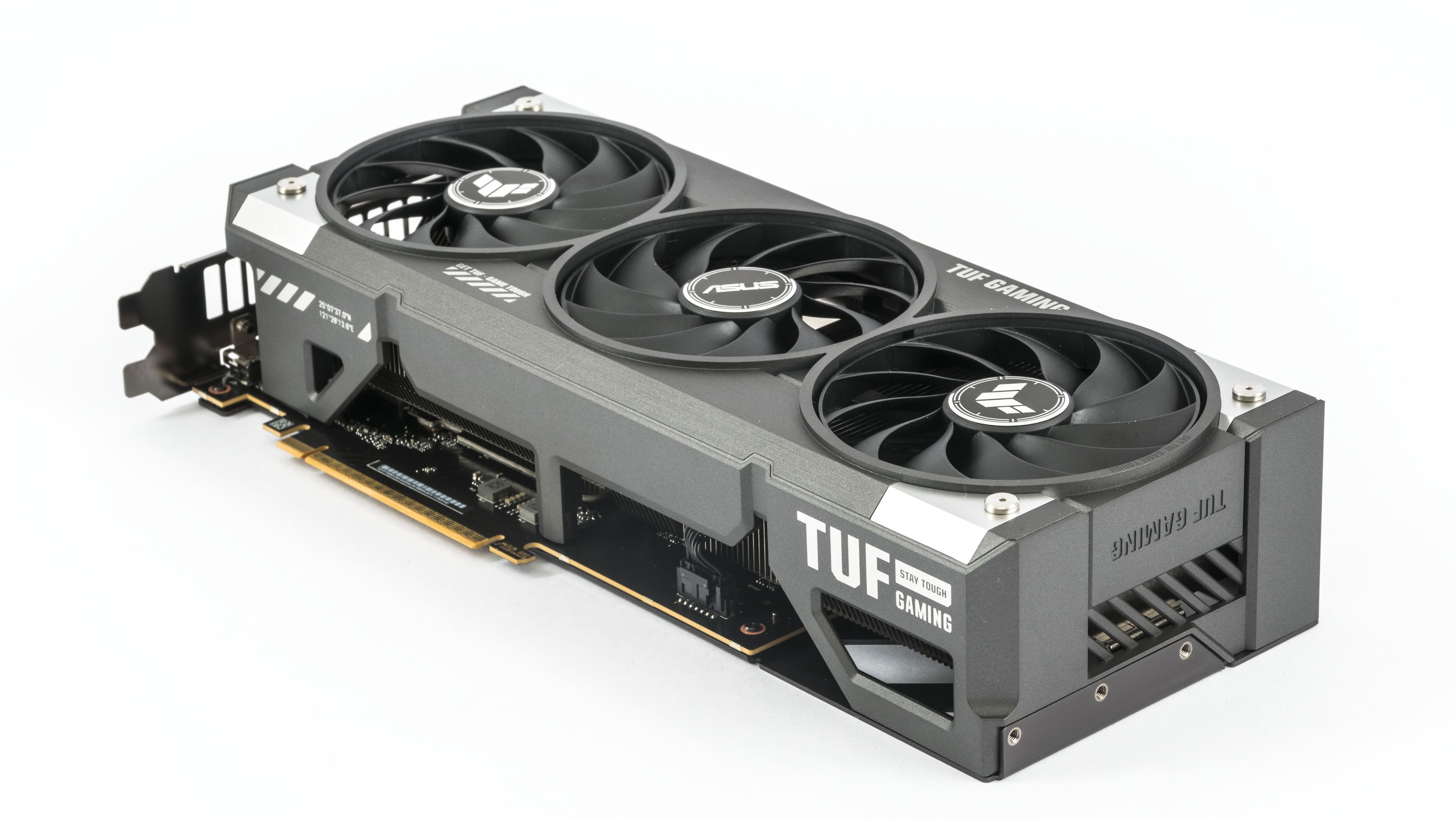

The backplate is made of metal. At the rear, there’s a cutout allowing some of the heated air to pass through above the card. In front of this cutout is another perforated area in the backplate. The silver logo and stripes at the end of the PCB are illuminated with addressable RGB LEDs.
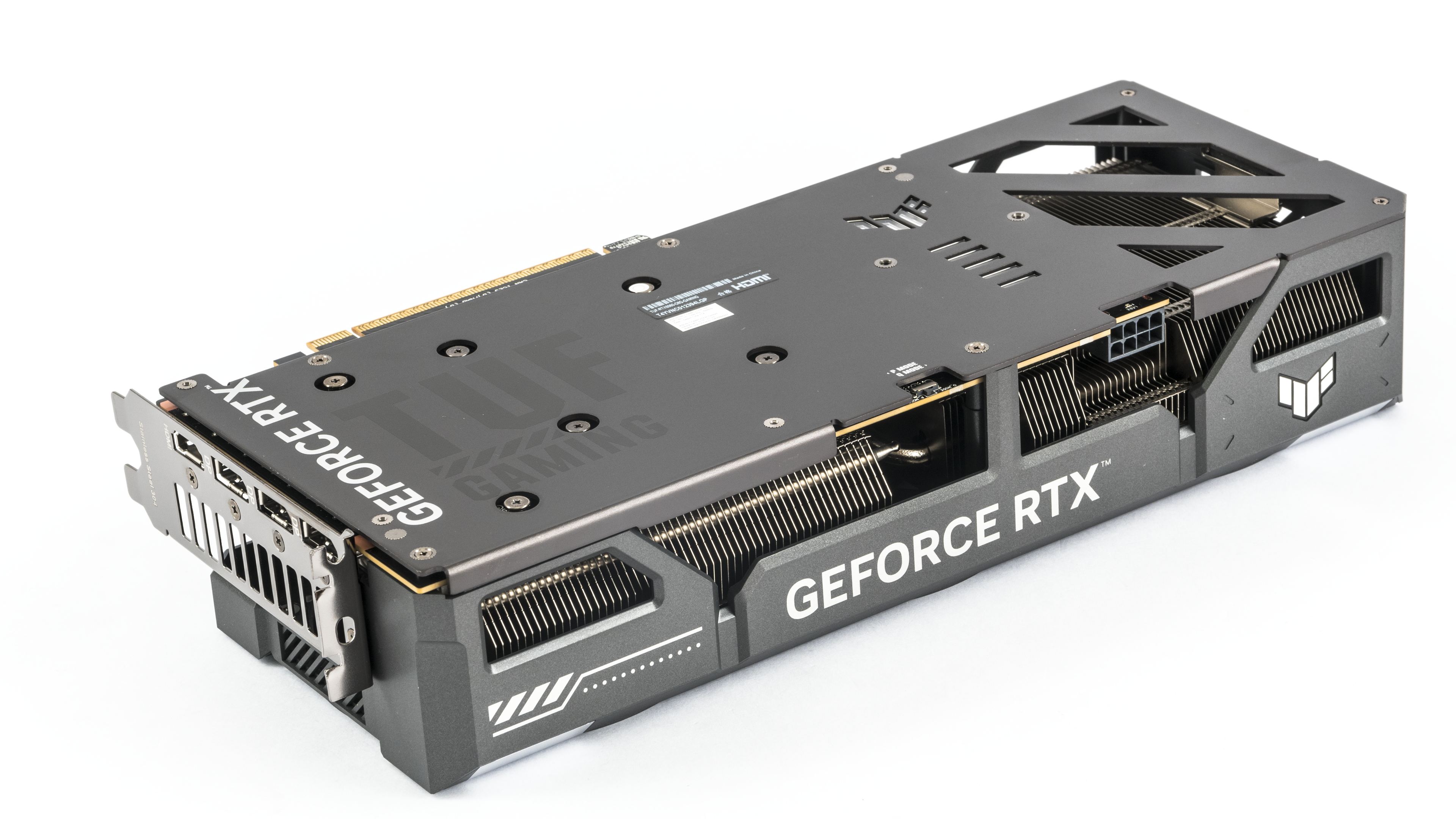
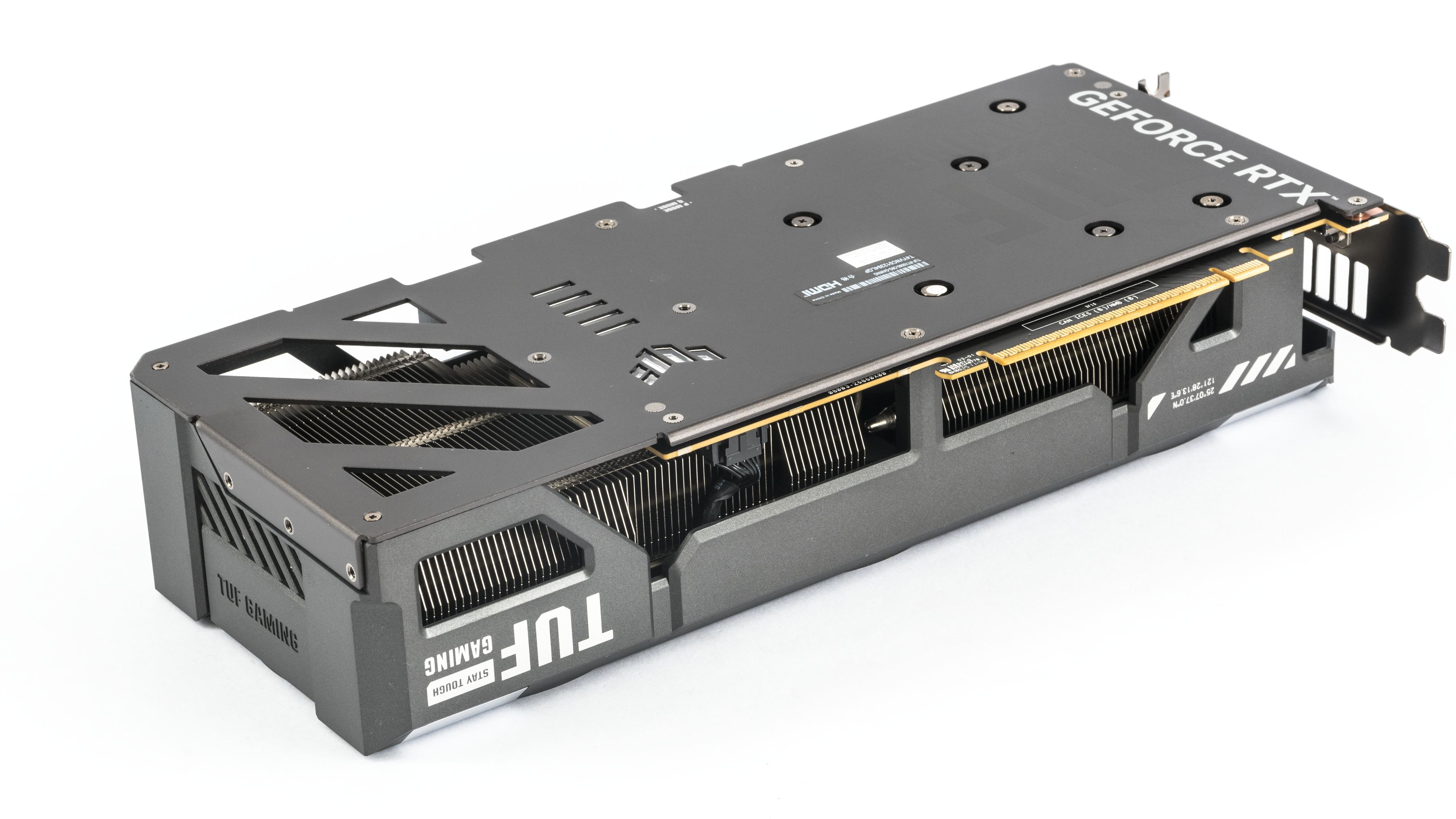
The lighting during operation is subtle, but if you have a large air cooler like the Noctua NH-D15 G2 on your CPU, it might partially obscure the effect.

The PCB is shorter than the full length of the card, with the rear portion of the heatsink left open for airflow. From the rear view, it’s clear that nearly the entire rear fan is visible through the open structure.
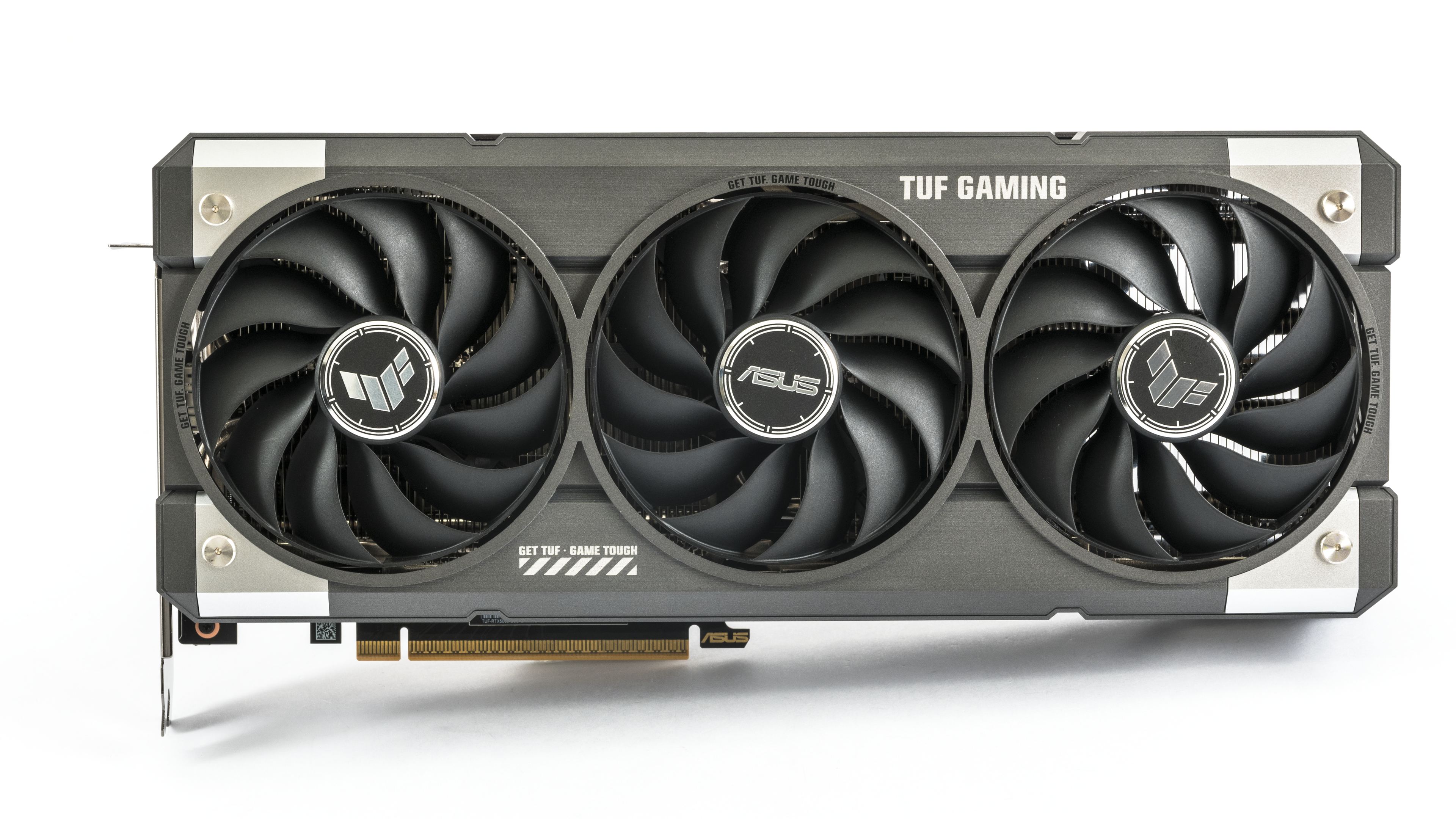
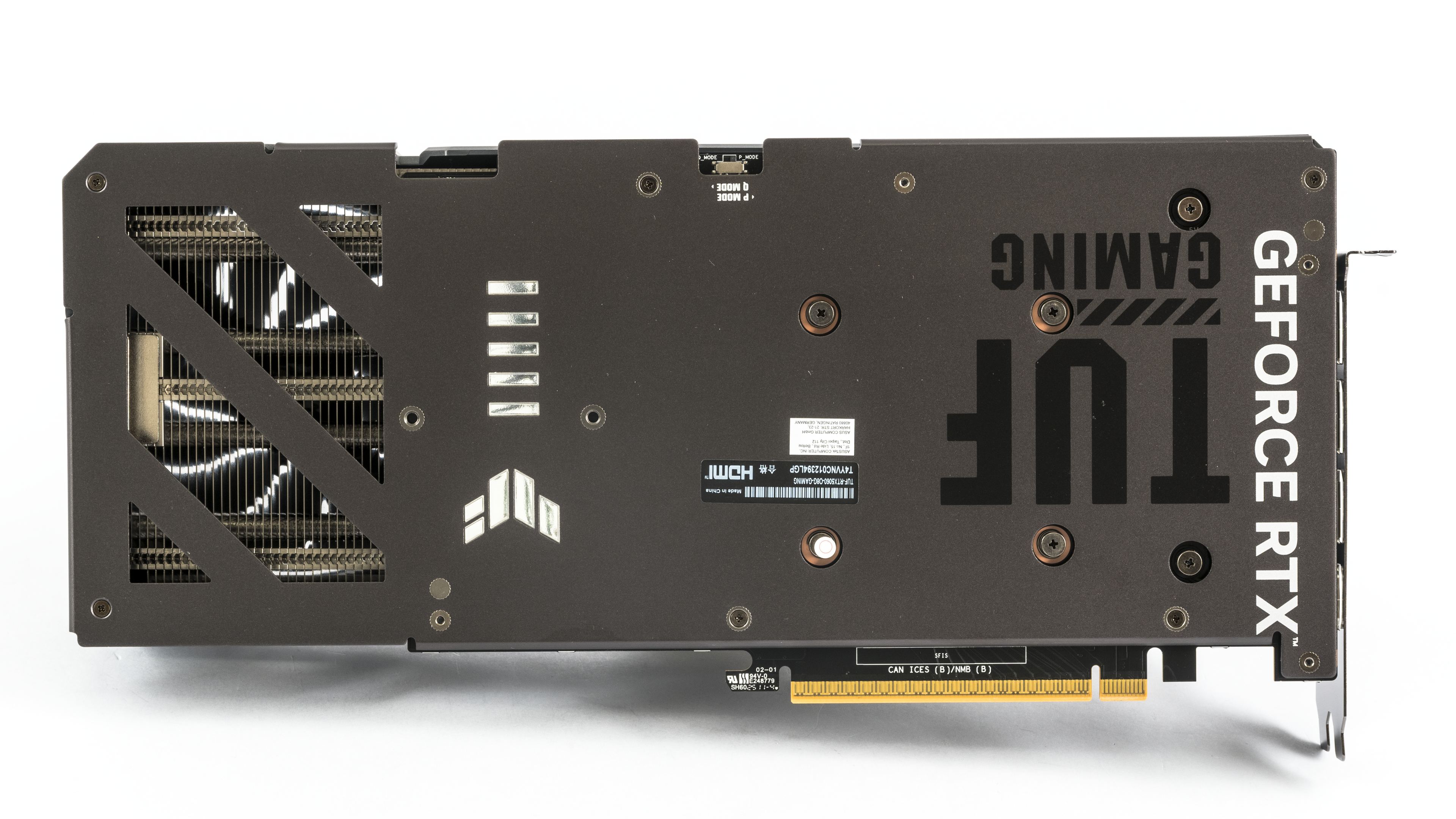
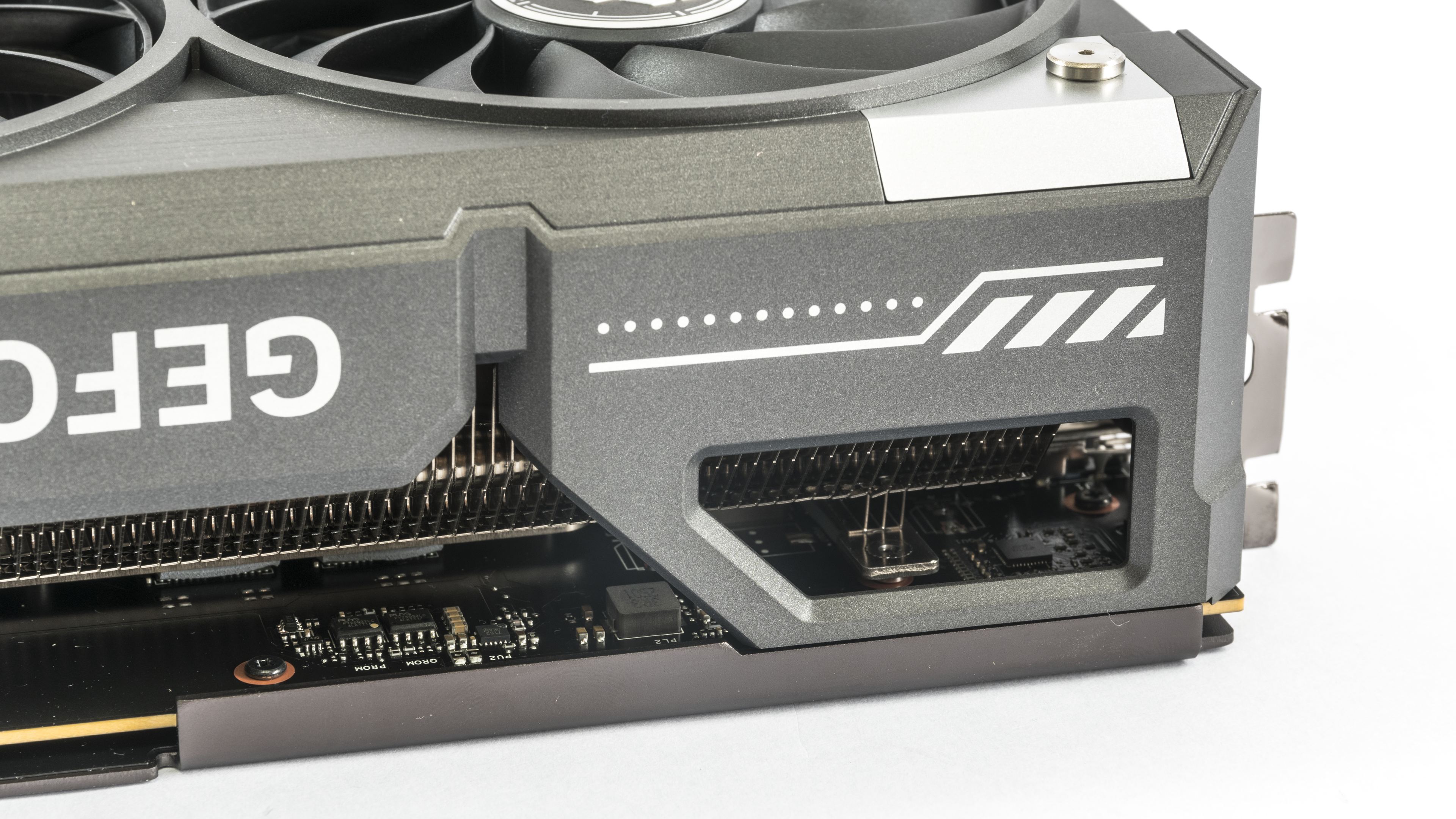
The transverse-finned heatsink fills most of the space under the shroud. From the side, the heatsink appears to differ only slightly from the RTX 5060 Ti version in terms of heatpipe arrangement or shaping. Thermal pads also transfer heat from the power delivery circuit into the large heatsink.
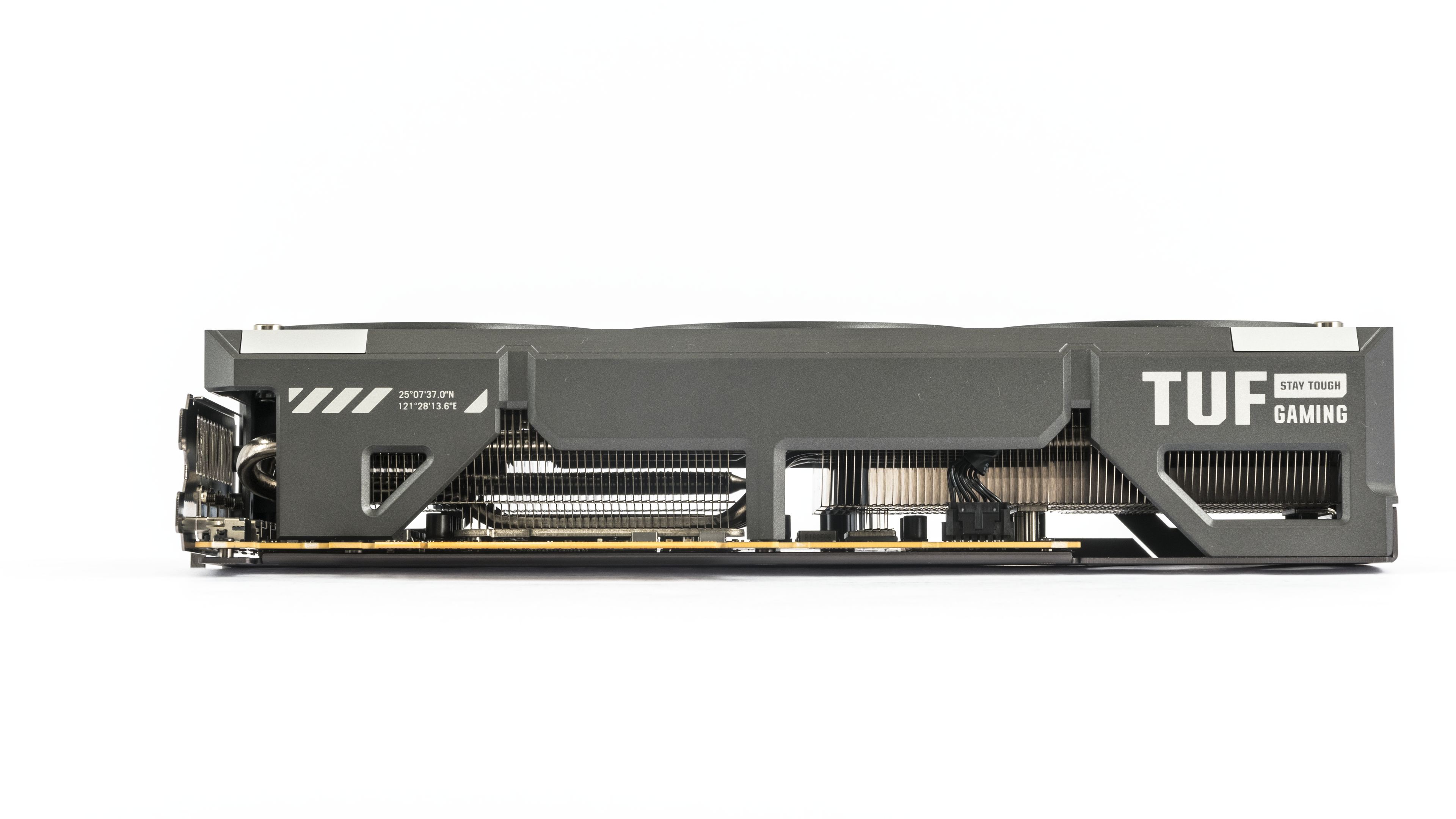
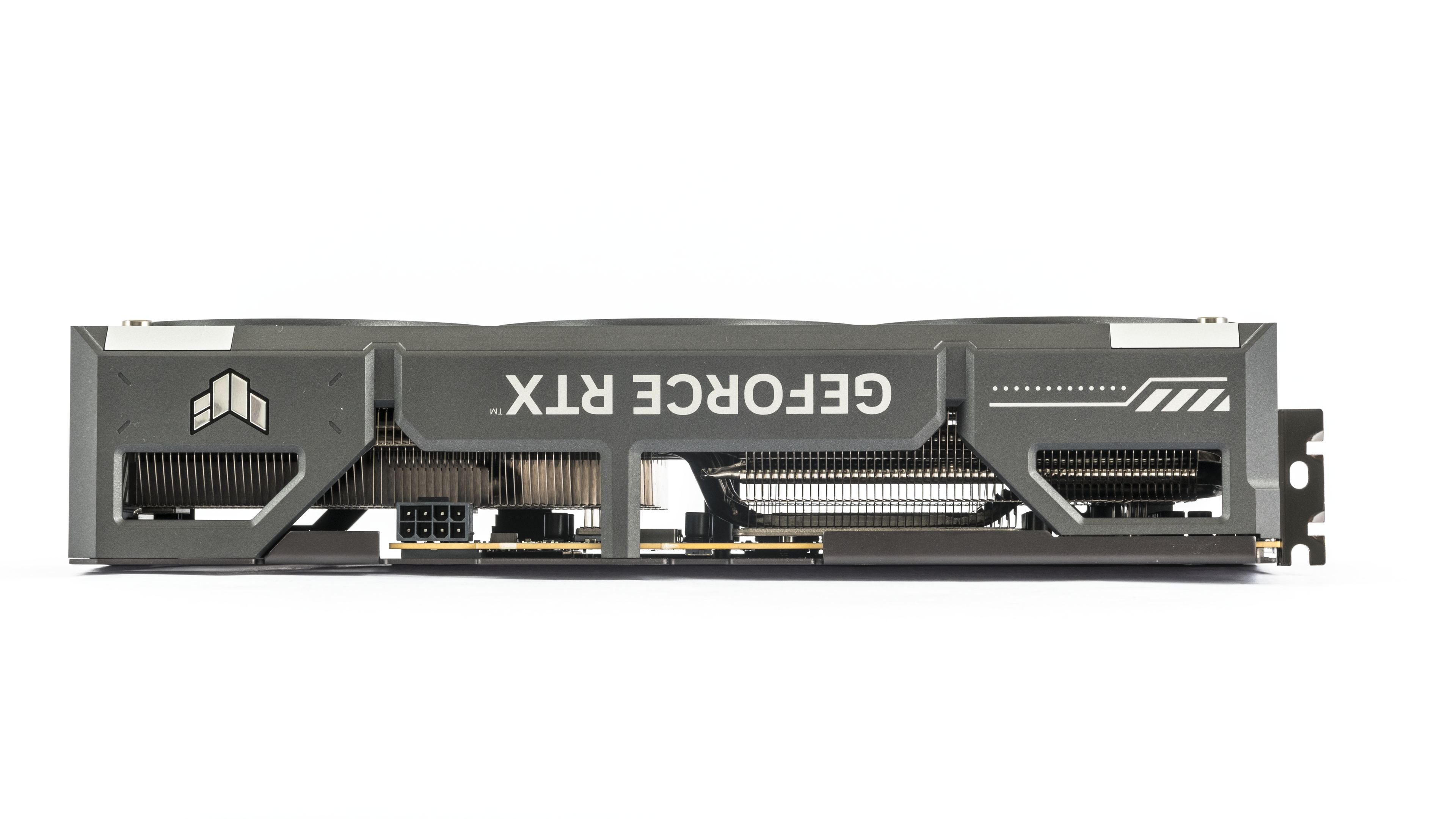
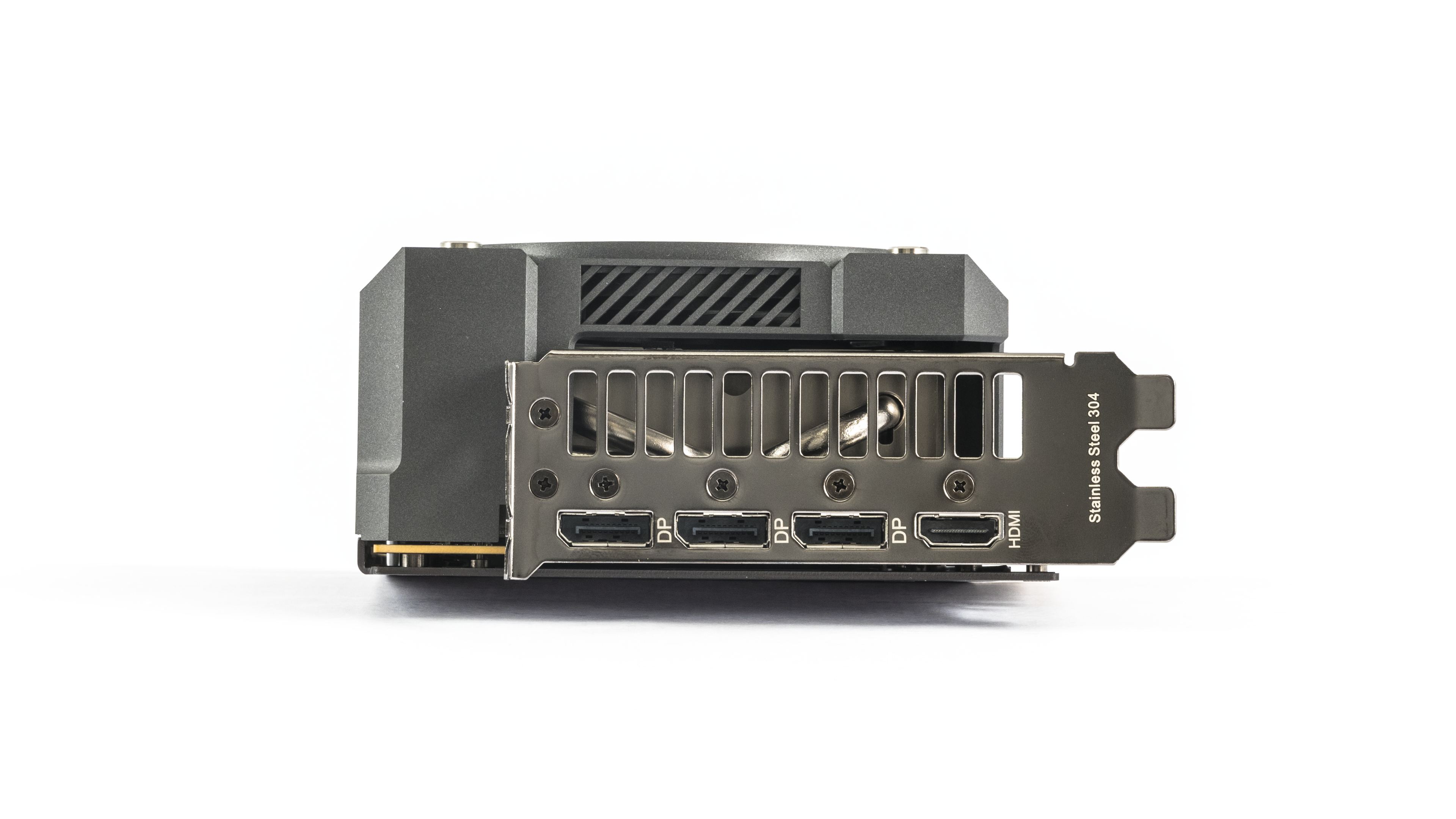
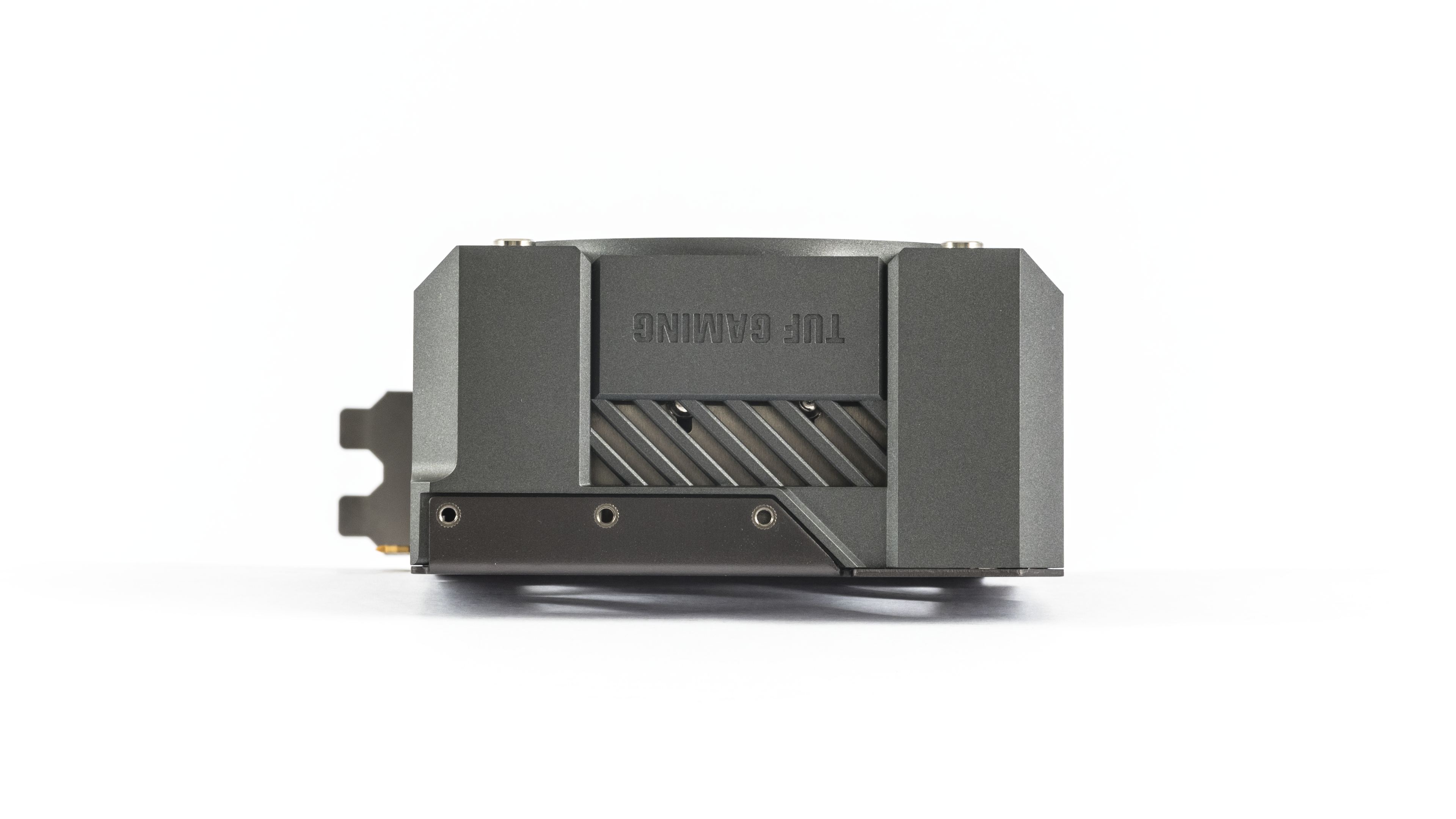
A close-up shows the cooling solution for the MOSFETs in the VRM section.
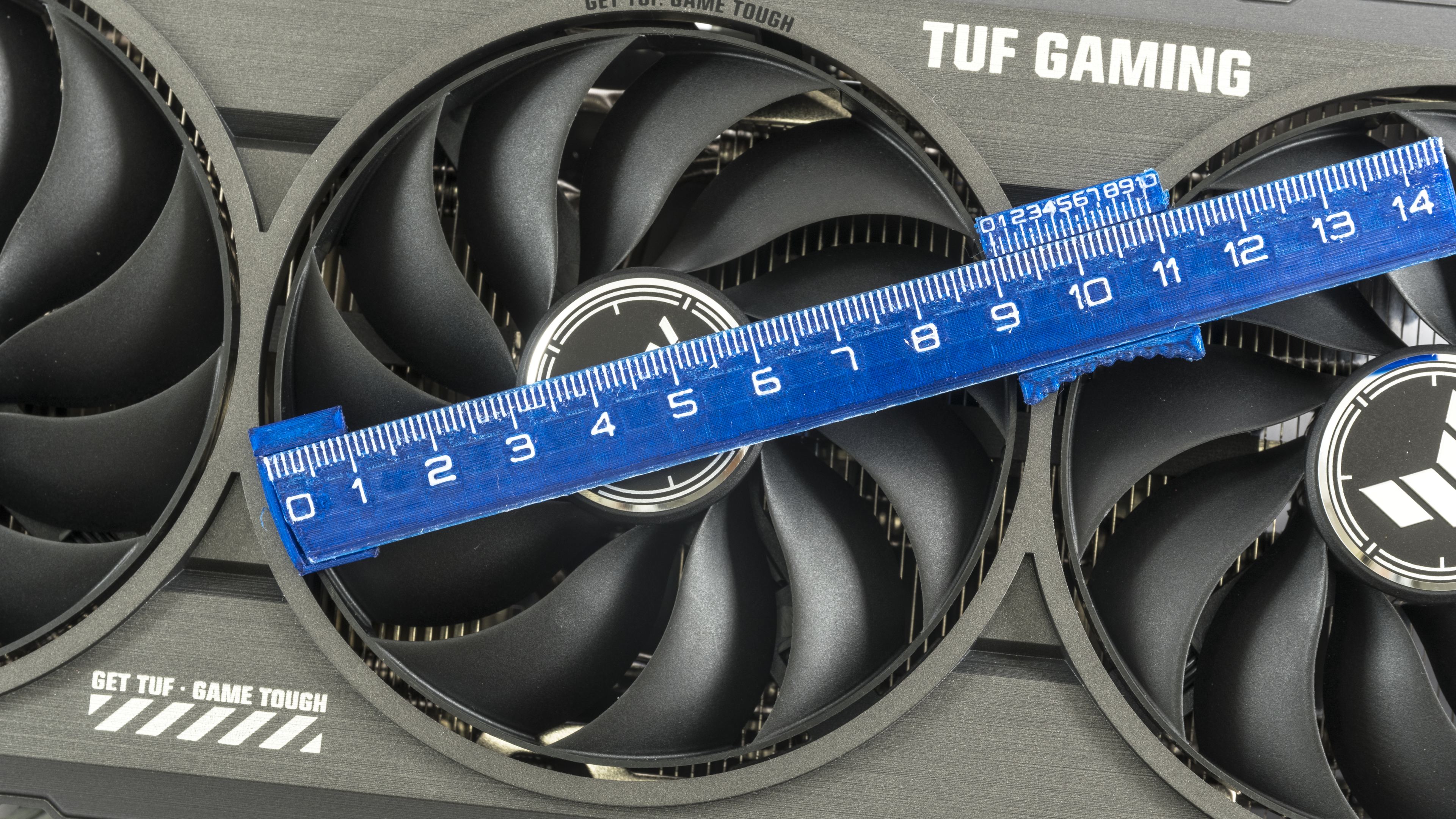
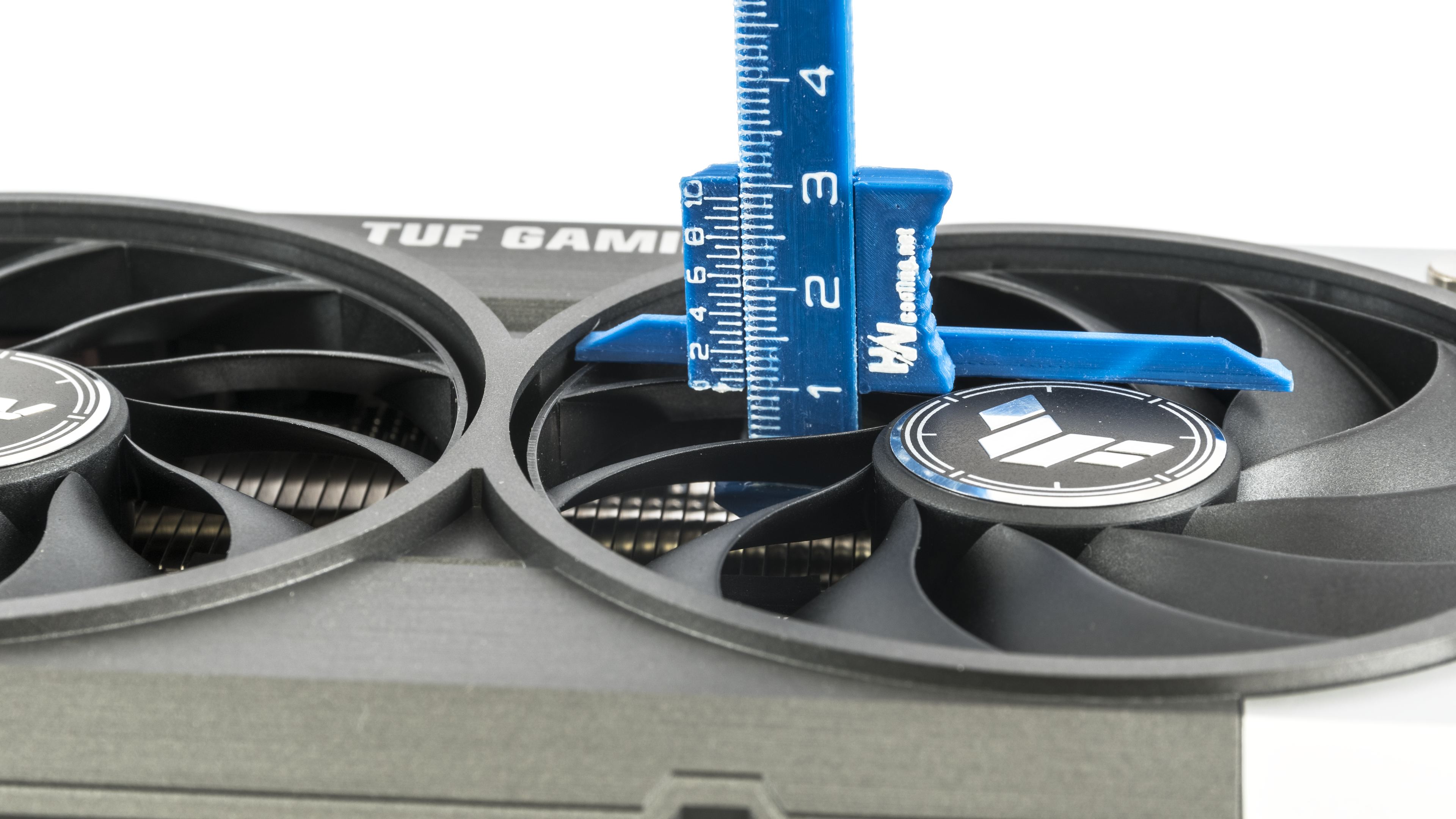
The fan dimensions are somewhere in the middle of what’s commonly used on today’s graphics cards – the impellers have a diameter of 91 mm and a height of 11 mm. They are low-profile and fairly slim, and compared to taller fans with larger blade surfaces, they are quieter at the same RPM.
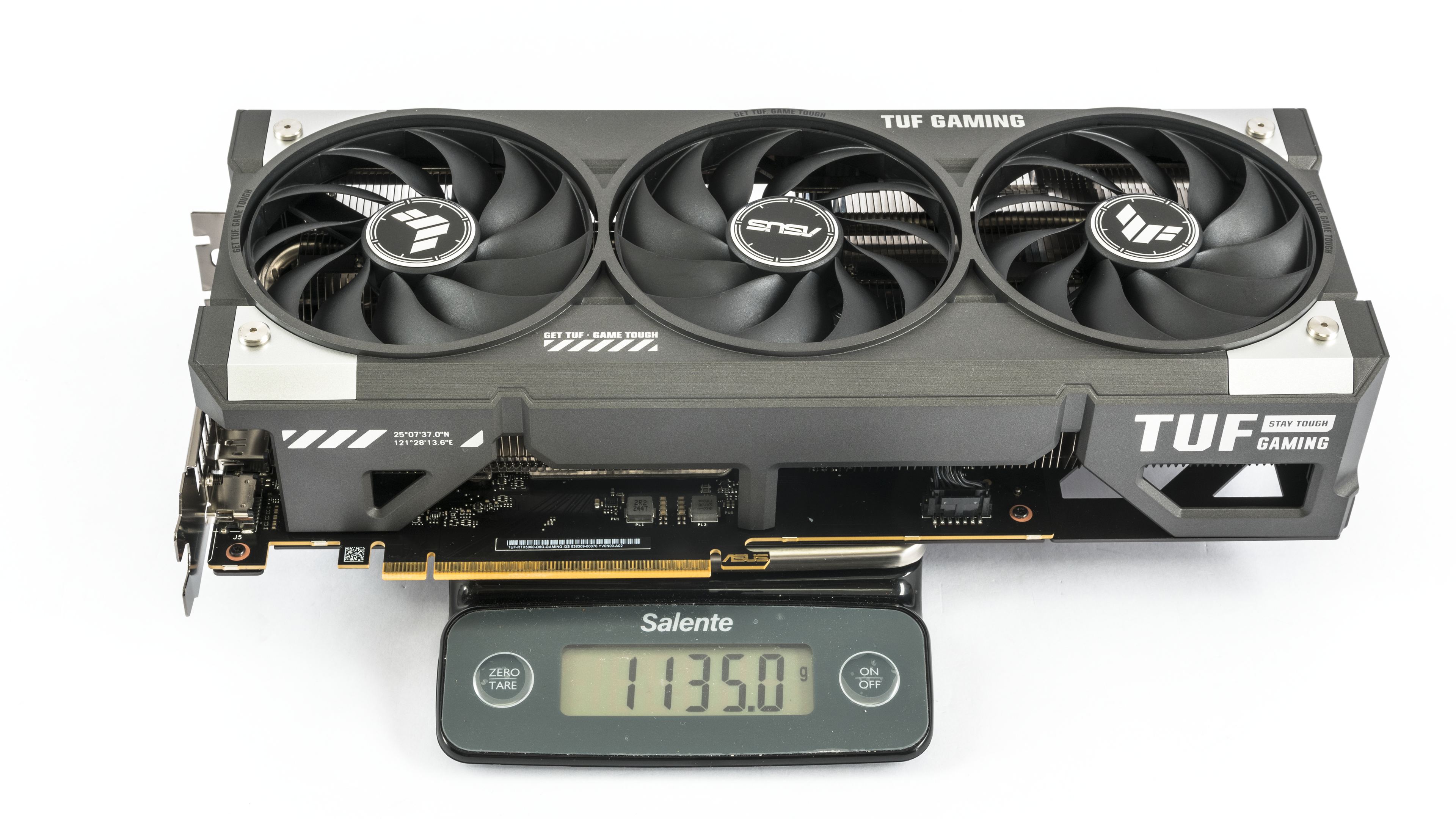
The weight is only a few grams lighter than the more powerful TUF RTX 5060 Ti, suggesting minimal changes to the cooler. The card weighs 1,135 g. While the TUF RTX 5060 Ti included a support bracket in the accessories, it’s missing with this model.
The card’s length exceeds 30 cm by a few millimeters.
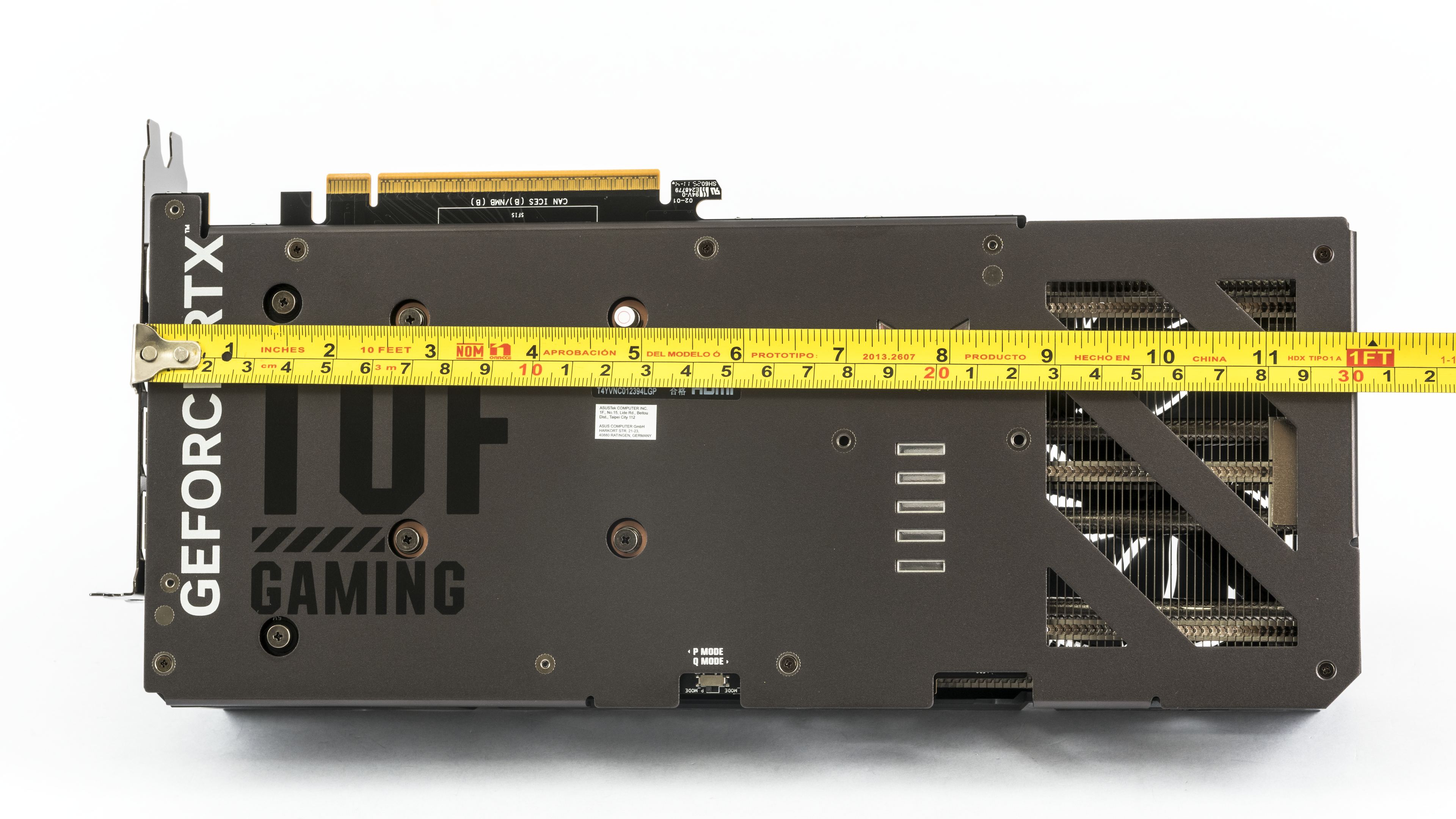
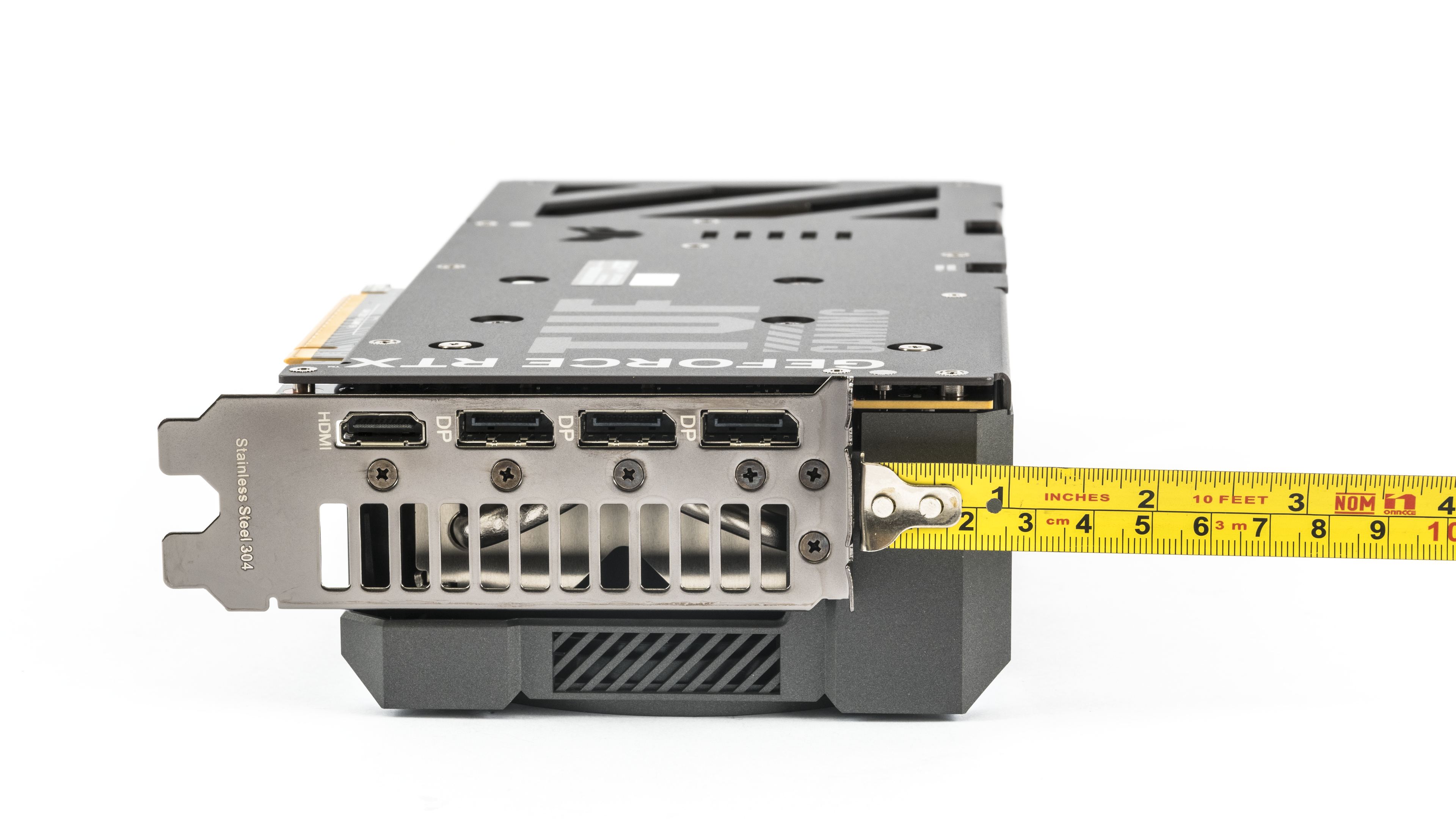
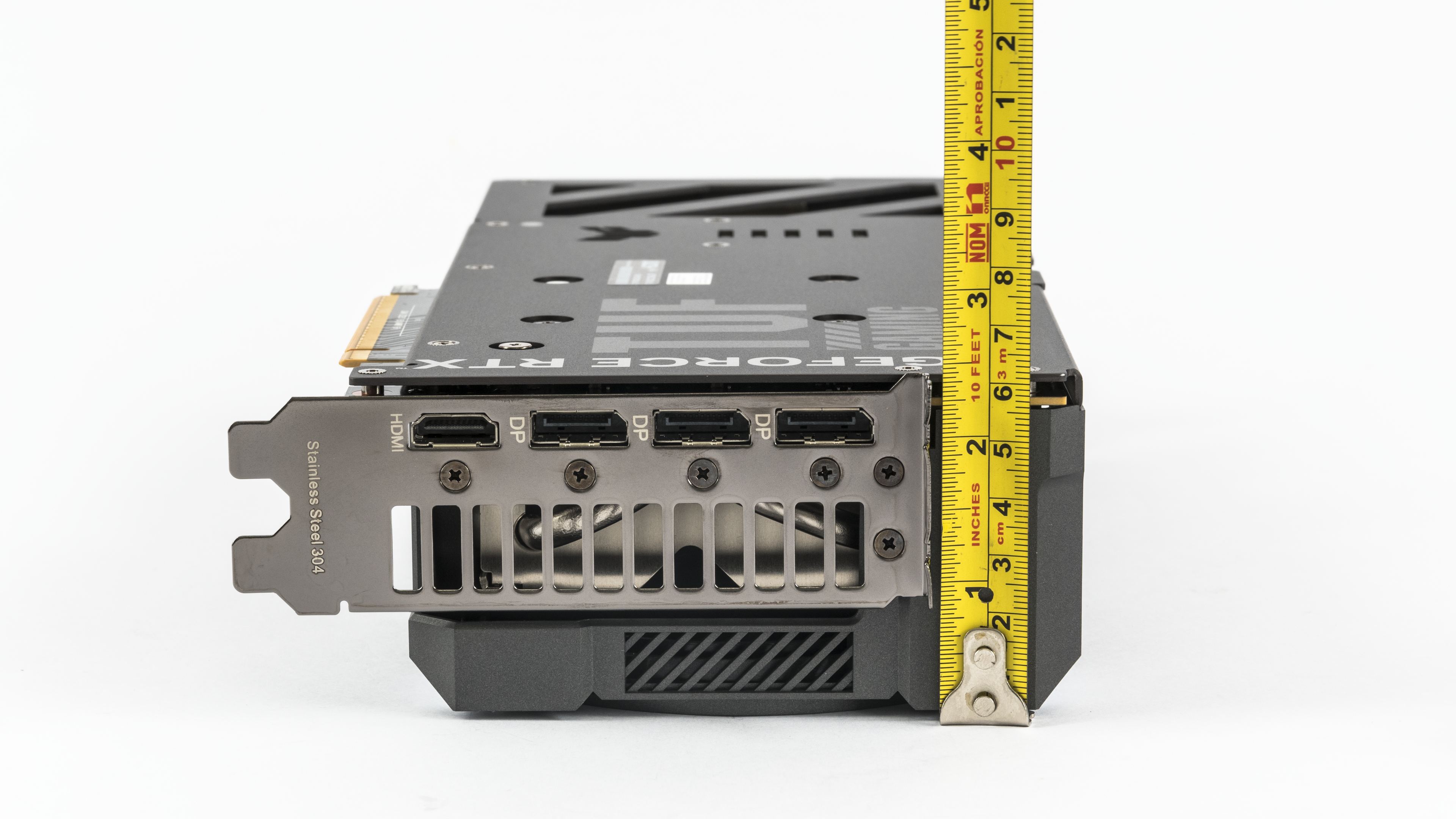
The card extends roughly 3 cm beyond the mounting bracket and occupies the full height of three slots. Leaving a fourth slot free is advisable for better airflow to the fans.
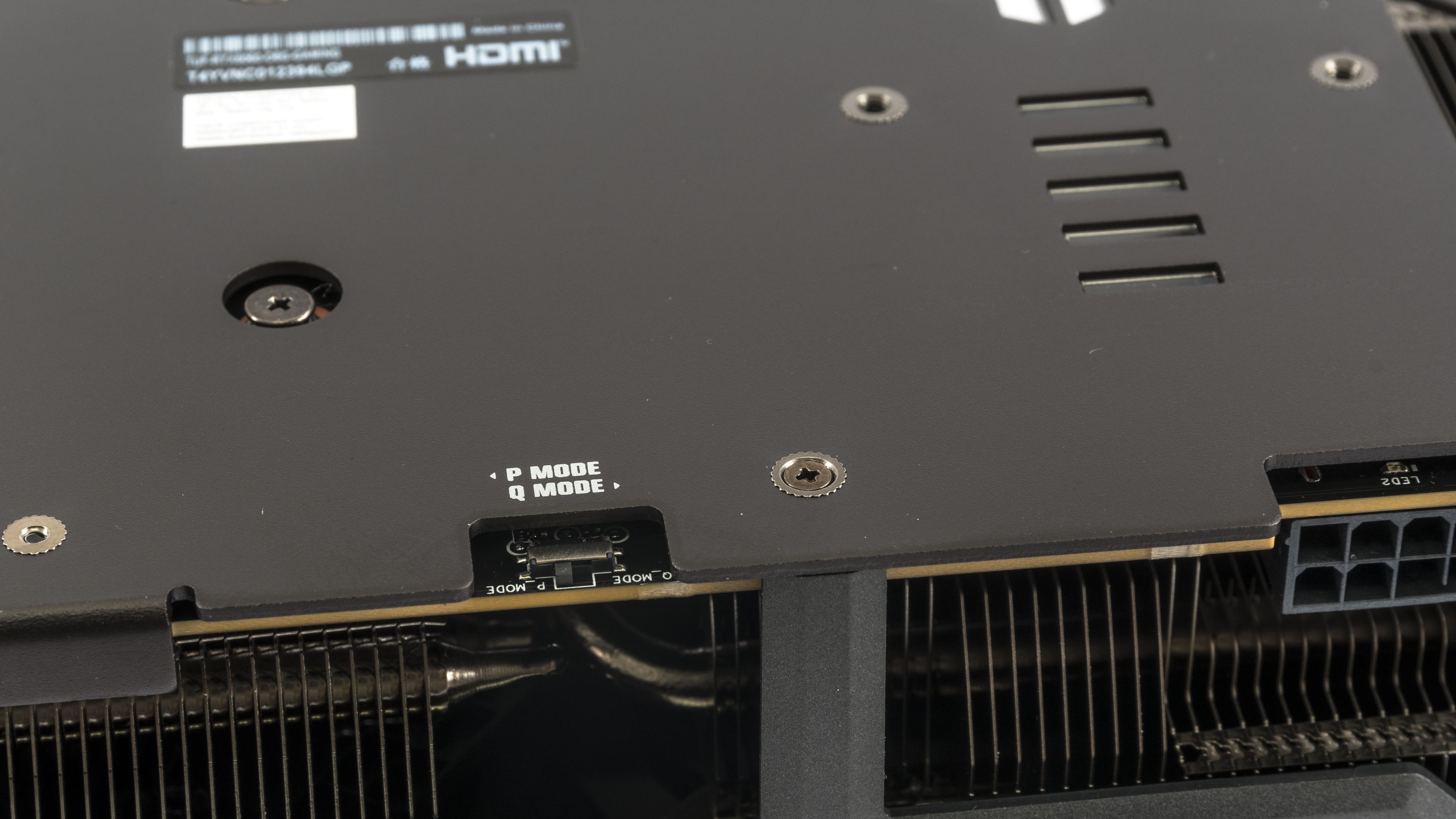
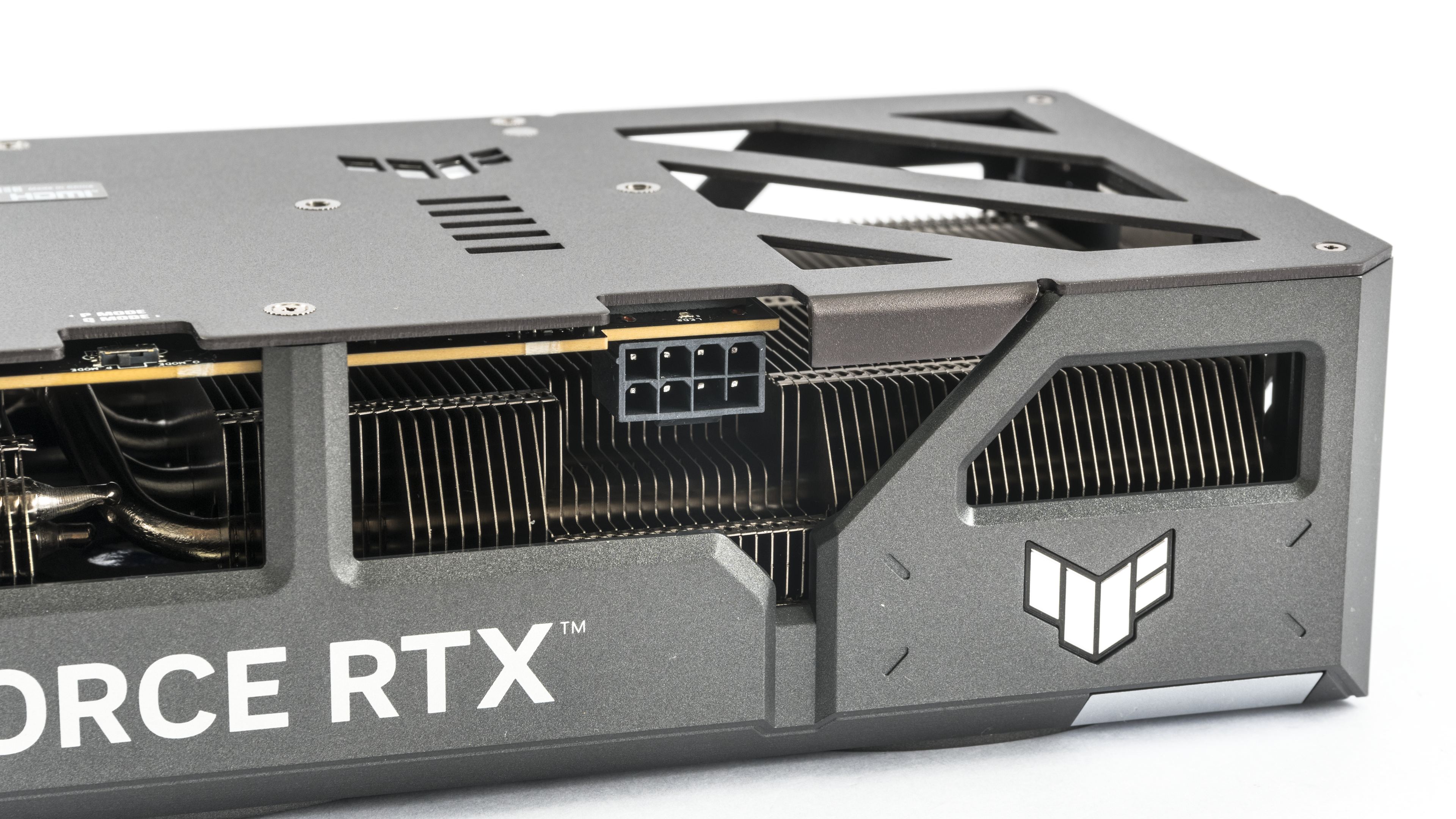
The BIOS mode switch is located to the left of the auxiliary power connector. The default setting is P mode.
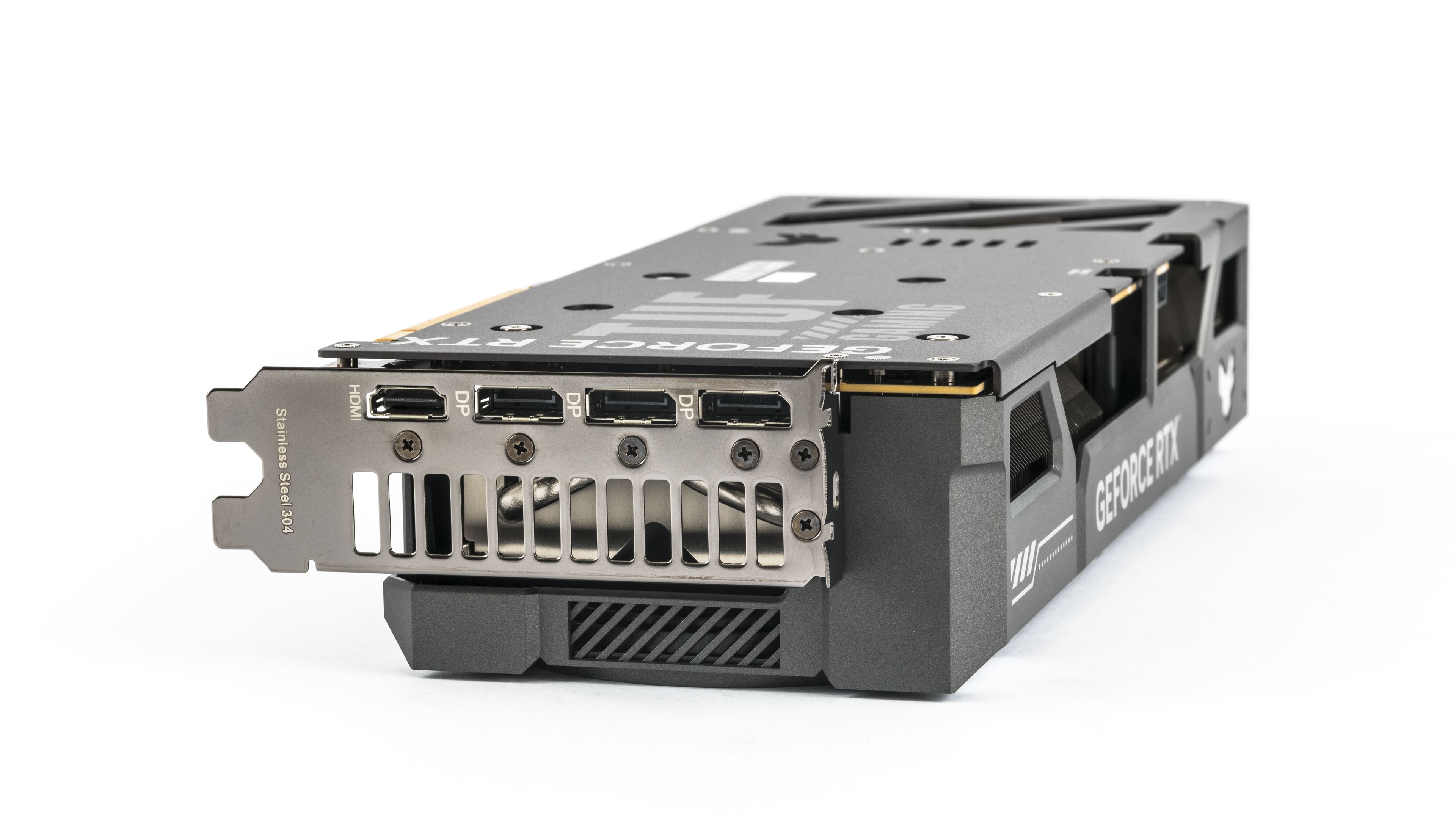
The output bracket includes a standard selection of ports – three DisplayPort 2.1b with UHBR20 and one HDMI 2.1b connector.
While the RTX 5060 Ti featured the newer 12V-2×6 power connector in the PCB corner, the RTX 5060 makes do with a traditional 8-pin connector.
We’ve covered the design, let’s move on to how it performs.
⠀


