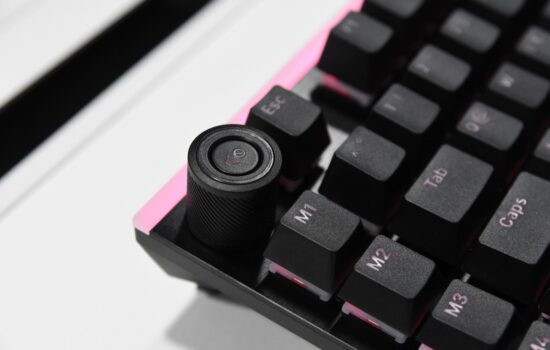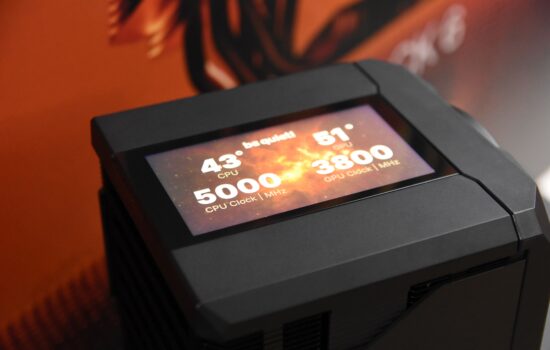
Shadow Rock 3 was introduced this year as the new top model in the mid-range coolers from BeQuiet!. This German manufacturer, as the name suggests, focuses on the production of components with very quiet operation. The Shadow Rock 3 cooler boasts of very quiet specifications even at a high TDP value of 190 W. However, marketing slogans will never replace real tests, which is why we’re bringing you a review of this cooler today.
Methodology of testing
Based on the readers’ feedback, I expanded the testing methodology. I will now test all coolers in two standard RPM levels, namely 800 RPM and 1200 RPM. This will be complemented by a test for maximum fan speed. Of course, I will record noise at all three levels. I also expanded the set of tests with another (lower) level of generated heat.
As a heat generator for each test I used Intel Core i7-5820K in the ASRock X99 Taichi motherboard. The whole rig is placed on the Streacom BC1 frame without other fans that would provide airflow. Stress tests are performed using the Aida64 Extreme app with a duration of 45 – 60 minutes. I tested the coolers at a CPU frequency of 4200 MHz with a voltage of 1.15 V and then at 4500 MHz with a voltage of 1.35 V. The consumption of the processor at these frequencies was about 140 – 150 W, or about 190 – 200 W. In particular, the second option is already a huge load on most coolers, so none of them can be expected to cool the processor at less than maximum speed.
I measured noise at three fan speed levels (800, 1200 and maximum speed) approx. 50 cm from the cooler using a calibrated Voltcraft SL-100 device in fast measurement mode (125 ms) with a sensitivity range of 30 – 100 dBA. Fan speed control is provided by Noctua NA-FC1. The ambient noise level is usually below 33 dBA. At the end of the test, I always note down the highest reached value of the processor temperature (CPU Max). All data regarding temperatures and CPU consumption are obtained from the HWiNFO64 software. The results are corrected for ambient temperature and reported as Delta T. I chose 75 °C as the test success limit. Any higher Delta T value then usually means a processor temperature close to 100 °C and the risk of throttling. Therefore, if the cooler does not pass the test with a Delta T value below 75 °C, such a test is marked as unsuccessful.
Of course, changing the methodology means retesting some of the coolers from my previous reviews. It is currently out of my time schedule to test all previous coolers, but I will add them over time in the following reviews. So today we compare the Shadow Rock 3 against its bigger brother in the form of BeQuiet! Dark Rock 4 and then we add two Noctua coolers. These are going to be the popular NH-U12S and NH-D15S models.
Tests results
All tested coolers performed very well at medium loads. In normal use, all coolers tested can be expected to run at low speeds without the processor overheating.
It can already be seen here that the high amount of waste heat in combination with the low speed means that most coolers are not able to prevent the processor from overheating which is then followed by throttling. This is not unexpected, it is simply the physical limit of the given cooler and does not mean that the cooler is of poor quality.