
We’ve recently brought you a review of an Asus gaming router which attracted attention with RGB backlighting. Today we will look at another router from this company that is unique in another field. This is one of the first WiFi 6 routers of those that support the new 802.11 ax standard. Let’s take a look at what improvements the novelty brings and what real differences you will see compared to 802.11 ac routers used so far.
Basic parameters
| Parameters | Asus |
| RT-AX88U | |
| Parametre | |
| Operating Frequency | 2,4 GHz + 5 GHz |
| Chipset (Broadcom) | Broadcom BCM4908 (SoC) + Broadcom BCM43684 (802.11ax) + Broadcom BCM53134S (GbE Switch) |
| Network standards IEEE 802.11 | ax/ac/n/b/a/g |
| Atenna | 4× external |
| RAM | 1 GB DDR3 |
| Internal storage (flash) | 256 MB |
| Encryption | 64/128-bit WEP, WPA/WPA2-PSK, WPA/WPA2-Enterprise |
| Sharing | 3G/4G, HDD, Samba, server FTP and print server |
| Network ports | 9× RJ-45 s 1 Gb/s (8× LAN + 1× WAN) |
| USB ports | 2× USB 3.1 gen 1 |
| Buttons | power, LED, Wi-Fi, reset, WPS |
| Dimensions | 300 × 188 × 61 mm |
| Weight | 1 kg |
| Approximate price | 350 eur |
Packaging and the surface
The contents of the package and its design are reminiscent of other routers from this manufacturer. You know right away what model it is and what its main features are.
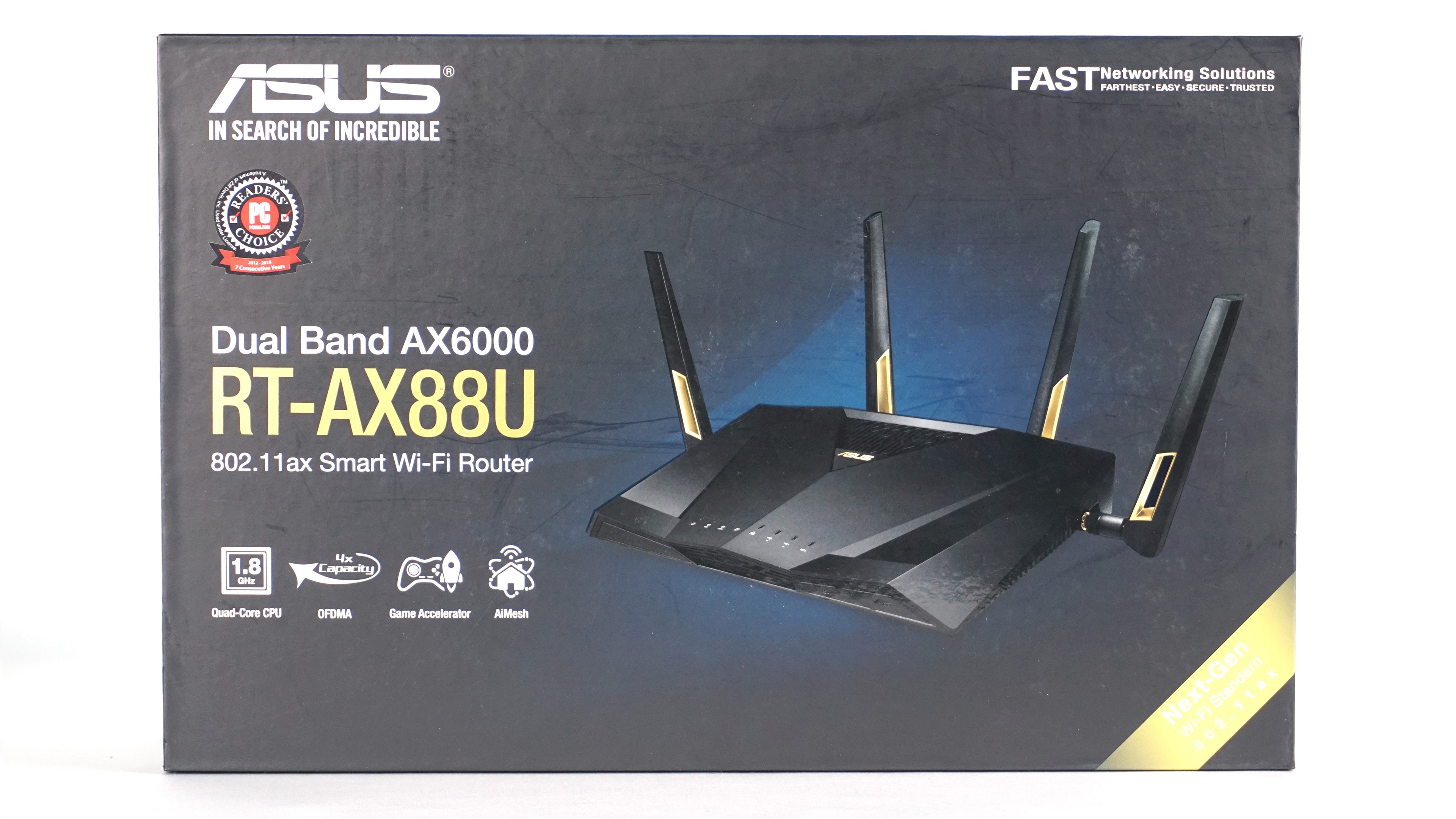

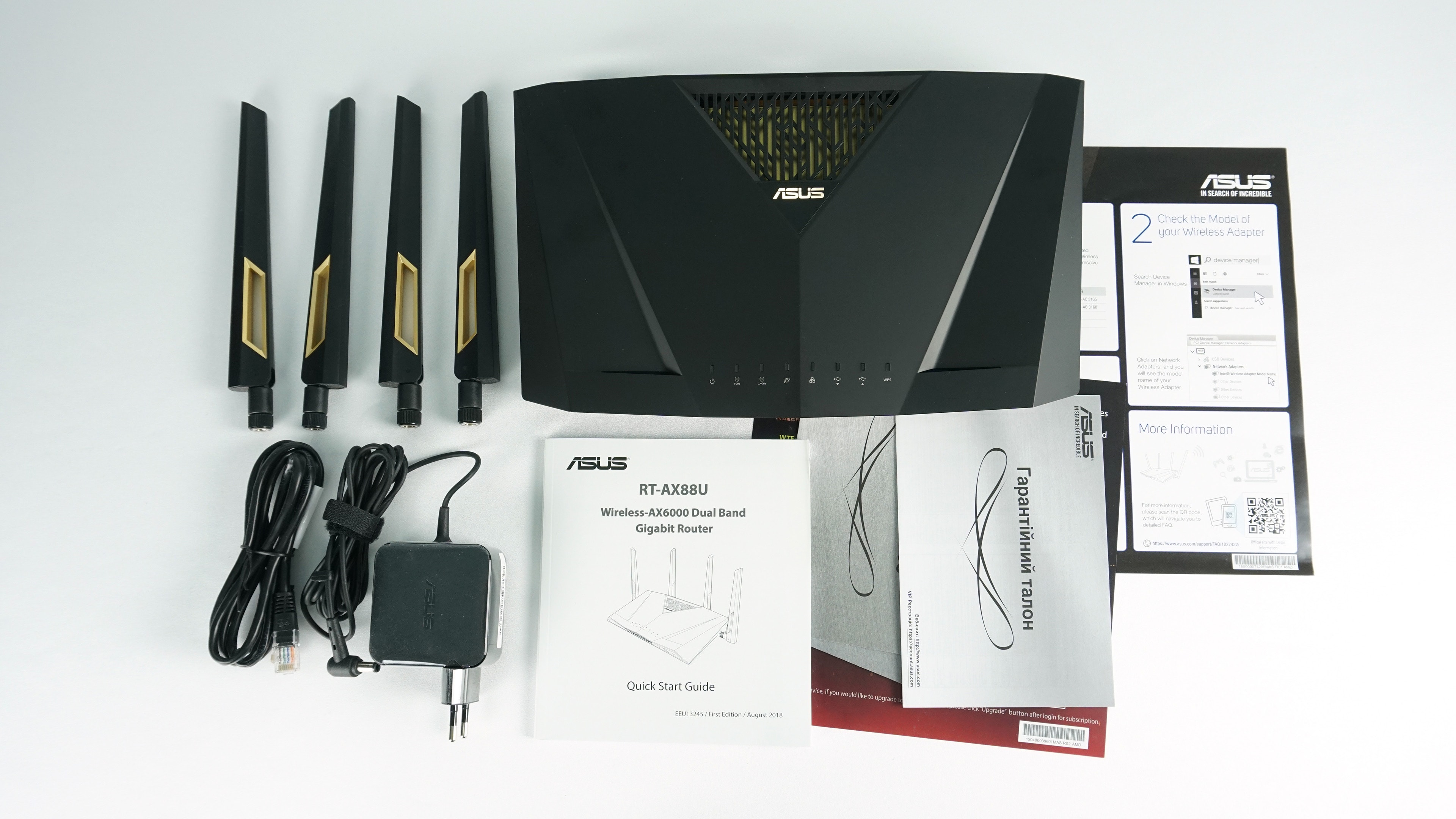
Inside you will find the router itself, antennas, LAN cable, power adapter and documentation, as usual.
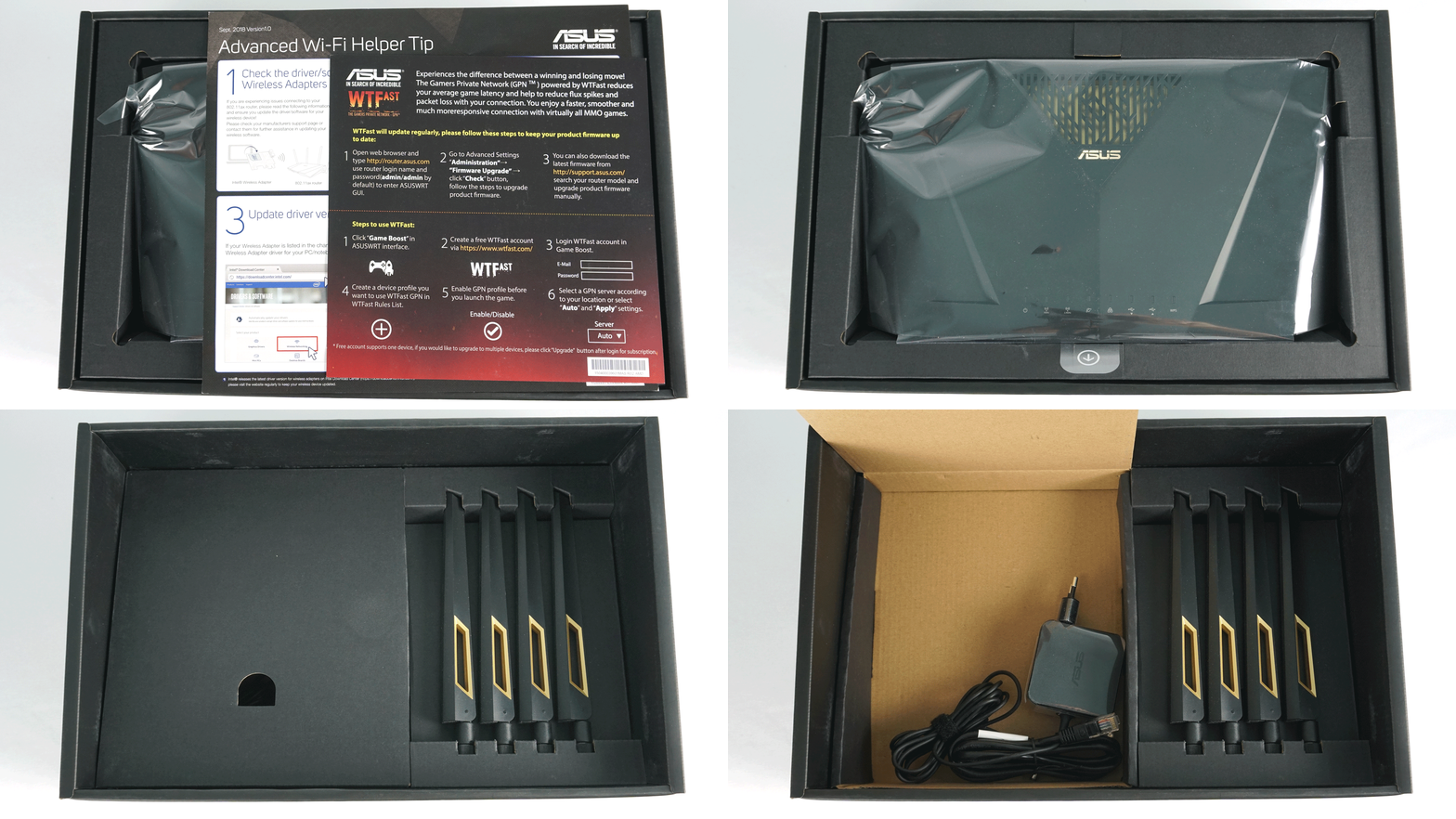
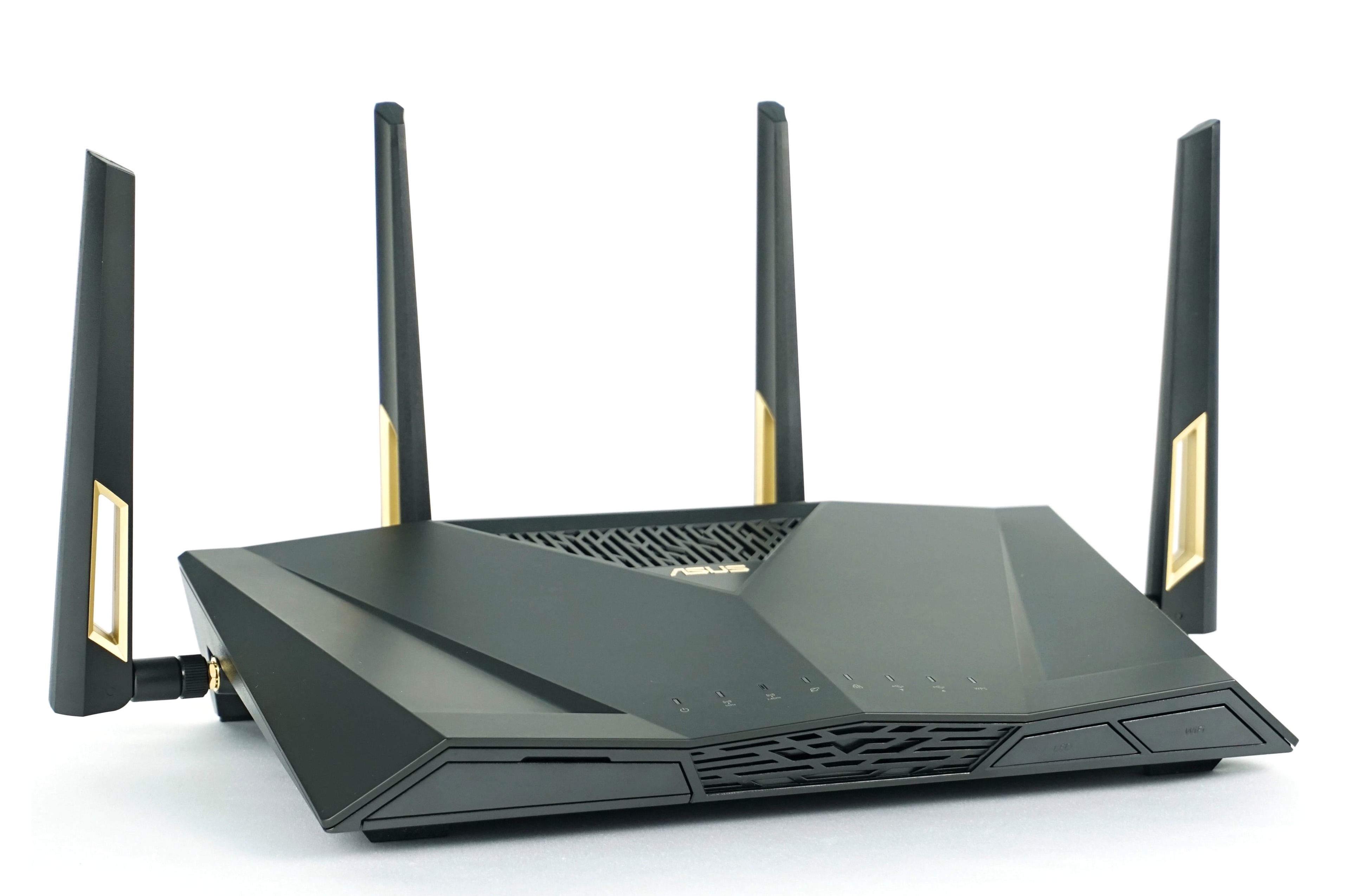
The design of the AX88U is identical to its predecessor AC88U which we will compare it to later. It differs only in the accent color which is now gold instead of red. We can find it inside the router and on the antennas.
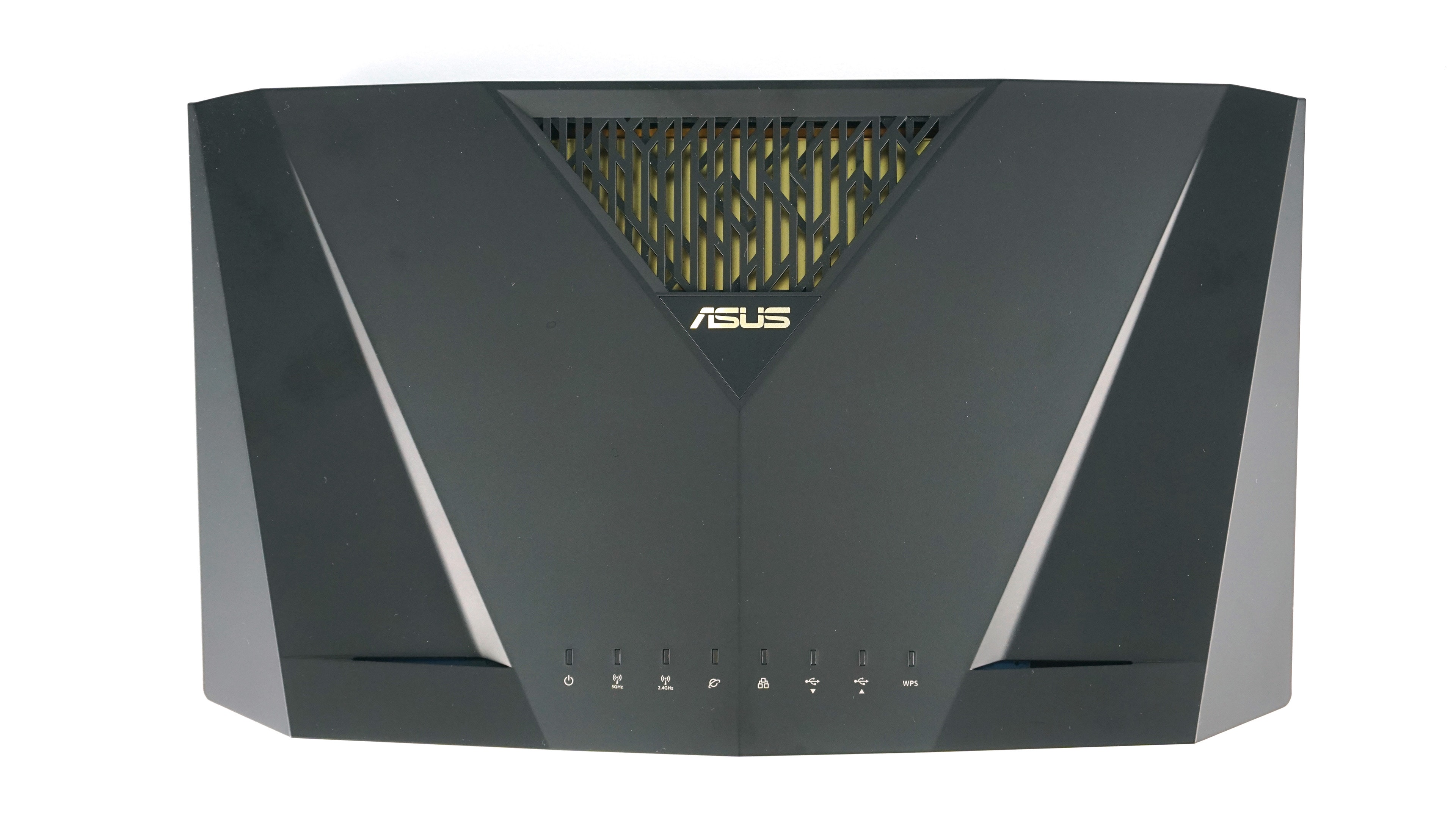
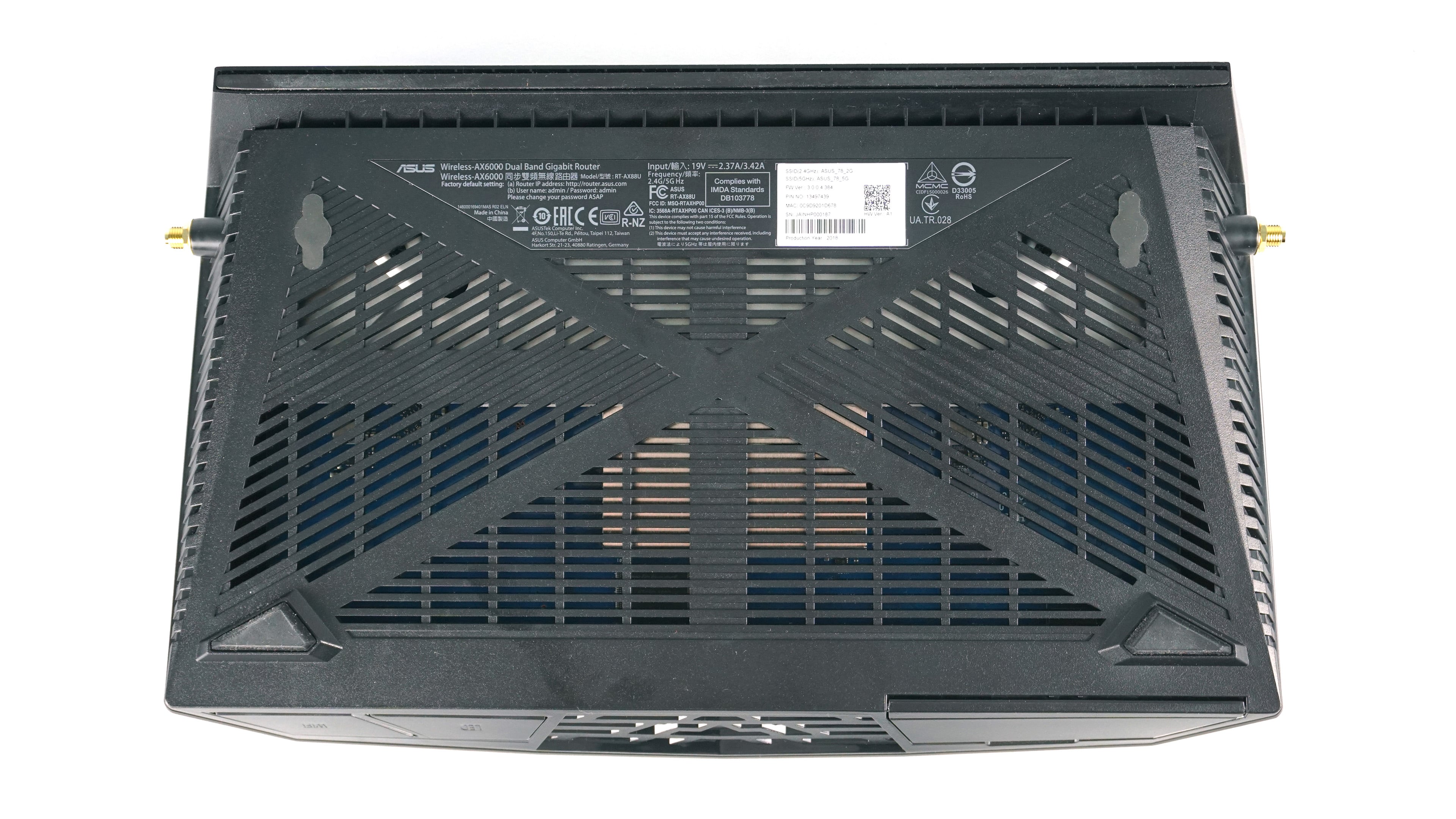
The bottom side is completely perforated so that the router can cool well, as it can heat up considerably during use. As with the gaming ROG AC2900, the AX88U also has a black plastic body which is literally a fingerprint magnet.
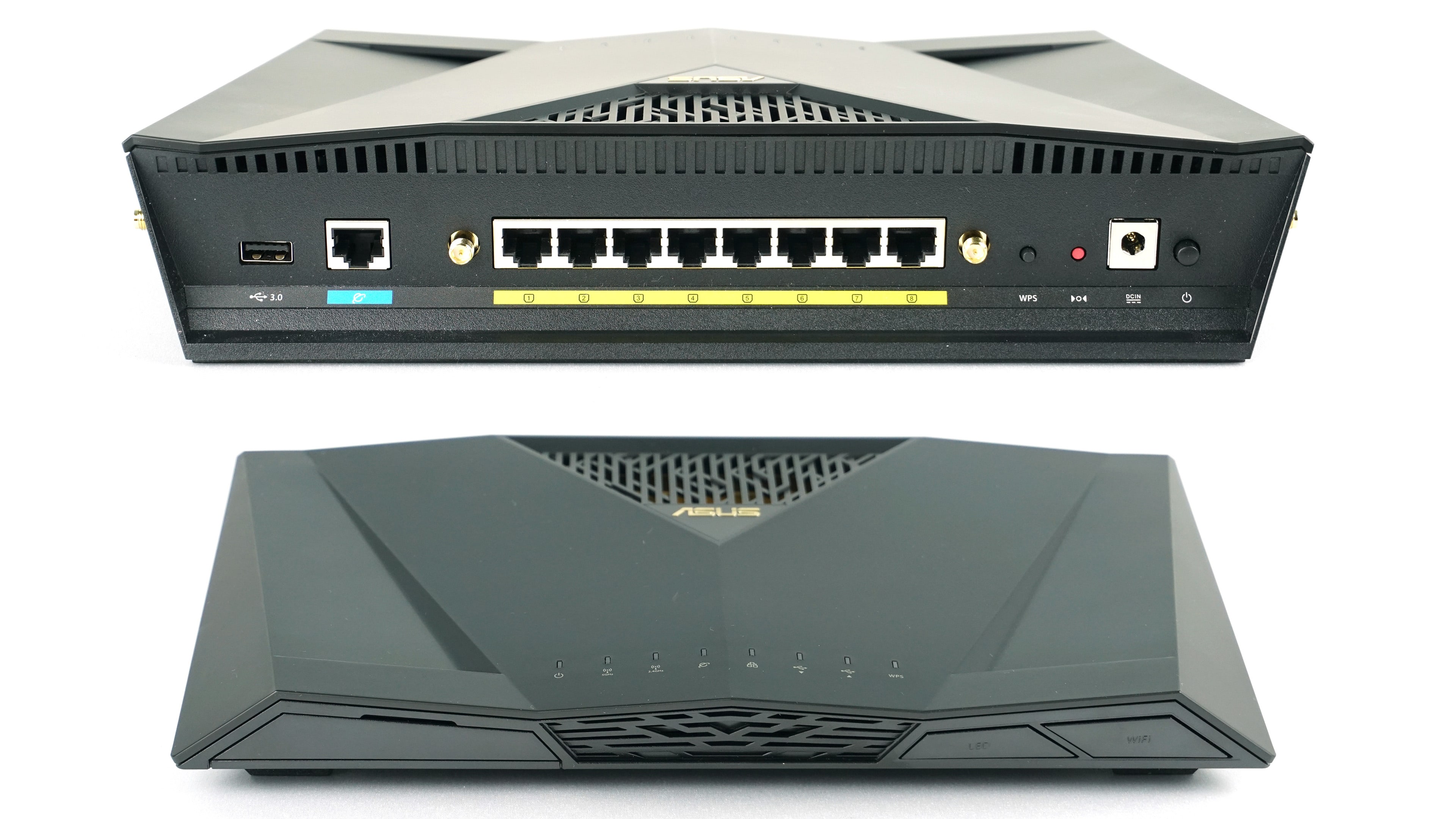
Almost all the connectivity is at the back. There is USB 3.0, 1Gb WAN port, up to 8× 1Gb RJ-45 connectors, a pair of antennas, WPS and reset buttons, a power connector and a power button. The main advantage (above all) is the eight LAN ports which can be found in this series of routers and square ROG routers.
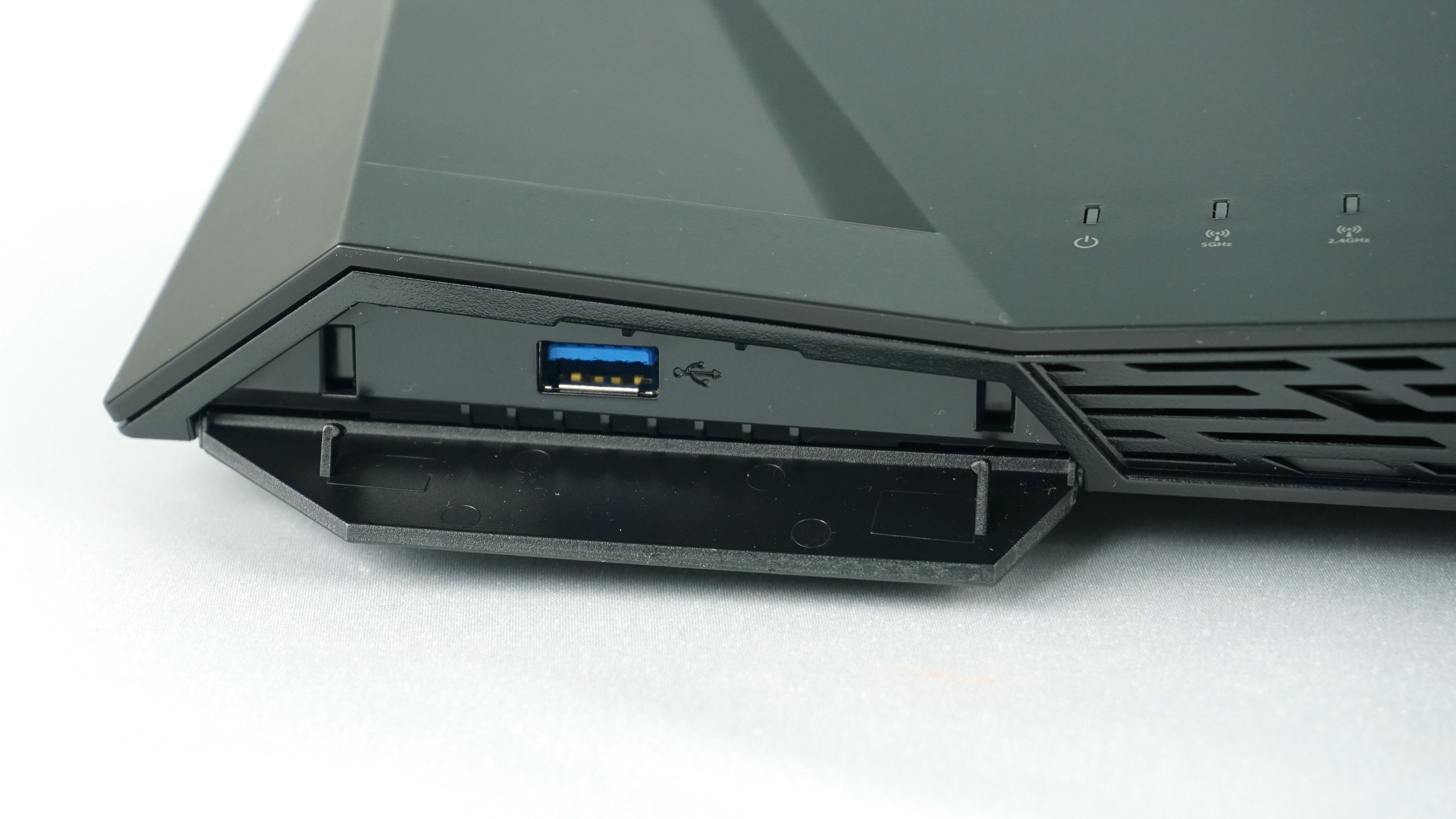
There is another USB 3.0 port on the front which is hidden behind a plastic cover. On the left side, in the same place, there are buttons to turn off the LED indicators and to turn off WiFi.
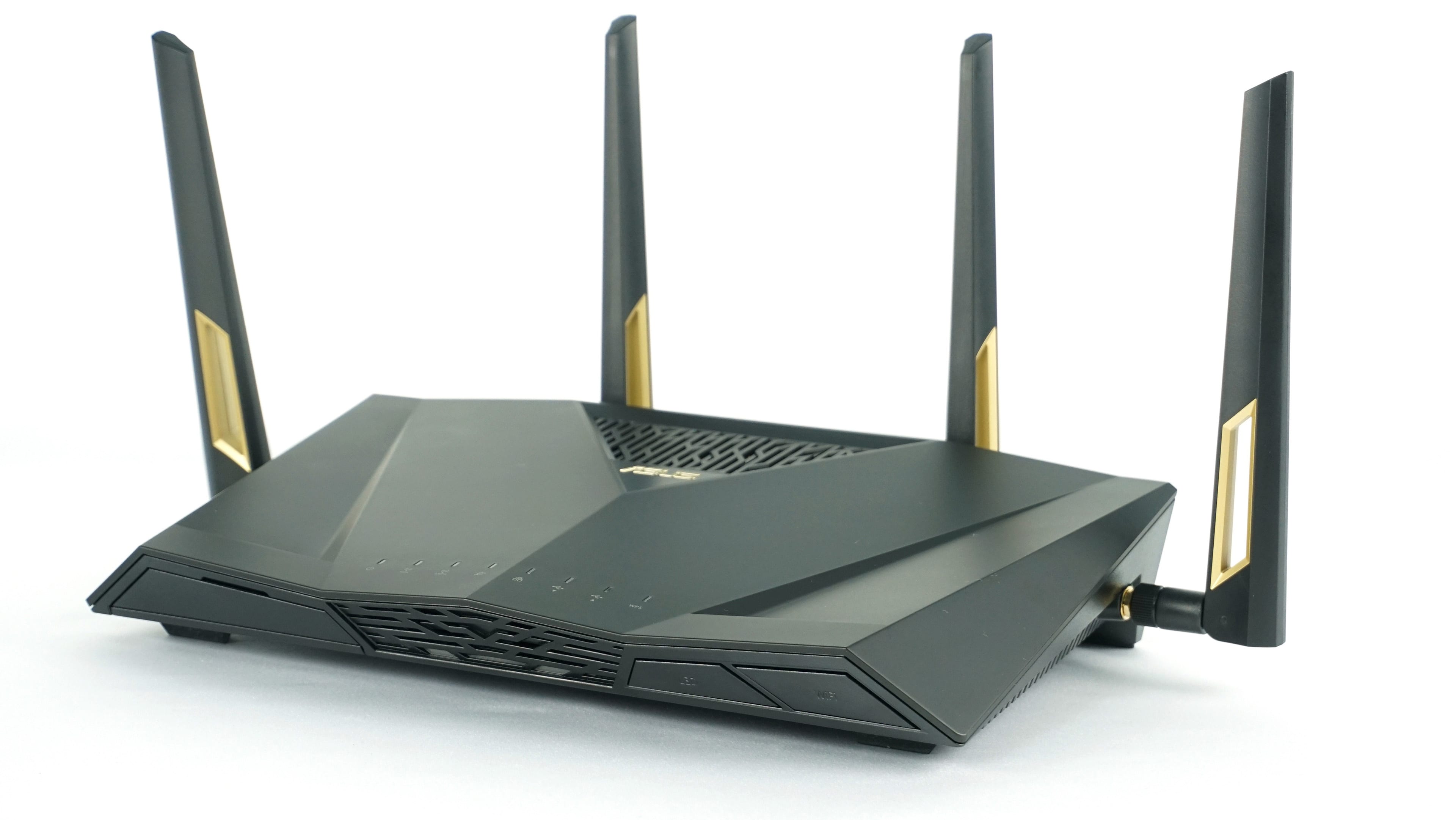
The router is relatively large and heavy, so we recommend that you carefully consider where you place it. In terms of design, the only differences from its predecessor are the gold color, a slightly changed order of elements on the back and the replacement of USB 2.0 with faster USB 3.0 on the back as well.
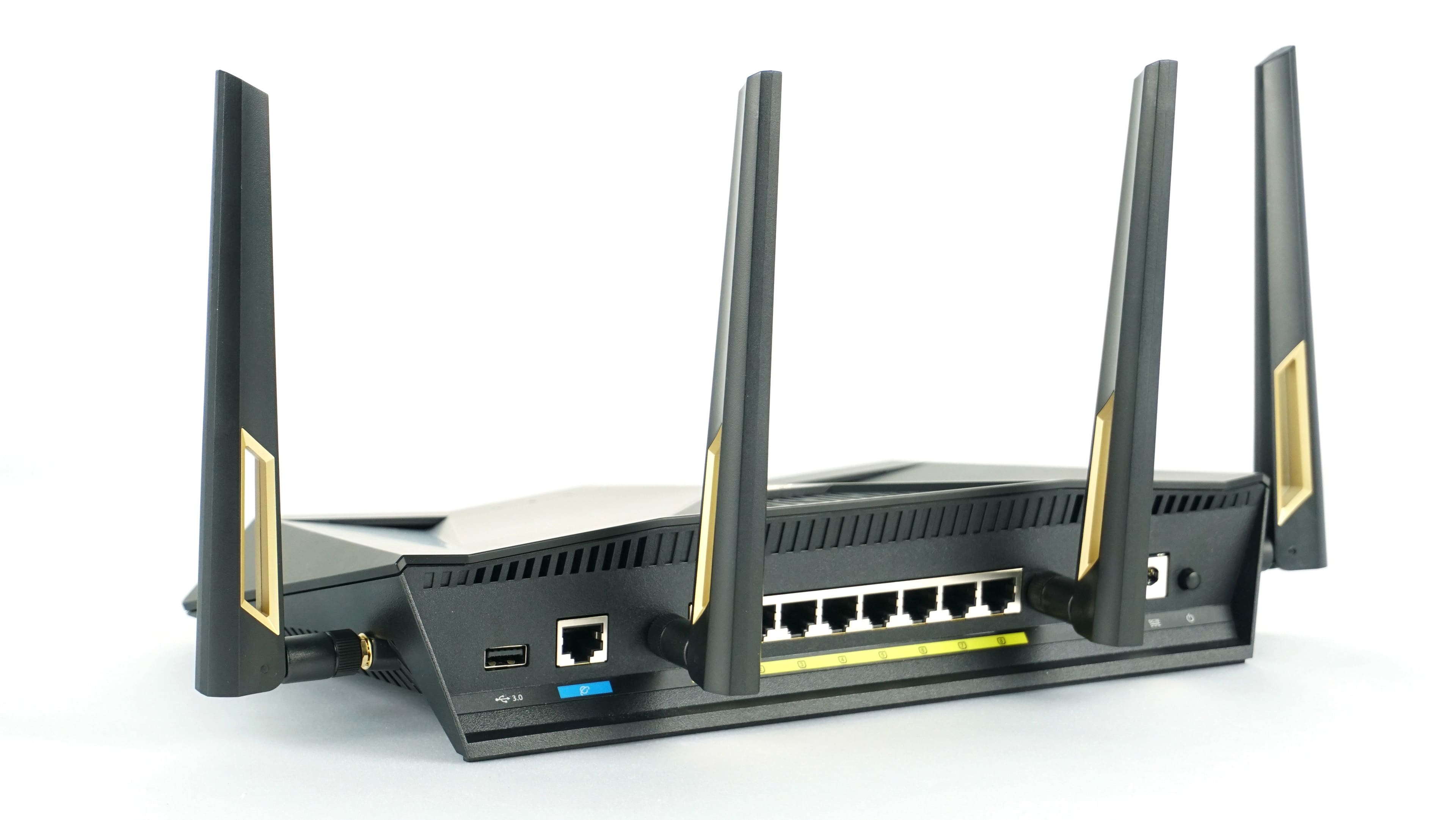
The main changes are therefore functional and you will learn them in the tests section. Before that, however, we will look at what changes WiFi 6 brings and also the router’s web interface.