


Significantly smaller than any case we’ve tested so far. The question is how this smaller size will affect cooling efficiency. Motherboard compatibility is narrower—the largest that fits is Mini-ITX, but the CPU cooler can still be tall, the graphics card long, and the PSU can even be full-size ATX. Yes, even that has a place in the DeepCool CH160. Even a case this small has enough space for large components.
… and internal details of the CH160
The side panels are held by four screws, two for each panel—one at the top and one at the bottom. At the rear, the panels are secured by screws, while at the front they slot into the case frame using tabs. Overall, everything is reliable and secure, and removing or reinstalling the panels is also convenient.

The motherboard is installed vertically, just like in larger cases. The difference here is that, since the CH160 only supports smaller Mini-ITX boards, the interior clearance is much lower.

However, the case is wide enough to fit a tall CPU cooler, and long enough to house a full-length graphics card. We’ll get back to this in the next section with installed components, but for now it’s worth noting the PCIe slot covers. There are four of them, which also hints at support for thicker graphics cards. GPU coolers can be triple-slot, and the perforation at the bottom of the case also helps with this—letting the GPU pull in more cool outside air.
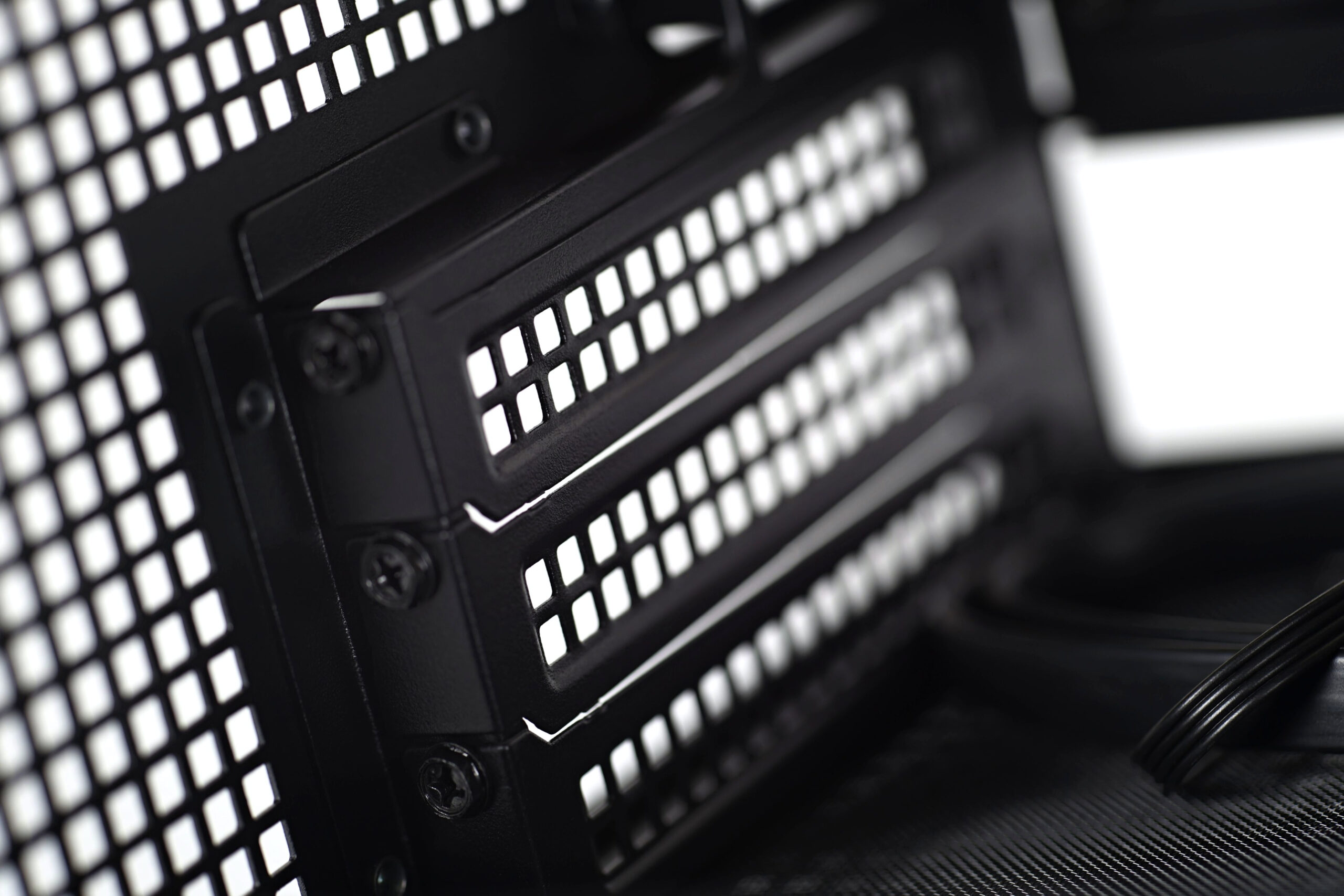
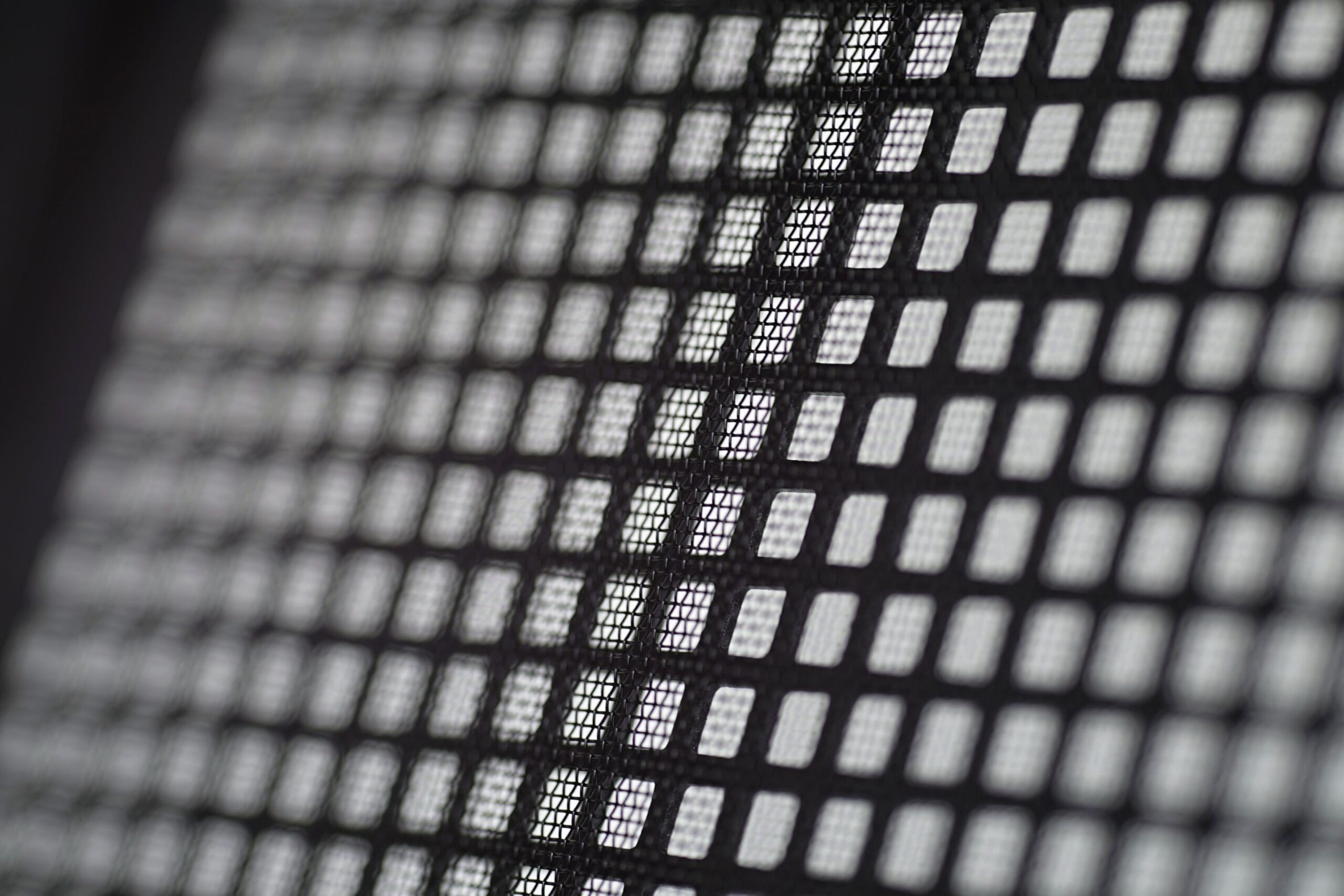
The mesh structure of the dust filter is clearly visible from the inside. It’s not the finest out there, but it is finer (and more aerodynamic) than traditional plastic filters. At the front of the case, behind the front panel, there’s also a bracket. This is meant for mounting an additional fan. It only mounts at two points (instead of four), but that’s still better than nothing.
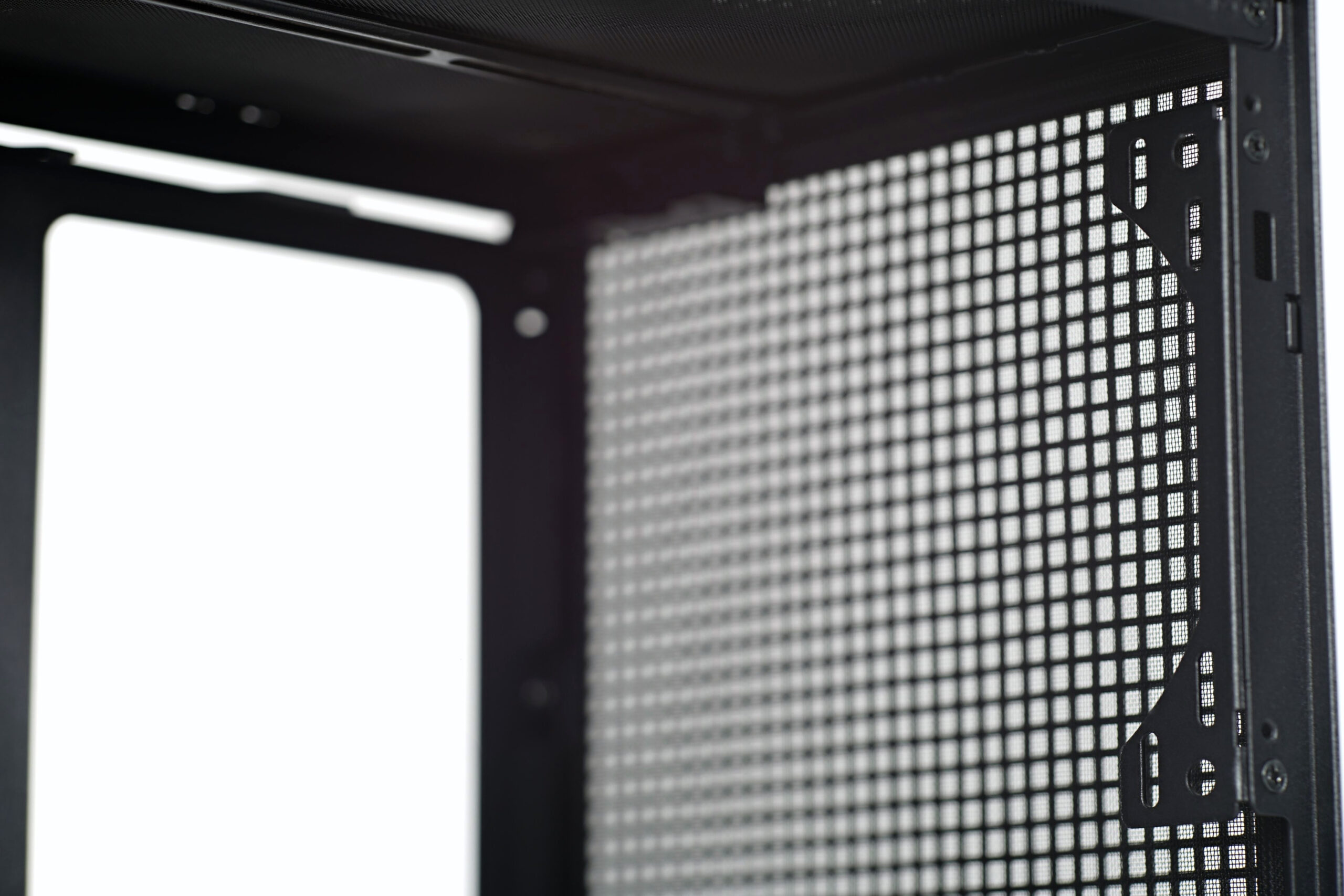
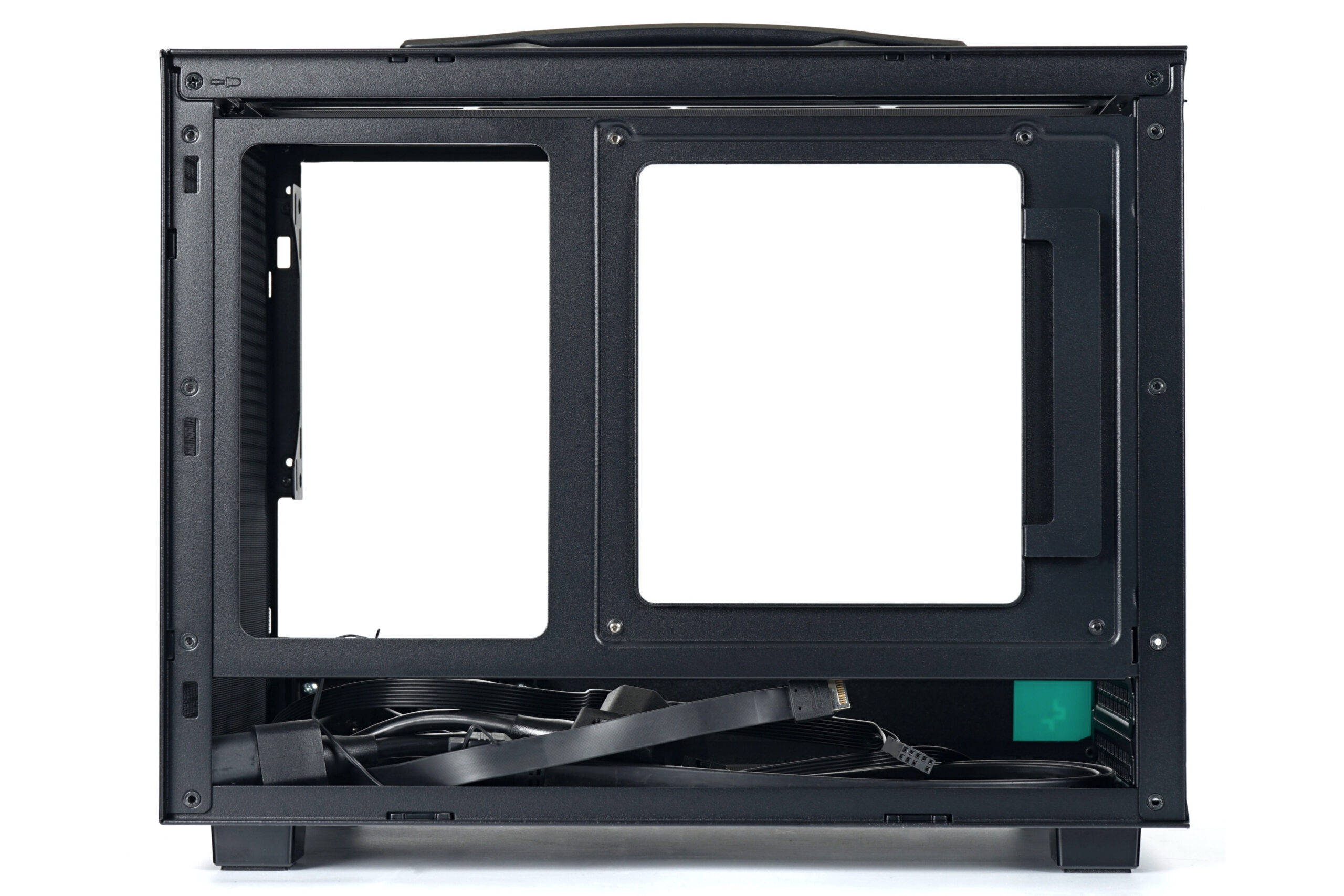
The power supply is also installed at the front, and that additional fan can only be fitted if you use an SFX PSU. While the case supports ATX power supplies as well, this comes with several limitations—including the fact that there will no longer be room for the mentioned fan. That fan can only fit next to the smaller, or narrower SFX unit.


It’s great that they offer a mesh side panel variant.
That really is a nice variant. 🙂
I don’t know to what extent the perforated side panel can help cooling, but it probably depends on the situation. With a top-flow CPU cooler there will likely be some benefit, and possibly even without it (for the graphics card, for example). But who knows… with side perforations, case pressure certainly drops to some extent, and with it also the airflow from the system fans. It would probably need to be tested, and hopefully we’ll get to it sometime. It won’t be with the DeepCool CH160 cases, but maybe with some others that also have multiple side panel variants. We’ll see…
… next up in our case testing, we’ll be looking at how the CH260 performs passively, or rather what kind of drop in cooling performance can occur compared to a configuration with added fans. 🙂
I am looking forward! I think the mesh panel can be useful in a transport use case, as indicated by the handle on top. Anyway, it’s great to have a choice.
I agree. The Mesh variant definitely makes sense for logistical reasons as well—a metal side panel won’t shatter under harder impacts. 🙂
–“…we’ll be looking at how the CH260 performs passively, or rather what kind of drop in cooling performance can occur compared to a configuration with added fans.”
👍