

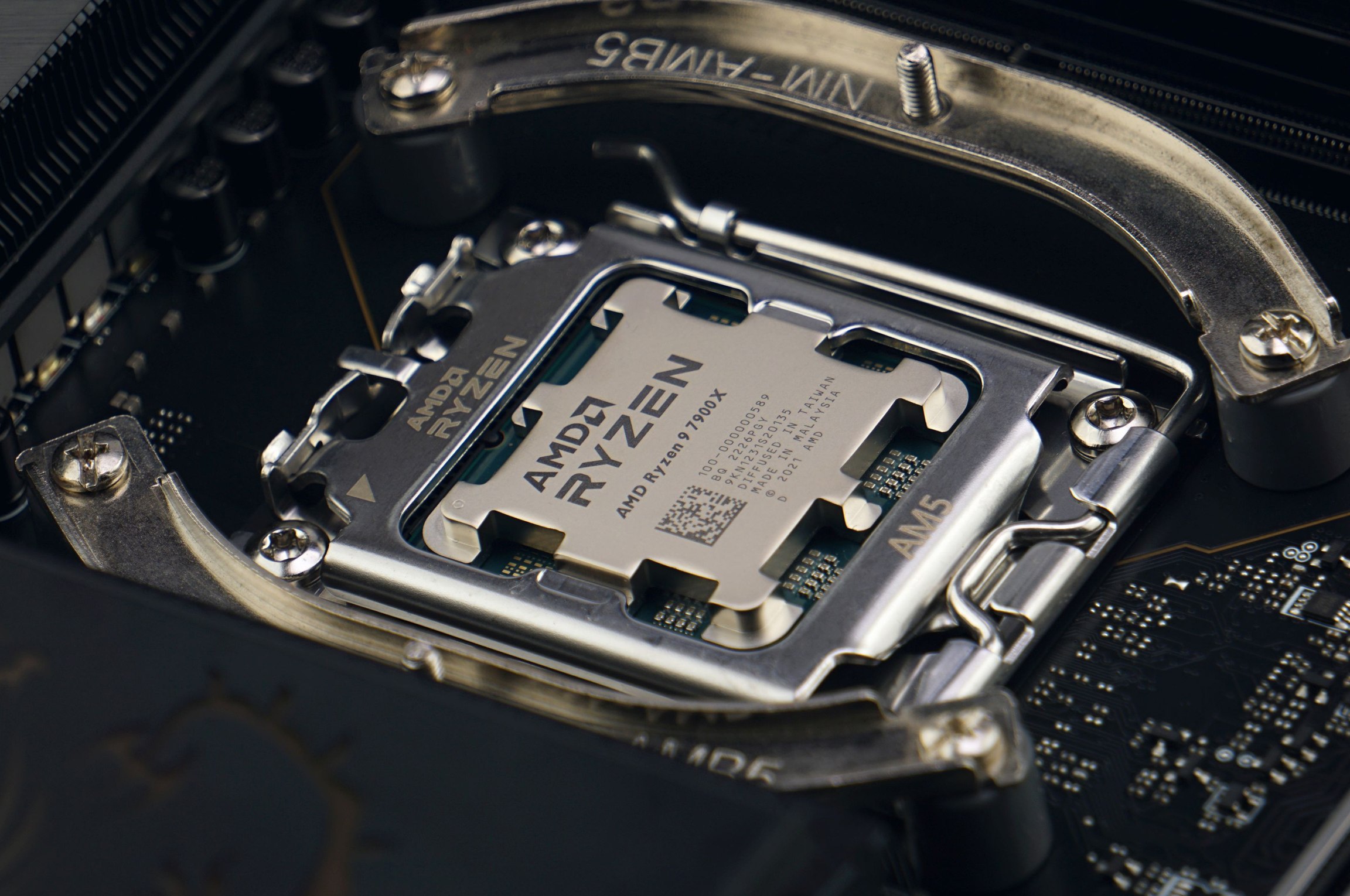
The launch of AMD’s next‑generation desktop processors (Zen 6 architecture) is apparently still many months away. It is therefore surprising that a new feature is coming to AM5 motherboards at the current time: AMD has introduced EXPO 1.2, a new generation of DDR5 memory overclocking profiles for the AM5 platform. EXPO 1.2 adds several previously missing capabilities, especially initial support for higher‑speed CUDIMM modules.
EXPO profiles are analogous to Intel’s XMP profiles, originally developed for Intel platforms, although AMD motherboards typically support them as well. The technology was introduced together with the AM5 socket in 2022 and has been used in version 1.0 until now. It has now been quietly updated to version 1.2, but this is more background development and preparation than something that will immediately improve your experience.
EXPO 1.2 represents changes to the specification and to firmware‑level support in motherboards and processors. Essentially, support for upcoming new features is being added now so that everything is ready when EXPO 1.2 modules actually launch. Although BIOS updates are already appearing (Asus has beta BIOSes for some X870 and B850 boards), this is not something you can immediately take advantage of.

What will EXPO 1.2 bring to us? The most important addition is support for CUDIMM and CSODIMM modules, which integrate their own clock generator (CKD) to achieve higher frequencies. Until now, these modules have worked only on Intel’s LGA 1851 platform with Arrow Lake processors, more or less. Ryzen 7000 and 9000 CPUs do not support them, but EXPO 1.2 profiles will include support for this technology, which will likely extend to AMD processors in the future, as well.
Although it might seem related, this behind‑the‑scenes introduction of EXPO 1.2 has nothing to do with the Ryzen 9 9950X3D2 Dual Edition that just launched. That CPU uses the same memory controller as previous Ryzen 9000 models and still does not support CUDIMM/CSODIMM. These updates to EXPO support are apparently meant to eventually work together with the next generation of Ryzen processors with Zen 6 architecture, coming this autumn or early 2027. The current firmware and EXPO 1.2 specification changes are simply preparation for these new CPUs and will not enable CUDIMM with the currently available processors.
EXPO 1.2 also includes other updates, some of which may be backward‑compatible with older processors. These include support for certain new module geometries (this could possibly be referring to the half‑channel width of recently introduced HUDIMM modules) and support for memory modules made by several new Chinese manufacturers (reportedly RAMXeed Limited Conexant, Rui Xuan, and Fujitsu Synaptics).
EXPO 1.2 profiles will also be able to set several new parameters—tREFI, tRRDS, tWR, and perhaps the most interesting, “ULL.” According to some sources, this could be an option that helps reduce overall memory latency. However, Yuriy Bublij (a.k.a. 1usmus), creator of Hydra and DRAM Calculator for Ryzen tools, states that the acronym does not mean Ultra Low Latency, as some speculated, but Unified Latency Lock. So don’t expect some radical latency improvements just yet.
However, in case the new parameters and options that are not tied to CUDIMM/CSODIMM support, some could in theorybe usable on older processors, meaning modules utilising them could be released even before Zen 6 arrives.
Sources: techPowerUp, 1usmus
English translation and edit by Jozef Dudáš
⠀