


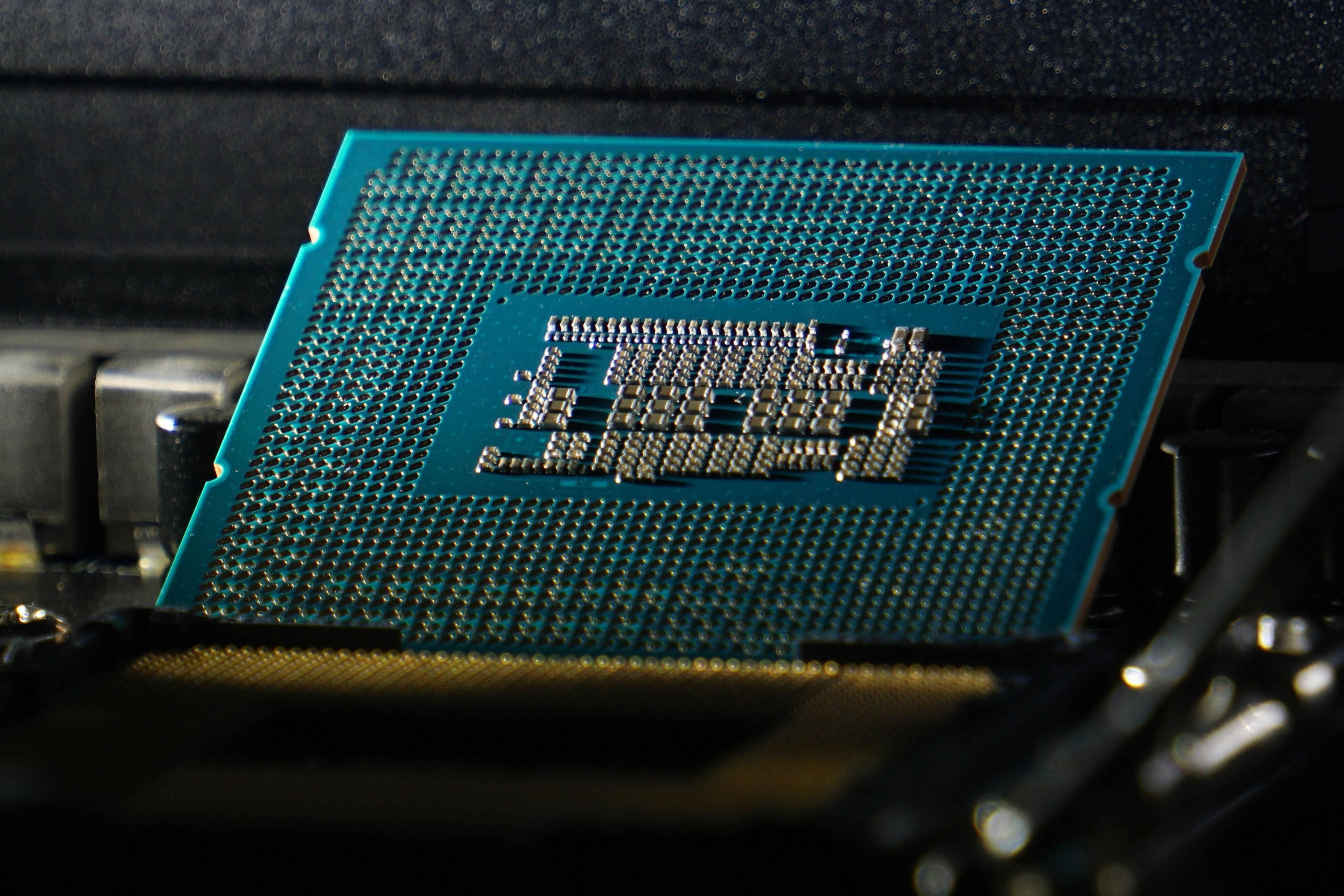
Recently we wrote about how Intel plans to step back from frequent socket changes for desktop CPUs, giving motherboards a longer useful “life” in the sense that they could be upgraded with newer processors. But this is not the only area where Intel, feeling pressure, is moving closer to AMD’s approach. Intel will also allow overclocking on cheaper boards and CPUs—something they have blocked until now, making it a “premium” privilege.
Just like with the topic of longer socket “lifespans,” Intel addressed this officially through their technical marketer Robert Hallock (who previously held the same role at AMD). According to him, more processors will be unlocked for overclocking and similar performance tuning in the future, and this capability will be available in lower price tiers—he literally said “it should not be a feature reserved only for those who pay the most for hardware.”
For now, this is only a vague outline of a strategy shift—Intel has not yet officially detailed what this broader (and cheaper) access to overclocking will look like. However, leaker Jaykihn, who has good access to Intel’s roadmaps and product plans, has spoken up instead.
What’s the current situation with overclocking?
For AMD processors, it has long been standard that CPUs are unlocked—you can adjust BCLK, multipliers, and other parameters used for overclocking. This does not mean overclocking is possible always—in this decade AMD has also started offering chipsets (A520, A620, B840) without overclocking support, and X3D processors tend to have overclocking disabled or limited, partly due to their sensitivity to damage from higher voltages. But overall, the norm is that CPUs are unlocked and motherboards allow OC; the opposite is an exception.
For Intel, the last two decades have been the opposite: the norm is that Intel CPUs cannot be overclocked, and the capability to utilise it is reserved only for specific models labeled “K” (or KS, KF when combined with other suffixes). And not only that — overclocking is also not standard on motherboards. Most chipsets do not support it (and this even applied to using XMP profiles in the past), and it is reserved only for boards with “Z” chipsets. These typically cost more than “normal” boards (with the chipset itself being sold to board makers at higher prices).
It is still not entirely clear how Intel will implement these overclocking changes in the next generation of processors (Nova Lake). According to a leaked draft of the lineup, there will still be distinct K‑series models with 125 W TDP.
But it is not impossible that the K designation could this time refer to expanded overclocking capabilities such as BCLK OC, while unlocked multipliers might be available even on mainstream models outside the K series. Alternatively, the “accessibility” idea could be achieved by simply lowering the prices of lower‑tier Core Ultra 5 and 7 K‑models.
Changes in chipsets: Cheaper boards will also allow overclocking
What will definitely change is the situation with chipsets, where this “democratization” or opening up of overclocking has already taken clearer shape. While today overclocking is allowed only on the most expensive chipsets (Z690, Z790, Z890), a previous leak revealed that with Nova Lake processors and the LGA 1954 desktop platform, there will be two overclocking chipsets: Z990 and Z970. Jaykihn has now explained why—this is apparently part of the broader shift toward openness.
It appears that the higher‑end OC chipset Z990 will take over the role of today’s Z790 and Z890—being basis for the more expensive, exclusive overclocking boards (we already know this chipset will provide all OC features including BCLK OC and the ability to split GPU lanes into ×8/×8).
The Z970 chipset will be positioned lower and, according to Jaykihn, will take over the cheaper segment of the market, including most mainstream boards that are currently built on chipsets like B760 or B860, which are not overclocking-enabled.

This does not necessarily mean the Z970 boards will be just as cheap as todays B860 and B760 ones (the general price levels may rise slightly with the newer platform), but overall, access to overclocking will expand into the part of the market currently occupied by “B”‑series boards. The Z970 chipset will have somewhat weaker capabilities—it will not provide GPU lane splitting or BCLK OC—but the essentials will be available: standard overclocking via unlocked multipliers, RAM overclocking, and likely various uncore overclocking and tweaking settings.
Conversely, the B960 chipset—which will also exist—will keep not supporting overclocking and will shift into the role of replacement for the lowest‑end chipsets (for example, H610 and H810). Nova Lake will not have an actual H910 chipset, and this seems to explain why: Low‑end boards will instead be based on the B960 chipset, which will move downward and take over this segment. In addition to cheap retail boards, B960 will also typically be used in OEM systems.
If you’re interested in how the individual chipsets will be equipped and how they will differ, you can find details in the article linked below:
Overclocking without (major) extra charges?
If price levels remain roughly similar, overclocking Intel processors would indeed become more accessible, because practically every builder or gamer would—after this shift—be building on a (hopefully cheaper than before) Z‑series chipset board. Ideally, unlocked multipliers would also be available on all CPUs, while “K models” would additionally offer extended features available only on Z990. But that remains to be seen.
Sources: PCGamesHardware, Jaykihn (1, 2, 3, 4)
English translation and edit by Jozef Dudáš
⠀



