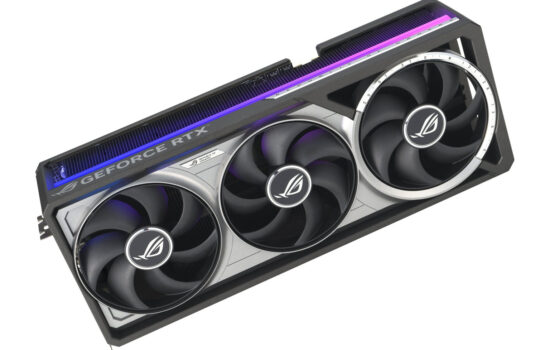
GeForce RTX 5070 Gaming OC 12G represents a mid-range model from Gigabyte’s RTX 5070 lineup. Thanks to its large, efficient cooler and dual BIOS with a silent mode, fan speeds hover around 1500 RPM under load, keeping the cooler quieter than most current cards. It also features prominent ARGB LED lighting and a sturdy metal anti-sag brace included in the accessories.
Fan behavior, noise levels
Virtually all graphics cards today share the feature of passive cooling under low loads, and this model is no exception.
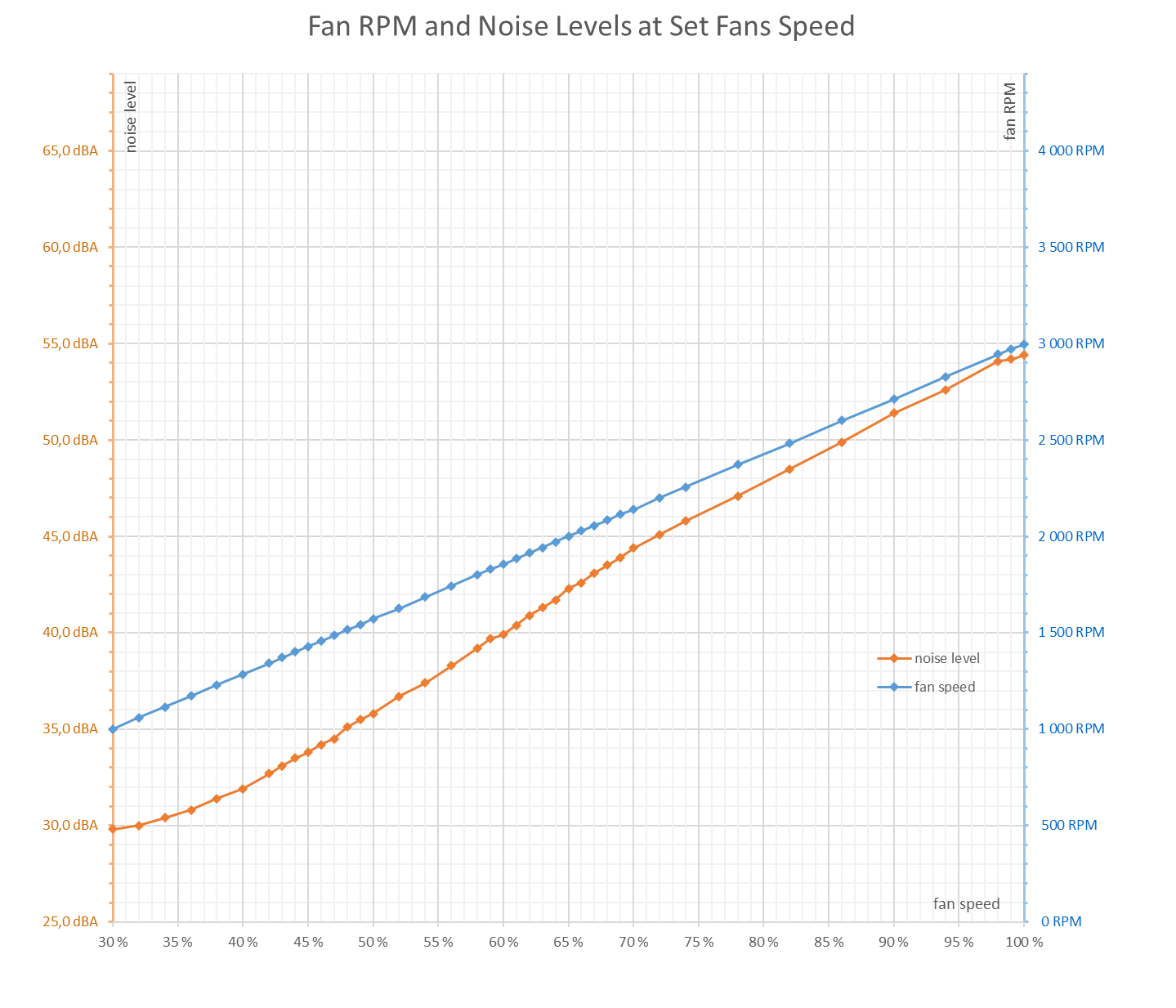
The minimum performance that can be manually set is 30%. The minimum fan speed is 1000 RPM, at which point the sound meter reads 29.8 dBA – below the lower limit of the measuring range.
In Silent mode, once the card heats up, the fans ramp up to 1430–1500 RPM, producing a noise level of 33.8–34.8 dBA. This is slightly louder than the previously tested TUF GeForce RTX 5070 from Asus, which ran at 30–31 dBA in silent mode, but the noise level remains very low and will likely only be noticeable in well-soundproofed systems.
In Performance mode, fan speeds increased to around 1860–1945 RPM. The resulting noise level ranged between 40 and 41.3 dBA, which is around average for graphics cards.
The fans can reach speeds up to 3000 RPM, giving the cooler decent performance headroom. However, at full speed, where the noise level hits 54.4 dBA, it’s unlikely anyone would run the card at that level for extended periods.
Cyberpunk 2077, RT Medium, 3840 × 2160 (Performance)
The first set of measurements comes from the Cyberpunk 2077 benchmark, set to RT Medium at 3840 × 2160 resolution. This configuration fully loads the GPU. It consists of eight back-to-back benchmark runs.
The graph shows the last run, from which the average value for a warmed-up card is calculated.

In Performance mode, the GPU clock speeds ranged between 2782 and 2835 MHz, averaging 2812 MHz.
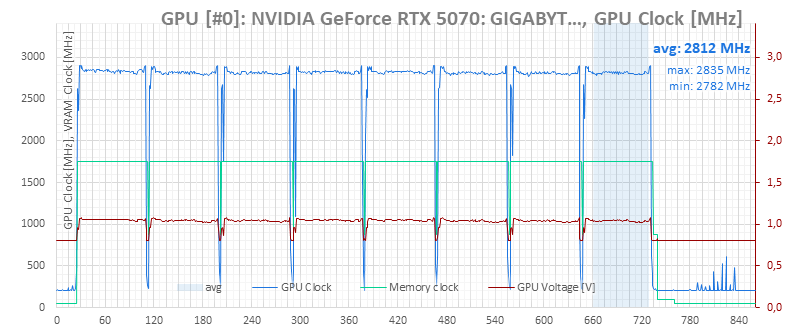
According to power monitoring (light green data line), the card maintained its 250W power limit under load. Based on other indicators, GPU Boost should be voltage-limited, which is not entirely consistent with the chart.
The dark color in the graph shows total system power consumption measured with a UT71E multimeter. The system’s overall power consumption was significantly lower than what we see with high-end models, primarily due to the GPU’s lower power usage. Additionally, the CPU was not as heavily taxed due to the less demanding GPU.

Average GPU temperatures remained below 70 °C during testing, with memory temperatures at similar levels. Hotspot readings are not displayed in monitoring for this new generation of GeForce cards.

At fan speeds of around 1860 RPM, the noise level is average.


⠀