



Established and well-known producers in the field are certainly familiar to our readers. In recent years, several new companies have appeared on the scene that may not yet be widely recognized. This series focuses precisely on such relatively new players. Although these brands have been on the market for a short time, their ambitions, fresh ideas, and technical solutions should not be underestimated. The fifth is best described as ferocious.
Ferociousness and efficiency as a priority
The predatory insects of the genus Ocypus rank among fast and efficient hunters that do not waste energy on unnecessary movement. In English, this beetle is referred to as the Devil’s coach horse, or Devil’s steed—essentially the devil’s horse or the horse of the devil’s carriage. The name dates back to the Middle Ages, when this predatory beetle was associated with the devil precisely because of its hunting traits.

The same name has been adopted by a young hardware brand aiming to establish itself in a similar fashion—through a fast market entry, a broad portfolio, and a focus on practical performance. Marketing metaphors aside, what ultimately matters is how the products perform in real-world use. And that can already be partially assessed.
Brand origins
Ocypus was founded in 2023 as a new brand focused on cooling components, cases, and power supplies. From the outset, it was clear this was not a single-product project but an ambition to enter multiple segments simultaneously. Such an approach is more typical of companies with existing development or manufacturing backing than of traditional startups.
The first major public showcase took place at Computex, where the brand exhibited finished products. Coverage by media outlets such as TechPowerUp noted that Ocypus did not present mere concepts, but complete product lines ready for market. At its very first Computex 2024 appearance, the company introduced a broad portfolio including liquid and air coolers, cases, and fans in two color variants, both with ARGB lighting and without it. At subsequent trade shows, the company expanded its lineup, particularly with fully featured displays integrated into its liquid coolers as well as computer power supplies.
Liquid coolers—Sigma and Iota series
The Sigma AIO coolers sit at the top of the range and are also among the brand’s most extensively tested products. At the same time, they largely define its reputation. The Sigma L36 Pro model reviewed by HWBusters demonstrated above-average performance, but on the other hand a weaker price-to-performance ratio. Testing at TechPowerUp confirmed a similar picture. While performance remains one of its strengths, reviewers also pointed out certain negatives and minor shortcomings related to build details or software, as well as a less favorable price-to-performance balance. On the other hand, the inclusion of a magnetically attachable 3.5-inch IPS display with a resolution of 640 × 480 pixels partly explains the higher price tag.
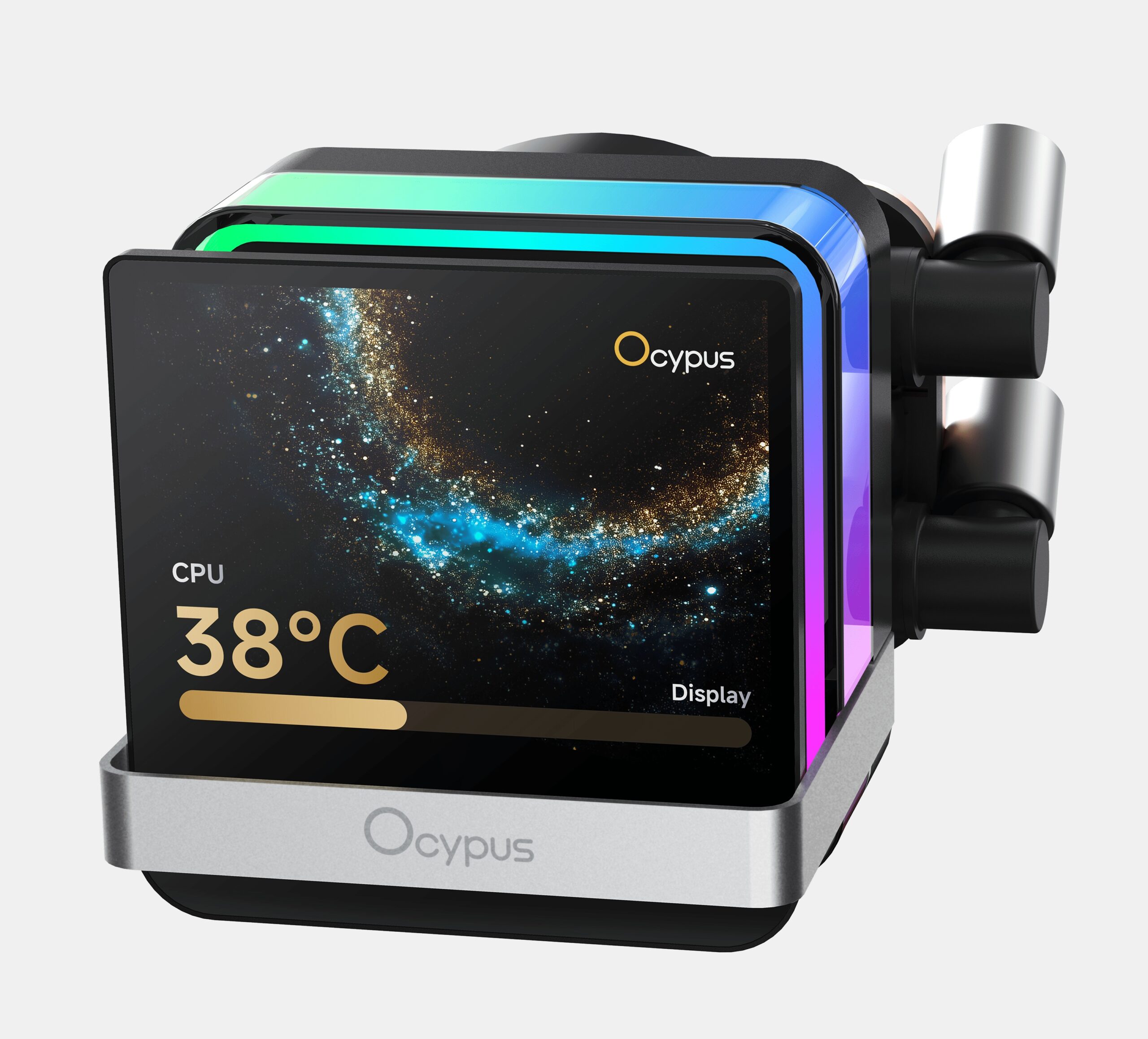
By contrast, the Iota series offers a simpler display and slightly lower performance, but at a more accessible price point. In this segment, however, it must compete against other brands that sometimes outperform it both technically and in pricing. For users who value aesthetics, it adds only a simple segmented display, which is unlikely to impress. So while Sigma delivers strong results despite its higher price, the Iota series, despite being more affordable, currently offers little that stands out against the competition. Whether build quality and failure rates will surpass competitors in this price bracket remains to be seen.
Air coolers—Iota and Delta series
Air coolers form the second pillar of the portfolio. Models designated A62 feature dual-tower designs, while A40 models belong to the single-tower category. The Iota A62 Digital model drew attention with its combination of a classic dual-tower heatsink and an integrated display. Tom’s Hardware’s review highlighted performance competitive with established brands, good acoustics, and robust construction. HWBusters noted, however, that the higher performance was primarily associated with the Intel platform, while performance on AMD did not particularly impress. The result is a cooler that does not bring a revolution but represents a very solid first attempt by the brand in the air-cooling segment.

Delta models, unlike the Iota series, do not offer a segmented display atop the towers. In addition, they feature different fans which, according to specifications, should deliver slightly weaker figures. Recently, however, the Delta A62 EX Digital cooler was added to the lineup and immediately stood out with its visual presentation. Judge for yourself. It has not yet undergone extensive relevant testing, but its specifications and build quality suggest it is targeting a higher tier.
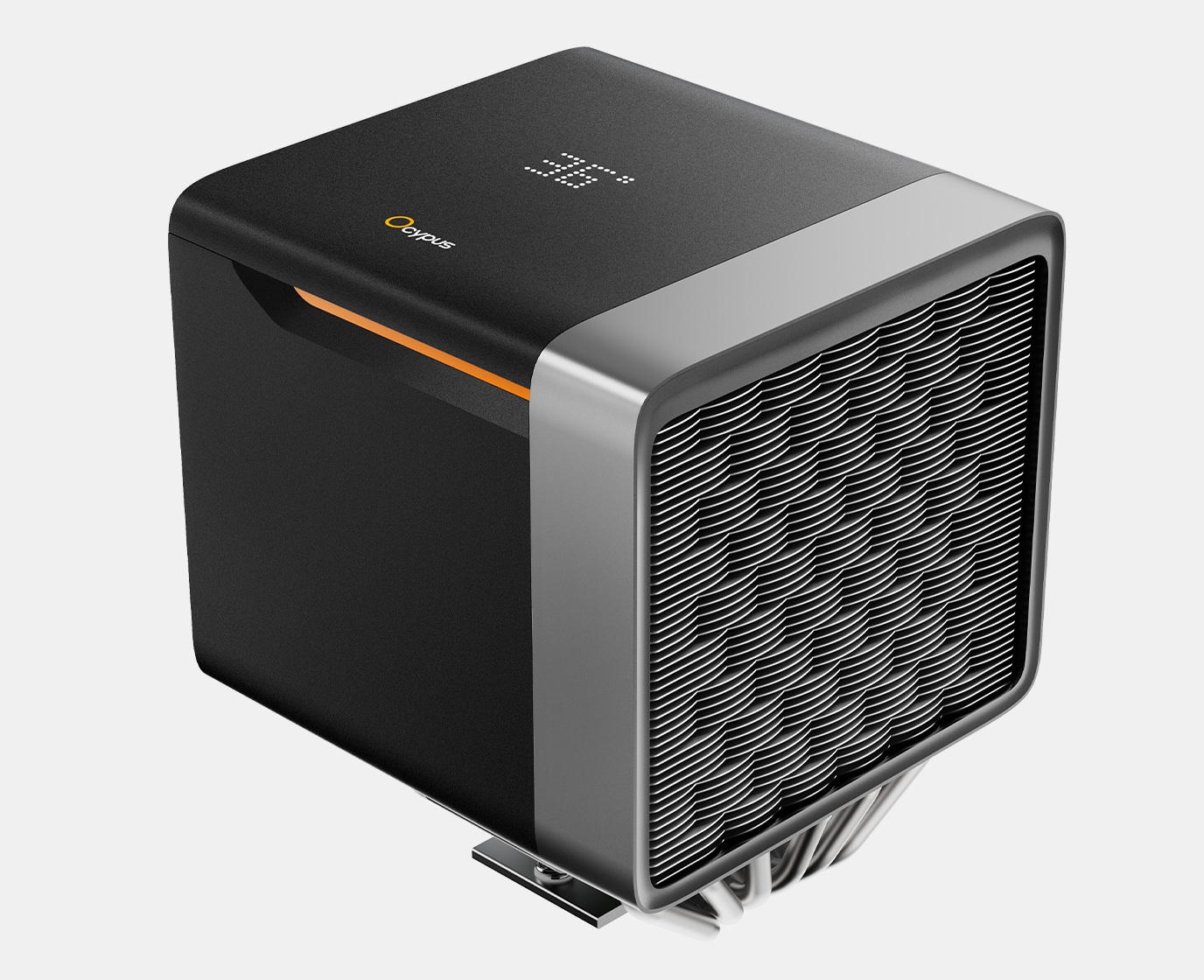
Despite featuring two towers and two fans, it offers excellent compatibility and should not interfere with memory modules. We have seen a similar solution before from DeepCool, with Assassin series coolers of comparable concept having already passed our own testing (the original version and the version with a vapor chamber). On the downside, the cooler stands 164 mm tall, meaning it may not fit into smaller cases or those with limited clearance for air coolers. Likewise, interference with the VRM heatsink is possible and should be verified prior to purchase.
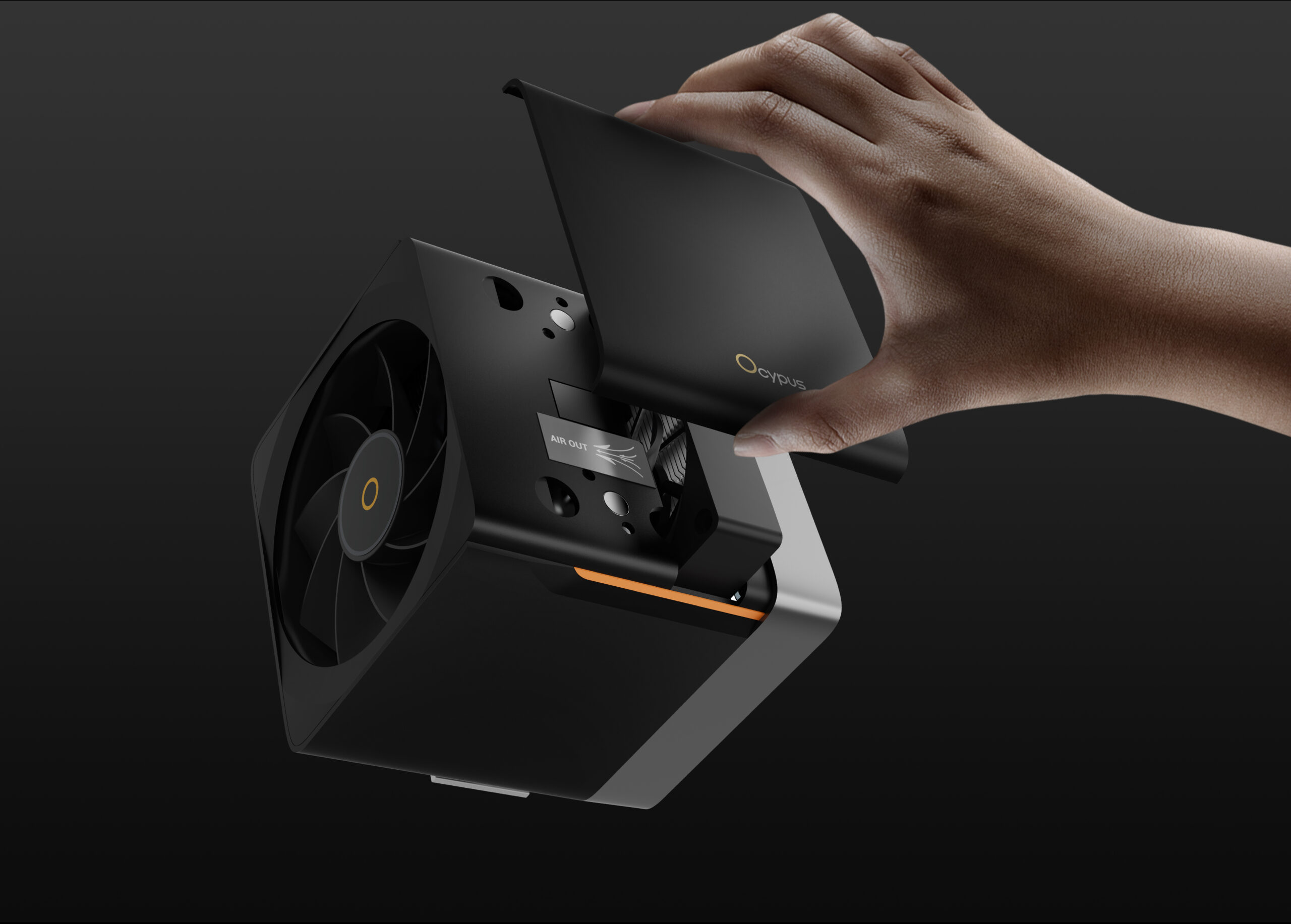
In addition to the Iota and Delta series, the portfolio also includes Gamma and Beta. These focus on cases with reduced clearance for air coolers, making them suitable for smaller enclosures, HTPCs, or other SFF builds.
Cases
The cases in Ocypus’ portfolio follow the same Greek alphabet naming convention used across its product range. In this instance, the series are Iota, Delta, and Gamma. Here as well, the Iota series is intended to play the leading role.
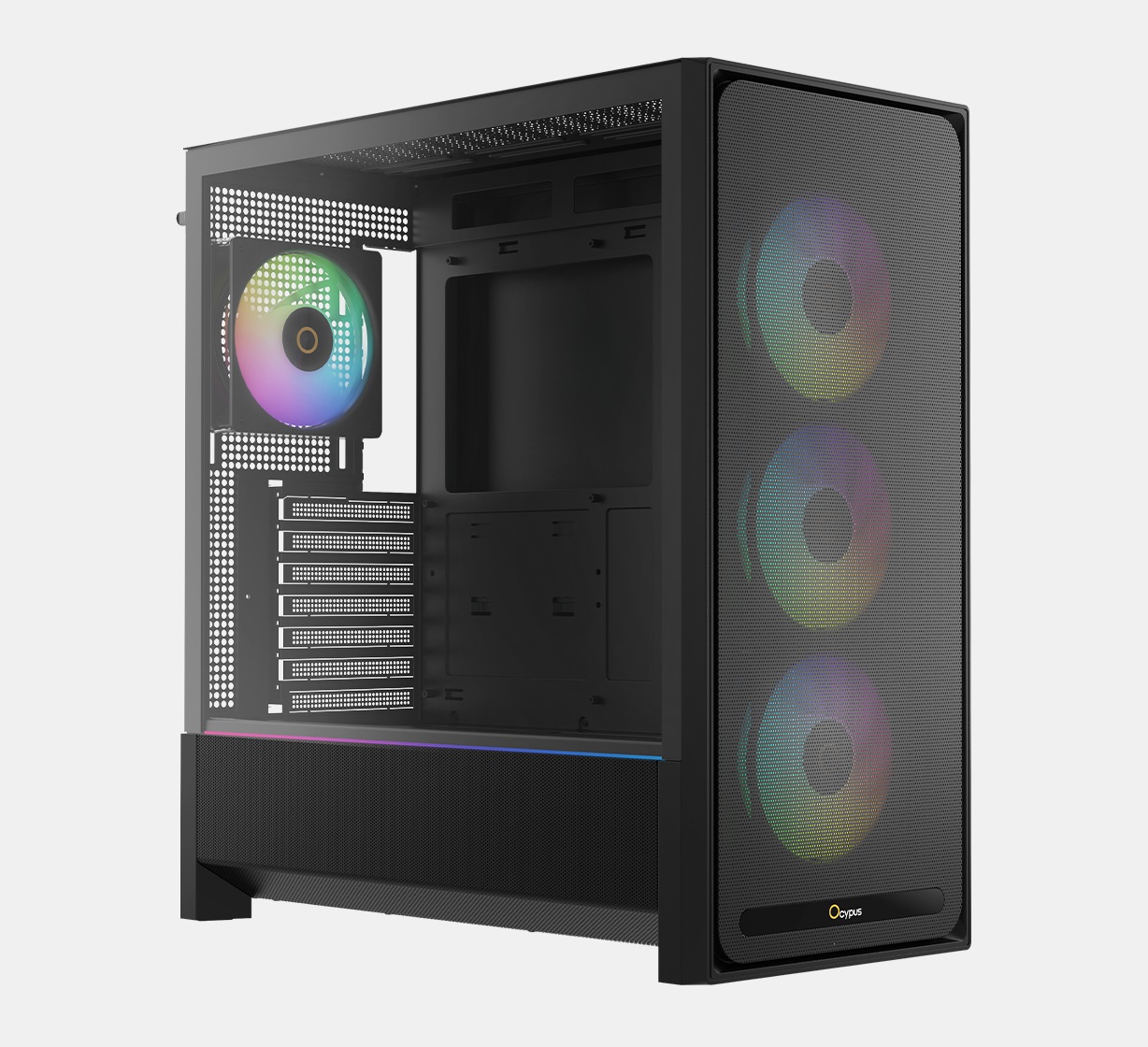
The Iota C70 model demonstrates that Ocypus can deliver a modern chassis. Testing at TechPowerUp and Tom’s Hardware agreed that it is a well-designed mid-tower with relatively solid material quality and BTF support. However, thermal test results place it in the average tier, it offers less cable management space, and it does not avoid certain shortcomings such as dust filter access or the absence of rubber/silicone grommets. It is clear, however, that this fish-tank style of case prioritizes aesthetics over optimal airflow—although even here, grommets would have helped.

On the other hand, the Delta series case, specifically the Delta C70 ARGB, looks very promising in terms of airflow. However, its positioning in a lower class is reflected in its construction. The most striking detail is the reduced panel thickness—listed at just 0.5 mm. Whether such thickness can provide sufficient structural rigidity is questionable.
Fans
Although Ocypus fans have not yet received the same media attention as its coolers, they form an important foundation of the portfolio. An interesting—though not unique—and, in the event of partial failure, rather impractical approach is the triple-fan block Sigma F36 ARGB. In any case, the breadth of the fan lineup deserves recognition. In addition to the aforementioned triple block, the company offers several fan types, each available in two color variants—white and black. It includes reverse-flow fans, ARGB models, as well as non-illuminated variants. Relevant testing in this area will have to wait. Interestingly, within its air coolers the company also uses different fan sizes, namely the more standard 92 mm as well as a non-standard 100 mm format. However, the standalone retail fan lineup includes only the standard 120 mm format.
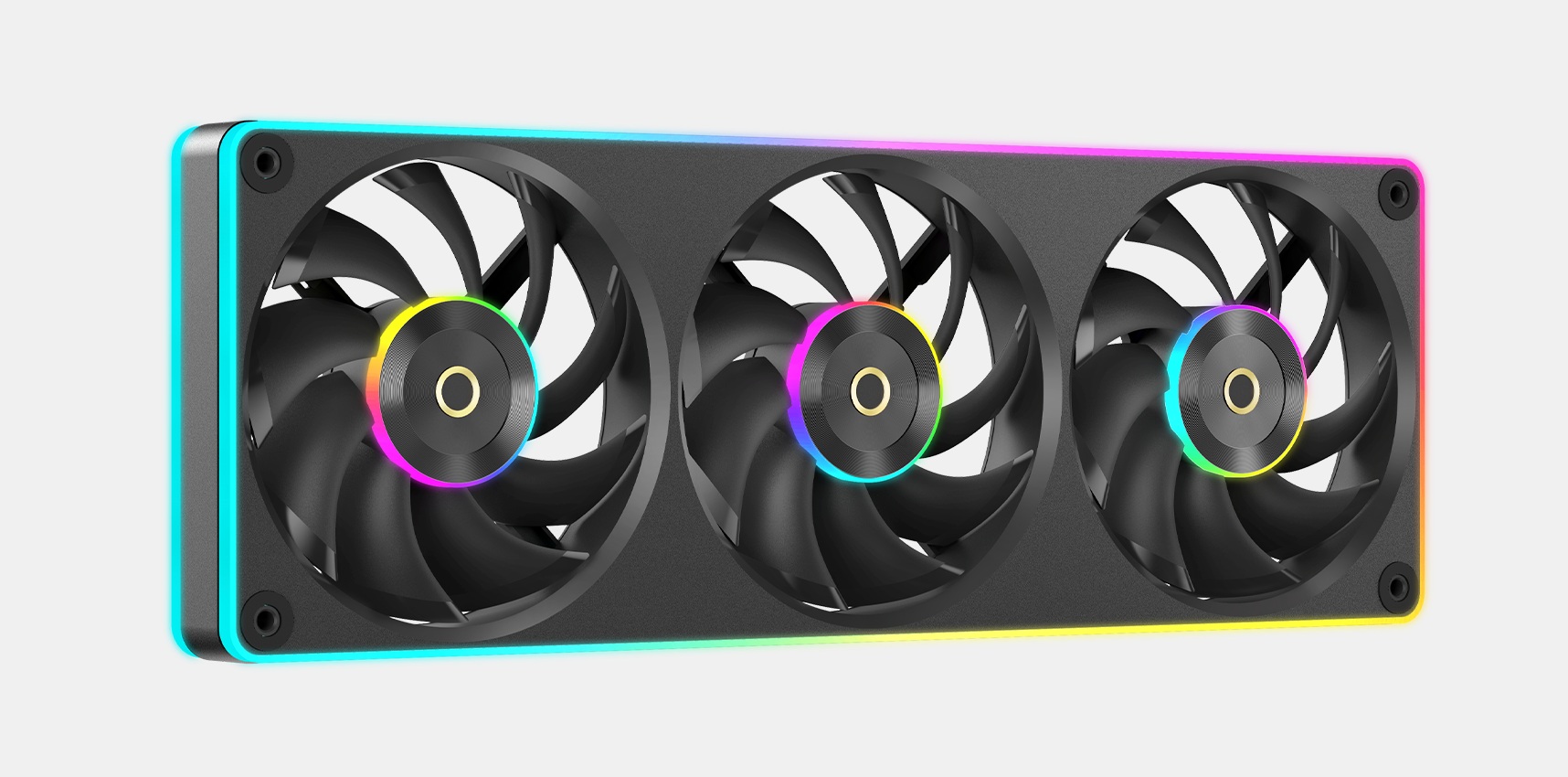
Beyond the core categories, the brand also offers power supplies and supplementary components such as thermal pastes, PWM/ARGB fan splitters, and an internal USB hub. The company’s power supplies have not yet undergone a significant number of independent tests, but their existence signals an effort to build a complete component ecosystem similar to that of larger manufacturers.
A broad portfolio right from the start
Ocypus is the kind of brand that does not attract attention with extravagant design or controversial concepts. Its strategy is far more pragmatic—to launch a full portfolio as quickly as possible and compete on performance. Reviews to date suggest this approach is partially succeeding. Some products achieve excellent results, while others stand out for their design. Competitive performance and a minimum of major flaws are good news for a newcomer. The foundation appears to be laid correctly. And if the manufacturer can continue building on this base, an inconspicuous newcomer may quickly become a stable market player whose products increasingly face well-known rivals in comparative testing.
Next time, we will look at a company whose products have already passed through our own testing during their short existence—but whose omission from this series might anger the Norse gods.
English translation and edit by Jozef Dudáš


Looking at the Delta A62 I think two things about these cube coolers: One, why do none of them use a standard form factor fan? I am not paying that sort of money for something that will be obnoxious if a fan gives up, and two, I’m surprised no one’s tried a little cleverness with ARGB, such as an ARGB fan or lightsouce that shines out through the fins, or some light illuminated lines on the cube itself.
yes, I also don’t like proprietary fan solutions on such cube coolers. 😉
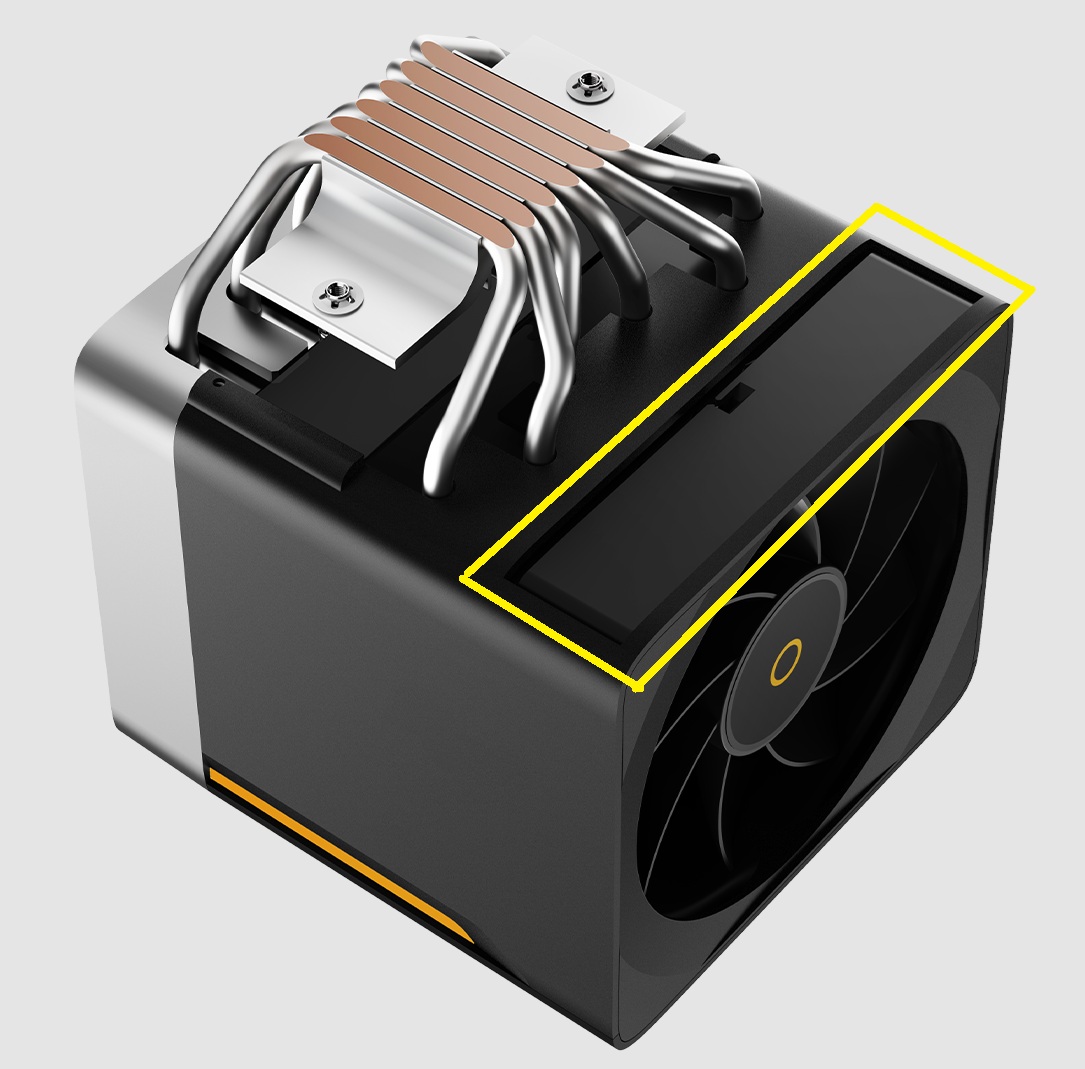
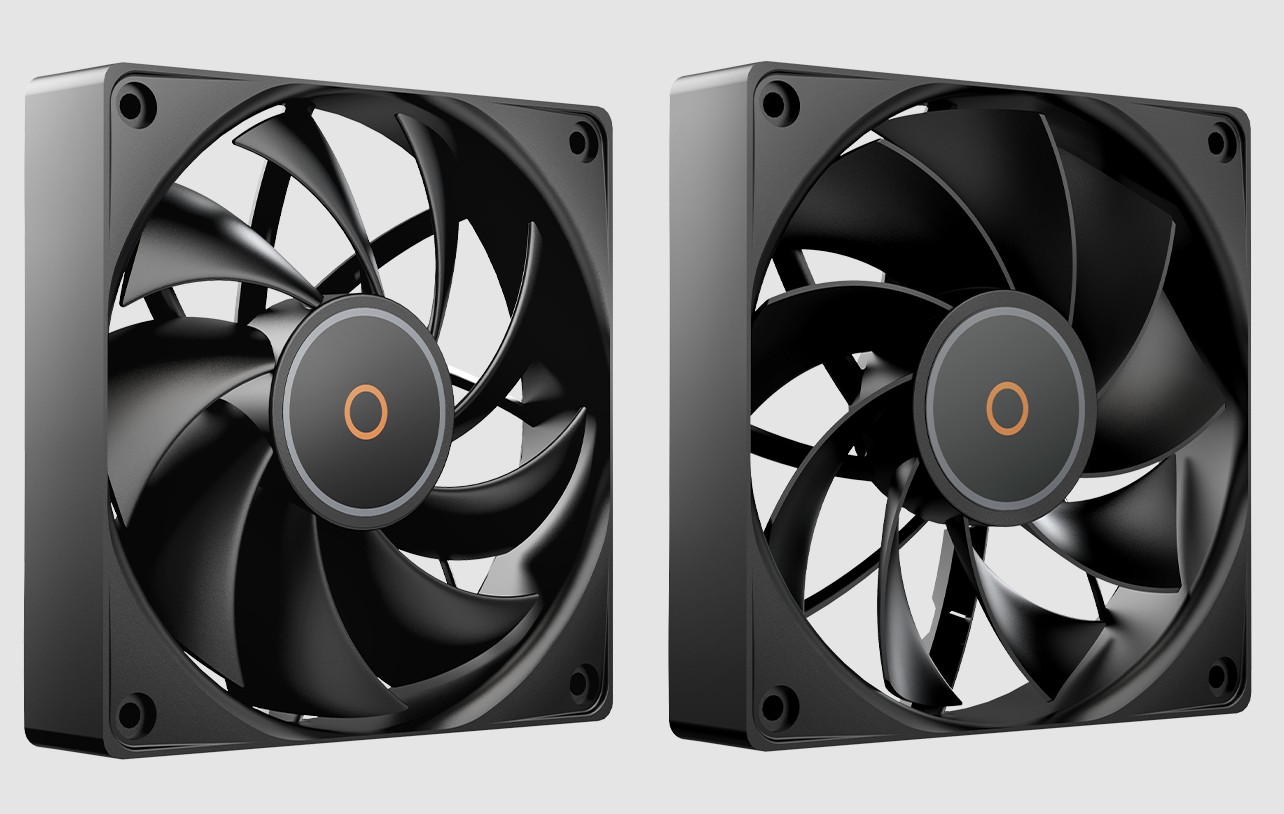
But unlike DeepCool (Assassin), BeQuiete! (Dark Rock Elite) and CM (MA824), the Ocypus Delta A62EX looks like relatively standard fans.
More can be seen in the EnosTech review.
Interestingly, they are labeled as Delta F12, but have a different number of blades than the fans they sell as Delta F12.
I would also ask them directly, but they haven’t responded to our call for communication yet. 🙁
I’m not sure, but I think the FSP MP9 might be sporting such a setup too.
Yes, it seems to be a similar design…We’ll see when it’s released. 😉
But from this it looks like it’ll use fans with beveled corners
https://m.sohu.com/a/898111544_362225/?pvid=000115_3w_a
Which they’ll be selling separately, if talk for the MP7P having allowances is anything to go by – and beveled 140mm is a standard form factor, if a less common one, so even if I couldn’t get the FSP, I might be able to find a replacement without 3D printing nonsense or faffing with a Dremel.