


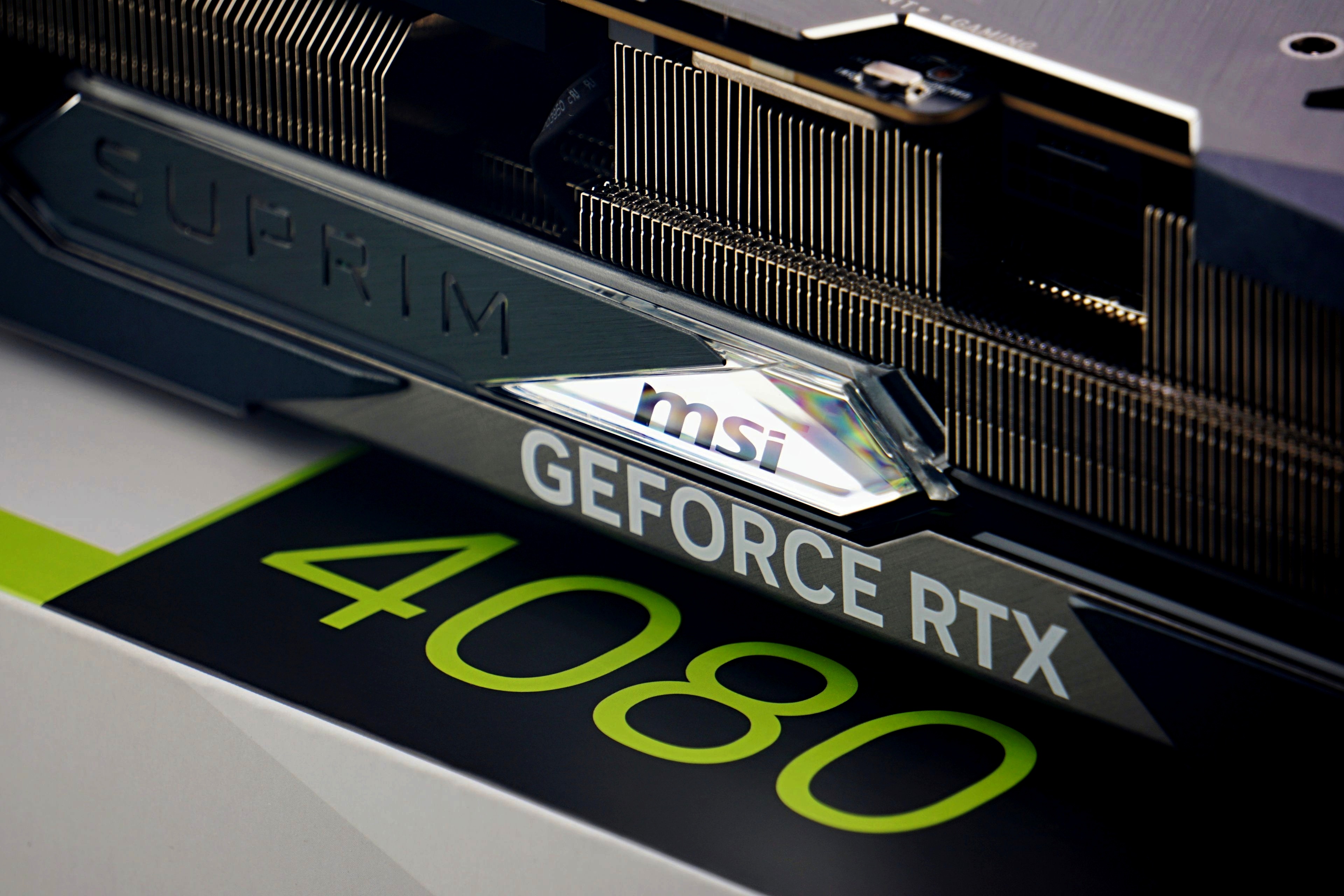
Nvidia finally released DLSS 5 last week, which you could read about here (and we covered the impact on performance and power draw here). There were also some unpleasant news: when Nvidia announced the first game launch (the release of NBA2K27), the company stated DLSS 5 support would only be available on GeForce RTX 5000 cards, not on older generations. Now, however, there has been a change of course.
When Nvidia announced that DLSS 5 would be released in the NBA2K27 game (the announcement came on September 1), it still stated that the technology would only be supported by GeForce RTX 5000 graphics cards, with no mention of any other GPUs. However, by the actual release on last Friday (alongside the start of NBA2K27 distribution), the situation had changed. Nvidia informed the media that it is in fact preparing to bring DLSS 5 to GeForce RTX 4000 graphics cards with the Ada Lovelace architecture—i.e. models from 2022 and 2023 (or 2024 in the case of the Super models).
However, this support will not arrive immediately. Nvidia says that for now it is focusing only on supporting GeForce RTX 50 series and improving DLSS 5 performance on these graphics cards. Only after that (once the performance is “more fully tuned”) will it reportedly turn to enabling the technology on GeForce RTX 4000 graphics cards as well. Nvidia has not yet given any approximate date or timeframe for when official support might arrive for GeForce RTX 4000 owners.
This change in “messaging” arrived relatively quickly, so it is possible that it is the result of a recent change in plans. The previous statement did leave room for compatibility to be expanded, since it did not explicitly say that the technology would remain exclusive to Blackwell-generation graphics cards forever. That Nvidia was leaving room for a later change of position could pretty much be assumed, but a similar policy changes are usually only announced after a longer period of time (see, for example, the over one-year long span of time it took AMD to confirm the arrival of FSR 4.1 for Radeon RX 7000 and 6000 graphics cards). This could suggest that Nvidia had not yet made up its mind about this step on last week’s Tuesday.

One possible reason for the pivot could be that shortly after the DLSS 5 libraries leaked, the modding community fairly quickly figured out how to add the filter to games unofficially, and they also managed to add compatibility with GeForce RTX 4000 graphics cards. Apparently, the AI model used worked immediately without any significant changes, and all that was needed was to carry over the code for GeForce RTX 4000 from other versions of DLSS. The adaptation appears to have been very easy, leaving Nvidia with few options for claiming that enabling DLSS 5 on GeForce RTX 4000 graphics cards is not a trivial task and pointing to technological differences between the GPU architectures. In this context, it would give stronger and stronger impression that Nvidia merely does not want to give the feature to older cards for commercial reasons, rather than there being a technical reason for it.

RTX 3000 and RTX 2000 Will Have Problems
The situation is different with GeForce RTX 3000 and RTX 2000 graphics cards. With these, the DLSS 5 support cannot be enabled so easily just using Nvidia’s existing code. The technology uses an AI model with FP8 parameters and older GPU architectures than Ada Lovelace and Blackwell (RTX 4000 and 5000) do not support FP8 compute instructions.
Modders have managed to get DLSS 5 running in Ampere and Turing as well, but it required more substantial modifications—the FP8 calculations have to be emulated on these older GPUs using FP16 instructions that have twice the precision (and therefore lower performance). And this means a significant increase in the performance hit that DLSS 5 inflicts, which is already heavy even on newer GPUs with FP8 support. It is therefore possible that Nvidia will not proceed with porting DLSS 5 to GeForce RTX 3000 and GeForce RTX 2000 graphics cards, at least unless the performance requirements of DLSS 5 can be significantly reduced in the future.
Source: VideoCardz
English translation and edit by Jozef Dudáš
⠀


