


Fans of alternative CPUs now have a new thing to talk about besides the mainstream offerings from Intel, AMD and the increasingly established Arm. Five years after Power10, a new generation is here: IBM Power11. Though it has to be said it’s focusing on enterprise systems and users, and IBM is no longer targeting mass-market servers or workstations, so this hardware is unlikely to end up in the hands of regular users.
IBM formally unveiled the Power11 processor generation and servers built on it this month. It’s been nearly five years since the Power10 platform was introduced at Hot Chips in 2020, and just under four years since Power10 servers actually launched in September 2021. This time, however, it’s not just a paper launch—systems with Power11 processors, manufactured directly by IBM, are expected to be available globally as early as July 25.
Only a sixteen-core, but with 128 threads
Official details about the processors themselves remain limited, but we found some more. Previous generations, Power8 and Power9, featured cores with either SMT4 (four threads) or SMT8 (eight threads), but in practice SMT8 was achieved by pairing two cores—so the physical core count was halved while keeping the thread count the same. With Power11, only SMT8 has been mentioned so far, suggesting this may be the sole configuration. Though that’s still not entirely clear.
A single Power11 processor offers, at most, 128 threads—which equates to 16 cores with SMT8. On paper, this puts it in the same league as 64-core (128 threads with SMT2) Intel Xeon or AMD Epyc CPUs, though it remains to be seen whether Power11’s core performance is competitive. Each core has 2MB of dedicated L2 cache, and all sixteen cores share up to 128MB of L3 cache—so 8MB per core. The L3 cache is split into two 64MB blocks, but whether this is presented as a unified or segmented cache to the processor cores isn’t yet known. Based on the published die images and diagrams, the silicon appears to feature exactly 16 cores on a single chip.

A dual-chip module is also available, supporting up to 32 cores—or more precisely, 30. The processor includes spare cores (two per dual-chip module, it seems) to enhance reliability. If a core is found faulty during operation in the field, it’s deactivated and replaced on-the-fly by a spare, with running processes automatically migrated—no shutdown required. However, this means the spares are subtracted from the total shipped core count, so you can’t have all 16 cores on the die active and still retain redundancy—unless, of course, there are physically more cores on the chip, which remains unconfirmed.

The cores reportedly run at 3.8–4.4 GHz, compared to 3.75–4.15 GHz in the Power10. IBM claims the new design offers up to 3× higher per-core performance versus Power9, 2× higher per-thread performance, 2× greater SIMD throughput per processor, and 4× the performance in AI matrix operations. It’s also equipped with four times more MMU units and cryptographic engines. However, all of these gains are benchmarked against the older Power9 (2017), so the improvements may be less striking in current context.
The processor supports DDR5 memory, but not in standard DIMM form. Power11 appears to continue using the OMI (Open Memory Interface) architecture from Power10, where the CPU connects via an abstracted interface to controller chips that manage the actual memory technology—allowing, in theory, compatibility with other DRAM types by swapping controllers.
Power11 utilizes special DDR5-4800 modules labeled DDIMM via the OMI bus. These are likely only available through IBM and come at a premium compared to off-the-shelf memory. OMI bandwidth is reportedly doubled from Power10. IBM documentation also suggests Power10 customers can upgrade while retaining existing DDR4 memory—implying backward compatibility of the CPU with Power10 boards. Additional connectivity includes a proprietary PowerAXON interface and PCI Express 5.0. PCIe 6.0 is not supported.

Still on the 7nm process
Power11 packs 30 billion transistors into a 654 mm² die, built on Samsung’s 7nm EUV process—which is notable, since it’s the same node as what was used for Power10. As a result, performance and efficiency gains must come from architectural improvements only, not from manufacturing advances. The chips will come in both single-die and dual-die versions.
Compared to Power10, IBM claims a power-efficiency improvement of about 20% (or 25–28% using a newly introduced high-efficiency mode). That’s not a huge leap from a new generation coming after four years. The high-efficiency mode involves undervolting and underclocking the CPU, trading roughly 10% of performance for up to 30% less power draw.
Meanwhile, competitors like Intel, AMD, and Arm vendors are already benefiting from TSMC’s more advanced 3nm processes—and next year, for instance, Epyc 9006 “Venice” is expected to debut on 2nm. The performance-per-watt gains over the past four years for those competitors have been substantial by comparison.
Power11 servers
IBM’s new systems using these processors include the IBM Power E1180, a 4-socket design scalable to 16 sockets per rack. A fully populated system supports up to 256 cores (presumably from 16 single-chip CPUs) and 2048 threads. It can be equipped with up to 256 DDIMM modules for a total of 64 TB of DDR5 memory (the modules not being standard, as mentioned above).
One tier down is the IBM Power E1150, a standalone 4-socket server supporting up to 120 cores (via 16-, 24-, or 30-core dual-die modules). Four 30-core dual-die CPUs deliver up to 960 threads. It supports up to 64 DDIMM modules for 16 TB RAM and uses a 2300W PSU rated 80+ Titanium.
The entry-level systems are the IBM Power S1124 (a 4U dual-socket server) and the IBM Power S1122 (a 2U edge server). Both top out at 60 cores when using 30-core dual-chip modules. The 2U version has 16 memory slots (up to 4 TB), while the 4U has 32 (up to 8 TB).

These servers support Linux, AIX, and IBM i operating system. One of the areas IBM is pitching them especially for is SAP HANA and other transactional database workloads.
The standout feature IBM emphasizes is reliability. Power11-based systems reportedly achieve 99.9999% uptime—said to be the most stable and resilient in Power/PowerPC platform history. Planned downtime is eliminated thanks to automatic OS and software patching and live migration of running apps, enabling uninterrupted operation.
IBM’s Power Cyber Vault security technology offers ransomware protection via snapshots and immutable software, being capable of detecting attacks within a minute and responding autonomously according to IBM. Power11 also includes support for quantum-safe cryptography.

AI readiness is another focus, with upcoming support for IBM’s in-house Spyre accelerators (expected to be available in Q4 2025). Whether these will rival Nvidia GPUs and other AI accelerators remains to be seen.
No return to the mainstream expected—Power11 is for legacy users
Interestingly, IBM’s own marketing makes it clear that Power is no longer a growth platform. Power11 is designed not to expand market share, but to serve a committed base of existing customers. That doesn’t bode well for long-term ecosystem vitality. On the flip side, these customers are clearly profitable—or locked-in tightly enough to sustain the platform.
As recently as in the Power9 generation, IBM was still hoping to expand the platform and capture new markets, including a share of the traditional server segment. For this reason, alongside the classic “big iron” Power9 versions for so-called scale-up deployments, there was also a budget-friendly “Sforza” platform designed for scale-out use—similar to x86 servers (for example, it used standard DIMM modules for memory instead of IBM’s typical system with buffered OMI chips and proprietary modules). The same goal also motivated a partial opening of the platform through the OpenPower organization, though this failed to attract broader interest from other companies.
New Talos boards with Power11 unlikely
The attempt to push Power into the mainstream via scale-out server products clearly didn’t gain traction—ultimately, the Power platform didn’t offer enough to set itself apart from x86 and Arm-based servers (or perhaps to even set itself as a viable alternative). Among the internet public, there was notable buzz around the Talos II and Blackbird “open-source” systems offered by Raptor Computing Systems, which promoted the full transparency of their firmware (often accompanied by a fair amount of “FUD” warning of the supposedly serious dangers of using a conventional, closed-platform PC with an Intel or AMD CPU).
These boards and workstations, however, were based solely on the older IBM Power9 platform—the scale-out Sforza design served as their foundation. They never transitioned to Power10, due to the fact that its memory and PCIe controllers require closed-source binary firmware. The company announced plans for an alternative using S1 processor announced to be in preparation by a company called Solid Silicon, which was perhaps supposed to be a modified Power10 processor with added open-source memory controller.
But whether that will come to fruition remains unclear two years after said announcement. Raptor Computing Systems hasn’t shared any updates since, and Solid Silicon has removed all mention of the S1 processor from the company’s website this year—which could be a sign that the project may have been quietly shelved. Raptor CS has also not responded in any way to the Power11 launch so far, making it unlikely we’ll see Talos workstations continue with this new CPU generation. IBM itself has given no indication that the new CPUs would meet the strict criteria of the libre hardware movement.
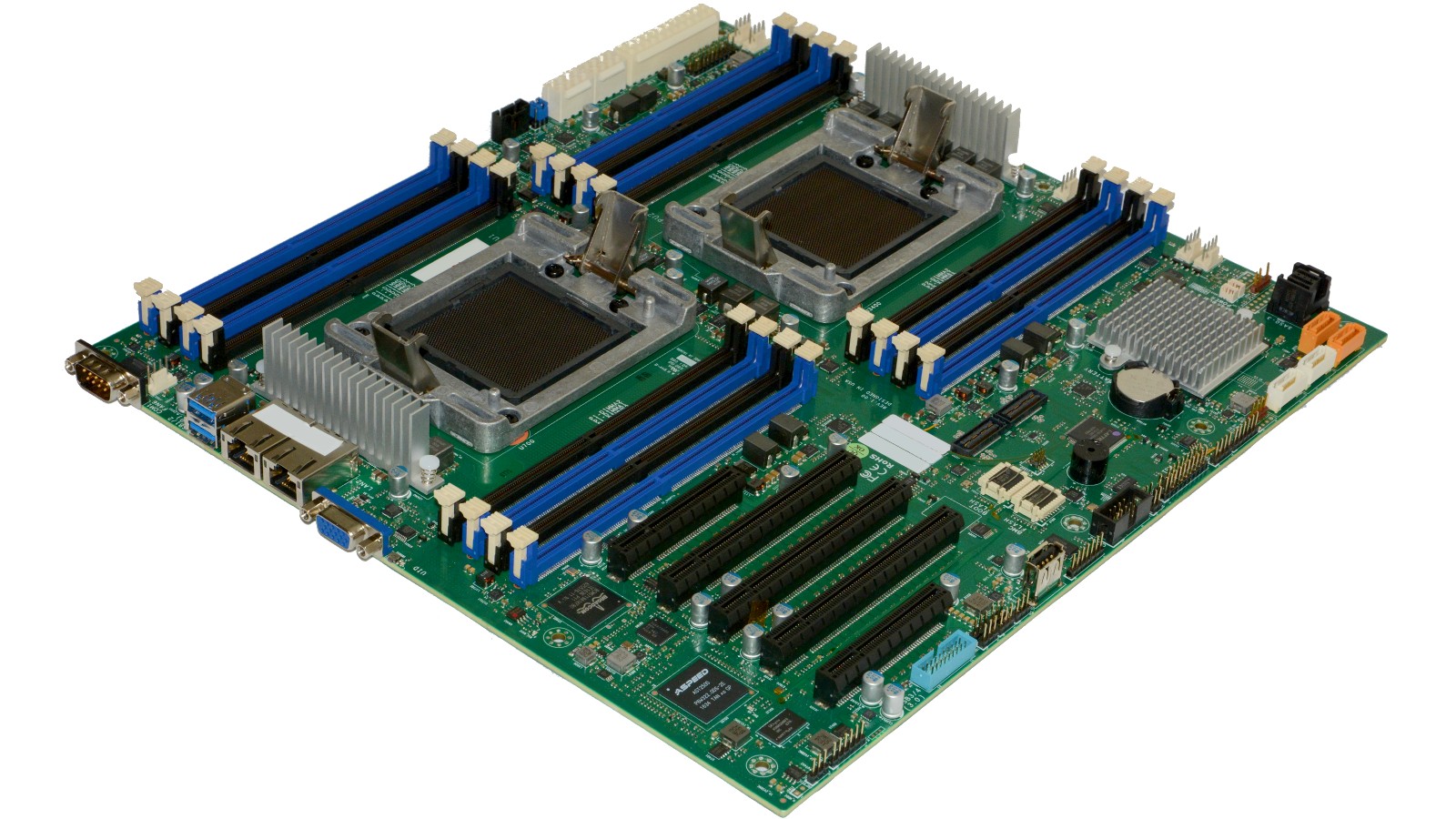
Sales of these open-source–focused workstations and servers (which represent low-end market from IBM’s perspective—though still being relatively expensive for consumer or SOHO users) were likely never too significant and in any case, for Power to make a broader impact in the industry, it was too little too late. In hindsight, the result was probably to be expected. A breakout success in the general-purpose server market was always unlikely, especially considering that all other competitors—struggling Intel included—had greater momentum at the time. They can release new generations more frequently than once every four years, and the intense competition leads to bigger leaps between generations. With Power10 and now Power11, IBM seems to have abandoned its attempts to expand the Power ecosystem into the mainstream. The new generation is clearly focused on scale-up solutions.
The line continues—Power12 is in development
The existing clients IBM is focusing on include banks, insurance companies, healthcare, and government contracts. These sectors involve relatively small numbers of systems, but at high prices—and likely with costly support and service packages (very much in the spirit of “if you have to ask about the price, you’re not the intended customer”). That’s probably the reason the IBM platform continues to live on despite its marginal presence in the mainstream server market. It’s a situation quite analogous to IBM’s mainframes.
The question is whether the Power platform, like mainframes, can continue down this niche path with a very small number of customers—but ones in mission-critical and highly lucrative sectors—and thus survive for decades to come. In theory, IBM could discontinue Power and unify its customer base on the mainframe platform in the future instead, or the two processor and system platforms might gradually merge into one over time.
For now, it’s safe to say that just as there’s no expectation of Power processors returning to “normal” markets, there’s also no clear signal that IBM plans to exit the business of building its own CPUs and hardware anytime soon. The company has confirmed it’s planning at least one more generation—Power12 is already reportedly in development. But from the perspective of an enthusiast into alternative CPUs, Power12 will probably remain what Power11 appears to be: a technological curiosity you won’t ever get your hands on.
Sources: IBM (1, 2, 3), Talospace, Phoronix (fórum)
English translation and edit by Jozef Dudáš
⠀


