Building water cooling loops for PC is fun and the results are almost always attractive. Today, however, I would like to focus on water loop maintenance and also on problems if you neglect maintenance. Maintenance is not a very popular topic though, so it is often not given enough attention. I was renovating a neglected water loop, where I would like to demonstrate the risks of insufficient maintenance. The following visuals may be drastic. 🙂
Disassembly and cleaning of the CPU block
Fortunately, the cooling block for the processor no longer hid any unpleasant surprises. Color changes and erosion of the nickel surface of the metal part were to be expected. I replaced the metal plate, which serves as a nozzle, with a new one in terms of laziness and simplicity. The sealing ring was OK and could be used again. I was just a little taken aback by the originally clear parts turning white inside the block. Again, insufficient maintenance and too long operation without fluid change and loop cleaning are to blame. Some yellowing was also seen on the CPU block cover, but this is nothing dramatic.

So it was the turn of the old toothbrush, water with a drop of detergent and a microfiber cloth. I then cleaned the metal parts of the block with a small amount of isopropanol. However, be very careful with this near the acrylate. Why? You will see later in the text. So, I could use the metal parts again in another loop, but I preferred to replace all the plastic parts. Not that the loss of their clearness would affect the functionality, but the color of spoiled milk does not look a bit attractive.

Transparent hoses and acrylic plexiglass
The photos below I think speak for themselves. EK-DuraClear hoses do no good at all for more than two years of operation. As I mentioned in another article, it is recommended to change the hoses as often as the liquid, i.e. at least once a year. Personally, I also recommend using EK-Tube ZMT ones, which are far more durable. ZMT means zero maintenance tube, i.e. minimal maintenance requirements.

In the next photo you can notice the detail of the outlet part of the cooling block for the CPU. Repeated mechanical stress caused microcracks in the acrylate. Fortunately, these did not lead to lack of tightness and fluid leakage. In this respect, an acetal or other synthetic polymer with similar properties is far more reliable. Alphacool, for example, uses nylon for its high tensile strength, heat resistance, absence of corrosion and, last but not least, for its low weight.

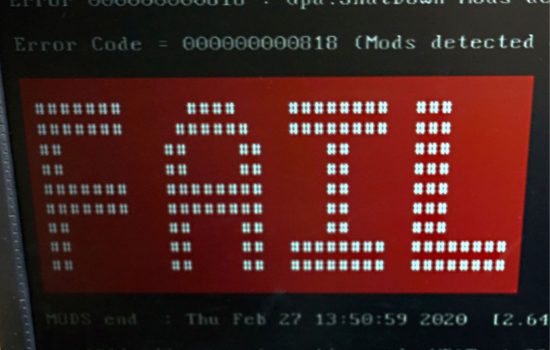
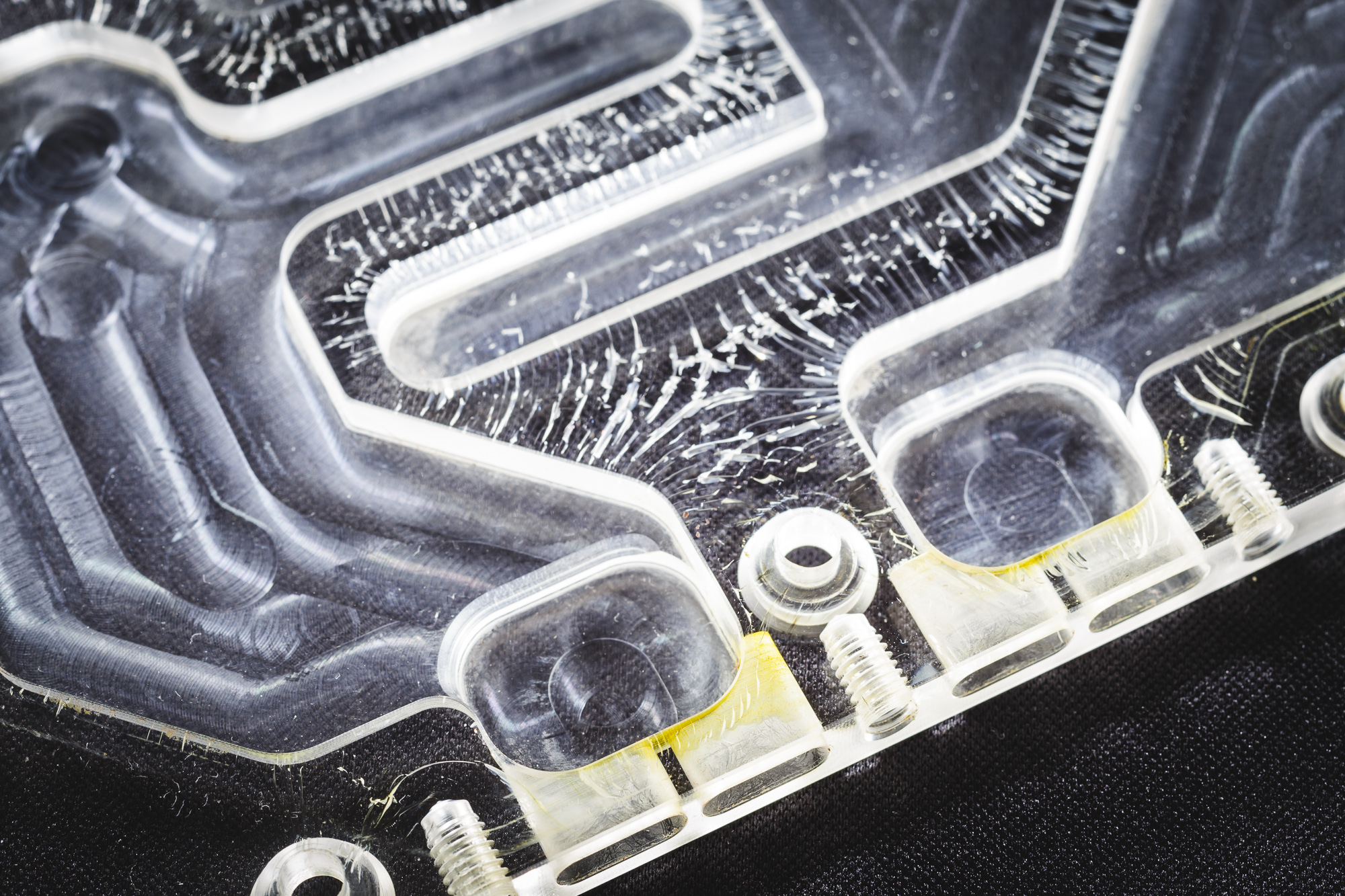
And, like they say, nobody’s perfect. Personally, I don’t consider myself a master of water cooling, that’s why I’ve had a few hard times. So, I’ll show you one epic fail at the end of this article. I have repeatedly stated in the texts that acrylic plexiglass must not be exposed to isopropanol, ethanol or acetone. And that’s exactly what happened to me as I was cleaning the graphics card block. I cleaned the metal parts of the graphics card block with isopropanol. It evaporates quickly and in addition I immediately dried the block with paper towels. After ten minutes, I got the impression that the block is already completely dry and it is therefore safe to mount the acrylic cover back in place. I was just in a hurry. The next day I was greeted by a beautiful mosaic of cracks and defects in the acrylate due to the leftover amount of isopropanol on the surface of the block.

Conclusion and summary
This article is definitely not intended to be demotivating. My goal was just to point out how important maintenance of the water cooling loop is. A certain dilemma arises in the choice of material. Today’s trend is to have everything transparent (and ideally with RGB), but the use of acrylate has a number of disadvantages. When it comes to reliability, I recommend using acetal, nylon or other durable polymers.
The same goes with hoses and pipes. Although clear hoses or tubes look attractive, they change color over time and need to be changed regularly. Also follow the manufacturers’ recommendations for how often fluids, hoses and tubes need to be changed. Don’t underestimate the maintenance of your loop unnecessarily, it won’t pay off. The extra worries, extra time and cost really aren’t worth it. Wish you low temperature and quiet cooling!
English translation and edit by Lukáš Terényi