


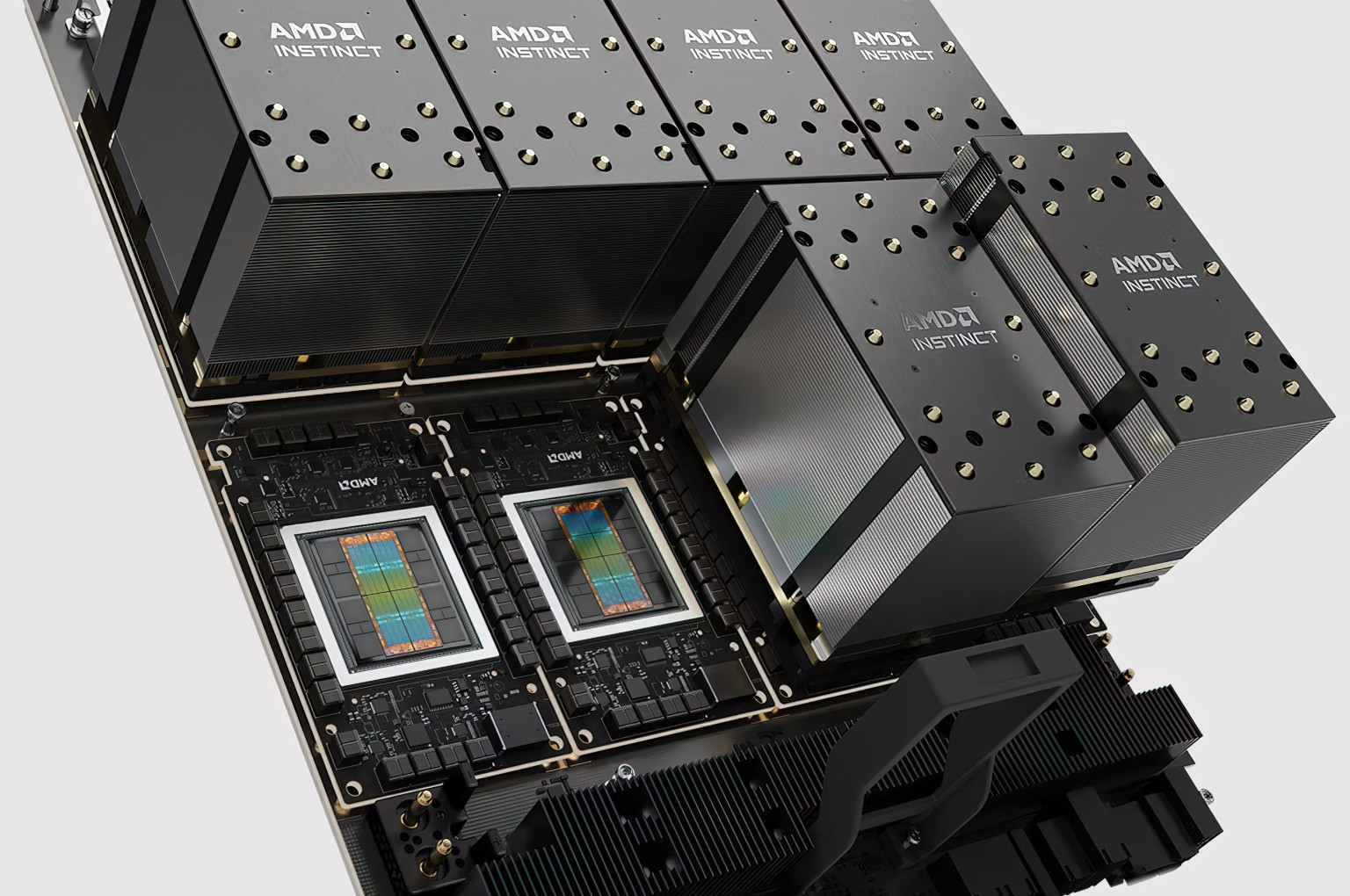
In recent weeks, we’ve seen SoftBank, Nvidia, and the U.S. government pour money into Intel in exchange for a significant stake in the chip industry’s former hegemon. Now a similar scenario is playing out with AMD, albeit in a stranger form. The company has announced a contract with OpenAI that, on one hand, has AMD securing a larger slice of the AI market, but on the other, hands a substantial piece of AMD over to OpenAI.
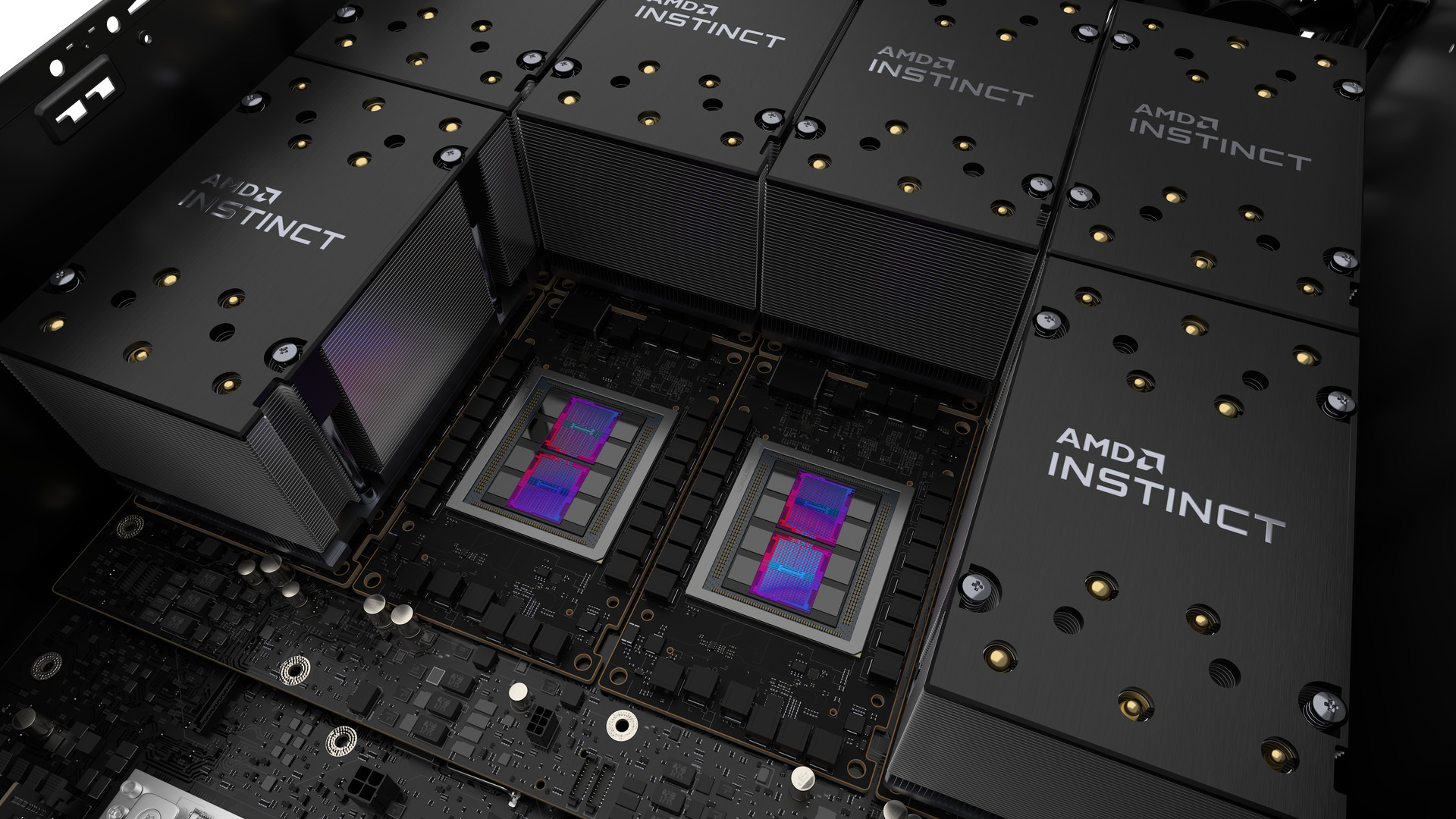
OpenAI has announced a multi-year, “multi-generational” contract with AMD, under which it will progressively purchase the upcoming AMD Instinct MI450 GPU accelerators and their successors from the generations that follow.
This is described as a “definitive” agreement, although the actual sales will only be realized in the future—the first Instinct MI450 GPUs are slated for delivery in the second half of 2026. Concurrently with the GPU purchases themselves, OpenAI is set to work with AMD as a partner on developing mass deployments of AMD GPUs for artificial intelligence, sharing technological know-how, and likely jointly tuning software and shaping future product roadmaps.
The volume of GPUs OpenAI is to purchase is not stated as a specific number of units, nor is the amount the company will pay for them disclosed. It is specified only in terms of the electrical power these GPUs will consume, a somewhat peculiar and obfuscating metric. There’s also some tangible arrogance in this choice of words, considering that the enormous power demands of AI data centers will drive up electricity costs for all other businesses and especially for ordinary households (so companies like OpenAI really shouldn’t be boasting about this negative impact they are pushing on the society). In total, the GPUs OpenAI is to buy from AMD are slated to consume 6 gigawatts, or 6,000 MW.
That’s equivalent to the output of six typical nuclear reactors like the Westinghouse AP1000 (or for czech readers, for example the VVER 1000 at the Temelín power plant in their original configuration, the output of which has since been increased somewhat, but it’s also necessary to consider that they are periodically shut down for maintenance, refueling, etc.). This is, of course, far from the only GPUs OpenAI plans to purchase or already operates; the total electrical consumption of the company’s AI megalomania is, and will be, much worse.
However, there’s something else about this contract that is truly unusual. In exchange for the deal and for the collaboration from OpenAI, the buyer—OpenAI—will receive AMD shares (which dilutes the stakes of current shareholders), and in a fairly large quantity. Through this contract, OpenAI gains the right to receive up to 160 million new AMD shares, representing roughly a 10% stake in the company. Notably, OpenAI will not buy these shares at full price, but for 1 cent per share— which is essentially for free.

This appears to be a rather strange arrangement, especially since we lack information on what revenue and profit the actual realized sales will generate. The acquisition of this stake is nevertheless conditional upon fulfilling the contract in several tranches. OpenAI can receive the first portion of shares only after purchasing GPUs corresponding to the first of the six gigawatts of total power consumption; it will receive additional tranches with subsequent phases. Furthermore, a condition is that AMD’s share price must reach a certain milestones at those times, which might somewhat compensate existing shareholders for the dilution of their stakes.
OpenAI will receive the final tranche of shares only upon completion of the entire “six-gigawatt” delivery and, according to some reports, conditional on AMD’s stock price being over $600 (this specific price is cited by Bloomberg, though it’s not stated in AMD’s press release). Prior to the leak of this news, AMD shares were valued around $165 (but they rose over 25% following the announcement).
Confirmation that the AI hype is real, or just more obvious signs of a bubble?
This isn’t the only case of planned extreme investments involving OpenAI that comes with a form of reciprocal service. Nvidia recently announced it would invest up to $100 billion into OpenAI, funds which are presumably intended for purchasing GPUs from Nvidia itself (their total consumption is said to be a staggering 10 gigawatts)—essentially, Nvidia would be giving the other company money to buy Nvidia’s products. OpenAI has also announced a plan to acquire AI data centers for up to $500 billion together with Oracle and SoftBank, a project they’re calling Stargate.
If all these contracts were to be realized, the impact on the computer industry would be massive, as they would consume tens of percent of the production of various chips and almost certainly trigger shortages and significant price increases for everyone. And the power consumption of all these data centers is better left unconsidered—as mentioned, it will almost inevitably lead to more expensive energy for both households and industry.
The question, however, is how much of these megalomaniacal plans will actually be implemented. While OpenAI has some real revenue, it is currently significantly outweighed by its costs, resulting in deeply negative gross margins—in other words, its AI business is unprofitable. With purchases on this massive scale, the gap between actual revenue and the revenue needed to recoup these investments will only widen further.
While the manufacturers of AI hardware are enjoying fat revenues and profits, serious doubts remain about their clients—the companies buying this hardware—and how are they supposed to find enough customers willing to pay hundreds of billions of dollars for AI services to cover the tens of billions paid to Nvidia, AMD, and other hardware suppliers, plus the costs of operating the data centers and the electricity costs.
Warnings are increasingly emerging that for this reason, the seemingly revolutionary AI expansion in its current form might just be a giant bubble. And if anything, these massive planned investments by OpenAI only make that hunch stronger and stronger. For those interested in this author’s opinion: I cannot shake the feeling that these runaway stream of press releases throwing around hundreds of billions of dollars (sums unprecedented in the industry so far) only make sense if you assume, as context, that a general crash is going to happen in the meantime and most of these plans are never going to be realized (perhaps they are not even expected to be).
And I wouldn’t be surprised if, at this moment, OpenAI and its CEO already see this end coming, but are desperately trying to stave it off, if only slightly, by trumpeting ever more extreme “visions.” The situation might be similar for Nvidia and AMD when they are giving OpenAI money and shares to buy GPUs from them—an attempt to maintain investor optimism and market hype for as long as possible before the entire house of cards collapses. It’s just a shame about the economic crisis that will then sweep up the rest of us.
Sources: AMD, Tom’s hardware, ComputerBase, Bloomberg
Jan Olšan, editor @ Cnews.cz
English translation and edit by Jozef Dudáš
⠀

