

The low price of a motherboard brings with it a few unconventional limitations. Ones that are not often found in competing models for similar money. Some of these are of the safety variety to avoid unnecessary damage to critical components. For a customer buying a standard, reasonably set-up build in this price class, they won’t be a bother, and saving money with the B660 Steel Legend can be beneficial.
Gaming tests…
The vast majority of tests is based on the methodology for processors and graphics cards. The choice of games is slimmer for motherboards, but that’s in order to be able to run all the tests with two different processors as promised. Each board will always be tested with a more powerful processor from the top end, but also with a weaker, average one. The more powerful variant on the LGA 1700 platform is the Core i9-12900K and the mid-range one is the Core i5-12400.
Based on tests with processors from different classes, you’ll be able to easily decide whether a more expensive motherboard for a cheaper processor makes sense for you or, conversely, how good of an idea it is to skimp on a cheaper motherboard while using a more expensive and more powerful processor, which naturally also has higher power draw and places higher demands on the overall quality of the motherboard.
We’ve selected five titles from the games and we’re testing them in two resolutions. There are significantly fewer games than in the CPU or graphics card tests, but there is just enough for the motherboard tests. Few people consider performance in a particular game when choosing a motherboard. But an indicative overview of how a motherboard shapes gaming performance (compared to other motherboards) is a must. To avoid significantly skewing the result over time, we reached for relatively older titles that no longer receive significant updates.

These are Borderlands 3, F1 2020, Metro Exodus, Shadow of the Tomb Raider and Total War Saga: Troy. For newer games, there might be some performance changes over time (with updates) and especially in high resolutions with high details. This is one of the test setups (2160p and Ultra, or the highest visual detail but without ray-tracing) that focuses on comparing performance, for which the bottleneck is the graphics card. In other words, it will be clear from these tests which motherboard and to what extent can impact the graphics card’s performance for some reason. In contrast, a setup with Full HD resolution and with graphical details reduced to “High” will also reflect the CPU’s influence on the final gaming performance.
We use OCAT to record fps, or the times of individual frames, which are then used to calculate fps, and FLAT to analyze the CSV. The developer and author of articles (and videos) for the GPUreport.cz website is behind both.
For the highest accuracy, all runs are repeated three times and average values of average and minimum fps are displayed in the graphs. These multiple repetitions also apply to non-game tests.
… Computing tests, SSD tests, USB ports and network tests
We test application performance in a very similar way to the processor tests. Almost all tests are included, from the easier ones (such as those in a web environment) to those that push the CPU or graphics card to the limit. These are typically tests such as 3D rendering, video encoding (x264, x265, SVT-AV1) or other performance-intensive computing tasks. As with processors or graphics cards, we have a wide range of applications – users editing video (Adobe Premiere Pro, DaVinci Resolve Studio), graphic effects creators (Adobe Premiere Pro), graphic designers or photographers (Adobe Photoshop and Lightroom, Affinity Photo, AI applications Topaz Labs, …) will find their own in the results, and there are also tests of (de)encryption, (de)compression, numerical calculations, simulations and, of course, tests of memory.

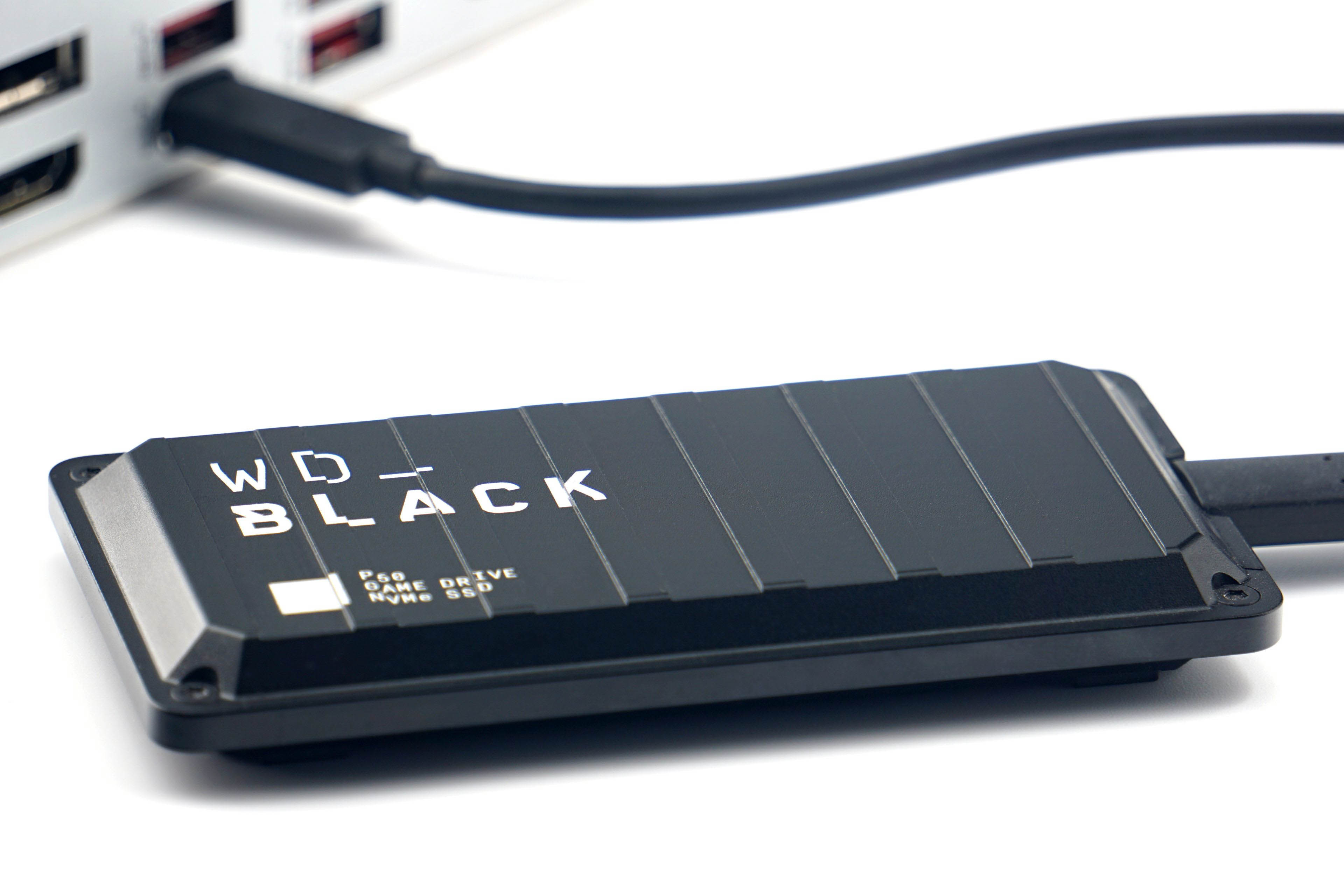
SSD performance tests are also important for motherboards. Therefore we test the maximum sequential read and write speeds on an empty Samsung 980 Pro SSD (1 TB) in the well distributed CrystalDiskMark, in all slots. We approach the USB port tests in the same way. We use a WD Black P50 external SSD to test them. It supports fast USB 3.2 gen. 2×2, so it won’t be a bottleneck for even the fastest USB controllers. We report only one result for each USB standard. This is calculated from the average of all available ports.
We won’t deprive you of network bandwidth tests either. We move large files in both directions within a local network between the motherboard network adapters and the Sonnet Solo10G 10-gigabit PCIe card. This from the aforementioned Samsung 980 Pro SSD to the Patriot Hellfire (480 GB), which is still fast enough to not slow down even the 10 Gb adapter.
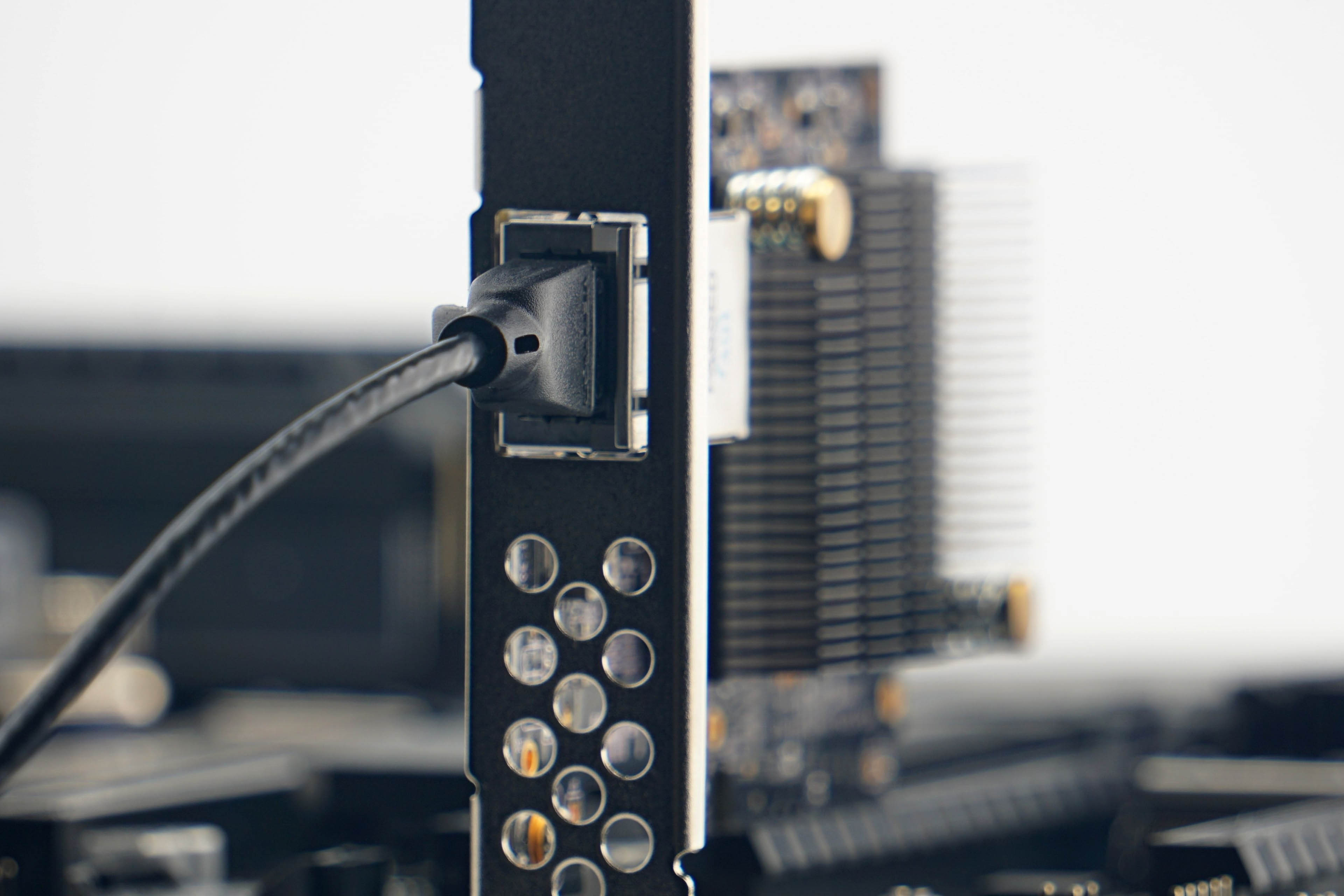
The results of all performance tests are averaged over three repeated measurements for best accuracy.
CPU settings…
We primarily test processors without power limits, the way most motherboards have it in factory settings. For tests that have overlap with power, temperature and CPU clock speed measurements, we also observe the behavior of boards with power limits set according to CPU manufacturers’ recommendations. We set PL1 to the TDP level, respecting also the tau timeout (56 s) for Intel CPUs. The upper power limit (PL2/PPT) is also set according to the official CPU specifications. Technologies for aggressive overclocking, such as PBO2 (AMD) or ABT (Intel), MCE (Asus) and the like, are not dealt with in our standard motherboard tests.
… and application updates
Tests should also take into account that over time, individual updates may skew performance comparisons. Some applications we use in portable versions that do not update or can be kept on a stable version, but for some this is not the case. Typically games get updated over time, which is natural, and keeping them on old versions out of reality would also be questionable.
In short, just count on the fact that the accuracy of the results you are comparing with each other decreases a bit as time goes on. To make this analysis easier, we’ve listed when each board was tested. You can find this out in the dialog box, where you can find information about the date of testing. This dialog is displayed in the interactive graphs, next to any result bar. Just hover over it.