Intel’s new Arc “Battlemage” gaming GPUs coming out next month

No new GPUs from Nvidia are expected to hit the market this year with the new products will be revealed in January (at CES 2025). But one possibly important premiere in the world of gaming GPUs is still slated to happen this year – Intel’s new Arc desktop GPUs, the Battlemage architecture, will be released. It looks surprisingly good in the mobile Lunar Lake processors, so Arc “Battlemage” desktop graphics cards might finally be worth it. Read more “Intel’s new Arc “Battlemage” gaming GPUs coming out next month” »

Added Value of the Nvidia App: Quick Latency Insights via HUD

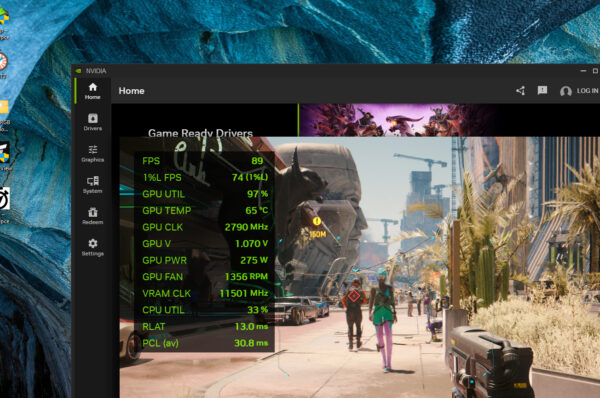
Questions about when will Nvidia modernize the control panel for graphics cards have been around since a decade ago. They were only answered this year when Nvidia unveiled a beta version of the successor to the control panel and the GeForce experience. We take a look at one of the new features it offers – OSD, HUD, in short an overlay window that, alongside the usual monitoring values, can display real-time PC latencies. Read more “Added Value of the Nvidia App: Quick Latency Insights via HUD” »

Introduction to input lag testing with AMD Frame Latency Meter

Frame rate has been the only metric for comparing performance in games. Even at smooth frame rates, however, gaming can be uncomfortable if there is a significant amount of input lag – the game responds to controls with noticeable lag. There are countless tools for measuring frame rates, but unfortunately not for testing responsiveness. Here we introduce the specialized Frame Latency Meter recently made available by AMD. Read more “Introduction to input lag testing with AMD Frame Latency Meter” »

3DMark Steel Nomad and three generations of graphics cards in test

UL Solutions’ 3DMark suite of performance tests recently added a new multi-platform test, Steel Nomad. With it, UL aims to replace the popular Time Spy in DirectX 12 for Windows while offering cross-platform performance measurement on other modern gaming platforms using other APIs such as Vulkan for Windows on Arm and Android and Metal for Apple iOS. Read more “3DMark Steel Nomad and three generations of graphics cards in test” »

Intel catching up with Radeons? Battlemage GPUs will clock high

Intel is expected to launch the second generation Arc gaming graphics cards late this year, or early 2025. Their Alchemist generation suffered from various flaws (high idle power consumption, for example) and a less mature ecosystem but it’s still the most successful (and the only usable yet) attempt to produce an alternative to GeForce and Radeon graphics cards. The next generation, Battlemage, could hopefully take it further. Read more “Intel catching up with Radeons? Battlemage GPUs will clock high” »

New Nvidia GPUs: GeForce RTX 5080 and RTX 5090 specs

It looks like the release of the next generation of Nvidia graphics cards got closer again. Major news about its Blackwell architecture GPUs was leaked on the web, or more accurately on (former) Twitter, yesterday – the specs of the two highest performance models that are due out first: the GeForce RTX 5080 and the new high-end, GeForce RTX 5090. And there’s a surprise: the specs of the high-end have improved compared to previous reports. Read more “New Nvidia GPUs: GeForce RTX 5080 and RTX 5090 specs” »

UDNA: Next-gen architecture will unite AMD’s gaming and AI GPUs

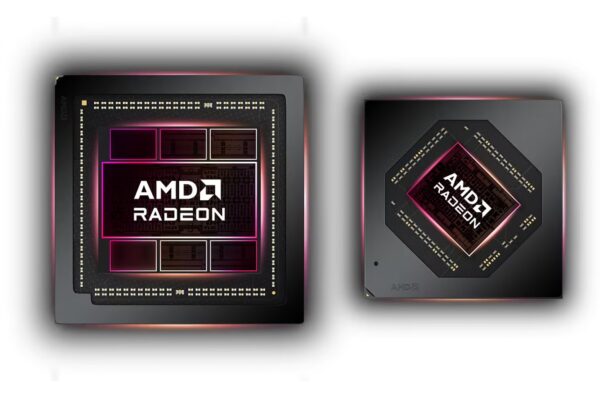
The next generation AMD GPUs with RDNA 4 architecture should be coming soon. The company has now confirmed the rumors that high-end models will not be released in this generation and it will cover only part of the performance and price range. But the company also discussed their long-term roadmaps for the Radeon and Instinct GPU architectures. It seems we could be in for a change as significant as the transition from GCN to RDNA. Read more “UDNA: Next-gen architecture will unite AMD’s gaming and AI GPUs” »

AMD prepares three Radeons with Navi 48, we have memory specs

This week, the first leak of a Radeon RX 8000 in the Geekbench database appeared online. It could have been an ES sample of this GPU or a similar early prototype, so it’s unclear how close these GPUs are to launch. But this seems to have kicked off leaks for this new generation of AMD graphics cards. A bit more detail has now surfaced on the web about what to expect from these GPUs, especially the more powerful mainstream Navi 48 GPU. Read more “AMD prepares three Radeons with Navi 48, we have memory specs” »

AFMF 2: Universal frame generation has better quality, performance

It’s been almost a year since the release of AMD Fluid Motion Frames (AFMF) for Radeon GPU users, which is an alternative solution to generating interpolated frames as provided by DLSS 3 or FSR 3, but for games that don’t offer those features. In fact, AFMF works at the driver level and generates frames without any game integration. A second improved version of AFMF 2 is now out with higher quality and better compatibility. Read more “AFMF 2: Universal frame generation has better quality, performance” »

“All” graphics cards in in-depth coil whine analysis

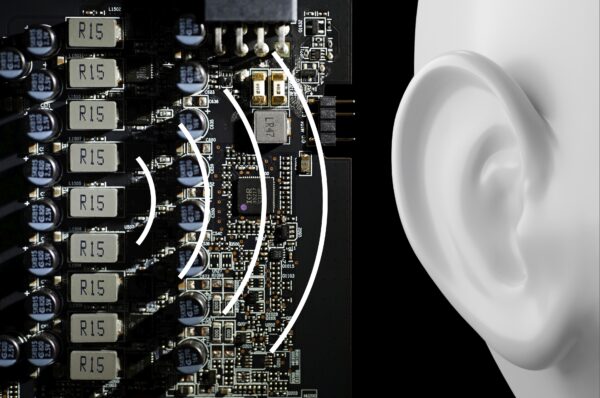
The number of graphics cards tested over the recent period has reached a number after which we can pause a bit and specifically focus on the noise level of their coils. The latter has always been recorded in standard measurements, but in large tests with lots of other information, this unique data was getting lost. That is why it will now, within the scope of this article, be limited to these only. So which of the modern graphics cards has the quieter coils? Read more ““All” graphics cards in in-depth coil whine analysis” »

Intel Arc Battlemage discrete GPUs use TSMC’s 4nm node

Intel should finally release a generation of its discrete “Battlemage” graphics cards with Xe2 HPG architecture later this year, but it will be competing with AMD’s Radeon RX 8000 and Nvidia’s GeForce RTX 5000 cards for most of its lifetime. It does look like Intel will have one advantage on its side, though – Battlemage will be on the same manufacturing node, and at least that way it won’t be disadvantaged right off the bat. Read more “Intel Arc Battlemage discrete GPUs use TSMC’s 4nm node” »

Gigabyte RX 7900 GRE Gaming OC 16G in test of 30 graphics cards

The most “lightweight” AMD Navi 31 (XL) GPU, the slowest memory subsystem, but also the lowest price. That’s the RX 7900 GRE compared to the RX 7900 XT. This Radeon is also noticeably cheaper compared to the RTX 4070 Super, although the GeForce’s power efficiency is more favorable. The gaming performance of the RX 7900 GRE (RTX 4070S), meanwhile, is comparable. That is, as long as you won’t miss ray-tracing graphics. Read more “Gigabyte RX 7900 GRE Gaming OC 16G in test of 30 graphics cards” »

RDNA 4 said to mostly be patched RDNA 3, RDNA 5 completely new

AMD hasn’t yet released the next-gen Radeon RX 8000 graphics cards, which will use the RDNA 4 architecture, so it’s probably a long time to the arrival of the following generation, which could be called RDNA 5 – but maybe also totally differently. Still, the first unofficial rumors have now surfaced about what RDNA 5 could mean in Radeon GPUs. This architecture could be a significant leap forward, unlike RDNA 3 and the upcoming RDNA 4. Read more “RDNA 4 said to mostly be patched RDNA 3, RDNA 5 completely new” »

New Nvidia GPUs this year? The cheaper RTX 5080 to be the first

We got news on next-gen graphics cards, which should be out in the second half of the year (or early next year). This time, they pertain to Nvidia’s upcoming cards, GeForce RTX 5000s with Blackwell GPUs. Two rumors arrived shortly after each other, initially claiming that Nvidia would release only the most expensive model this year, but this was almost immediately corrected to more affordable model actually being the first out. Read more “New Nvidia GPUs this year? The cheaper RTX 5080 to be the first” »

Caveat: RGB LEDs can damage graphics cards and other hardware

A curious “scandal” has now surfaced on the Internet: it seems that decorative RGB LEDs in your computer may not be a purely cosmetic feature that has no effect on the hardware. Users on social media have noticed that the illumination can leave an irreversible mark on your hardware, so to speak, such as on a graphics card that you have next to your RGB memory. Whether this can also have adverse effects on users is hard to say. Read more “Caveat: RGB LEDs can damage graphics cards and other hardware” »

Ray tracing for old games: NVIDIA RTX Remix tested

Sometimes people say that today’s games don’t measure up to the old ones and don’t offer much besides visuals. But what if modern visuals could be added to classic games that are even twenty years old? NVIDIA’s RTX Remix technology (or software) is supposed to do just that, making it relatively easy to add better graphics to even very old games using a mod – including raytracing effects and things like DLSS or DLAA. Let’s see how it works. Read more “Ray tracing for old games: NVIDIA RTX Remix tested” »

RDNA 4 Radeon GPUs: specs and performance of both chips leaked

Previously, new GPU generations were coming in 2-year cycles, which would mean a launch this fall. However, Nvidia’s roadmap has put the GeForce RTX 5000 launch into 2025 some time ago. AMD is still unclear on the launch date of Radeon RX 8000s, but there’s some chance it’s within this year. The specs of these GPUs using RDNA 4 architecture have now surfaced on the internet. If they are real, it might even point to a release relatively soon. Read more “RDNA 4 Radeon GPUs: specs and performance of both chips leaked” »

AMD to produce lowend CPUs and GPUs using Samsung’s 4nm node

Back when the groundbreaking Ryzen processors launched, AMD was still manufacturing almost all of its products at GlobalFoundries, with the exception of chipsets designed by ASMedia. But now, by contrast, it is almost fully tied to the fortunes of TSMC. However, it looks like there could soon be some diversification in place. Samsung-made chips are coming to low-cost processors and they’ll also appear in Radeon graphics cards later. Read more “AMD to produce lowend CPUs and GPUs using Samsung’s 4nm node” »

FSR 3.1 improves quality, can add frame generation to DLSS

At GDC 2024, AMD unveiled the 3.1 version of its FidelityFX Super Resolution (FSR) game upscaling. This is an evolution based on last year’s FSR 3.0 and is designed to improve image quality, but also brings an interesting change. Previously, a frame generation technology (analogous to Nvidia’s frame generation in DLSS 3 and 3.5) was introduced in FSR 3. In FSR 3.1, it can now also be used separately, even combined with DLSS. Read more “FSR 3.1 improves quality, can add frame generation to DLSS” »

Nvidia DLSS (3.5) in Alan Wake II. When does the game run best?

Alan Wake II is the first game to support Nvidia DLSS 3.5 from the start. In addition to the technological aspect, there is also the high popularity among gamers. This gives us the basic reasons to take a close look at the performance under different settings. In diving in with the gaming performance, we will be interested not only in the visual side, but also the power consumption. Not just of the graphics card, but the CPU as well. Read more “Nvidia DLSS (3.5) in Alan Wake II. When does the game run best?” »

1 … 6 7 8 9 10 … 16