Advanced Shader Delivery Now Available for Nvidia, Intel, and Qualcomm GPUs

This spring, a new technology called Advanced Shader Delivery appeared in the Windows gaming ecosystem. It addresses the problem that modern games often have to spend many minutes compiling shaders after launch, if they were freshly installed or the GPU driver was updated (which happens frequently). With Advanced Shader Delivery, shaders are instead downloaded from a server, which is much faster. Initially, only AMD graphics cards supported this innovation, but now the others are getting it too. Read more “Advanced Shader Delivery Now Available for Nvidia, Intel, and Qualcomm GPUs” »

AMD to Raise Prices on All Products: GPUs, CPUs and Chipsets

We reported that Intel was preparing to raise CPU prices next month, but according to further information, the same was planned by AMD. Further sources have now confirmed that this manufacturer will also be raising prices. However, the scope of the price increases is to be much broader—it will affect not only CPUs, but apparently all chips manufactured by AMD. As a result, graphics cards pricing will rise further, but so will prices of motherboards. Read more “AMD to Raise Prices on All Products: GPUs, CPUs and Chipsets” »

DLSS 5 Now Running on Intel GPUs Too: Support Vibe Coded by AI

Nvidia’s clearly intended the DLSS 5 game AI image-enhancement technology to be exclusive for GeForce GPUs—as with previous DLSS versions—if not outright a “vendor lock-in” to stifle competition. Ironically, it currently seems to be the DLSS tech easiest to get running on competing hardware, hough actual practical viability of the unofficial ports remains unclear. And modders have now managed to get it running on Intel GPUs as well. Read more “DLSS 5 Now Running on Intel GPUs Too: Support Vibe Coded by AI” »

New Nvidia and AMD GPUs Not Coming Until 2028. Except for one

It used to be the case that new generations of graphics cards would arrive every two years. GeForce RTX 3000 and Radeon RX 6000 at the end of 2020, RTX 4000 and Radeon RX 7000 at the end of 2022. However, the last generation already went off track, and things are looking to get even worse: the GeForce RTX 6000 series reportedly won’t launch until 2028. The same is reportedly true for next-gen Radeons—although perhaps not quite. Read more “New Nvidia and AMD GPUs Not Coming Until 2028. Except for one” »

Nvidia Changes Course, DLSS 5 Coming to Some Older Cards

Nvidia finally released DLSS 5 last week, which you could read about here (and we covered the impact on performance and power draw here). There were also some unpleasant news: when Nvidia announced the first game launch (the release of NBA2K27), the company stated DLSS 5 support would only be available on GeForce RTX 5000 cards, not on older generations. Now, however, there has been a change of course. Read more “Nvidia Changes Course, DLSS 5 Coming to Some Older Cards” »

Next-gen Radeon GPUs: RDNA 5 architecture clock targets leaked

2027 is approaching with new generations of GPUs, although they will be delayed compared to the previous two-year cycles. AMD has GPUs with the new RDNA 5 architecture coming, which could incorporate fairly major changes compared to today’s RDNA 4 based  GPUs, as well as a new manufacturing process. Thanks to the latter, clock speeds will apparently increase, although perhaps not by as much as one would have expected. Read more “Next-gen Radeon GPUs: RDNA 5 architecture clock targets leaked” »

mVolt+ Unlocks Forbidden GeForce RTX 5000 Overclocking Options

Overclocking graphics cards is quite different from how “OC” works on CPUs. GPUs generally operate at fairly low voltages and clock speeds, and their overclocking is mostly artificially limited by various power or voltage limits in the drivers and firmware. The same is true of Nvidia’s current cards. But the artificial OC limits have now been bypassed, so it may be possible to extract significantly higher performance from them, although not without risks. Read more “mVolt+ Unlocks Forbidden GeForce RTX 5000 Overclocking Options” »

DLSS 5: First Game Out, Inner Workings and Performance Cost

The files of the AI game image enhancement technology DLSS 5 have leaked last week, and modders added the filter to the first games—unofficially. However, the official launch was not far behind. Nvidia has announced that it is now officially launching in the first game, NBA2K27, which is also the title from which the files previously leaked. Starting tomorrow, you will be able to try out what it looks like and what its costs are. Read more “DLSS 5: First Game Out, Inner Workings and Performance Cost” »

Nvidia Has Launched Improved DLSS 4.5 with Ray Reconstruction

In spring, Nvidia announced a new version of the DLSS 4.5 gaming upscaling technology coming in August, promising improved output quality, through settling a debt of sorts: The DLSS 4.5 technology eliminated the Ray Reconstruction technology (originally introduced as part of DLSS 3.5), so you lost access to it when enabling DLSS 4.5. Now this incompatibility has been solved, and Ray Reconstruction is also coming to DLSS 4.5. Read more “Nvidia Has Launched Improved DLSS 4.5 with Ray Reconstruction” »

What can Instinct MI455X tell us about RDNA 5 GPUs? [Analysis]

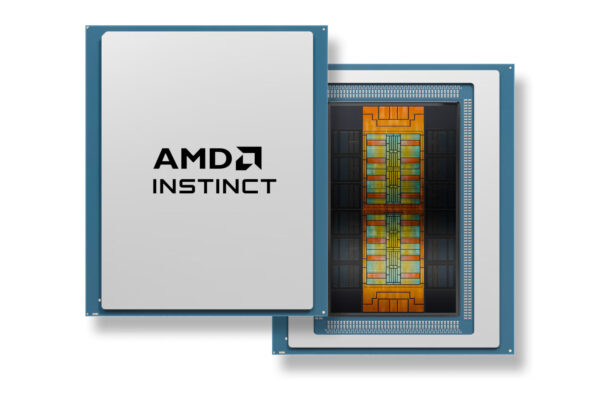
Last month, AMD unveiled its CDNA 5 architecture-based Instinct MI455X AI accelerators. This matters even outside AI and server workloads, because CDNA 5 is now related to the RDNA 5 architecture that will power the next generation of Radeon gaming GPUs. Let’s take a look at what the new Instincts reveal about RDNA 5 and what else has leaked about this architecture. This includes one change that is rather surprising. Read more “What can Instinct MI455X tell us about RDNA 5 GPUs? [Analysis]” »

HWiNFO Now Shows Temps of Individual Video Memory Chips

Not long ago, HWiNFO gained the ability to monitor GPU hotspot temperatures—local hotspots with significantly higher temps than the average having been reported by Nvidia chips. This has been followed by another improvement in graphics card temperature monitoring. You will now be able to look at the temperatures of all memory chips on the card, which can reveal cooling problems in much the same way as the GPU hotspot temperature. Read more “HWiNFO Now Shows Temps of Individual Video Memory Chips” »

Instinct MI455X and the Helios Rack: Can AMD beat Nvidia in AI?

AMD unveiled Zen 6-based server processors at the Advancing AI 2026 event, dubbing them the best generation it has ever released. The company is focusing on complete solutions including its own Helios server racks, though, which incorporate a new generation of GPUs: the Instinct MI455X, the first GPU based on an architecture derived from the RDNA gaming GPU family and a product that is intended to take AMD to a new level in the AI market. Read more “Instinct MI455X and the Helios Rack: Can AMD beat Nvidia in AI?” »

Nvidia unveils its most powerful GPU yet: 3nm Rubin for AI

Presenting at SIGGRAPH 2026, Nvidia has revealed more details about its latest upcoming GPU generation—Rubin. We are talking about the Rubin GPU for data centers and artificial intelligence though, not gaming graphics cards. The Rubin AI accelerator will be more important to Nvidia, though, as it promises the company hundreds of billions of dollars more in revenue from various firms hoping to establish themselves in the AI sector. Read more “Nvidia unveils its most powerful GPU yet: 3nm Rubin for AI” »

Multi-frame generation coming to Radeon GPUs, drivers show

Last year, Nvidia introduced multi-frame generation that inserts 2, 3, or even 5 AI-interpolated “fake” frames between real frames (though only for GeForce RTX 5000-series cards—with users of older GPUs out of luck). Since then, Intel has also introduced multi-frame generation, but it has never been available on Radeon graphics cards. That now appears to be changing, as AMD seems to be preparing the feature for an upcoming driver release. Read more “Multi-frame generation coming to Radeon GPUs, drivers show” »

Nvidia plans GeForce RTX 5090 SE graphics. A chance for gamers?

A few days ago, we reported that the previously canceled GeForce RTX 5080 Super card is once again on track for launch. It was expected to be the fastest model in the Blackwell refresh lineup, but Nvidia is apparently preparing another model above it. However, it will not officially carry the “Super” designation, since it will be a cut-down sibling of the flagship GeForce RTX 5090. As such, it could prove to be an attractive card for gamers. Read more “Nvidia plans GeForce RTX 5090 SE graphics. A chance for gamers?” »

1 2 3 … 21