


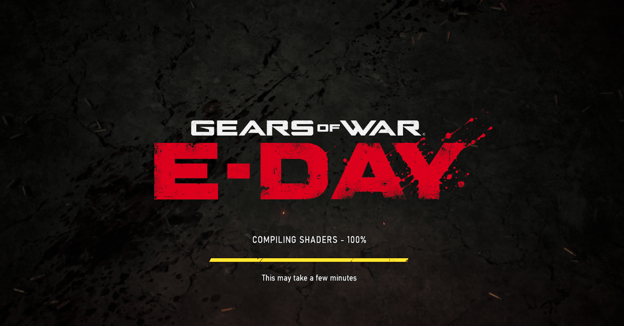
This spring, a new technology called Advanced Shader Delivery appeared in the Windows gaming ecosystem. It addresses the problem that modern games often have to spend many minutes compiling shaders after launch, if they were freshly installed or the GPU driver was updated (which happens frequently). With Advanced Shader Delivery, shaders are instead downloaded from a server, which is much faster. Initially, only AMD graphics cards supported this innovation, but now the others are getting it too.
We discussed how Advanced Shader Delivery works in this article, when the technology was launched for AMD graphics:
Radeon GPUs
AMD GPUs have supported this feature since driver Adrenalin 26.6.1 (and all later versions); it now works on all graphics cards with RDNA, RDNA 2, RDNA 3 / 3.5, and RDNA 4 architectures, meaning graphics cards from the Radeon RX 5000 series upward, including those integrated into APUs.
Snapdragon X2 Elite
Qualcomm has now joined AMD. The company supports this feature in its Windows drivers for Adreno X2 graphics, which are found in the 3nm Qualcomm Snapdragon X2 Elite processors with ARM architecture released this year.
- Tip: Snapdragon X2 Elite launched: Arm laptops are now the fastest
- Tip: Adreno X2 unveiled: Does Snapdragon X2 have the best integrated GPU?
On this platform, downloading shaders instead of compiling them (an advantage for laptops) should already work as of now. It was added in driver 2026.08.3, released on September 22. However, GPUs in the previous generation of processors, the Snapdragon X Elite (and Plus), are apparently not yet supported.
Intel Arc
Microsoft has now announced that support for Advanced Shader Delivery will also arrive for Intel GPUs during the current month (October). We do not yet have a driver version number for Intel in which the support will appear, but it will concern Arc B-Series (Battlemage) GPUs. This will therefore apply to standalone Arc B570 and B580 graphics cards and integrated GPUs in Core Ultra 200V “Lunar Lake” and Core Ultra 300 “Panther Lake” processors.
Finally, GeForce RTX and Spark RTX Too
And this month it will also reach GeForce graphics cards. Here, too, no driver version number has been given yet, so it will probably be released in the coming days (or weeks). However, Nvidia has confirmed that all GeForce RTX graphics cards will receive the feature—meaning from the GeForce RTX 2000 series upward (the GeForce GTX 1600 series will probably be out of luck, even though it uses the same Turing architecture, just stripped of AI acceleration and ray tracing support).
Nvidia has apparently timed the support to arrive alongside laptops with RTX Spark processors. The GPUs of the RTX Spark processors (which belong to the GeForce RTX 5000 generation) are also explicitly listed among the platforms that will use Advanced Shader Delivery.
The Xbox App Is Required
Support for Advanced Shader Delivery is in Windows 11 from version 24H2 upward; you also need to have the Xbox app installed, through which the infrastructure works. It is also recommended to have the latest GPU drivers.

One of the first new games to take advantage of support across the GPU ecosystem is Gears of War: E-Day. According to Microsoft, the first launch of the game after installation (and after driver updates, or game updates) is shortened by up to 95%—to just a few seconds. On typical PCs, conventional shader compilation would take several minutes, according to Microsoft. You will be able to tell that the feature is in use because a message reading “Precompiled shaders installed” will appear at the bottom of the screen at launch. Another game with support will be, for example, Call of Duty: Modern Warfare 4.
The original implementation of Advanced Shader Delivery was tied only to games purchased through the Xbox ecosystem (including the Game Pass subscription) and the Microsoft Store. This is not meant to remain the case—in the future, the feature will also help with games bought through Steam, the Epic Games Store, or GOG. However, Microsoft does not mention this expansion now, so it is probably still not ready.
Sources: Qualcomm, VideoCardz, Microsoft
English translation and edit by Jozef Dudáš


