At GDC 2024, AMD unveiled the 3.1 version of its FidelityFX Super Resolution (FSR) game upscaling. This is an evolution based on last year’s FSR 3.0 and is designed to improve image quality, but also brings an interesting change. Previously, a frame generation technology (analogous to Nvidia’s frame generation in DLSS 3 and 3.5) was introduced in FSR 3. In FSR 3.1, it can now also be used separately, even combined with DLSS.
Of the less dramatic improvements brought by FSR 3.1 that AMD announced at GDC 2024, it will offer integration to Vulkan and the Xbox Game Development Kit, as well as AMD’s own FidelityFX API. This is supposed to be useful for making it easy to update existing games with newer, improved versions in the future, as long as they already have FSR 3.1 integrated though this API.
More: AMD introduces FSR 3. Open source frame generation for all graphics cards
Image quality improvement
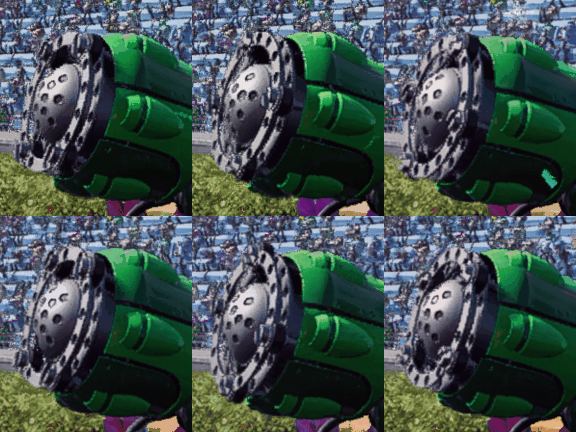
In addition, FSR 3.1 should improve the image quality of the upscaling, as it should have improved temporal reconstruction that will be more reliable. It will eliminate or mitigate shimmering and flickering in some problematic scenes around moving objects. However, temporal detail stabilization should work better not only in a moving image, but also in a still, non-moving image.


Ghosting is also supposed to be reduced, resulting in better details in objects and scenes that are currently getting damaged due to faults in temporal filtering.
In other words, upscaling should have fewer artifacts caused by temporal filtering (i.e., combining visual information from multiple consecutive frames). This is something that Nvidia has also repeatedly focused on when improving DLSS, and it’s probably an area where we will see continuous improvements, since 100% perfection in temporal reconstruction and stabilization will likely never exist, making this a never-ending work.

Frame generation by AMD made available for users of competing cards as well
But the most notable thing is that AMD has decoupled the implementation of its frame generation technology, which is included in FSR 3, from upscaling. Now in FSR 3.1, it can be used separately, even with upscaling technology of another type. This means that one can turn on, for example, XeSS upscaling on Intel Arc graphics in a game, and FSR 3.1 can hook in after it is applied and add frame generation. This should work with DLSS as well.
This means that gamers using Nvidia graphics cards will be able to turn on frame generation even on GeForce RTX 3000 and RTX 2000 graphics cards, where Nvidia’s frame generation technology doesn’t work (its frame generation featured in DLSS 3 is only supported on the new RTX 4000 generation cards). And there will be no need to disable DLSS because of it. Until now, using frame generation on such cards required you to fully switch over to FSR upscaling (if available) instead of DLSS.
It should still be the case that this form of frame generation will require direct in-game support for FSR 3.1 (and its frame generation). AMD does still have the FMF (Fluid Motion Frames) solution that can be forced even onto games that don’t support it, but that is implemented at the driver level. It can therefore inevitably only be used on Radeons, for other graphics cards you would also have to get this from their respective manufacturers.
First implementation this year
These improvements cannot yet be tested anywhere. AMD showed the results in Ratchet & Clank: Rift Apart game, where the implementation already exists, but will probably not be released for some time. This game is to be one of the first to feature FSR 3.1. According to AMD, developers will have the finished FSR 3.1 technology available to them for further work in Q2, but implementation may take some time and direct availability in games within Q2 is not promised. Real availability of FSR 3.1 in games will happen “later this year” according to AMD, but this doesn’t rule out some titles appearing with the technology during the summer (Q3) as well.
19 games with FSR 3, soon to be 40
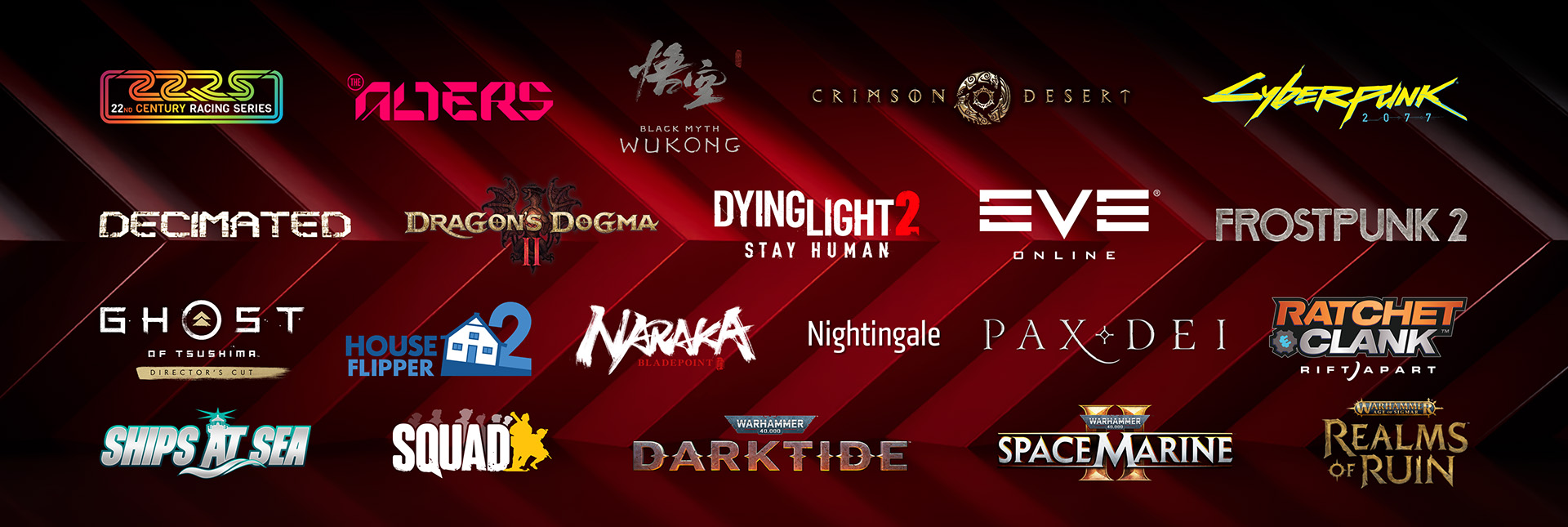
By the way, AMD reports that FSR 3, its open source frame generation technology available to all GPUs, is now available or close to release in 40 games, six months after its release. Among the freshest additions where FSR 3 is already present is The Last of Us Part I.

There should be support for 19 games already available, while the other 21 are in the category of those where FSR 3 should be usable in the near future (according to AMD).
Sources: AMD, TechPowerUp
English translation and edit by Jozef Dudáš
⠀