


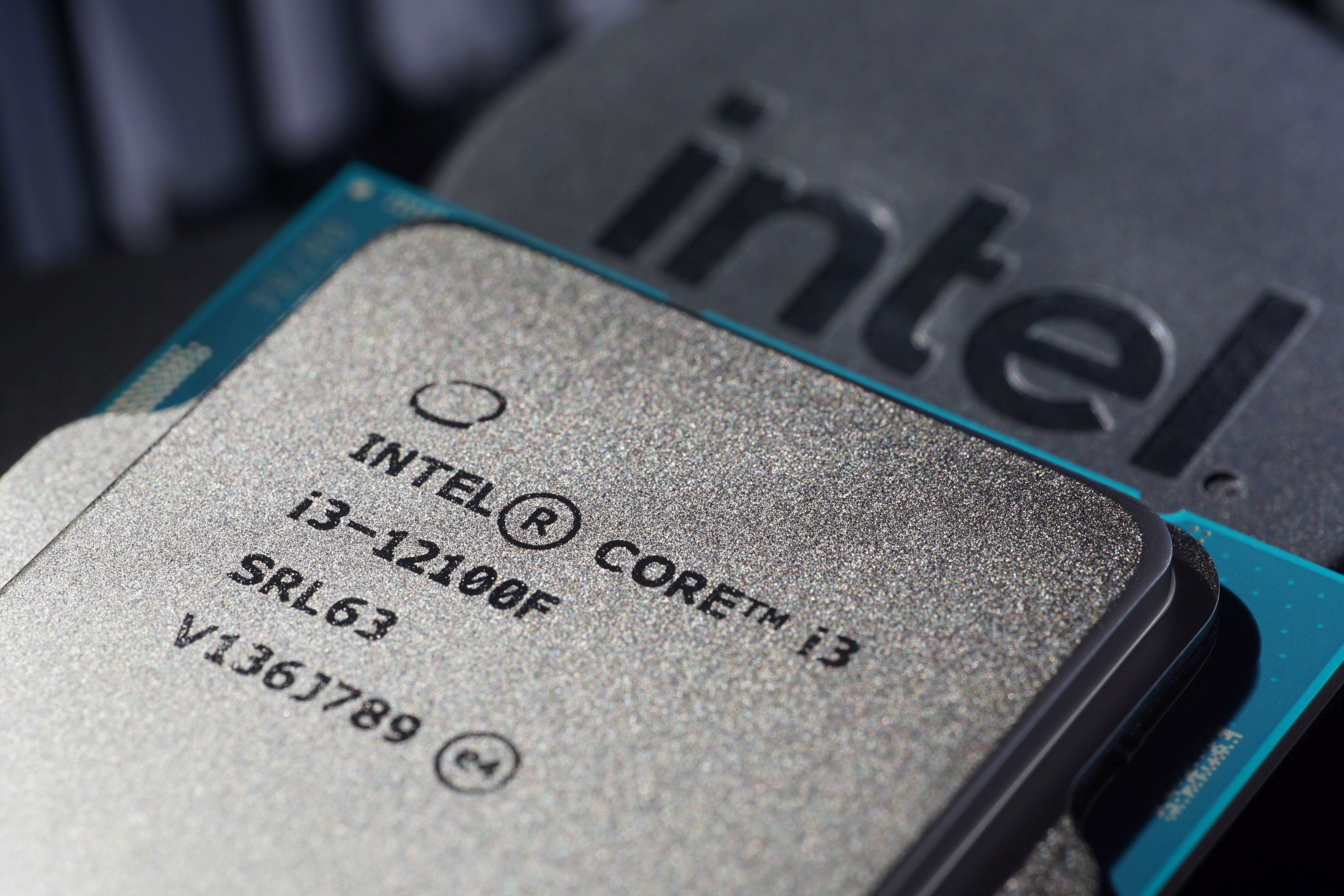
In recent days, several leaks have surfaced about Intel’s next-gen Core Ultra 400 processors, codenamed Nova Lake — we’ve seen core counts that the various model tiers will have as well as platform and chipset connectivity. Over the weekend, another interesting piece of information leaked: data on projected (or perhaps promised) performance of the processors that is being included in Intel’s internal or partner-only presentations.
This leak consists of a small snippet from a page. It was published by sites like VideoCardz, which later removed the original source link at the leaker’s request. We can’t confirm the data as 100% authentic, but the chances look reasonable — for now, keep in mind that the info as unofficial. The snippet doesn’t explicitly say it’s about Nova Lake desktop CPUs for socket LGA 1954, but the context strongly suggests it.
Multithreaded performance: Is less than +100% a failure?
Let’s look at performance in multithreaded workloads first. Nova Lake is expected to bring a major jump in core counts. Intel is planning models with two chiplets, each with 8 P-Cores and 16 E-Cores, totaling 48 threads, plus four extra LP E-Cores in a power-efficient SoC “island.” That’s a 100% increase (excluding the LP E-Cores, whose multithreaded value is unclear) over current top-end Core i9 13900K/KS, 14900K/KS Raptor Lake, and Core Ultra 9 285K Arrow Lake CPUs.
The document snippet states a multithreaded performance gain of +60%, or more precisely, greater than +60% (“>1.6× higher”). A 60% gain might seem low with a 100% core count boost, but the truth probably is that scaling under 100% is entirely normal.
Intel’s Raptor Lake and Arrow Lake CPUs push core clock speeds close to their max, even in multithreaded loads — leading to 250W+ power draws. That’s making the silicon operate in an inefficient zone, where small clock gains mean much higher power use. A 10% clock cut might cut power by 25%, for instance.
Once the plans of 48/52-core Nova Lake configs became known, it was natural to expect that Intel could (or would be forced to) run E-Cores at lower, more efficient clocks in heavy workloads. This reduces performance slightly, but greatly boosts efficiency — avoiding the need to raise maximum turbo power too much. The document’s wording actually supports this, saying Nova Lake will bring “ultimate performance and efficiency.”
An ideal case would be doubling P- and E-Core counts while keeping max power close to Arrow Lake’s 250–297 W. Any lost performance could still be clawed back via overclocking after all — at the cost of higher power, of course.
With 48 threads, perfect scaling is unlikely
There are other factors. We’re talking about thread counts jumping from 24 to 48 (or even 52 with LP E-Cores). Many tasks simply won’t scale linearly, and will struggle to saturate that many threads. In many benchmarks, even if theoretical all-core performance rose by 100%, the measured gain would be lower. Intel’s figure could be an average across tests including some of which don’t scale well.
The same will likely happen with AMD’s upcoming 24-core SMT processors (also giving 48 threads). But it may be less obvious there, since tasks are scheduled placing one thread per core first. AMD’s per-thread performance in such situation is better than Intel’s E-Cores, to which tasks get scheduled once the first 16 high-performance P-Cores are all taken. With AMD, single-threaded performance only drops once both threads per core are in use (so after 24 threads).
In yny case, there are good reasons why performance would “only” go up by 60%. A larger gain would likely come with more power draw and more waster heat.

Single-threaded performance: P-Core makes modest gains again
In Arrow Lake chips, largest gains happened in E-Cores, while the progress made by the big P-Cores were a bit underwhelming. Its Lion Cove architecture is ambitious (with 8 instruction decoders for example), but ended up with only modest IPC gains — +9% or 12% depending on variant — over Raptor Lake, while max clock speeds dropped.
Nova Lake will improve P-Core performance, but Intel isn’t promising a huge jump — saying that single-threaded performance will be at least +10% higher. Again, note that it says “greater than,” not exactly 10% (the exact phrasing is “>1.1× higher”). As seen with past AMD Zen 5 and Zen 6 IPC slide leaks, companies often give conservative figures they’re confident to exceed — leaving headroom in case that the core is later hit with issues that might reduce performance below actual targets or in case clock targets end up being undershot. So who knows, actual single-threaded gains might still reach say +15%, for example.
Also, it’s unclear whether that 10% figure refers to a specific benchmark or an overall average.
“Leadership gaming performance” — but details unclear
According to Intel, Nova Lake processors should offer “Leadership Gaming Performance” — but marketing terms like this rarely mean “the undisputed best” (as in beating all rivals). The meaning of the phrase is more vague, perhaps meaning “in the generall ballpark of top-tier, in one way or another.” Nova Lake might not beat Ryzen 9000X3D in games — or AMD’s follow-up product that Nova Lake will compete with. But Nova Lake will also offer versions with larger L3 cache (up to 144 MB), which could provide gaming gains similar to AMD’s 3D V-Cache chips.
Still, don’t automatically link the >10% single-threaded gain to gaming performance. It’ll play a role, but gaming isn’t purely about single-threaded performance (after all X3D chips often have lower clocks). Cache perofrmance, memory latency, and clever interconnect architecture between cores and memory controllers will matter far more. The chiplet interconnect is currently Nova Lake’s biggest gaming weakness. If Intel manages to improve on it significantly, gaming performance could improve even if single-threaded scores don’t.
We’ll find out in a year or so — Nova Lake desktop CPUs are set for launch in the second half of 2026. But more unofficial info will likely trickle out even before that, and we’ll keep you posted as always.
Source: VideoCardz
English translation and edit by Jozef Dudáš
⠀


