


The new GeForce RTX 5070 Ti goes on sale as the most affordable GeForce model with the Blackwell architecture to date. We’re looking at one of the best-equipped versions—the MSI GeForce RTX 5070 Ti 16G Vanguard SOC, a top-tier model from MSI. It features an extremely powerful cooler with massive headroom and excellent performance but comes at a price comparable to the RTX 4080 Super from the previous generation.
The next tests are from the F1 24 benchmark at a resolution of 3840 × 2160 pixels with Ultra settings. With these settings, the GPU is almost fully loaded. This involves a benchmark with five laps on the Singapore circuit in wet conditions. Oproti testům z benchmarků
The frame rate again differs only slightly between the two BIOS versions, with a difference of 0.2 frames per second. The measurement deviation is often larger.

The difference in GPU clock speed is only slightly larger than in the Metro Exodus benchmark.

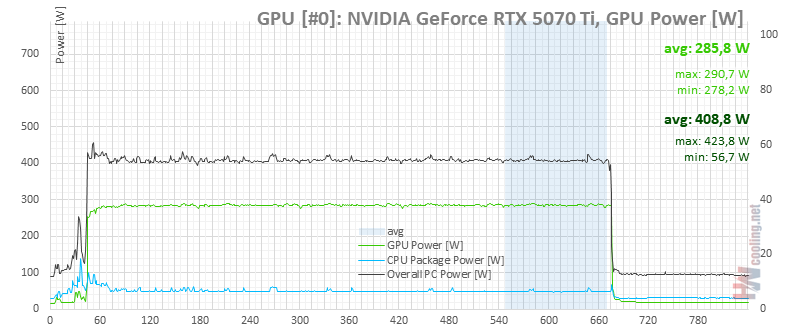
In terms of power consumption, the card stays just below the power limit.
With the higher fan performance, temperatures stay below 60 °C.

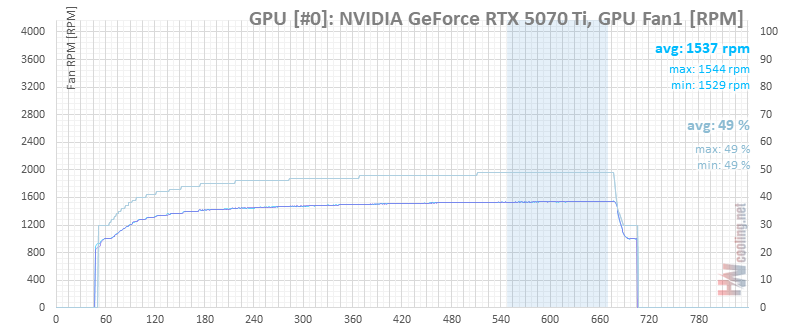
Once warmed up, the fans again run at around 1540 rpm.
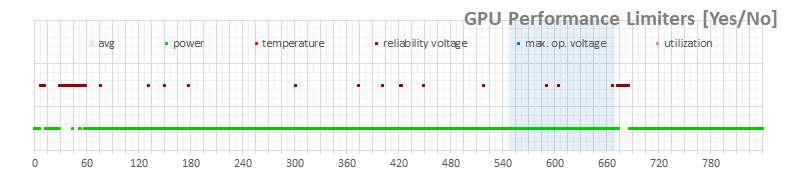
According to monitoring, the boost is primarily limited by the set power consumption.






No coil whine charts anymore? 🙁
I’d like to start measuring it again in a few months in some form, but right now, that’s almost impossible because I’d need to measure all relevant cards for comparison with new ones and add more games and benchmarks. Plus, we’d also need to buy another Umik for that.
I believe that sooner or later, spectral sound analysis will return to graphics card testing. However, as Adam writes, there are currently other priorities, and the methodology will evolve and become more refined over time. And let’s trust that, within this framework, we will once again have an exact overview of coil whine noise level as well. 🙂
Hey man thanks for the deep analysis. Out of all the 5070 Ti, if you had to pick one and price is not an issue, which one would it be?