


F1 24
Performance with TAA
Performance with FSR3 balanced and FSR3 Balanced + Frame Gen
F1 24
Performance with DLAA, DLSS Performance and DLSS Frame Gen
⠀

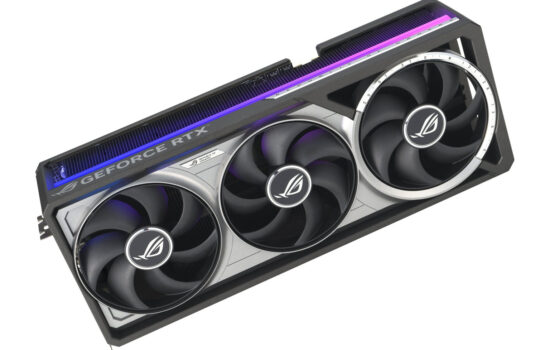
According to recent leaks, Nvidia is discontinuing the GeForce RTX 5090 and redirecting the GB202 chips to the production of AI accelerators for workstations and servers. At first, it was hard to believe. It would be the first time the company itself had canceled the most powerful and most expensive GPU model for gaming PCs—and what’s more, two years before the new generation. However, more and more signs appear to confirm this. Read more “End of GeForce RTX 5090: Retailers Ending Sales, Nvidia too”

Overclocking graphics cards is quite different from how “OC” works on CPUs. GPUs generally operate at fairly low voltages and clock speeds, and their overclocking is mostly artificially limited by various power or voltage limits in the drivers and firmware. The same is true of Nvidia’s current cards. But the artificial OC limits have now been bypassed, so it may be possible to extract significantly higher performance from them, although not without risks. Read more “mVolt+ Unlocks Forbidden GeForce RTX 5000 Overclocking Options”

The files of the AI game image enhancement technology DLSS 5 have leaked last week, and modders added the filter to the first games—unofficially. However, the official launch was not far behind. Nvidia has announced that it is now officially launching in the first game, NBA2K27, which is also the title from which the files previously leaked. Starting tomorrow, you will be able to try out what it looks like and what its costs are. Read more “DLSS 5: First Game Out, Inner Workings and Performance Cost”

No coil whine charts anymore? 🙁
I’d like to start measuring it again in a few months in some form, but right now, that’s almost impossible because I’d need to measure all relevant cards for comparison with new ones and add more games and benchmarks. Plus, we’d also need to buy another Umik for that.
I believe that sooner or later, spectral sound analysis will return to graphics card testing. However, as Adam writes, there are currently other priorities, and the methodology will evolve and become more refined over time. And let’s trust that, within this framework, we will once again have an exact overview of coil whine noise level as well. 🙂
Hey man thanks for the deep analysis. Out of all the 5070 Ti, if you had to pick one and price is not an issue, which one would it be?