Recently we have reported on GPU vendors (Nvidia and apparently AMD as well) reducing graphics card production or cutting output of cheaper models in favor of more expensive ones due to memory prices. Unfortunately, this is not the only factor that will likely drive prices upwards. There’s another factor at work that could significantly raise the prices of gaming GPUs and turn so-called recommended prices into an outright fiction.
You may recall that for a large part of last year, it was difficult to find graphics cards in stores at the prices AMD or Nvidia set at launch as the official price—so-called MSRPs (which stands for “manufacturer’s suggested retail prices”). In practice, especially in the spring months following release, cards were often overpriced by tens of percent due to shortages (which, however, apparently weren’t caused by inevitable market conditions like those today; rather Nvidia prematurely halted production of GeForce RTX 4000 cards before having the next generation’s production ramp ready, for reasons unclear—this could even have been an attempt to manipulate prices, in theory).
Nevertheless, Nvidia at the time tried to ensure that at least to some extent there were cards actually priced at the officially recommended level in the market. Typically, it had agreements with board partners (such as Asus, Gigabyte, MSI, Gainward, Zotac, and others) to ensure each company offered at least one base model at MSRP. In practice, this did not always work—these cards were often available only in limited quantities and sold out quickly. There were also cases where a card carried this status only at launch, with its official price increasing a few weeks later.
What was the OPP program?
The youtuber der8auer has now come forward with information revealing that this Nvidia policy—seeking to at at least partially (or “performatively”) mitigate graphics card pricing issues—had an internal name: OPP. Der8auer does not specify what the acronym stands for; according to techPowerUp, it means Open Price Program (although no source is cited). In any case, this was a matter of internal negotiations with board partners, not something publicly disclosed.
OPP was a cashback program (involving rebates in the form of reverse payments to the buyer, in this case the card manufacturer) that partially subsidized produced graphics cards on the condition that the manufacturer sold them at the recommended price. It was thus an attempt by Nvidia to influence graphics card prices that would otherwise be set by the board partners themselves, with the goal of getting at least some cards onto the market at the official “MSRP” price in a situation where most cards—or without this program perhaps all of them—were more expensive.
According to der8auer, the program most likely worked with all major manufacturers (and possibly many smaller ones as well). It addressed two things. When the market was experiencing a shortage of graphics cards and prices were climbing, an agreement with Nvidia under OPP compelled manufacturers to apply the official recommended price to a specific model in their lineup, so that there were cards on sale whose prices were not inflated, at least in theory. Such models were also preferentially seeded to reviewers.
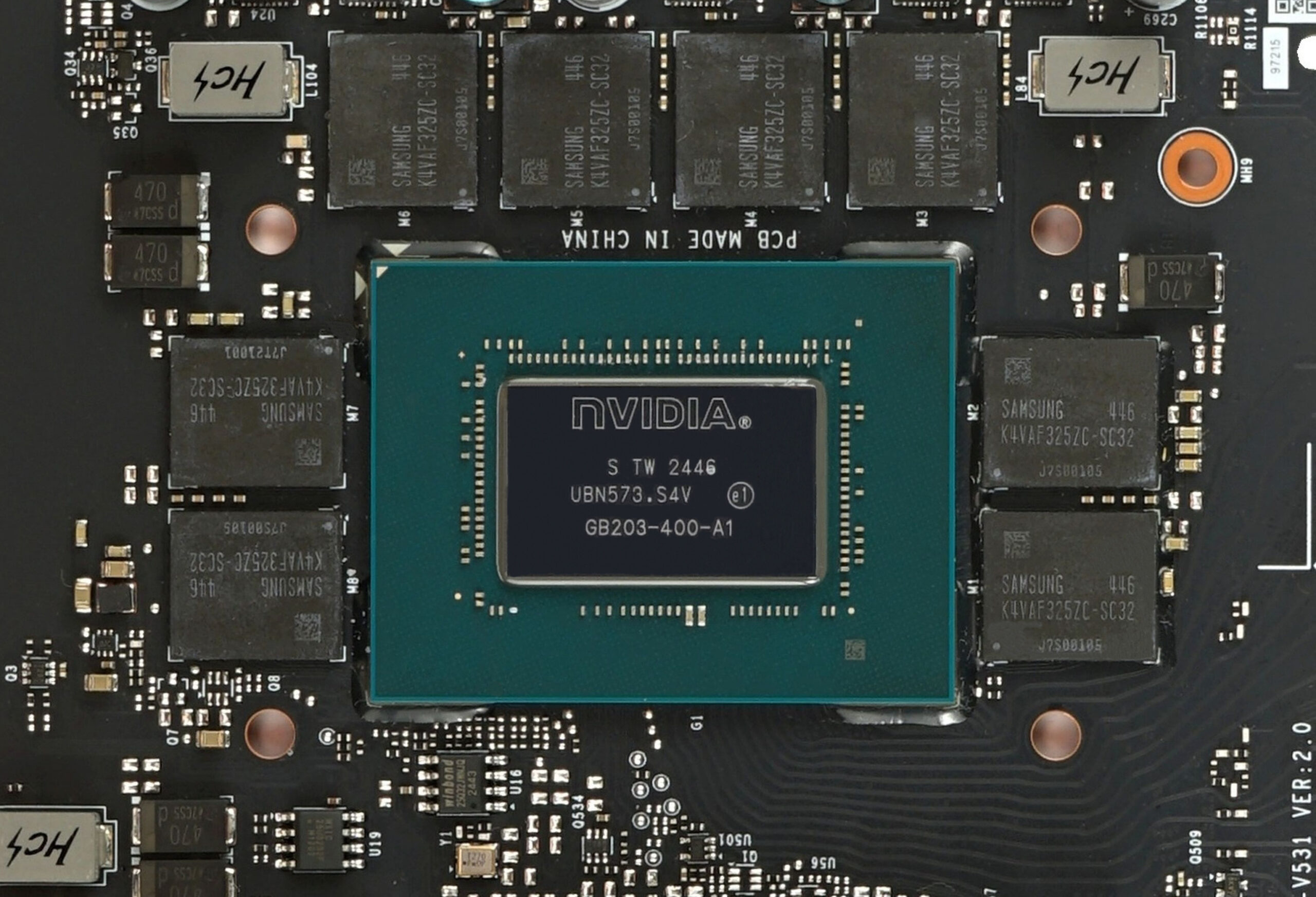
According to der8auer, however, in recent years it was often practically impossible to sell some GeForce card models at the official price without using this cashback/discount help. The manufacturers always purchase the GPU from Nvidia together with the memory allocated for it at a price that is set by Nvidia, which often left insufficient budget for other essential components (such as the cooler, PCB, and power delivery components). The only options were therefore either to sell the card as a premium model at a price above MSRP, or to use the cashback/discount from Nvidia under OPP—which turned a negative margin into a positive one.
The cashback under the OPP policy thus did not address the fundamental causes of high prices, but it did make it possible to deliver some cards to market at MSRP. The question then was whether these subsidized cards existed in quantities large enough to have practical significance, or whether they merely gave companies an excuse allowing them to pretend that recommended prices were not a complete fiction. How high the officially promised MSRP is and the existence of cards at such MSRP were naturally something, that mattered a lot for marketing and promotional purposes.
It should be said that Nvidia almost certainly did not lose money on these cashbacks—this was not a subsidy in the sense of selling chips at a loss. According to official financial results, Nvidia enjoys very high margins; in the case of OPP, the cashback likely only reduced its own profit collected on the bundle of GPU and memory somewhat. One can also view this from the perspective that the size of Nvidia’s margin on GPUs was itself at the core of the problem. OPP made it possible for Nvidia to get cards onto the market at recommended prices without having to reduce its margin across all GPUs supplied to board partners.
Similar cashbacks that helped—at least temporarily—the manufacturers to ship cards into stores at lower prices were something alleged also during the launch of the Radeon RX 9070 and RX 9070 XT (where the first quickly sold-out batches of cards in our market could indeed be purchased at lower prices with almost instant price bumps visible as the next batches arrived). Whether AMD has continued this practice after the launch is unknown.
Subsidizing cards is now ending—prepare for price increases
This program, however—and this is the main news here—will no longer be lowering graphics card prices. Der8auer states that according to his information, Nvidia ended the OPP policy a few days ago (his video dates to Friday, January 23). This means that for any of the graphics card models that could be purchased at recommended prices only because Nvidia was providing the manufacturer with cashback, there will be a significant price increase—and this is likely to particularly affect the most attractive low-priced models, which may now end up priced on par with those more expensive “premium” models that never pretended to adhere to MSRP.
For cards whose prices were kept down via OPP, this means that their originally set recommended price effectively ceases to apply and becomes entirely irrelevant. We shall see whether this affects all currently sold GeForce RTX 4000 and 5000 models, or only some of them, and how the extent of the resulting price increases will vary in practice. The end of OPP naturally goes hand in hand with rising memory prices, and the two factors will likely be difficult to gauge on their own. Rising memory prices are something Nvidia understandably had to pass on to customers sooner or later, so this alone is not something that can be outright criticized (even though we do not know how large Nvidia’s margins are on specific GPUs and GDDR7—some proverbial belt-tightening is probably not to be expected). The elimination of OPP means that this round of price increases will hit cheaper card variants especially hard, as Nvidia will no longer be helping them with discounted GPU pricing.

It is likely that this change is behind the recent reports that claimed Asus’s GeForce RTX 5070 Ti cards were EOLed. This board partner initially stated that the RTX 5070 Ti model would be effectively discontinued, a claim that was later modified and denied in various ways, with both Nvidia and Asus stating that all models remain in production. It’s likely that the reality behind these reports is that Asus is ending production of its cheaper MSRP GeForce RTX 5070 Ti model, which had been enabled specifically by Nvidia’s cashback (or more precisely, Nvidia providing Asus with a discount on the GPU for these cards), and the reason is nothing else but Nvidia now having terminated the cashback/discount program.
According to der8auer, it is true that shipments of the GeForce RTX 5070 Ti will be massively reduced—making the card very hard to obtain, if available at all—and that production will shift toward the GeForce RTX 5080. That model, however, is also expected to become significantly more expensive; according to his information, a price increase of 40–50% can be expected, to 1400–1500 EUR level in Europe.
Sources: der8auer, techPowerUp
English translation and edit by Jozef Dudáš
⠀