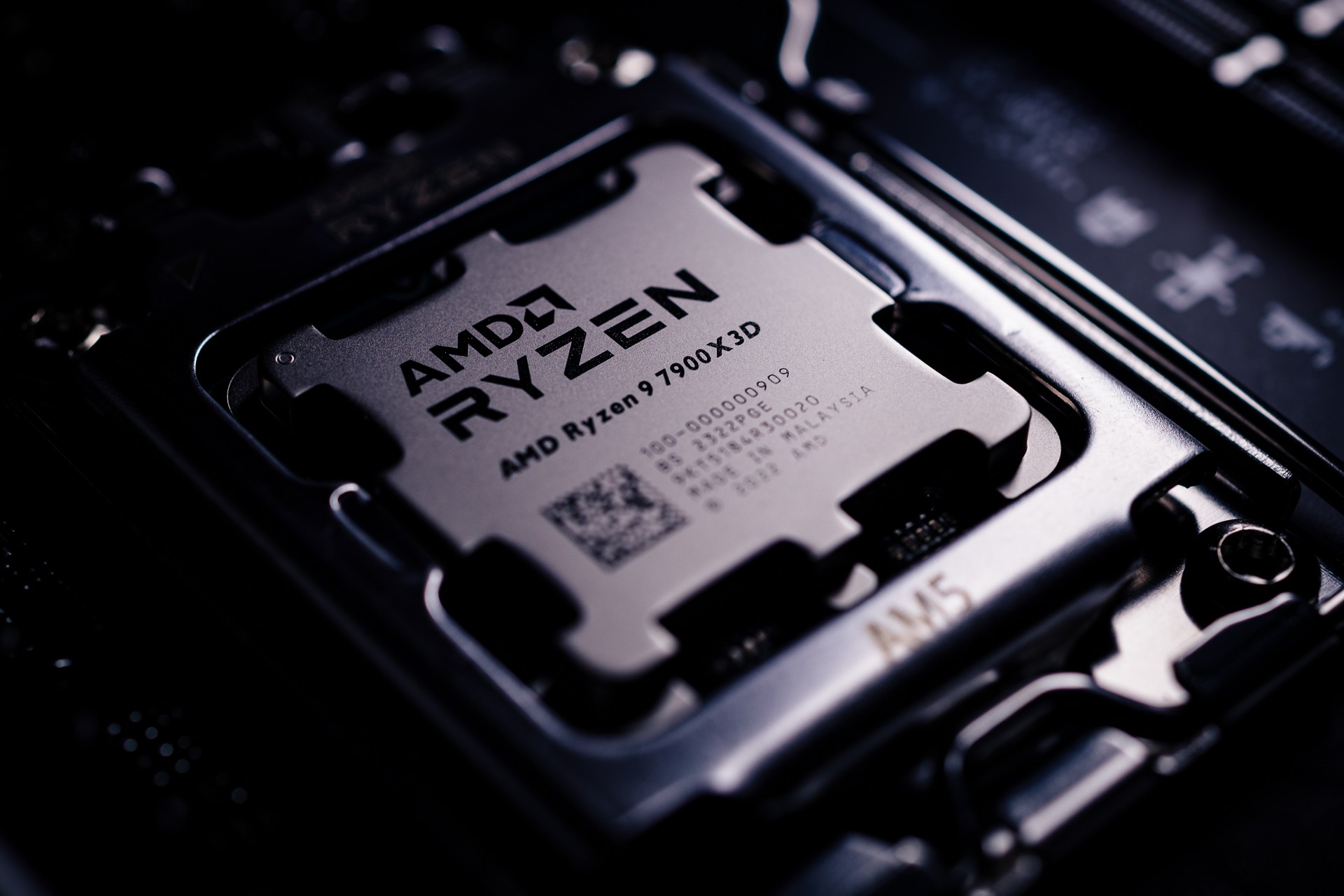
A few days ago, we reported that Ryzen CPUs with the Zen 3, Zen 4, and especially Zen 5 architecture (with which the biggest impact is expected) should get a performance boost in a future Windows 11 update to version 24H2. This big update isn’t out yet – it’s the Copilot+ release that brings various AI innovations and was at one time reportedly being considered for launching as Windows 12. But Ryzen owners won’t have to wait that long.
As we wrote in a previous article, Windows 11 version 24H2 should include an optimized codepath handling speculative vulnerabilities (Spectre-type attacks) mitigations that improves performance on processors with Zen 5 cores (i.e. the new Ryzen 9000s), but AMD says the Zen 4 and Zen 3 generations should also see some improvement.
Read more: Optimization in Windows 11 will speed up AMD CPUs – Zen 3, 4 and 5
From what has been said about the patch (or more accurately speaking, the optimizations), the performance improvement is probably due to the fact that the previous version of a patch for Spectre was not optimal for newer AMD architectures. Probably because it reset the state of the branch predictor (by erasing its BTB cache) too aggressively, whereas some parts of this software mitigations are not needed for newer cores due to hardware fixes.
In a blog post published by AMD, it was mentioned that the company is working with Microsoft to bring these performance-enhancing changes “to all Windows 11 users soon”. It wasn’t entirely clear from that, but that wording didn’t seem to be just talking about AMD trying to get version 24H2 out sooner. Instead, this optimization seems to have made its way into the current version (23H2).
Update KB5041587 right now
AMD announced to the media last night that the changes in question around branch prediction (more specifically, around the speculative attacks related mitigations’ handling of the CPU branch predictor) have been backported to the current version of Windows 11, and can thus be easily applied now – unless you’re still on Windows 10 of course.

This update has been available in Windows Update since yesterday as “2024-08 Cumulative Update Preview for Windows 11 Version 23H2 for x64-based Systems (KB5041587)“. AMD points out that you must manually select it for installation, by clicking on the “Advanced options” button, then “Optional updates” where it should be visible and you can choose to install it.
Usually it should not install automatically, but on our editorial system with a Ryzen 9 7950X, it installed itself without any intervention (or rather right after clicking on the “Check for updates” button). This likely happens when the “Get the latest updates as soon as they’re available” option is enabled.
Whether the KB5041587 update installs automatically or you have to manually select it, AMD says it should deliver similar speed increases in games to those promised for 24H2, and you don’t have to use insider test builds to do it.
We wanted to let you know that the branch prediction optimization found in Windows 11 24H2 has now been backported to Windows 11 23H2. Users will need to look for KB5041587 under Windows update > Advanced options > Optional updates. We expect the performance uplift to be very similar between 24H2 and 23H2 with KB5041587 installed.
Performance impact benchmarks
The effect of these optimizations has been tested by several media outlets so far – for example Hardwareluxx, Hardware Unboxed. Initially it has been tests on that big yet officially unreleased version of 24H2. The linked article by Hardwareluxx has been updated with tests of the effect of this update to the old Windows 11 23H2 released yesterday, so it does seem there are some effects, which is pointing to the optimizations related to the branch predictor on Zen 3, 4 and 5 indeed being applied in this update.
The performance gains due to these optimizations are unlikely to be across the board in every application and game. Since these performance gains are stemming from optimized mitigations of Spectre flaws (or related vulnerabilities), it’s completely logical that performance gains can only ever occur if some performance has been lost due to the mitigating of vulnerabilities in the first place. Thus, improvements can be expected in those games where performance degradation can be measured with those “mitigations”. The mitigation performance impairment occurs during system calls (e.g. reading and saving data to disk, network traffic), while benchmarks that just run for a long time contained in userspace without much interaction with the operating system (audio encoding, SuperPi coudl perhaps behave like that) might not be affected much. For games, the effect will probably also vary from title to title. Realistically, something in the range from single digits up to about 10% extra FPS or slightly over can be expected in games that do see gains.
Source: Microsoft, Tom’s Hardware, WCCFtech
English translation and edit by Jozef Dudáš
⠀