


We recently looked at different profiles in AMD Software, and today we’ll dive deeper into adjusting the fan control settings in more detail. First, we’ll test how fan performance affects the card’s behavior across the entire working range of fan speeds. Then we’ll focus on how fan control behavior differs between automatic and manual fan-speed settings, and on how to set the fan-control curve settings for the card.
Default settings vs. custom, default curve
The curve for setting fan performance depending on GPU temperature behaves differently than you might expect. And I’m not sure to what extent this is AMD’s intention and to what extent it’s just an immaturity in the logic behind how fan performance control works on Radeon cards.
While on GeForce cards, fan speeds are primarily governed by the average chip temperature, in the case of Radeons, it seems that if you leave the setting on automatic control, the fan management behaves differently than if you switch to manual.
On the tested Gigabyte card, after switching to the advanced fan control settings, you will see the following curve:


I will project the curve from the image above into a graph with temperature and fan performance. Then, in the form of an XY scatter plot, I will plot the values showing what performance the fans have at the corresponding temperatures. Points are drawn semi-transparent; the more frequently a value occurs, the less transparent (more opaque) the point becomes. Mostly, the fans operate at average GPU temperatures around 60–65 °C and fan performance in the range of 40–50%. So, it doesn’t really match the curve from the settings.

We can create the same graph for hotspot temperatures, but the difference is even more pronounced and it doesn’t match the curve at all.
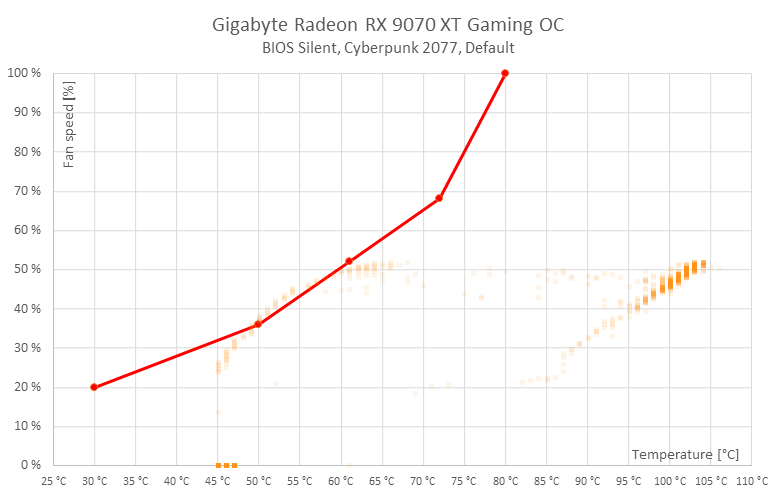
That was the default setting. If you switch to the displayed custom curve and apply the changes, the card’s behavior changes drastically. From the following measurements, it seems that while the default setting is closer to regulation based on average temperatures, during manual control the fans are governed by the hotspot temperature.
And that’s a problem because the hotspot temperature is significantly higher than the average—under load on the tested card with automatic control, the hotspot sits around 100 °C, so the fan control almost always hits the x-axis maximum (maximum temperature).
We will compare this in the graphs below.
Cyberpunk 2077, BIOS Quiet, default settings vs. custom curve (default)
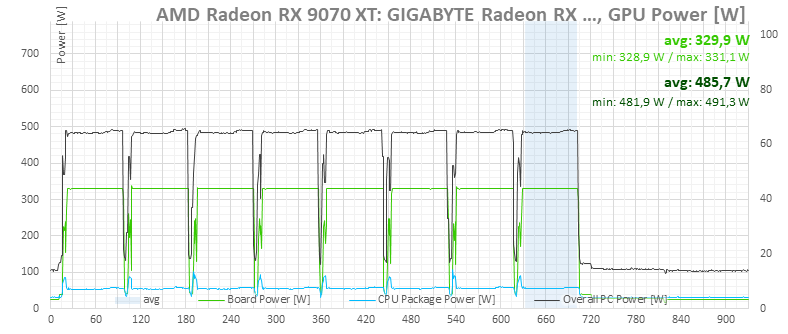
The first performance test was conducted using the Cyberpunk 2077 benchmark with RT Medium settings at the native resolution of 3840 × 2160. It consists of eight consecutive runs, with average values taken from the final run.
You should see the results in the interactive graphs, which switch when you hover over them. If they don’t work, the same graphs are available below as clickable thumbnails that open in a lightbox.

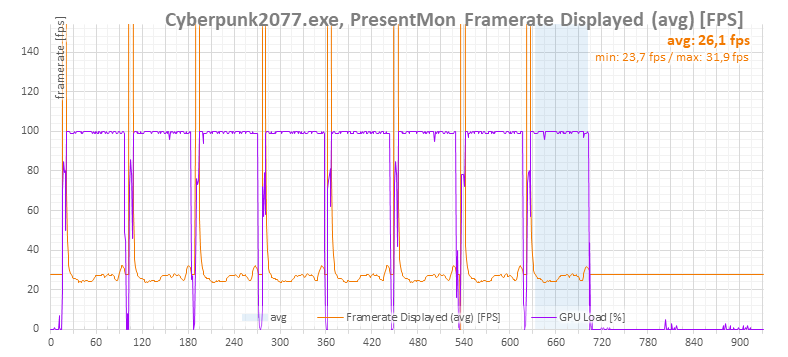
Default settings | Custom fan curve (default)

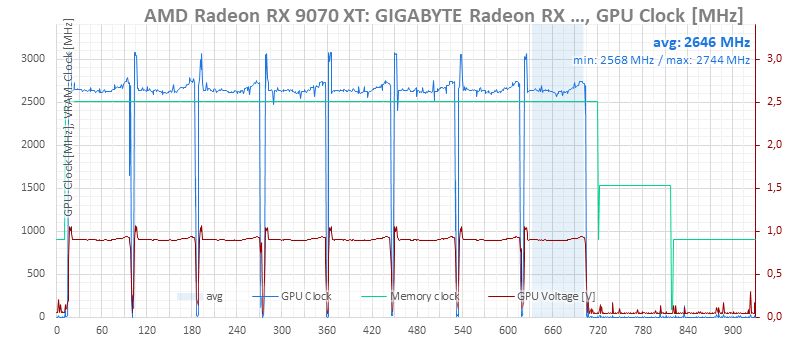
Default settings | Custom fan curve (default)
A dramatic difference can already be seen in operating temperatures.


Default settings | Custom fan curve (default)
It’s a consequence of how the fan behavior changes.

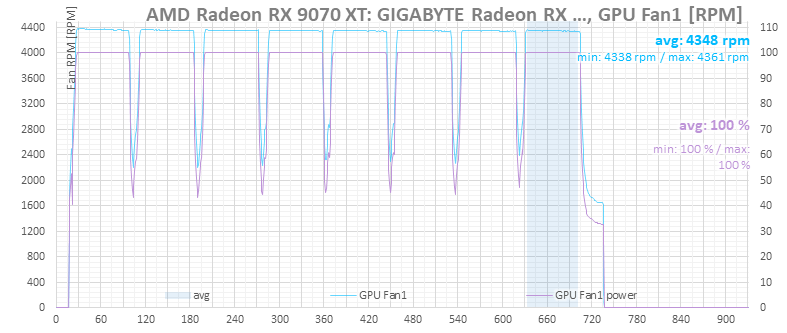
Default settings | Custom fan curve (default)

Default settings | Custom fan curve (default)
F1 24, BIOS Quiet, default settings vs. custom curve
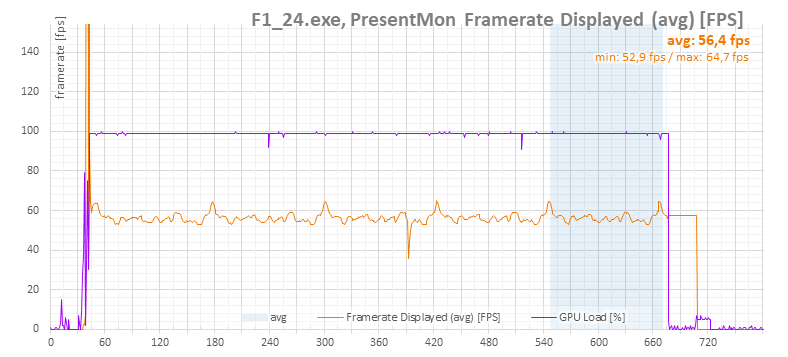
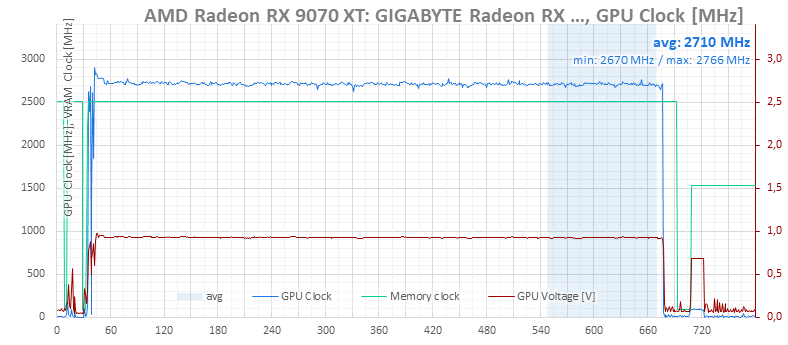
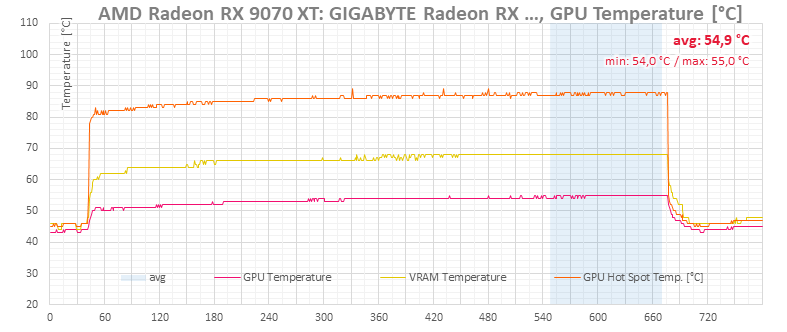
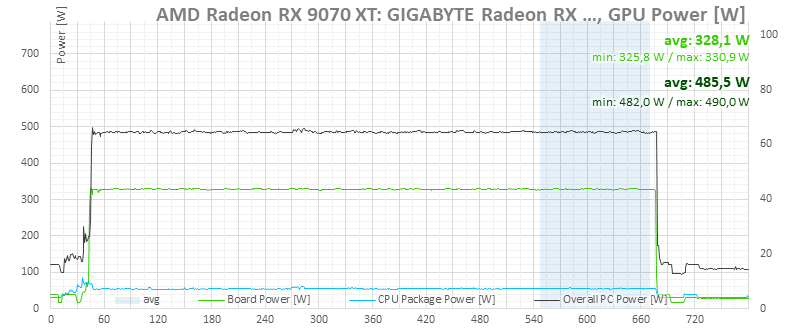
The next tests are from the F1 24 benchmark at 3840 × 2160 resolution with Ultra settings. This is a benchmark with five laps on the Singapore map in the wet. Unlike other benchmarks, this is a sustained load; there is no drop in load between test loops, and the card remains heated the entire time.
The differences are similar—with the custom curve, the card quickly spins the fans up to practically maximum speed.

Default settings | Custom fan curve (default)

Default settings | Custom fan curve (default)

Default settings | Custom fan curve (default)


Default settings | Custom fan curve (default)

Default settings | Custom fan curve (default)
⠀

