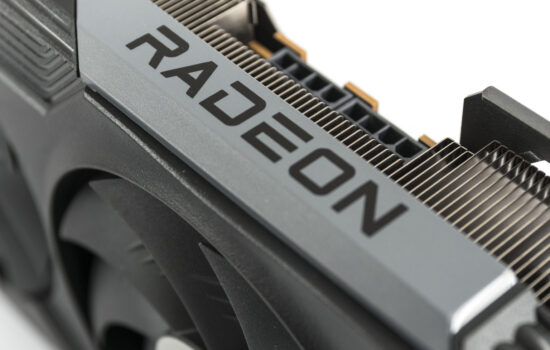
The Nitro+ Radeon RX 9070 XT sits at the top of Sapphire’s lineup. AMD’s current Radeon generation focuses solely on the upper mid-range segment with intense price competition. As a result, Sapphire’s flagship isn’t a pricey premium model with a massive cooler like the previous-gen Nitro+ RX 7900 XTX. Instead, the designers focus on attractive aesthetics and distinctive features, such as the hidden 12V-2×6 power connector.
Before we dive into testing the Sapphire Nitro+ AMD Radeon RX 9070 XT OC GPU, let’s briefly recap the basic parameters of the Radeon RX 9070 XT. We covered it in detail, along with the RX 9070, at launch in articles dedicated to the RDNA4 architecture and the parameters of both models, their features, and new technologies they introduce.
The Radeon RX 9070 XT is the most powerful model in the current generation of cards with the RDNA4 architecture. It uses the Navi 48 chip as its foundation. The RX 9070 XT features a fully unlocked chip with 64 CUs, 4096 stream processors, 128 raster operations units, and 256 texture units. Detailed specifications are in the table below.

We have already tested the base Pulse model and the better RX 9070 XT Pure from Sapphire; today we look at the top-tier variant, the Nitro+ AMD Radeon RX 9070 XT.
Sapphire Nitro+ AMD Radeon RX 9070 XT OC GPU 16 GB
(11348-01-20G)
In recent years, the Nitro+ series has represented the peak of Sapphire’s offerings. The Sapphire Nitro+ AMD Radeon RX 9070 XT OC GPU 16 GB features a powerful cooler and factory overclocking; the GPU boost clock is increased from the original up to 2.97 GHz to up to 3.06 GHz, and the typical game clock is raised from 2.4 to 2.52 GHz. Associated with this is an increased power limit from the reference 304 W to 330 W.

We are accustomed to dual BIOSes on higher-end Nitro+ models from previous generations, but in this generation, the card has only one. Specifications and values stored in the BIOS are shown in the GPU-Z screenshots below.

The GPU-Z monitoring shows only the usual data as on other models. The fans are monitored and regulated via a single header. The power limit can be set in the range of -30 to +10 % (231 to 363 W).


The HWiNFO application can extract the most information from the monitoring systems of most cards. You can see the list of sensors available for the tested card in the latest version of the application in the image below.

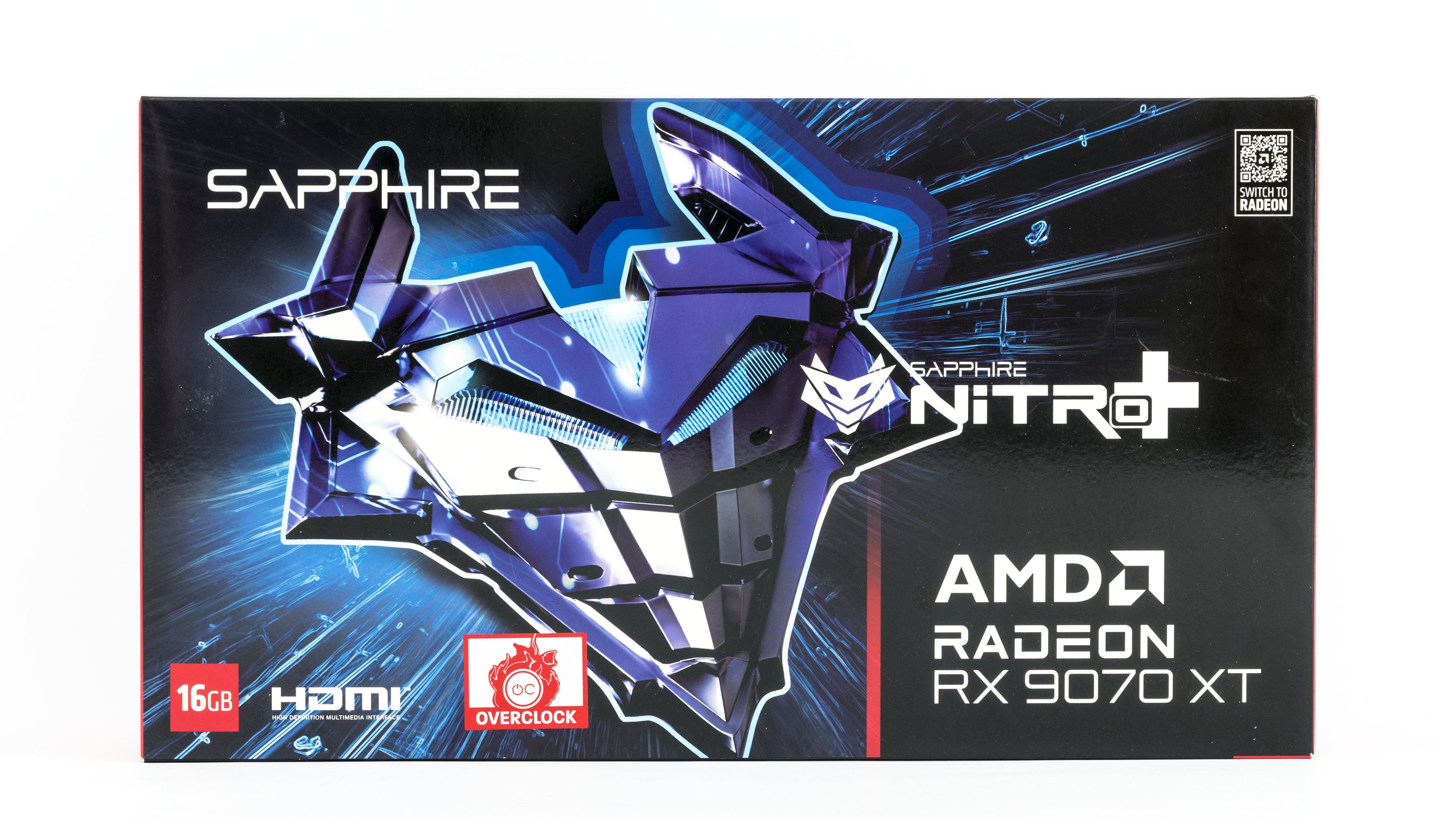
On the back of the box, manufacturers usually highlight key features of the card’s equipment; Sapphire gives more space to the AMD technologies common to all Radeons. You won’t learn much about the card itself.


The accessories are plentiful, including a concise installation manual, leaflets with additional guides, a GPU support bracket, and a power adapter from three 8-pin connectors to a 12V-2×6 connector—which is very unusual for Radeons. In a black envelope is a metal backplate that attaches to the card, but more on that in the next chapter.

⠀
⠀