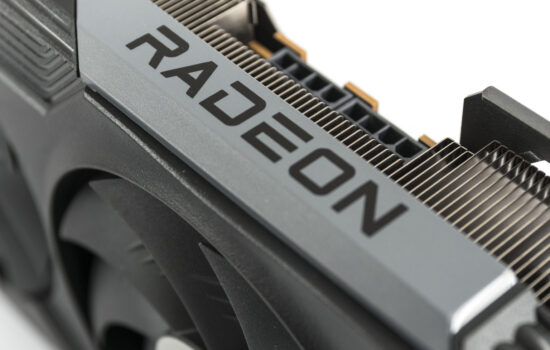
The Nitro+ Radeon RX 9070 XT sits at the top of Sapphire’s lineup. AMD’s current Radeon generation focuses solely on the upper mid-range segment with intense price competition. As a result, Sapphire’s flagship isn’t a pricey premium model with a massive cooler like the previous-gen Nitro+ RX 7900 XTX. Instead, the designers focus on attractive aesthetics and distinctive features, such as the hidden 12V-2×6 power connector.
The card is equipped with a 3.2-slot cooler with an unusual design. It’s surprising mainly because the power connectors are not visible from the outside, even though the card, with its declared 330 W power draw, cannot function without them. The shroud has a metallic grey colour and combines plastic and metal elements. Three counter-rotating fans are set into it, blowing air down onto a transverse fin stack heatsink.
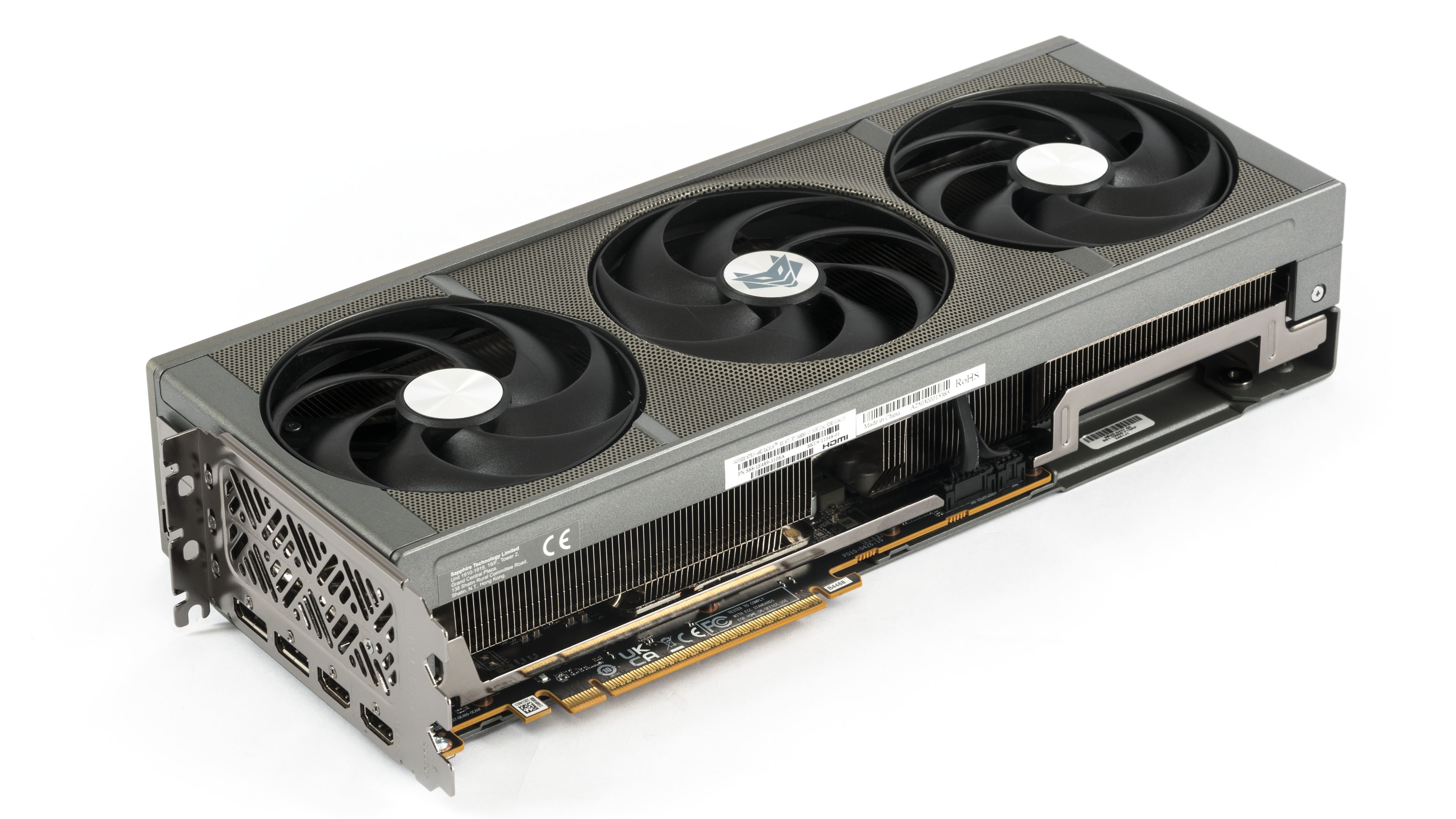
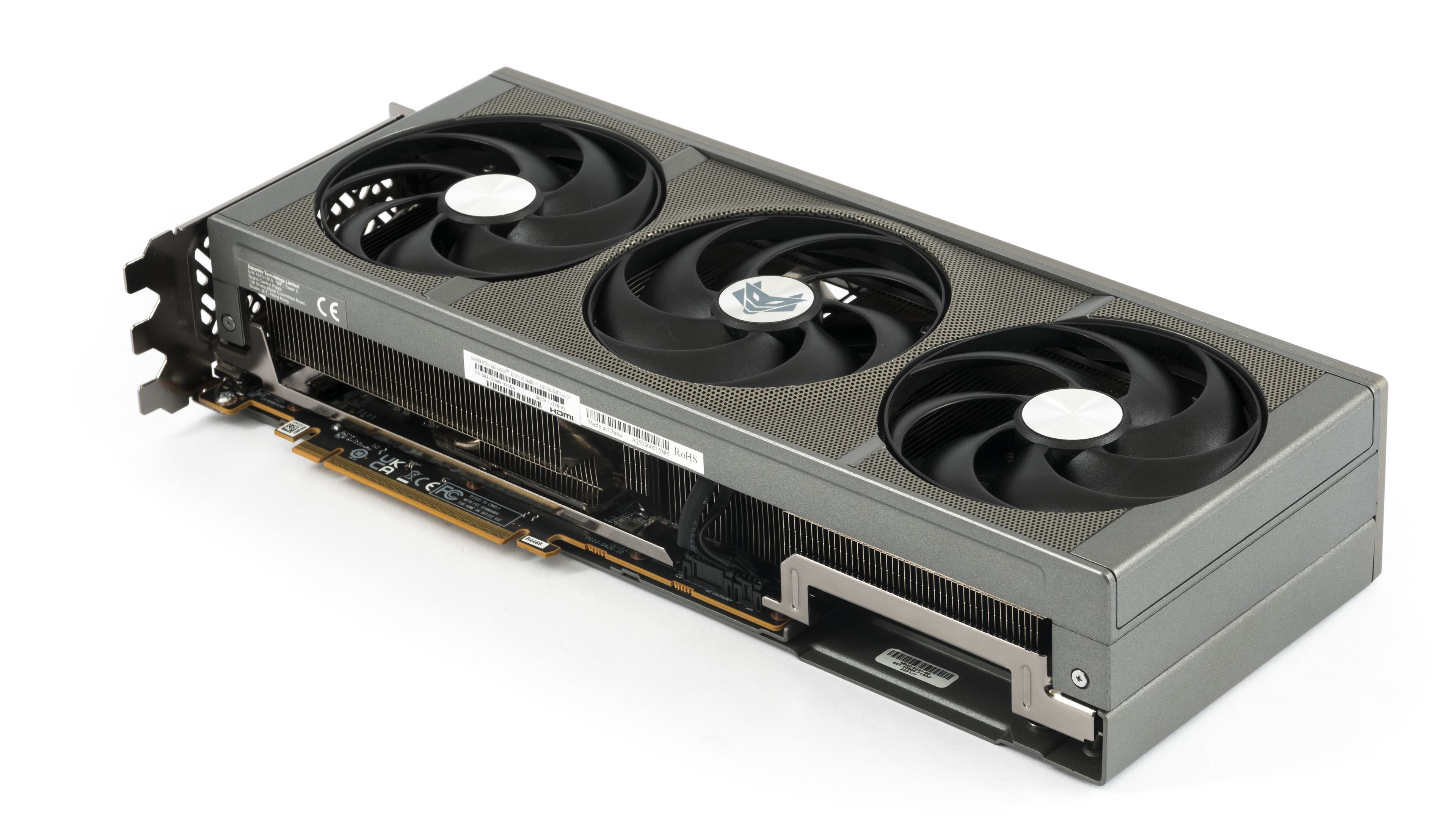

A peculiar design element is the use of perforated metal sheet, typically used as a coarse dust filter in cases. It is not open-pass-through; a plastic cover lies beneath it.
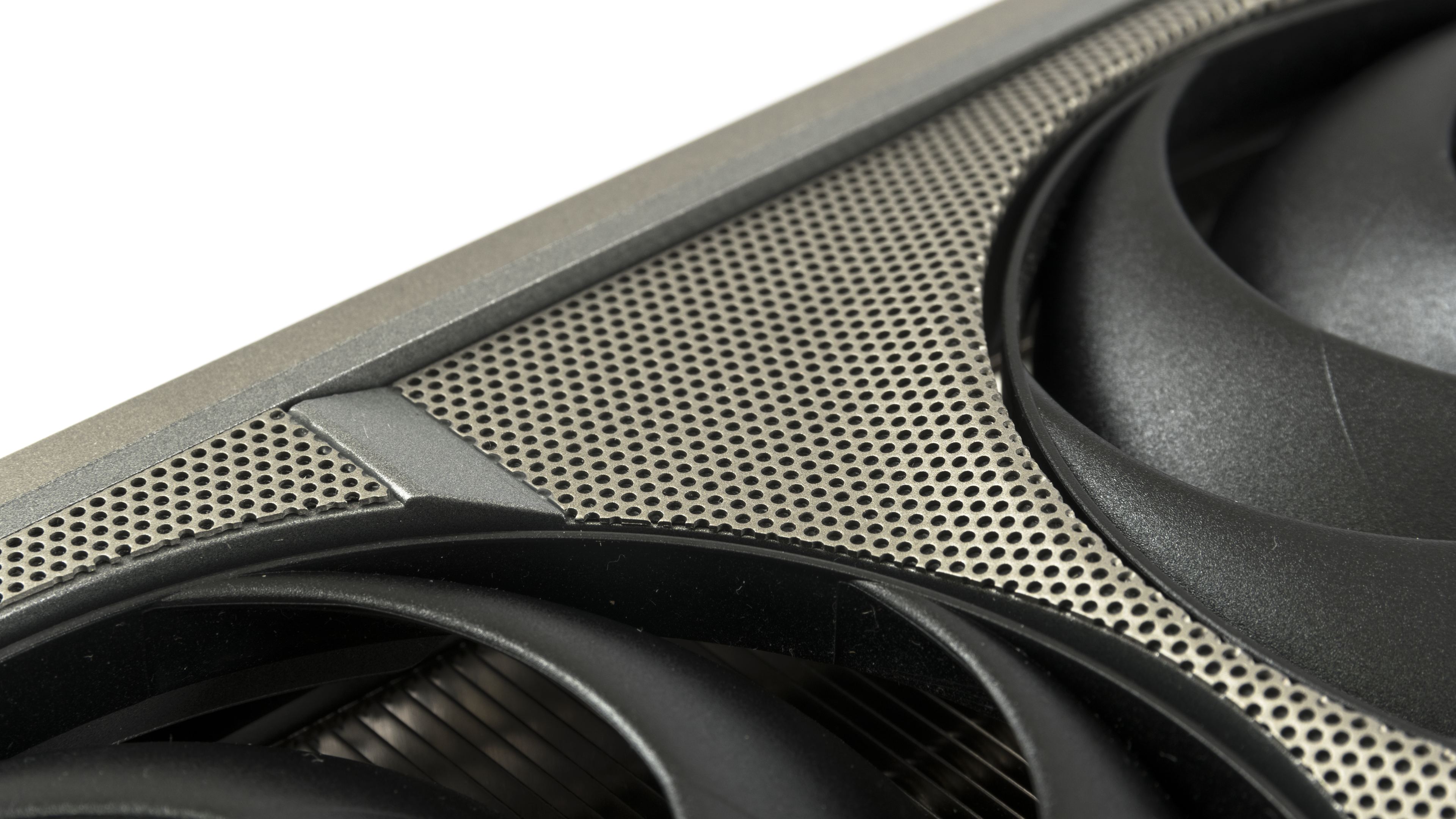
The cooler dimensions aren’t much larger than the cheaper Pure RX 9070 XT model, but it has more heat pipes.
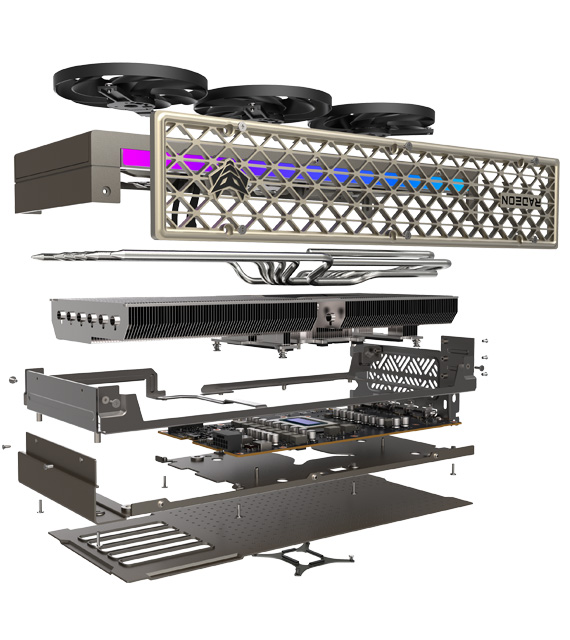
The rear part of the cooler should be open-pass-through, but the heatsink fins are partially covered by a foam insert that protects the power cable from damage. The middle fan rotates in the opposite direction.
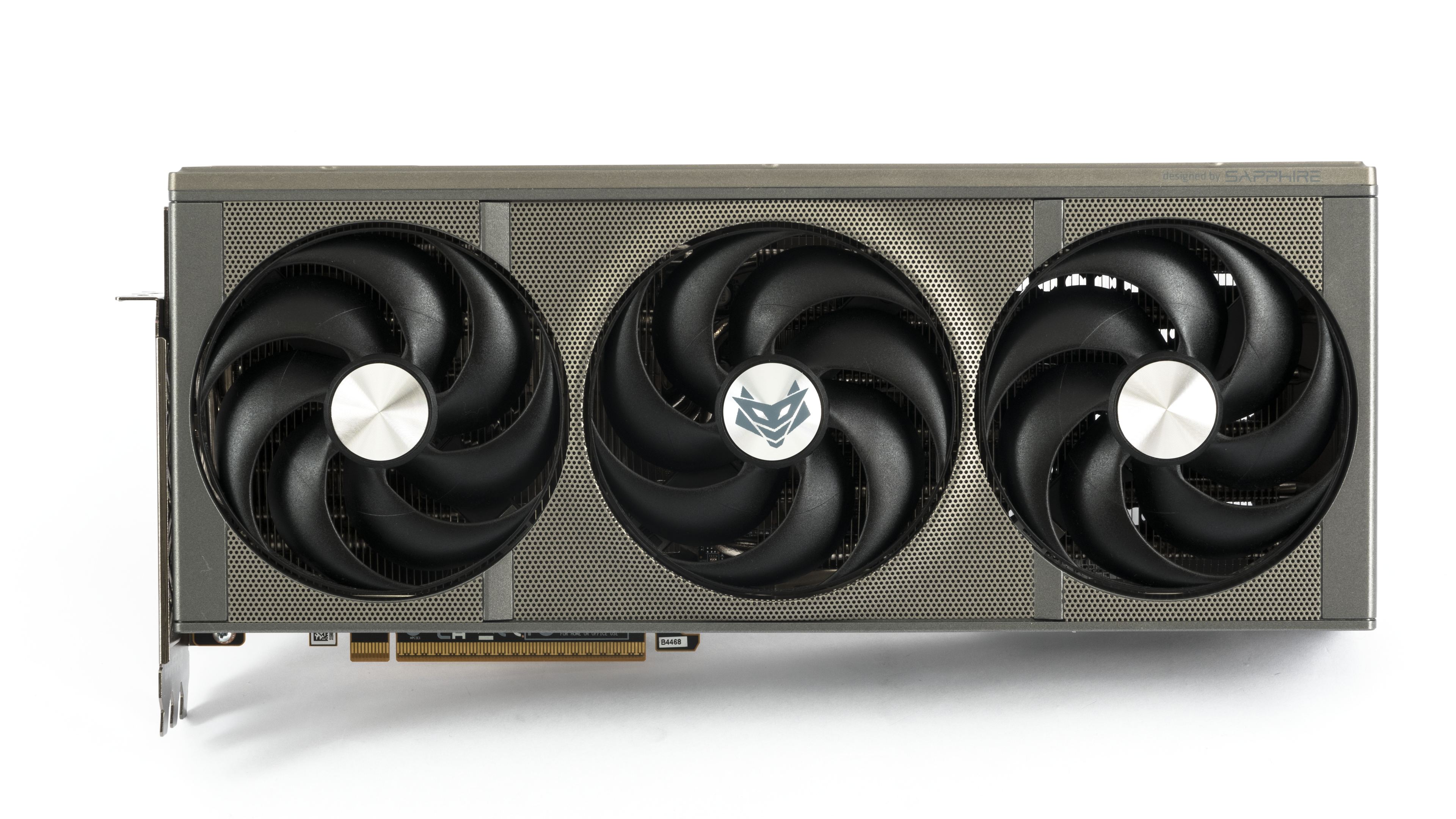

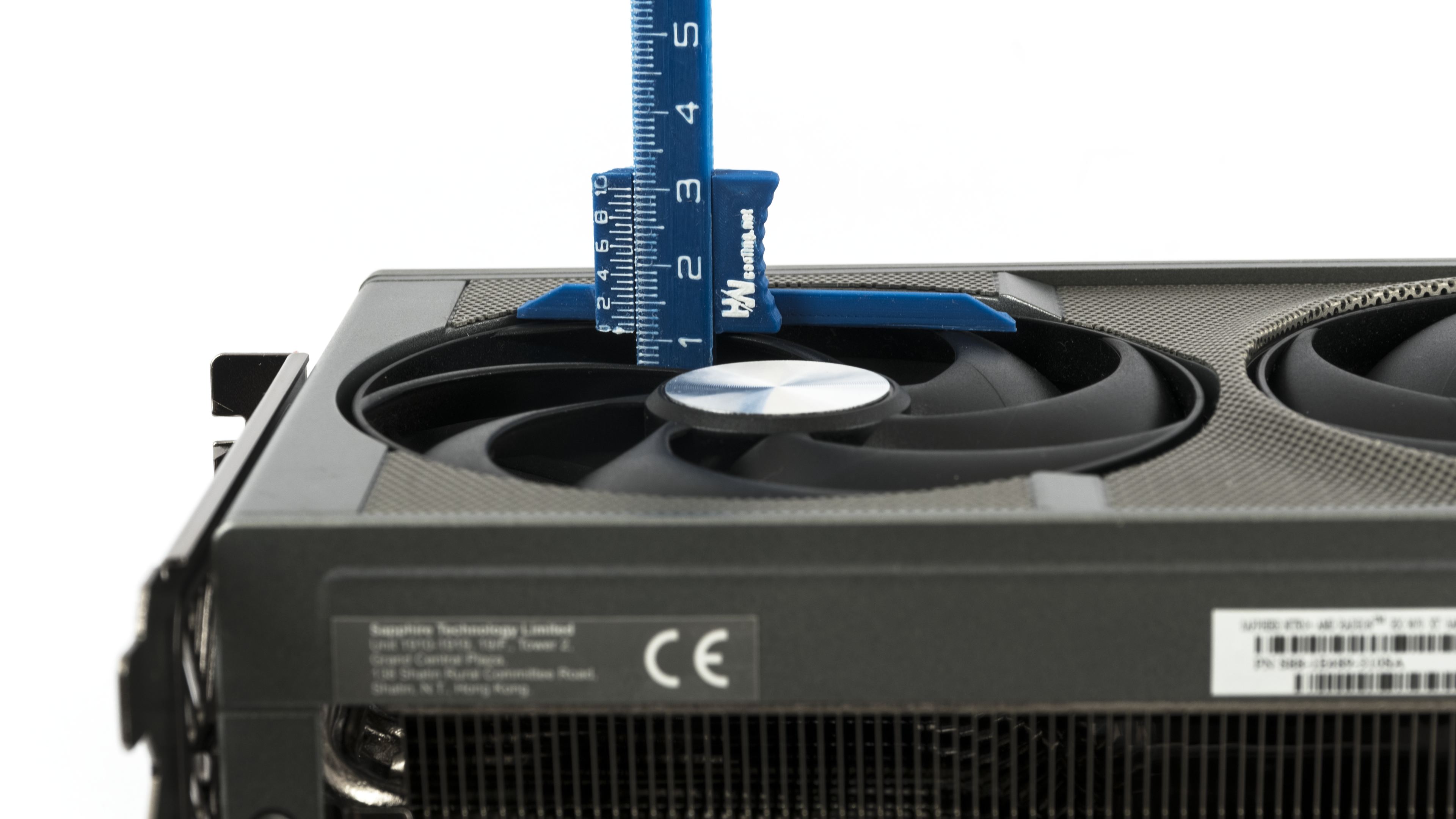
The fans have a height of 11 mm and a diameter of 10 cm, placing them among the larger ones.
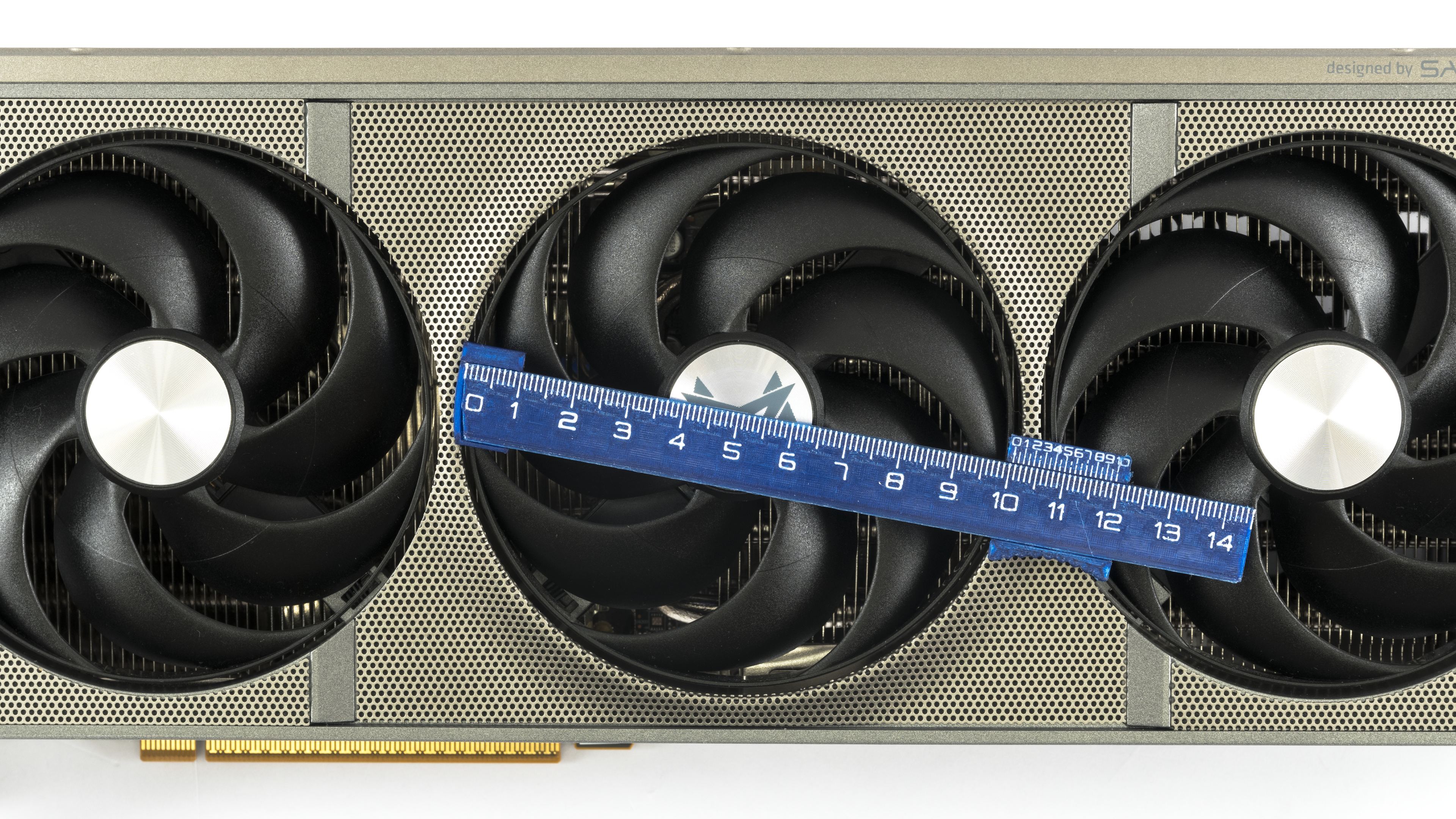
Between the PCB and the metal backplate are thermal pads that help draw heat away from the memory. You can see through the entire card from the side.

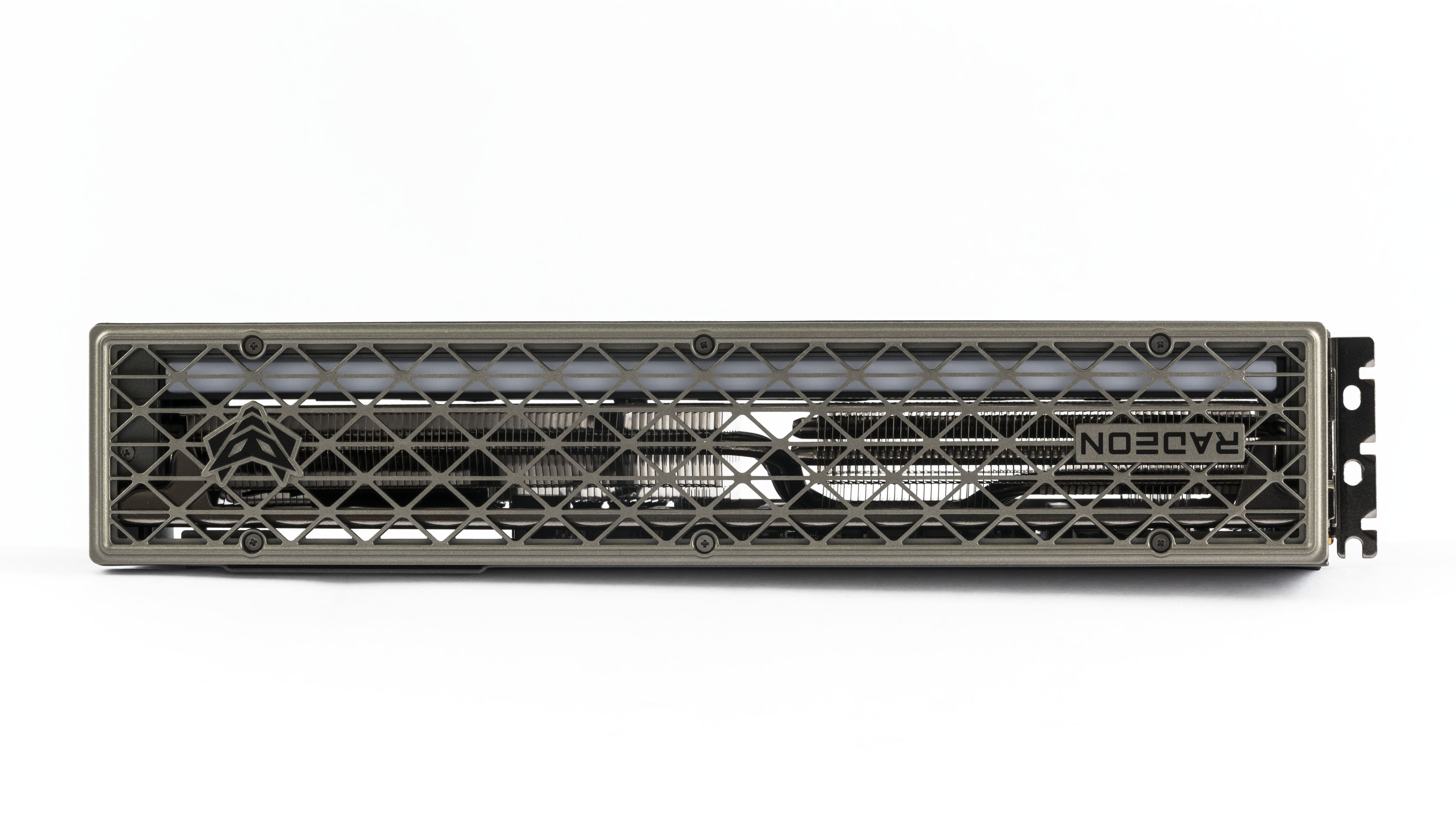
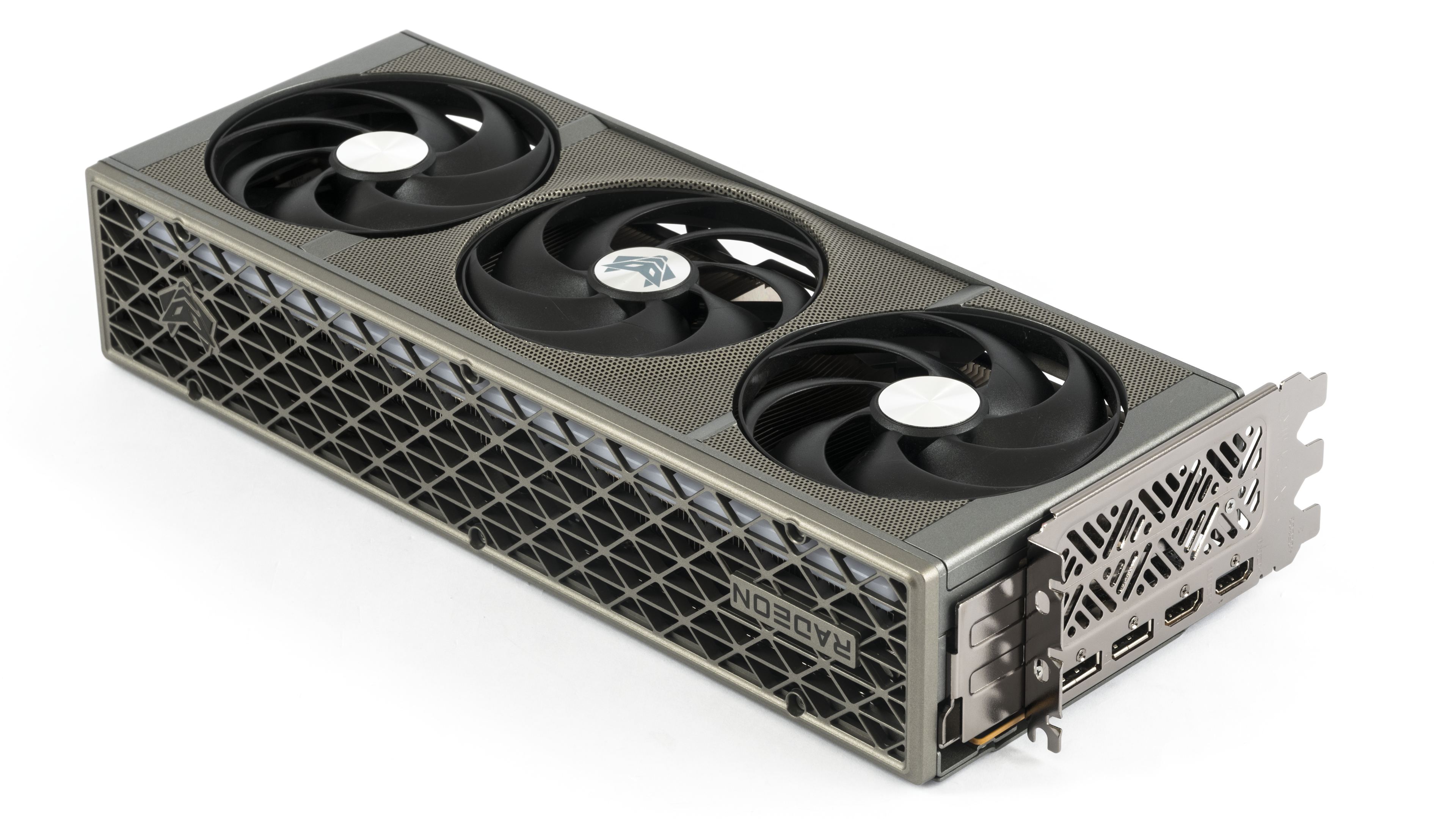
Along the side of the card is a strip of white translucent plastic, which is backlit by addressable RGB LEDs.

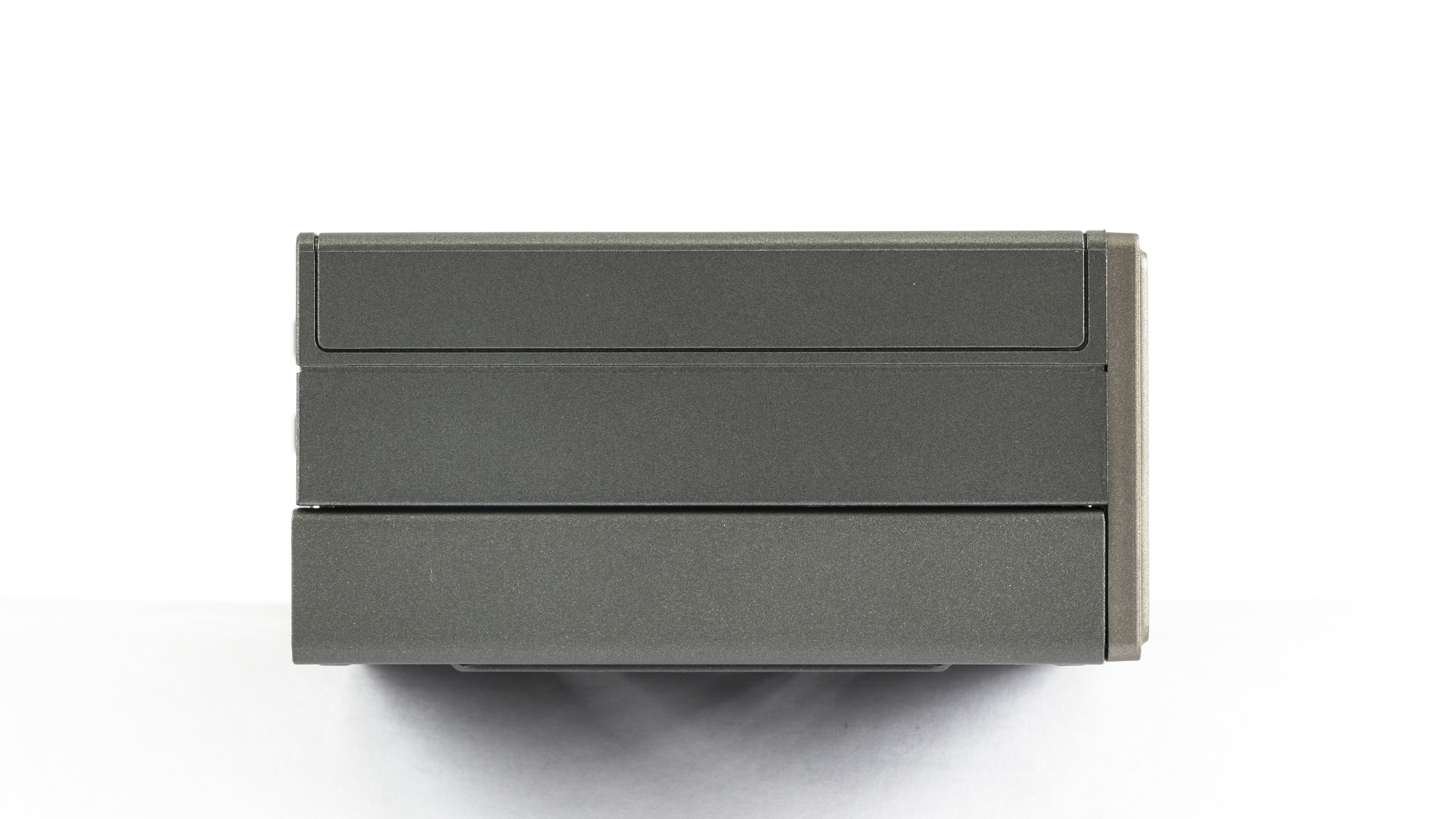
The card’s length from the bracket is 33 cm. From the edge of the bracket, the cooler extends beyond the card by just under 4 cm. The card’s height is between 6 and 7 cm. It is thus slightly taller than three slots, but a fourth slot must remain free anyway for air access to the fans.
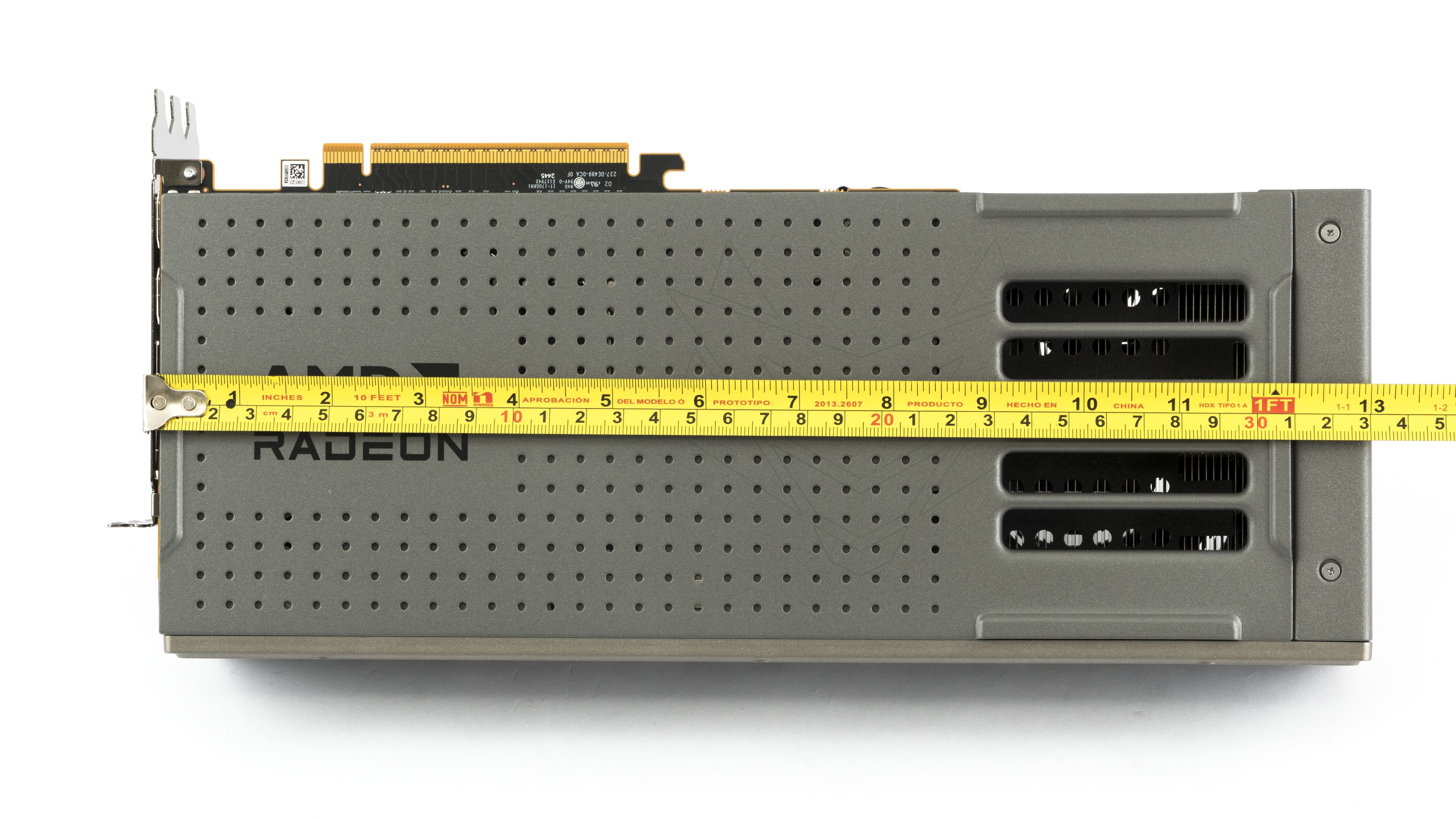
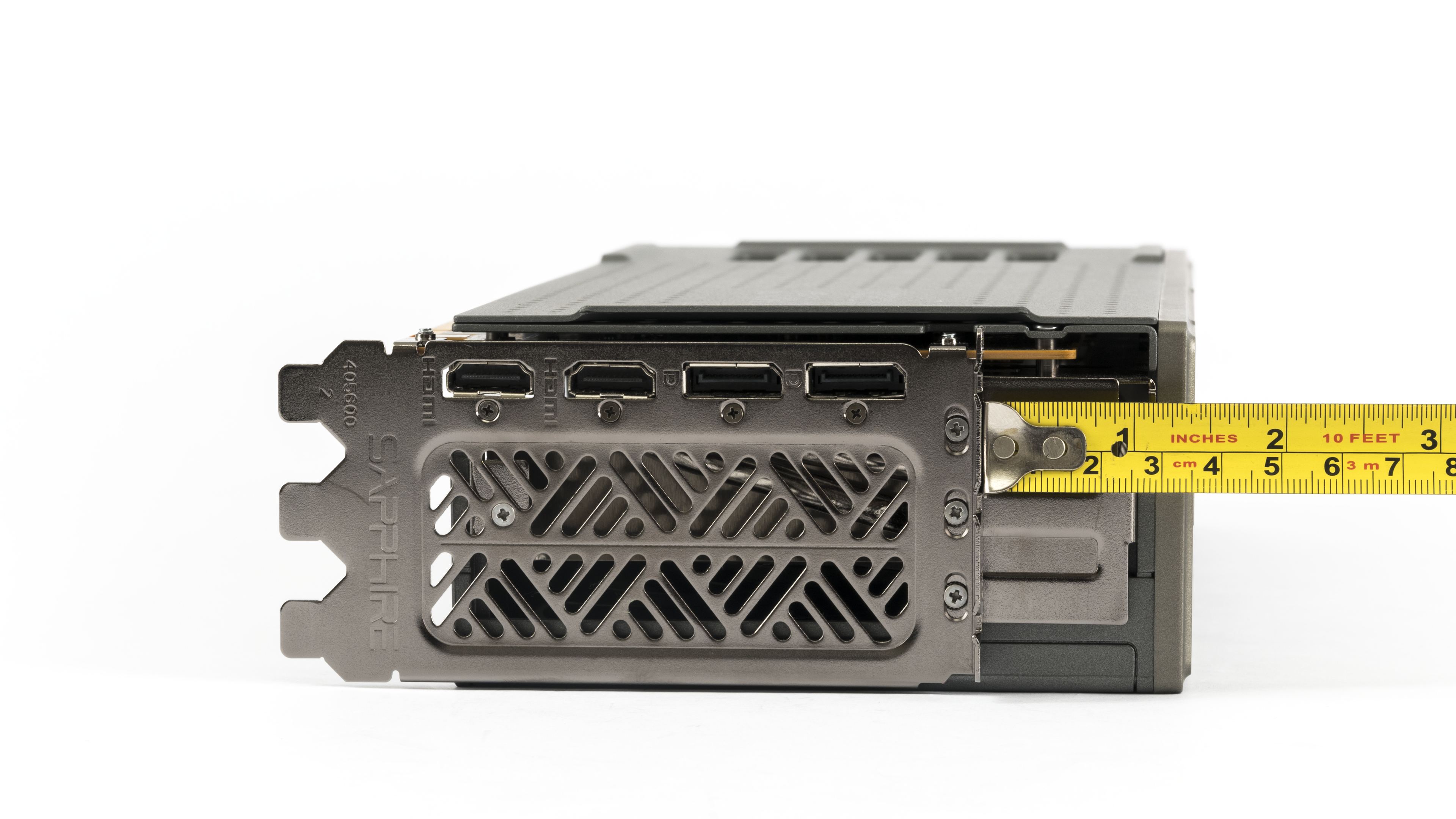
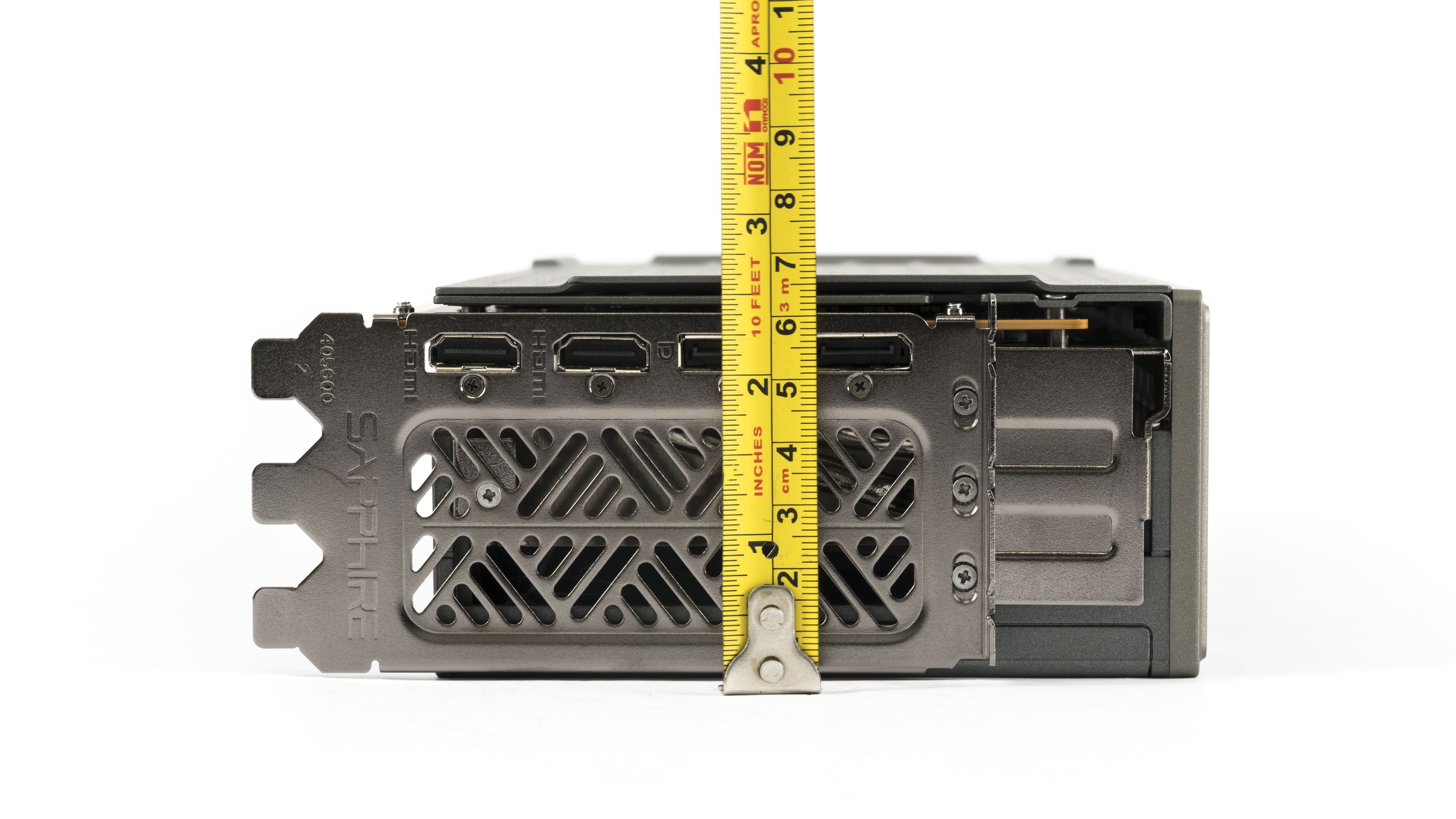
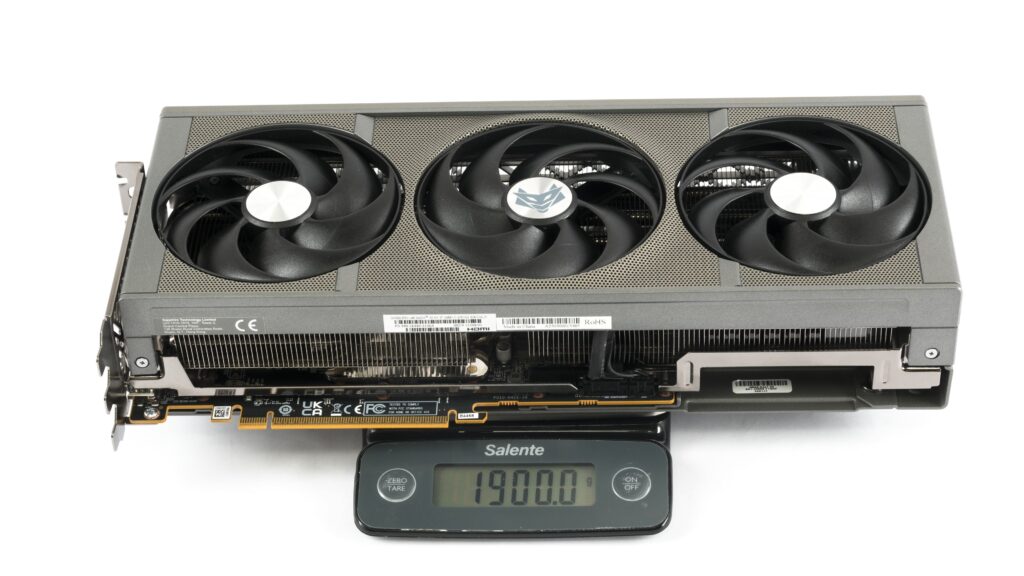
The card’s weight is 1.9 kg without the power adapter.
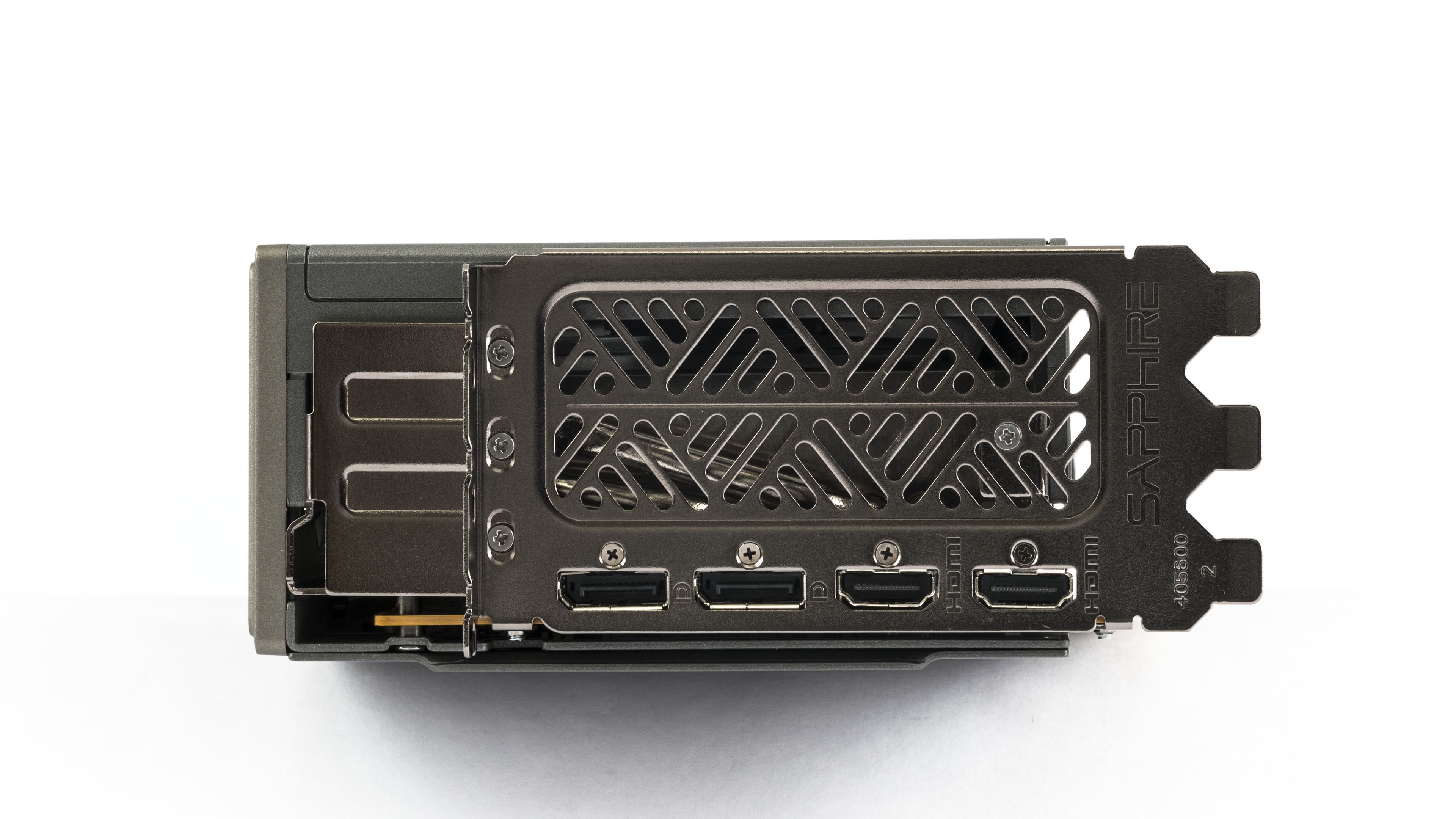
The most common output combination is three DisplayPort 2.1a with UHBR13.5 and one HDMI 2.1b. Sapphire has used a combination of two DisplayPorts and two HDMI connectors.
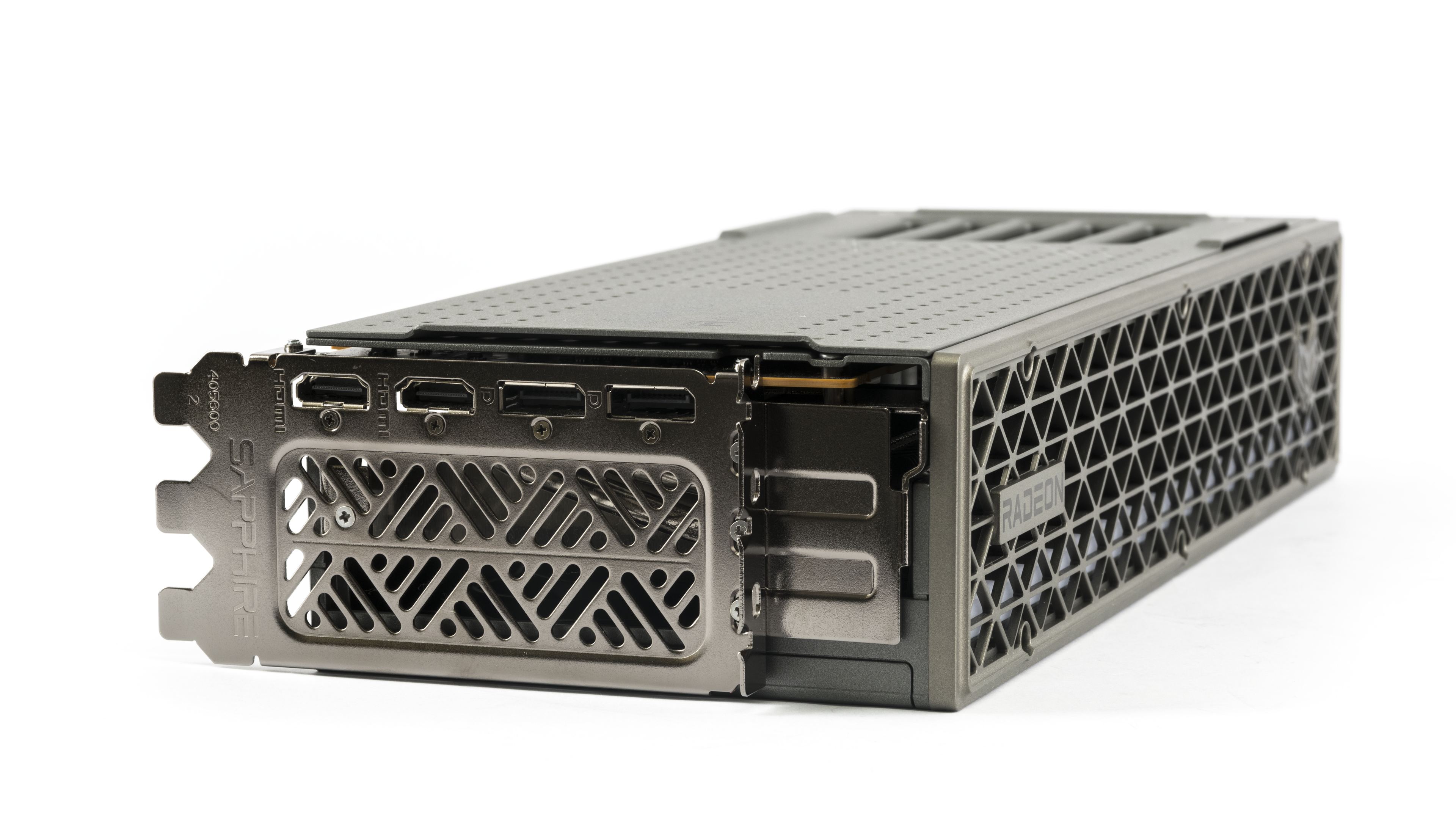
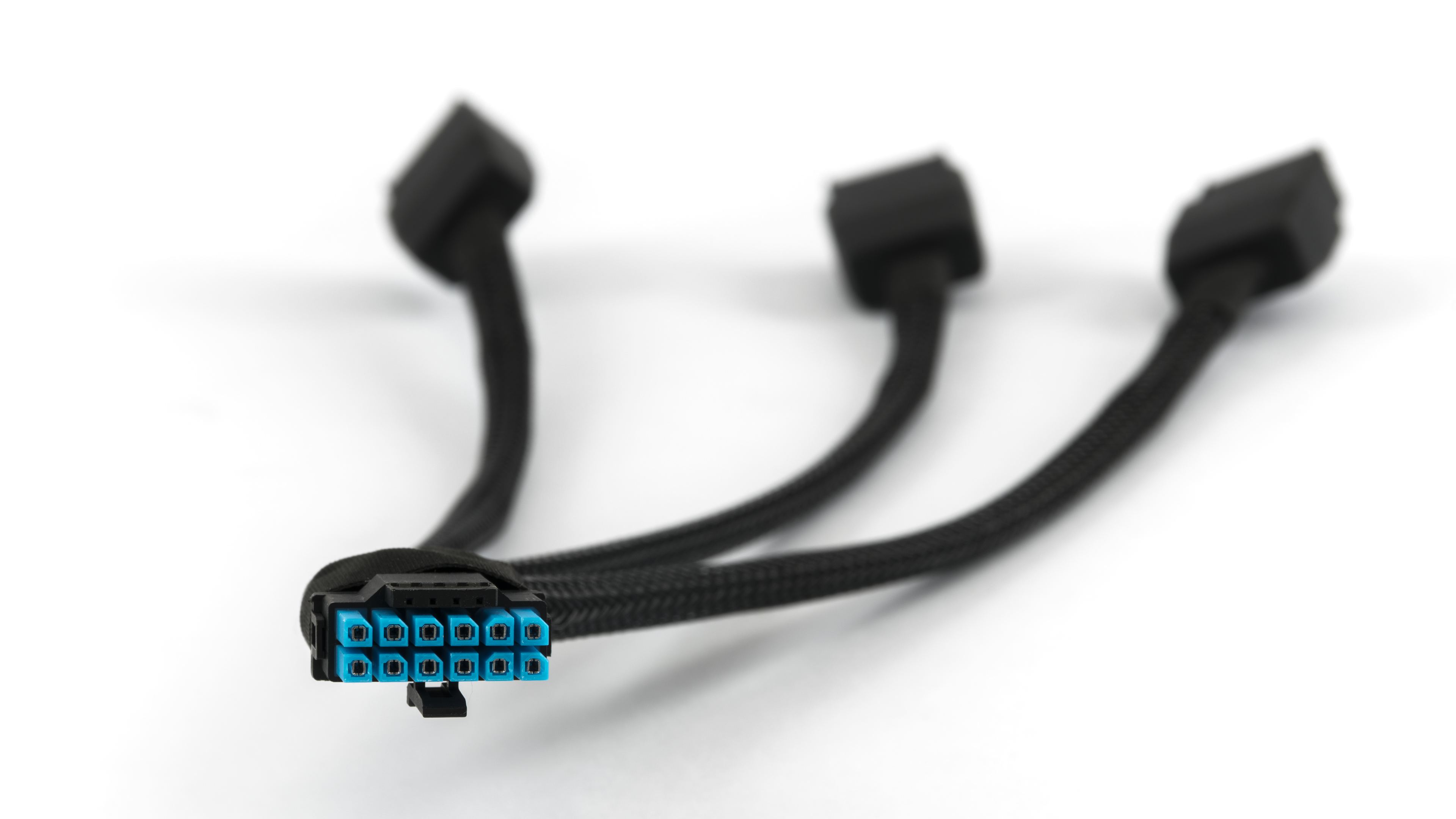
A 12V-2×6 connector is used for auxiliary power. The power cable is hidden inside the card under a cover. The connector is oriented with the latch facing up. Next to it is a connector for synchronizing the ARGB lighting with the motherboard.

While everyone praises Sapphire for neatly hiding the auxiliary power cables in the design, an undesirable side effect is the foam pad that partially restricts the free passage of air. The supplied adapter has blue plastic around the contacts, making it more visible if the connector isn’t fully seated.
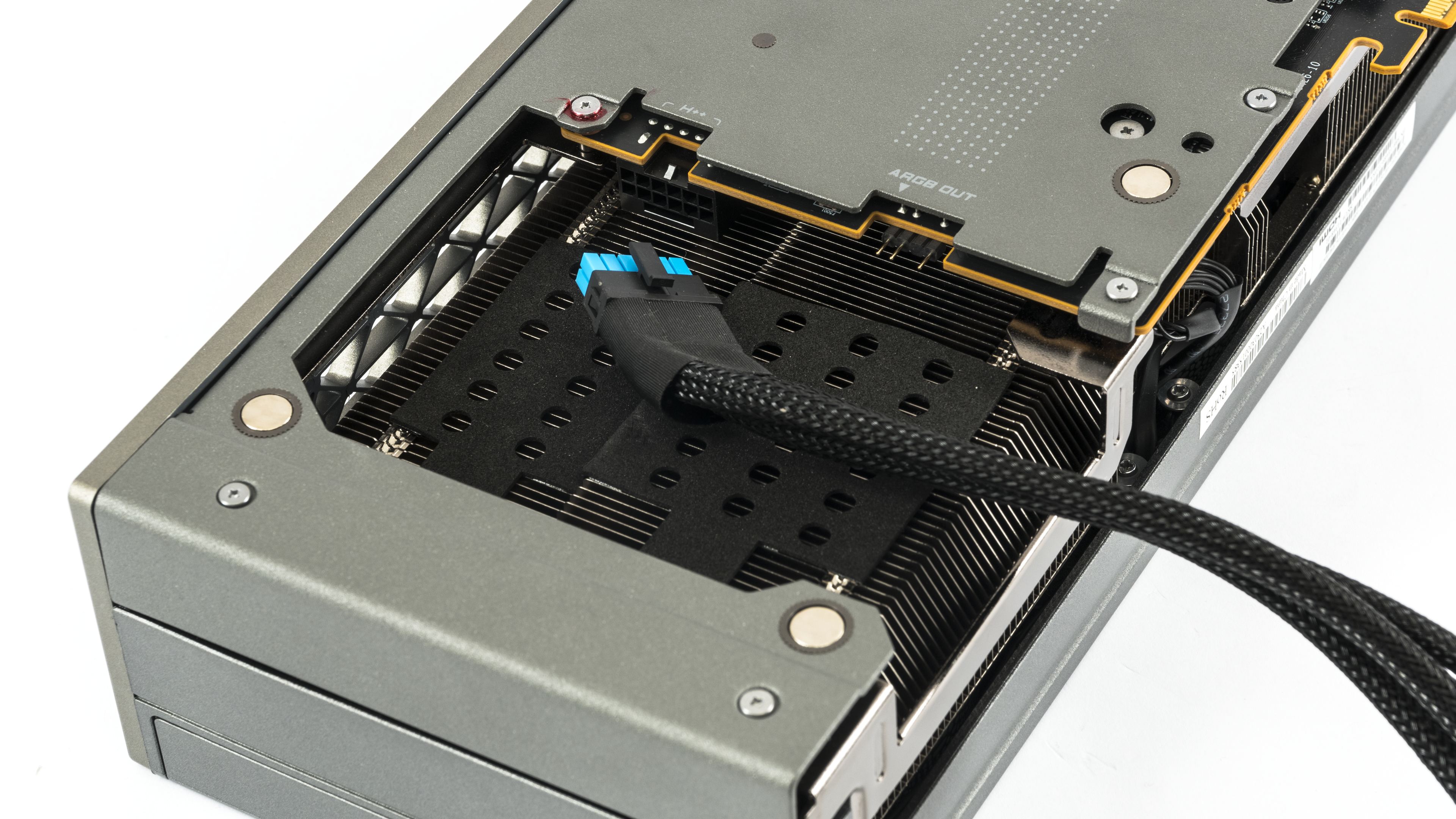
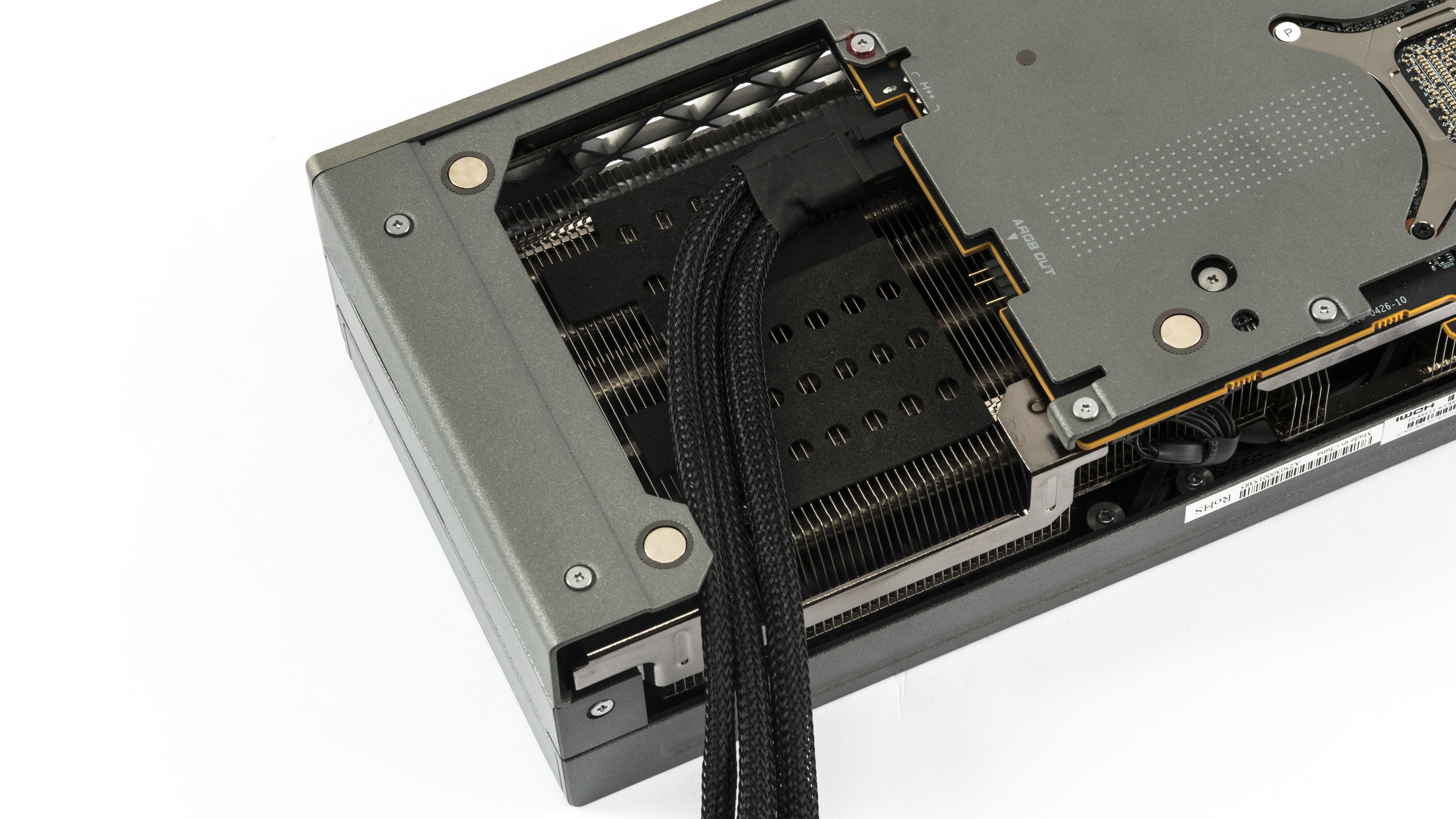
After connection, you cover it with the metal backplate, which is secured using strong neodymium magnets.

Having covered the card’s design, let’s move on to the test build and results.
⠀
⠀