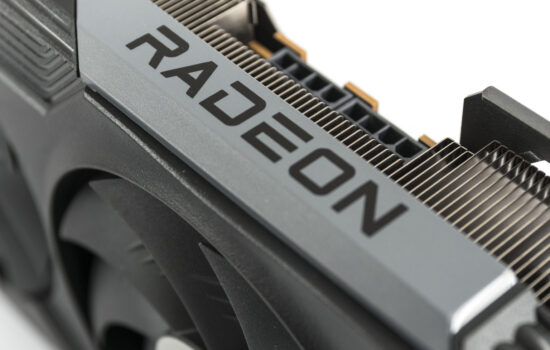
The Nitro+ Radeon RX 9070 XT sits at the top of Sapphire’s lineup. AMD’s current Radeon generation focuses solely on the upper mid-range segment with intense price competition. As a result, Sapphire’s flagship isn’t a pricey premium model with a massive cooler like the previous-gen Nitro+ RX 7900 XTX. Instead, the designers focus on attractive aesthetics and distinctive features, such as the hidden 12V-2×6 power connector.
Final thoughts
It’s evident that the designers put considerable effort into the aesthetics of the Nitro+ AMD Radeon RX 9070 XT. It is arguably the most elegant model in the Nitro+ series that Sapphire has released so far. However, it seems that in some aspects, design was prioritized over functionality. According to sales statistics, this approach is clearly a winner with customers, who appreciate the card’s clean look, free of dangling cables visible through the case window.
I was surprised that the Nitro+ didn’t perform as well in our test setup as in other reviews found online. The reason is likely that I put the cards under more strain. They are usually tested at an ambient temperature of 21–22 °C, whereas I maintain a room temperature of 25–26 °C during testing.
The test conditions also differ—many reviews are still conducted on open test benches, where there is no issue with exhausting heated air. When cards are tested in a case, reviewers often use chassis designed for high-end cooling that pull cool air across the full area beneath the GPU. For my test platform, I intentionally chose a case with a less favourable, yet currently most common, layout—namely, one with a PSU shroud at the bottom, close to the motherboard. Because of this, the cooler isn’t getting as much cool air from beneath the cooler.
On most new cards, it’s visible that their designers tried to exhaust as much heated air as possible directly upwards from the card. The Nitro+ doesn’t fare as well in this regard as other models, including the Pure RX 9070 XT. This is also contributed to by the manufacturer mitigating the advantage that cards with a shorter PCB and open-pass-through fin stack at the rear of the cooler usually have. A foam pad was attached to the heatsink to protect the power cable from being cut by the sharp fins. Consequently, the Nitro+ exhausts warm air more to the sides than upwards, and it seems that some of this heated air recirculates back under the card inside the case.

The snap-on metal cover isn’t very practical either—it holds firmly, but during noise measurements, I had the impression that it caused the card to resonate more when the power delivery coils started to whine
I don’t want to draw hasty conclusions after testing a single unit—it might have just been a less successful sample—but compared to the Pure RX 9070 XT tested at launch, the coil whine was noticeably louder and audible from a greater distance. Among the cards I’ve had my hands on this year, it ranks among the worst in terms of coil whine noise; with case fans at minimum speed, the sound level meter registered 2 dBA higher than with the Pure AMD Radeon RX 9070 XT.

I don’t mean to say that the Nitro+ RX 9070 XT is an uninteresting or average card. The cooler is still quieter than what’s typical for budget models, and its other operating characteristics are also good. It’s just that it doesn’t hold true what applied to most Nitro+ models of previous generations.
t doesn’t stand out as much in terms of noise and thermals, and compared to the cheaper RX 9070 XT models in Sapphire’s lineup, you don’t gain as much as was the case, for example, with the Nitro+ AMD Radeon RX 7900 XTX. Simply put, the premium impression is created more by its appearance than on its overall noise and cooling performance.
But this is understandable. Given that AMD’s offering in this generation is limited to the upper mid-range segment, competing with Nvidia primarily on price, manufacturers have to save more costs. In the design phase, they were constrained by the budget and couldn’t use components as costly as in the premium models of the previous generation, which carried almost double the price.
| Sapphire Nitro+ AMD Radeon RX 9070 XT OC GPU 16 GB (11348-01-20G) |
|
+ Better price/performance ratio than GeForce RTX 5070 Ti − Worse value for money than than the Pure AMD Radeon RX 9070 XT |
| Approximate retail price incl. VAT: 765 EUR |
English translation and edit by Jozef Dudáš
⠀