




The Gungnir gaming case series has a new top model, the 300R Airflow. This 60-litre midi-tower brings, among other things, features that facilitate the installation of components. All in all, we can probably talk about a user experience on a higher level. Whether it lives up to the selling price is up for consideration. The price is set quite high and the innovations that the MSI case brings may not be enough for everyone.
Testing methodology
Although the case has the option to fit 140mm fans in the front and rear, it comes with four 120mm fans. In the price range, I would expect 140mm fan variants though. Three are at the front for sucking in cool air and one at the back, for exhausting the already heated air. The case offers the option to mount an 80/120mm fan directly on the metal cover of the vertical grommet, which could contribute to better cooling of the bottom of the motherboard and the components on it. Therefore, for comparison at a noise level of 39 dBA, we will use the bottom fan from the front panel for this position. This mode is highlighted in purple in the charts with an additional “extra fan” designation in parentheses.
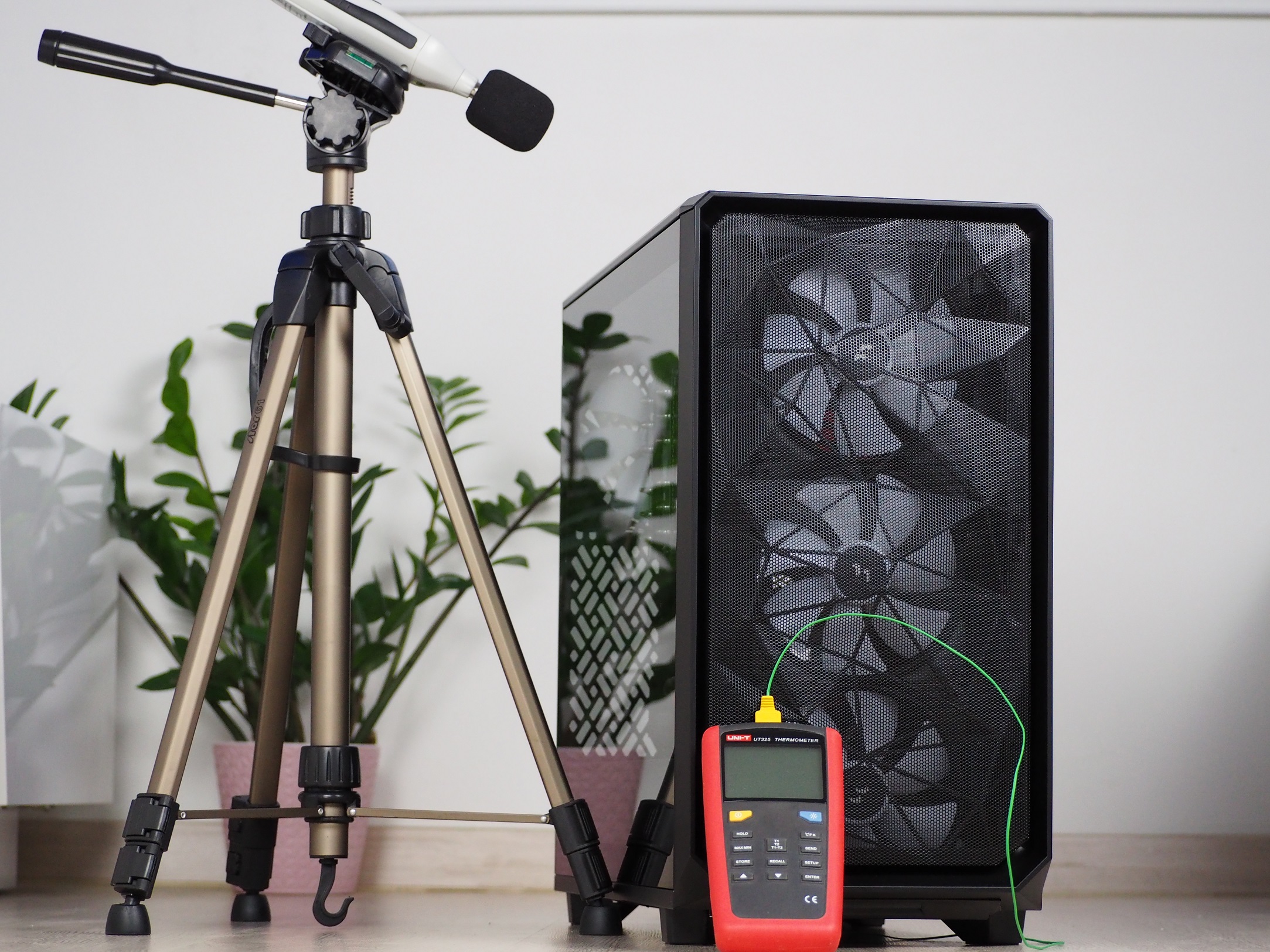
Testing is done in a home environment where I strive for the most accurate results possible. In the room during testing, the air temperature in front of the case is 23 degrees Celsius and the minimum noise level I can measure with the Voltcraft SL-100 noise meter is 32.4 dBA. The sensor of the noise meter is aligned to the center of the top of the case at a distance of 10 cm, for the best measurement of the speed difference of the fans, which I change using the motherboard. For easy comparison to other cases, they are always regulated to fixed noise levels.
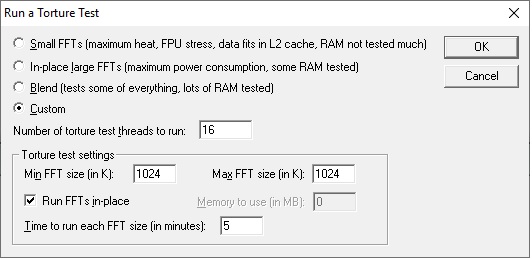
Individual components are heated for 10 minutes in FurMark synthetic stress tests and with Prime95 (custom settings) at the same time. This time is long enough to allow all components to warm up sufficiently. There are then 15-minute cooling breaks between tests, during which the component temperatures (and the case air temperature as well) are brought back to default.
Noise mode levels:
- 36 dBA
- 38 dBA
- 39 dBA
| Test setup | |
| Processor | AMD Ryzen 7 3700X |
| Motherboard | ASRock X570 Taichi |
| CPU cooler | Scythe Fuma rev. 2 (single fan) |
| Thermal compound | Noctua NT-H2 |
| Graphics card | Asus RTX 2060 Super Dual |
| RAM | Patriot, 2× 8GB, 3600 MHz/CL17 |
| SSD | Western Digital Blue 500GB (2280) |
| Power supply | Corsair RM750X |





Anytime I see new case (especially costing that much), I immediately compare it to Fractal’s Define 7/Meshify 2 which I find special ones. Maybe not first ones not having any serious flaws, but first ones not having them when also having just anything enineered that well to the point of competition (or just me trying hard to complain) not having ideas how to do it better or improve it further. They are like pc case benchmark and it’s sad to see that they are already three years old, but for all this time nobody managed to create something that good when it could be that easy as copying all of the tricks. The problem of this MSI case is not even trying when costing the same money.