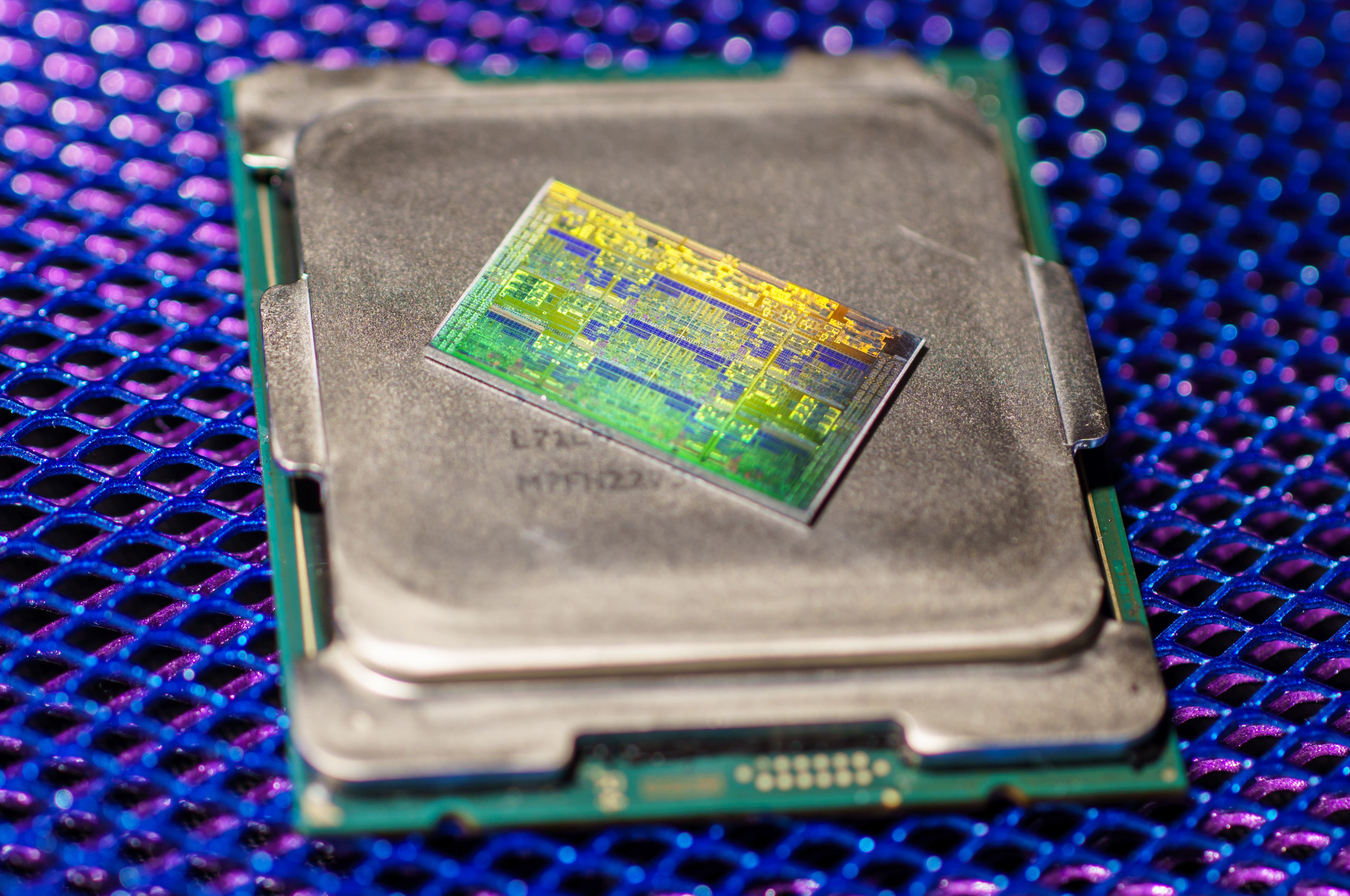
Next year in March, Intel will release the 11th generation Core processors for desktop. These sister chips to 10nm Tiger Lake in notebooks, although using 14nm silicon, will have the same new core architecture and features like PCIe 4.0. We now have leaks that show what to expect from Core i9-11900K, the highest model of the Rocket Lake CPU. This should be the SKU that will be of most interest to gamers.
The Twitter-frequenteing leaker Tum Apisak has found a probably first entry for the final production silicon (it could still be a qualifying sample too, but those match production CPUs in their specs) of the Rocket Lake processor, in the benchmark result database of the game Ashes of the Singularity. The entry in the database is for the Core i9-11900K processor. If Intel keeps the naming scheme, this would correspond to the highest performance Rocket Lake processor that Intel is planning, meaning it will be the successor to the i9-10900K decacore.
The processor has eight cores and 16 threads. This means the Core i9 series for the LGA 1200 socket will suffer some reduction in the number of cores, with Rocket Lake. This might be due to a single Cypress Cove architecture core (a port of the Sunny Cove core used by the 10nm Ice Lake chips) probably having higher power draw and also bigger area than the Skylake cores in the Comet Lake chips which go up to 10 cores.
The base clock should also be lower for the same reason. According to the AotS database, Core i9-11900K should have a base clock of just 3.5 GHz. That’s a bit lower than the octocore Core i9-9900K, which had 95W TDP. The Rocket Lake octocore Core i9-11900K that we’re talking about here, should have 125W TDP however. Current Comet Lake octocore SKU Core i7-10700K has a base clock of 3.8 GHz with that TDP.

Further specs aren’t shown by the Ashes of the Singularity database, but they can be derived from another source. MSI published a CPU-Z screenshot for the Rocket Lake processor (when announcing that it would provide support for the Re-Size BAR function a.k.a. Smart Access Memory on its Z490 platform motherboards). A Rocket Lake CPU is featured on the screenshot. It lacks SKU label, meaning it was an engineering sample. This way MSI has revealed information that Intel probably didn’t want to reveal yet, but that’s another thing.

What needs mentioning is that we don’t know if this ES corresponds to the configuration of the Core i9 models (and doesn’t instead match the Core i7, for example). ES chips also do not match final specifications of production chips, so the clock speed may be lower than what Intel will eventually ship. The base clock is only 3.4 GHz for example, not 3.5 GHz like AotS shows. If we look at the maximum boost, this sample runs at 5.0 GHz (based on the multiplier being reported as 8× to 50×). This means that the Core i9-11900K will reach at least this clock speed or higher, not anything less. Some time ago, unconfirmed information leaked from a leaker going by the nick MebiuW stated that the maximum single-core boost could even reach 5.3 GHz (and the maximum all-core turbo could be 4.8 GHz). Such specs seem to still be possible in the light of the current leaks.
4.8/5.3
— 猫比优斯 (@MebiuW) October 17, 2020
Whether the maximum ST clock speed is 5.0 GHz or 5.3 GHz (or in between), single-thread performance should be very high. At the same frequency, the Ice Lake processor core is on average 18% faster than current Skylake cores, so performance would be much higher than with the Core i9-10900K. At least single-threaded performance, that is. In applications loading all cores/threads, the processor could rather be at the same level as the i9-10900K due to the 20% deficit in the core count. Single-core performance should be the decisive factor in games though, so Rocket Lake should be very strong in gaming.
PCIe 4.0 and other benefits
According to what we know about Rocket Lake so far, it also features a new Iris Xe GPU in addition to new CPU cores. The GPU architecture will be the same as in Tiger Lake – but with only 256 shaders. However, support for AV1 video decoding will be retained. The processors will oficialy support DDR4-3200 as well as PCI Express 4.0 (×16 for GPU and another ×4 for SSD). And the iGPU will finally support HDMI 2.0 output, too.

Intel has confirmed that these processors should be released in Q1 2021, hopefully around March.
English translation and edit by Lukáš Terényi