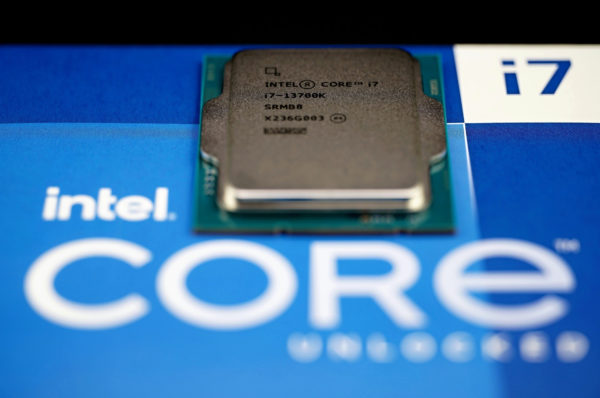
Intel has recently hinted at release of new desktop processors when the company announced the Intel InnovatiON event which was used to unveil the 12th and 13th generation Core desktop processors (Alder Lake, Raptor Lake for socket 1700) in previous years. However, it’s likely that only a paper launch will come directly at this event and the real CPUs will come out later. Unofficial reports from Chinese leakers now reveal when that will be. Read more “Intel CPU launch plans: refreshes, Meteor Lake and Arrow Lake”
Author: Jan Olšan
Conflict of interests? ARM wants Intel to buy part of company
Ever since Nvidia’s plan to acquire ARM failed, the Softbank fund has been aiming to monetise the company through an IPO instead, in which a portion of ARM’s stock would be sold not to a single acquiring party but through the mechanisms of open stock trading. It turns out this could have curious results, because it seems the initial public offering could end up with Intel, the main competitor, being one of the owners. Read more “Conflict of interests? ARM wants Intel to buy part of company”
big.LITTLE by AMD: Zen 4c has the same IPC as the big Zen 4
After Intel’s hybrid CPUs, AMD is preparing its own big.LITTLE scheme that uses a mix of Zen 4 cores and a new Zen 4c variant that will be used in servers but also in laptops. However Zen4c is and at the same time is not a little core. While having much smaller footprint, it is said to be fully architecturally equivalent to the large core, including (almost?) the same performance per 1 MHz. The only little thing about it is clock speed. Read more “big.LITTLE by AMD: Zen 4c has the same IPC as the big Zen 4”
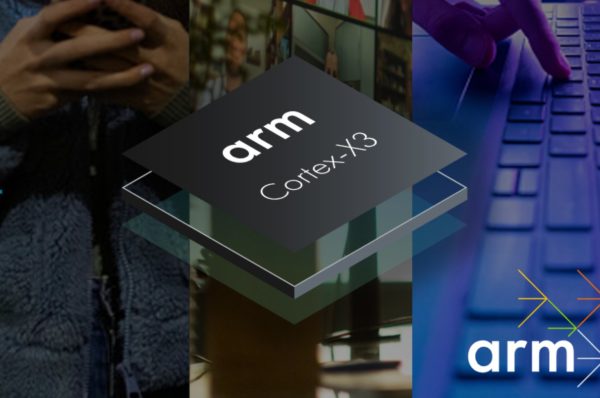
ARM unveils record-breaking Cortex-X4 core with eight ALUs
ARM has been releasing a new generation of processor cores every year lately. This year will be no different (except for the Computex timing). ARM has unveiled a complete line of new architectures: a new Cortex-X4 “prime” big core for maximum single-threaded performance, a new medium Cortex-A720 core whose role is to provide multi-threaded performance (like Intel’s E-Core), and finally a new low-power Cortex-A520 little core. Read more “ARM unveils record-breaking Cortex-X4 core with eight ALUs”
RDNA 3 the same as RDNA 2? Wrong, computational tests show
We’re still in the process of finishing our review of the Radeon RX 7600 (the Pulse model by Sapphire), but we made a little preview, looking at a subset of tests that might go unnoticed in the final review: compute applications benchmarks. Why? The card seems to show better than typical performance gains in them. We’ve seen opinions stating that Navi 33 GPU bingst nothing new versus the Navi 23 chip, but these results say otherwise. Read more “RDNA 3 the same as RDNA 2? Wrong, computational tests show”
x86-S: Intel wants to drop legacy compatibility from processors
The scenario of Intel dropping backwards compatibility and creating a new version of x86 processors free of various “legacy burdens” has been discussed for a long time. The hype around ARM processors and the perceived or real advantages they gain by not carrying similar “baggage” highlighted this topic again. Intel has unveiled a proposal for a simplified pure 64-bit x86-S architecture that could bring about such a revolution, now. Read more “x86-S: Intel wants to drop legacy compatibility from processors”
Asus improves board warranty: Memory OC and beta BIOS covered
Recently, a controversy has flared up on the web surrounding Asus motherboards. It is related to the issues of Ryzen 7000X3D CPUs killed by excessive VSoC voltage, which was previously set too high by Asus boards (not just Asus ones though). Asus received further complaints after providing a fix as a beta BIOS update that was not officially covered by warranty. The company has now responded by changes that should improve things quite a bit. Read more “Asus improves board warranty: Memory OC and beta BIOS covered”
GeForce in ARM processors. MediaTek SoCs will use Nvidia GPUs
Android phones are dominated by Qualcomm, but it is closely followed by MediaTek, which has already achieved similarly significant market shares, but lacks a comparable positioning in the highend and flagship mobile phone segment. But it looks like MediaTek is preparing a move that could possibly shake things up. The Taiwanese manufacturer is said to have teamed up with Nvidia, and its mobile chips could feature GPUs with its architecture. Read more “GeForce in ARM processors. MediaTek SoCs will use Nvidia GPUs”
AMD, like Nvidia, will produce chips at Samsung, on a 4nm node
Against expectations, Intel will start manufacturing processors at TSMC. Similar diversification may occur with AMD, who relied almost entirely on TSMC lately. But according to unofficial reports, the company will start manufacturing some of its chips at Korea’s Samsung, much like Nvidia recently did with some of its GPUs. This would reduce AMD’s dependence on a single supplier, but the move likely seeks to cut costs, too. Read more “AMD, like Nvidia, will produce chips at Samsung, on a 4nm node”
AMD fixes bug that kills Ryzen 7000 CPUs, update your BIOS
Last week, cases of destroyed V-Cache using Ryzen 7000 “X3D” CPUs and even a burned socket on the board (the dead CPU probably started drawing excessive current from the VRM through the pins). At first it wasn’t clear if it wasn’t a result of manual overvolting, but AMD announced that they have found the cause of the problem and are releasing board BIOS updates to protect the CPUs from damage, so definitely update. Read more “AMD fixes bug that kills Ryzen 7000 CPUs, update your BIOS”
Radeon RX 7600 XT launch date leaked: less than four weeks away
A few days ago, reports started surfacing that more affordable Radeon graphics cards with RDNA 3 architecture based on the Navi 33 chip might finally be coming to market. They stated that these cards could be exhibited (just that at that point) at Computex 2023 during (May 30–June 2). But it might all happen faster. According to information posted by YouTuber Moore’s Law Is Dead, there card should be available on the shelves before then. Read more “Radeon RX 7600 XT launch date leaked: less than four weeks away”
Microsoft preparing its own AI chips to compete with Nvidia’s GPUs
The development of artificial intelligence has gained mainstream awareness in recent months with news around ChatGPT and OpenAI and similar projects. These advanced neural networks and AI models have large hardware requirements, benefiting Nvidia, whose GPUs are used to train and run these neural networks. But this interest may also bring new competitors. Among them is reportedly Microsoft, which is preparing its own chips for AI. Read more “Microsoft preparing its own AI chips to compete with Nvidia’s GPUs”
VLC Media Player got RTX Video Super Resolution AI upscaling
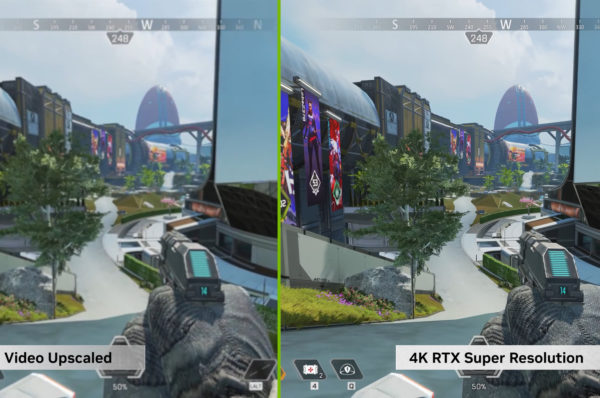
In February, Nvidia released the RTX Video Super Resolution feature, which is video upscaling using the tensor cores of GeForce RTX 3000 and later GPUs. It’s basically an DLSS 1.0 equivalent (as it lacks motion vector based temporal filtering) for low-resolution web video. Initially, this RTX Video was only available in Google Chrome and Microsoft Edge, but now you can use it for local playback in the popular VLC Media Player. Read more “VLC Media Player got RTX Video Super Resolution AI upscaling”
AMD’s Zen 6 processors will use 2nm process technology
Few days ago there was news that GeForce RTX 5000 graphics (the Blackwell architecture GPUs in them) will not yet use the 3nm manufacturing node, reportedly staying on 4nm technology instead. Now, there is news about another product that will use a new technology for a change – AMD processors with Zen 6 architecture. We learned that thanks to one of the employees leaking this important detail on the LinkedIn social network. Read more “AMD’s Zen 6 processors will use 2nm process technology”
Kioxia trying HLC NAND with 7 bits per cell, LN2 cooling required
A few years ago, we used to look down on TLC NAND flash that stores 3 bits in a single cell and ask for SSDs with SLC (just 1-bit) flash memory. Since then, TLC has become the norm, and the lower-quality tier was taken over by QLC chips with 4 bits per cell and even worse endurance and performance. And it seems this trend could continue, as Kioxia and WD are preparing “hepta-level cell” NAND that would store 7 bits at once. Read more “Kioxia trying HLC NAND with 7 bits per cell, LN2 cooling required”


Latest comments