Seasonic MaxFlow fan: Still “water” runs deep

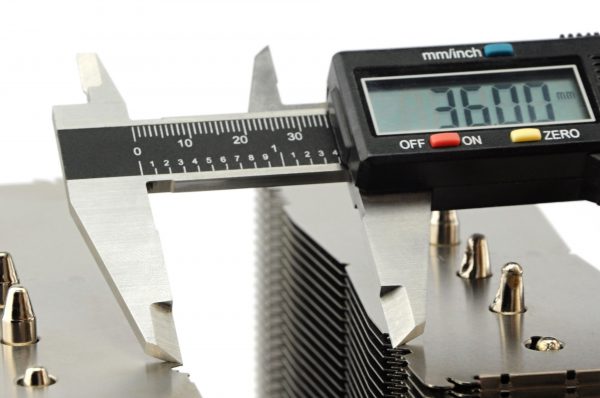
You know the feeling: moderate expectations, and then a surprise. With the MaxFlow fan, a fairly positive one. It delivers excellent results not only at its maximum speed, but also in quieter operation. However, it is weaker with obstacles, where it has to overcome higher resistance from the surrounding environment, and it should also be noted that, as with the Phanteks T30 and Sudokoo Mach120, its thicker profile means poorer compatibility. Read more “Seasonic MaxFlow fan: Still “water” runs deep” »

Arctic BioniX P14 A-RGB: Elegant daisy chaining is just the beginning

High cooling efficiency is the foundation, but with the BioniX P14 A-RGB fans, Arctic has also made efforts on other fronts. In addition to the clever daisy-chaining method (with the aim of reducing cabling to a minimum), this includes, for example, illumination as intense as possible. The light is guided not only through the entire impeller, but also through the surface of the frame, from the side. There are light guides in these areas as well. Read more “Arctic BioniX P14 A-RGB: Elegant daisy chaining is just the beginning” »

Selection of Older but Still Relevant Tests (Part 7)

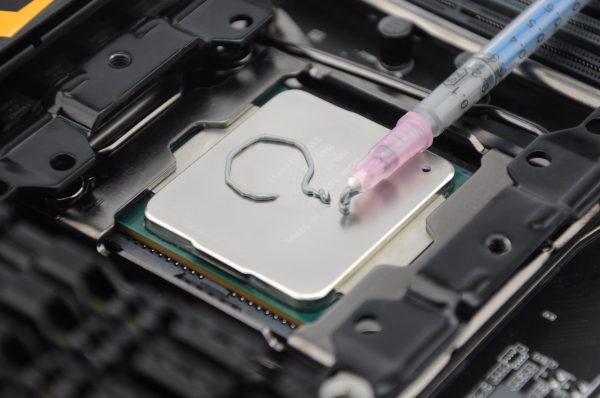
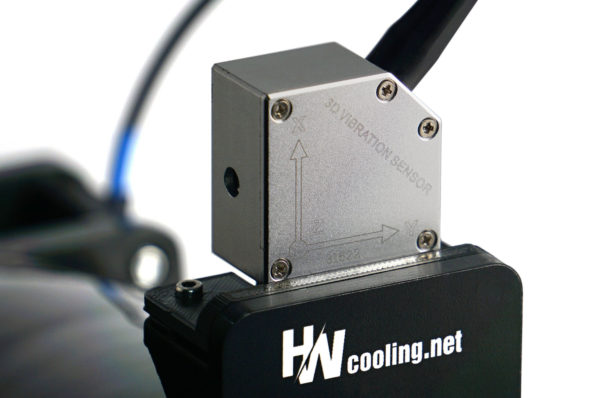
HWC has published several analyses that deserve to be revisited. Although they are not from today—or even yesterday—we still consider them useful in practice. The final part of this series will contain something “extra”—vibration tests of different samples of the same fan models, a comparative overview of thermal pastes, and a really large database of CPU cooler tests. Read more “Selection of Older but Still Relevant Tests (Part 7)” »

Selection of Older but Still Relevant Tests (Part 6)

HWC has published several analyses that deserve to be revisited. Although they are not from today—or even yesterday—we still consider them useful in practice. How can cooling performance be affected by the use of heatsinks in a space where there would otherwise be a fan? What is the difference between a punched and a wire grille (in PC cases)? Did you know that airflow in some situations also depends on the shape of the fan frame? Read more “Selection of Older but Still Relevant Tests (Part 6)” »

Selection of Older but Still Relevant Tests (Part 5)

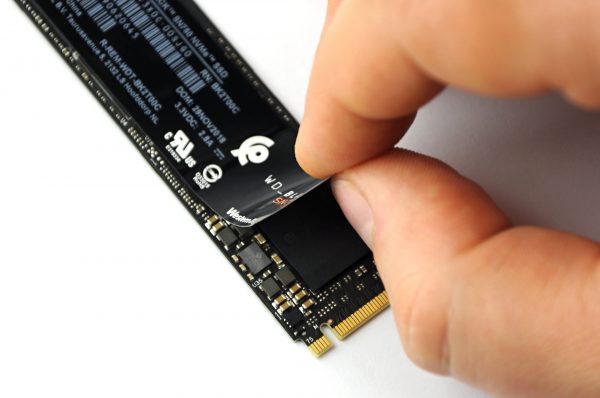
HWC has published several analyses that deserve to be revisited. Although they are not from today—or even yesterday—we still consider them useful in practice. In the past, we tested how HDD vibrations affect noise levels and whether removing the label from an SSD makes sense in terms of cooling efficiency. More recently, HWCooling reached the milestone of one hundred tested fans. Read more “Selection of Older but Still Relevant Tests (Part 5)” »

Arctic BioniX P12 A-RGB: Efficient, inexpensive, illuminated and…

And with very clever daisy‑chaining from one fan to the next. This is what can fill in the ellipsis in the headline. The aerodynamic efficiency remains top‑tier, built on a design that Arctic revised some time ago (with the P12 Pro fans), but which can still be considered “new.” The BioniX P12 A‑RGB fans certainly are (new), and in this in‑depth analysis we focus on how they work. Read more “Arctic BioniX P12 A-RGB: Efficient, inexpensive, illuminated and…” »

ID-Cooling AM-120-K: Bet on an Elegant Geometry

It has exactly the elements that make an inexpensive fan aerodynamically efficient and acoustically unobtrusive. Or rather, not too obtrusive—at least at lower, non‑high speeds. At higher speeds, every fan is “noisy,” but making a low‑cost fan that can still be described as pleasant to the ear is already something of a feat. We can, however, state that ID‑Cooling has achieved this with the AM‑120‑K model. Read more “ID-Cooling AM-120-K: Bet on an Elegant Geometry” »

Selection of Older but Still Relevant Tests (Part 4)

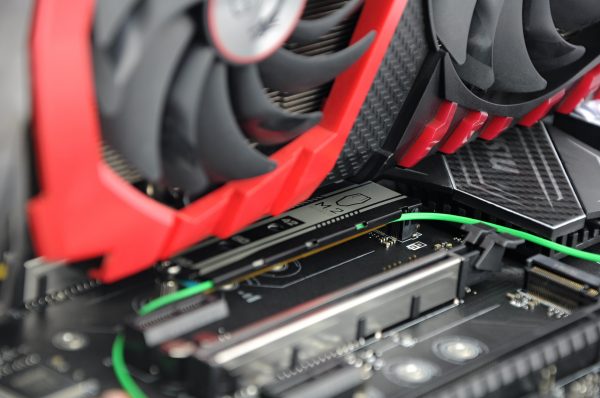
HWC has published several analyses that deserve to be revisited. Although they are not from today—or even yesterday—we still consider them useful in practice. Whether it concerns comparative tests of different case designs (from relatively conventional mid-towers to fully passive solutions), a large overview of SSD coolers, or an examination of how an inexpensive CPU cooler copes with changing thermal loads. Read more “Selection of Older but Still Relevant Tests (Part 4)” »

Selection of Older but Still Relevant Tests (Part 3)

HWC has published several analyses that deserve to be revisited. Although they are not from today—or even yesterday—we still consider them useful in practice. SSD below the graphics card or above it? How much can mounting pressure affect cooling performance, and does a thicker thermal pad really mean higher temperatures for the critical component?That’s what we covered in the tests featured in this article. Read more “Selection of Older but Still Relevant Tests (Part 3)” »

Selection of Older but Still Relevant Tests (Part 2)

HWC has published several analyses that deserve to be revisited. Although they are not from today—or even yesterday—we still consider them useful in practice. What is the best way to apply thermal paste? Which technique should you use, and how much paste? What about SSD coolers—which of the available models is the most attractive? And how can you improve SSD cooling with small heatsinks originally designed for VRAM? Read more “Selection of Older but Still Relevant Tests (Part 2)” »

Selection of Older but Still Relevant Tests (Part 1)

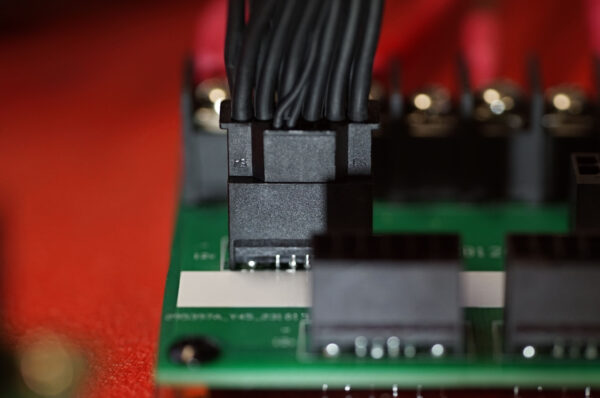
HWC has published several analyses that deserve to be revisited. Although they are not from today—or even yesterday—we still consider them useful in practice. Does replacing a PSU reduce coil whine? We did not observe that, at least not to any significant extent. Thermal imaging of 16-pin PCIe connectors? We’ve got that too, along with measurements of different case fan layouts and airflow distributions (including airflow intensity). Read more “Selection of Older but Still Relevant Tests (Part 1)” »

Endorfy Corona 120 Reverse: Attractive mainly visually

You’ve already seen the tests of the Endorfy Corona 120 fans, and now we’re adding results for the “reverse” variants. The aerodynamic design is essentially the same—just… reversed. The emphasis on visual appeal is therefore even stronger. The colorful lighting is complemented by an element intended to make the result even more striking. You won’t see the stator struts interfering with the appearance. Read more “Endorfy Corona 120 Reverse: Attractive mainly visually” »

Analysis: Which PC fans vibrate the least?

So which ones? Vibrations of more than a hundred PC fans collected in one place, in both 120 mm and 140 mm formats—the ones most widely used among PC builders. Some models vibrate more, others less, or not at all. The scenarios vary, as is natural. The task is to make sense of it all based on exact measurements. These are compiled into clear graphs. Yes, you’ve seen them before. Read more “Analysis: Which PC fans vibrate the least?” »

Endorfy Corona 120: Only the (ARGB) ring visible in the dark

From the models still sold under the SilentiumPC brand, the Corona fans have come a long way. They are still more “showy” than “efficient,” although even in their primary function they don’t fall behind as much as you might expect (even if airflow per unit of noise is lower…). Their loyalty to the ring‑style light guide remains. Together with ARGB LEDs, it frames the fan’s impeller—and it really does look good. What do you think? Read more “Endorfy Corona 120: Only the (ARGB) ring visible in the dark” »

Endorfy Stratus 140 White ARGB: Great, apart from high vibrations

Low price also applies when it comes to the Stratus 140 White ARGB fans. Considering the presence of vivid ARGB lighting, there aren’t many cheaper models in the 140 mm category. Its excellent aerodynamic characteristics are held back by one thing only, and that’s higher vibration levels, and it doesn’t appear to be a “one‑off sample issue”—as usual, our detailed testing is based on multiple units. Still, the trade-off seems to be worth it. Read more “Endorfy Stratus 140 White ARGB: Great, apart from high vibrations” »

1 2 3 … 39