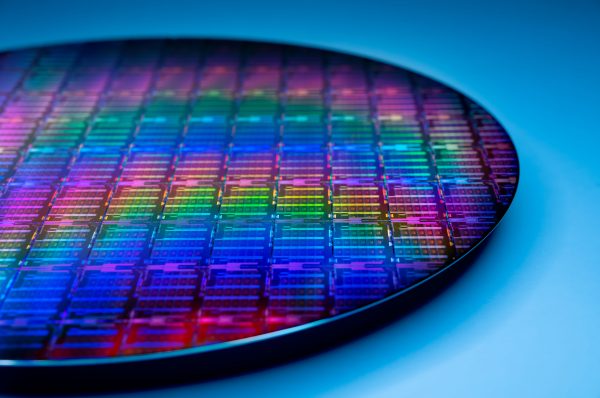
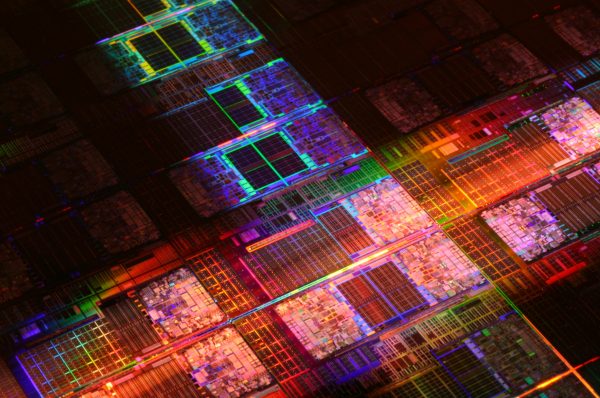
Not long ago, rumors surfaced that AMD’s upcoming Zen 6 CPU architecture would be based on 3nm node, but on a 2nm process. At the time, it was unclear whether those YouTube reports were credible. But time has validated them – AMD itself has now confirmed that its next-gen CPUs will use the 2nm node, and even revealed that its 2nm processor has already completed tape-out at TSMC, as one of the very first chips to do so. Read more “AMD boasts the first 2nm processor – First “HPC” one, that is”
Category: News
Samsung’s rumored 1nm technology aims to be a „Dream Process“
Intel’s ambitions to catch up with TSMC and reclaim its position in chip manufacturing are a constant topic today, but in fact it is Samsung who is currently Taiwan’s closest competitor in advanced technologies. However, even Samsung has struggled to keep pace lately, and their 1.4nm process was recently rumore to be scrapped entirely. But new reports suggest Samsung intends to stay in the race – and is working on a 1nm process. Read more “Samsung’s rumored 1nm technology aims to be a „Dream Process“”
We’re aware and working on it. Technical issues on HWCooling
Our most active readers have noticed that it’s not possible to submit comments, log in, or register on HWCooling.net. Yes, these are the current issues the website is struggling with. And they’re giving us headaches too – we definitely want to fix them as soon as possible. Of course, we’re not indifferent to the situation and are working on a solution as much as our time allows. On the “reader-only” level, everything should be fine with no major limitations. Read more “We’re aware and working on it. Technical issues on HWCooling”
DXR 1.2: New tech for better ray tracing graphics performance
Ray tracing graphics, alongside upscaling and similar “more FPS” tricks, has been the main trend in games in recent years. Although ray tracing is commonly associated with Nvidia’s RTX marketing brand, it’s actually built on the DirectX API: DirectX Ray Tracing, or DXR, which launched before GeForce RTX. This technology is now getting a major upgrade to version DXR 1.2, which will bring new capabilities as well as better performance. Read more “DXR 1.2: New tech for better ray tracing graphics performance”
AMD planning RX 9070 GRE: Cheaper RDNA 4 with 12GB VRAM?
When the Radeon RX 9070 and 9070 XT launched, AMD confirmed Radeon RX 9060 XT coming in the second quarter. That card is expected to use the Navi 44 chip with just 128-bit bus and 2048 shaders, leaving a large gap between it and the Radeon RX 9070. Lack of a 192-bit card also means no graphics that could offer an affordable option thanks to 12GB VRAM. It seems there’s a new SKU coming to fill this gap – the Radeon RX 9070 GRE. Read more “AMD planning RX 9070 GRE: Cheaper RDNA 4 with 12GB VRAM?”
GlobalFoundries & UMC Eye Merger in Chip Industry Shake-Up
In recent years, much attention has been on whether Intel can close the gap in cutting-edge chip technologies and become a true rival to TSMC. Samsung on the other hand already competes, the company is also facing mounting challenges, however. But a new challenger may be emerging for the Taiwanese king of silicon lithography: according to reports, GlobalFoundries and UMC may be exploring a merger to create a stronger competitor. Read more “GlobalFoundries & UMC Eye Merger in Chip Industry Shake-Up”
Zen 5 desktop APU is coming to AM5 by the end of the year
It has been 8 months since AMD introduced the Ryzen AI 300 “Strix Point” to the market – these are the first APUs (monolithic low-power CPUs with relatively strong integrated GPUs) based on the Zen 5 architecture. Until now, it was unclear whether these CPUs would ever have a desktop version. However, reports have just emerged suggesting that processors featuring Zen 5 and improved integrated graphics are on the way. Read more “Zen 5 desktop APU is coming to AM5 by the end of the year”
BeQuiet! Riddle (4/2025). Can you guess what’s in the photo?
In cooperation with BeQuiet!, we have prepared a cyclical activity for this year, which may be of interest to HWCooling readers. We’ll post a detail of some piece of hardware and you can guess what it is. You can compete (and eventually win something) on a regular basis, with a new challenge every month. But for now, you need to get “to the next round” through the next one, in April. Read more “BeQuiet! Riddle (4/2025). Can you guess what’s in the photo?”
Everything we know about the new Arctic P12 Pro fans
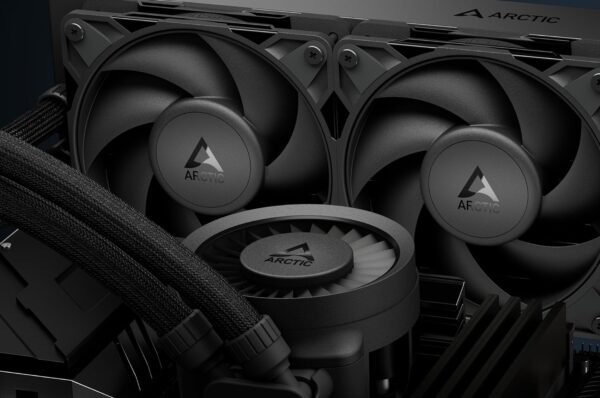
They made their debut on Liquid Freezer III Pro liquid coolers, and there’s a strong chance the Arctic P12 Pro fans will eventually be sold separately. The notable improvement lies in their redesigned aerodynamics – the P12 Pro models feature more blades than their predecessors, altering their performance characteristics. This article focuses on known details about these new P-series fans. Read more “Everything we know about the new Arctic P12 Pro fans”
Arctic’s new „pro“ variant of Liquid Freezer III (Pro) AIO
The new Liquid Freezer III Pro liquid coolers introduce one highly visible change compared to previous models (Liquid Freezer III) without the “Pro” designation. This change involves new P-series fans featuring seven blades (instead of Arctic’s typical five-blade design). Additionally, the coolers boast an exceptionally thick radiator profile, which should also contribute to achieving high cooling efficiency. Read more “Arctic’s new „pro“ variant of Liquid Freezer III (Pro) AIO”
Cooperative Vectors in DirectX to use Blackwell Neural Shaders
Nvidia recently talked new features for GeForce graphics cards – primarily the RTX Remix modding platform leaving beta and first games using Nvidia ACE. The company has another announcement: Neural Shaders, one of the architectural innovations in Blackwell GPUs, will be coming to DirectX. Microsoft is adding a Cooperative Vectors function to this API, which GeForce RTX 5000 series will support precisely through their Neural Shaders. Read more “Cooperative Vectors in DirectX to use Blackwell Neural Shaders”
Fractal Design North XL RC. Cases for „reverse motherboards“
There are already several motherboards that have some connectors on the back. Typically ones that require cabling. The reason for this “reversal” is mainly aesthetic—to hide the cables and make everything look as clean as possible. In today’s world, where glass side panels are common, unsightly cables are particularly noticeable. For those who care about the appearance of their PC, the new Fractal Design North XL RC case might be appealing. Read more “Fractal Design North XL RC. Cases for „reverse motherboards“”
Western Digital launches 26TB Red Pro HDDs for RAID and NAS use
Recently, Western Digital introduced a new technology to rival Seagate’s HAMR HDDs – a drive design featuring a record-breaking 11 platters. Thanks to these 11 platters, WD can now offer HDDs with a capacity of 26 TB using conventional CMR recording, avoiding SMR. Now, the company is launching a drive that leverages this technology for NAS systems – the 26TB WD Red Pro, which enables the creation of a four-bay array exceeding 100 TB. Read more “Western Digital launches 26TB Red Pro HDDs for RAID and NAS use”
Intel launches mass production on 1.8nm. Panther Lake tiles?
Is Intel on track to overcome its long crisis? It will be decided by company’s fabs – a strategic advantage but now a burden the company can no longer afford. Intel now needs external clients to sustain them and whether these clients will come depends on the ability to deliver competitive technologies. The company is pinning its hopes on the 18A process. Production using this technology has just begun, so the answer may come soon. Read more “Intel launches mass production on 1.8nm. Panther Lake tiles?”
OptiScaler: Unlock FSR4, XeSS, or framegen in unsupported games
With the Radeon RX 9000 series, AMD launched updated gaming upscaling technology. FSR4 uses artificial intelligence for the upscaling step for the first time, which should improve image quality. However, there’s the usual problem of not all games supporting these technologies. Now, a surprisingly capable solution has emerged—the OptiScaler tool, which can “force” the new FSR into a large group of games that don’t natively support it. Read more “OptiScaler: Unlock FSR4, XeSS, or framegen in unsupported games”


Latest comments