The scenario of Intel dropping backwards compatibility and creating a new version of x86 processors free of various “legacy burdens” has been discussed for a long time. The hype around ARM processors and the perceived or real advantages they gain by not carrying similar “baggage” highlighted this topic again. Intel has unveiled a proposal for a simplified pure 64-bit x86-S architecture that could bring about such a revolution, now. Read more “x86-S: Intel wants to drop legacy compatibility from processors”
Category: Processors
GeForce in ARM processors. MediaTek SoCs will use Nvidia GPUs
Android phones are dominated by Qualcomm, but it is closely followed by MediaTek, which has already achieved similarly significant market shares, but lacks a comparable positioning in the highend and flagship mobile phone segment. But it looks like MediaTek is preparing a move that could possibly shake things up. The Taiwanese manufacturer is said to have teamed up with Nvidia, and its mobile chips could feature GPUs with its architecture. Read more “GeForce in ARM processors. MediaTek SoCs will use Nvidia GPUs”
AMD, like Nvidia, will produce chips at Samsung, on a 4nm node
Against expectations, Intel will start manufacturing processors at TSMC. Similar diversification may occur with AMD, who relied almost entirely on TSMC lately. But according to unofficial reports, the company will start manufacturing some of its chips at Korea’s Samsung, much like Nvidia recently did with some of its GPUs. This would reduce AMD’s dependence on a single supplier, but the move likely seeks to cut costs, too. Read more “AMD, like Nvidia, will produce chips at Samsung, on a 4nm node”
AMD fixes bug that kills Ryzen 7000 CPUs, update your BIOS
Last week, cases of destroyed V-Cache using Ryzen 7000 “X3D” CPUs and even a burned socket on the board (the dead CPU probably started drawing excessive current from the VRM through the pins). At first it wasn’t clear if it wasn’t a result of manual overvolting, but AMD announced that they have found the cause of the problem and are releasing board BIOS updates to protect the CPUs from damage, so definitely update. Read more “AMD fixes bug that kills Ryzen 7000 CPUs, update your BIOS”
AMD’s Zen 6 processors will use 2nm process technology
Few days ago there was news that GeForce RTX 5000 graphics (the Blackwell architecture GPUs in them) will not yet use the 3nm manufacturing node, reportedly staying on 4nm technology instead. Now, there is news about another product that will use a new technology for a change – AMD processors with Zen 6 architecture. We learned that thanks to one of the employees leaking this important detail on the LinkedIn social network. Read more “AMD’s Zen 6 processors will use 2nm process technology”
Jim Keller’s new firm plans RISC-V CPUs with Apple-like wide cores
RISC-V processors are still yet to reach above the embedded sector, but with the current developments around ARM, they may be closer to that goal than we think. They ISA might even come to the highest performance processor segment currently ruled by Intel and AMD that ARM itself (with the exception of Apple) is still just trying to crack. Tenstorrent, led by Jim Keller, is now developing processors that could be close to those from Apple. Read more “Jim Keller’s new firm plans RISC-V CPUs with Apple-like wide cores”
Core i5-13400F complete gaming tests (B0 vs. C0). W/o E cores too
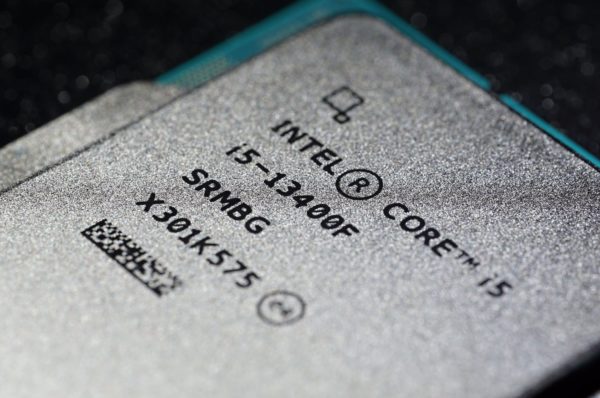
The third and final Intel Core i5-13400F CPU test with measurements beyond standard will add to what the previous two have shown. We ran the two existing steppings – B0 (with Raptor Cove/Raptor Lake P cores) and C0 (Golden Cove/Alder Lake) – through all the games we use to test processors, in four different display setups. In the case of stepping B0 even with modified CPU settings, with E cores disabled. Read more “Core i5-13400F complete gaming tests (B0 vs. C0). W/o E cores too”
When E cores are disabled: Core i5-13400F vs. Core i5-12400(F)
With the little (E) cores turned off, the Core i5-13400(F) becomes a 6-core processor with 12 threads in the same way that the older Core i5-12400(F) is. This intergenerational comparison is also a side product of tests main goal of which is to show the impact of E cores not only on computational and gaming performance, but also on operational characteristics. The biggest differences occur in the situations that mainstream PCs run into most often. Read more “When E cores are disabled: Core i5-13400F vs. Core i5-12400(F)”
Not every Core i5-13400F is the same: Raptor (B0) vs. Alder (C0) lake
In the vast majority of Intel Core i5-13400F processor tests (including ours), you’ve studied the results of the variant built on the Golden Cove cores from the Alder Lake generation. But there is also an iteration from Raptor Lake (with Raptor Cove cores). However, this processor is harder to get hold of, its availability is considerably weaker, but it is obtainable. You’ll find out if it’s worth the extra effort from the comparative analysis. Read more “Not every Core i5-13400F is the same: Raptor (B0) vs. Alder (C0) lake”
24GB/48GB DDR5 modules don’t work with Ryzen CPUs, fix coming?
In the past, Intel processors could not run newer higher-capacity DDR2 and DDR3 modules, while AMD processors worked. That’s why we were sort of assuming that the currently appearing DDR5 modules with unusual “non-binary” capacities would just automatically work on AMD platforms. But that’s not true, it seems that they only work with Intel processors for now and Ryzen 7000s will only be able to use them after a future update. Read more “24GB/48GB DDR5 modules don’t work with Ryzen CPUs, fix coming?”
Ryzen 7000X3D: technical details and asymmetric CCX handling
Last day of February, AMD started selling the Ryzen 7000 processors with 3D V-Cache, the chiplet technology increasing L3 cache capacity. Prior generation (Ryzen 7 5800X3D) proved that this benefited gaming, and it looks like the same is true now. Ryzen 7000s are aimed specifically at gaming PCs, and according to reviews, they seem to have surpassed Intel’s Raptor Lake processors in that and are now holding the gaming performance crown. Read more “Ryzen 7000X3D: technical details and asymmetric CCX handling”
Intel LGA 1851 platform details: Z890 and Meteor Lake connectivity
Intel LGA 1700 desktop platform is now running on its second generation of processors (Raptor Lake) which will see a refresh in fall, but that will be the end of this socket. A new LGA 1851 socket is planned for Meteor Lake and Arrow Lake processors and a report has now revealed new features of this platform. Intel will give the processor-connected I/O interfaces an upgrade that will put it closer to the AM5 platform. Read more “Intel LGA 1851 platform details: Z890 and Meteor Lake connectivity”
Not just Meteor Lake. Even TSMC-made 3nm Intel chips are delayed
There was a report that Intel allegedly cancelled the desktop version of the first 4nm Meteor Lake CPUs, which could indicate that the process is having issues similar to the early 10nm technology – like not reaching high enough clock speeds. But that may not be the only blow to Intel’s upcoming products. Now there are reports that even the 3nm chips, ironically enough those that it plans to outsource to TSMC, may be delayed as well. Read more “Not just Meteor Lake. Even TSMC-made 3nm Intel chips are delayed”
Intel Meteor Lake to be mobile only, desktop 4nm CPUs cancelled
Intel is now trying to catch up to TSMC and regain the manufacturing process leadership that underpinned its past dominance. So perhaps the biggest question for years to come is whether it has already managed to “fix” its factories, or whether processor delays and missed targets will be a recurring theme in the future. Warning sing are appearing that the first 4nm Meteor Lake processors could possibly end up like the notorious 10nm chips. Read more “Intel Meteor Lake to be mobile only, desktop 4nm CPUs cancelled”
Ryzen 9 7950X: AMD’s elite CPU beats but also doesn’t beat Core i9
We saved our tests of the most powerful Ryzen 7000 processor for last, for a number of reasons, as the last “X” model to expand the results database from this generation. The Ryzen 9 7950X, with its 32 threads, stands up to its 32-threaded competitor in the form of the Core i9-13900K with sovereignty, despite having eight fewer cores. Some might even state that it is the more cost-effective processor. But it comes down to your own point of view. Read more “Ryzen 9 7950X: AMD’s elite CPU beats but also doesn’t beat Core i9”


Latest comments