


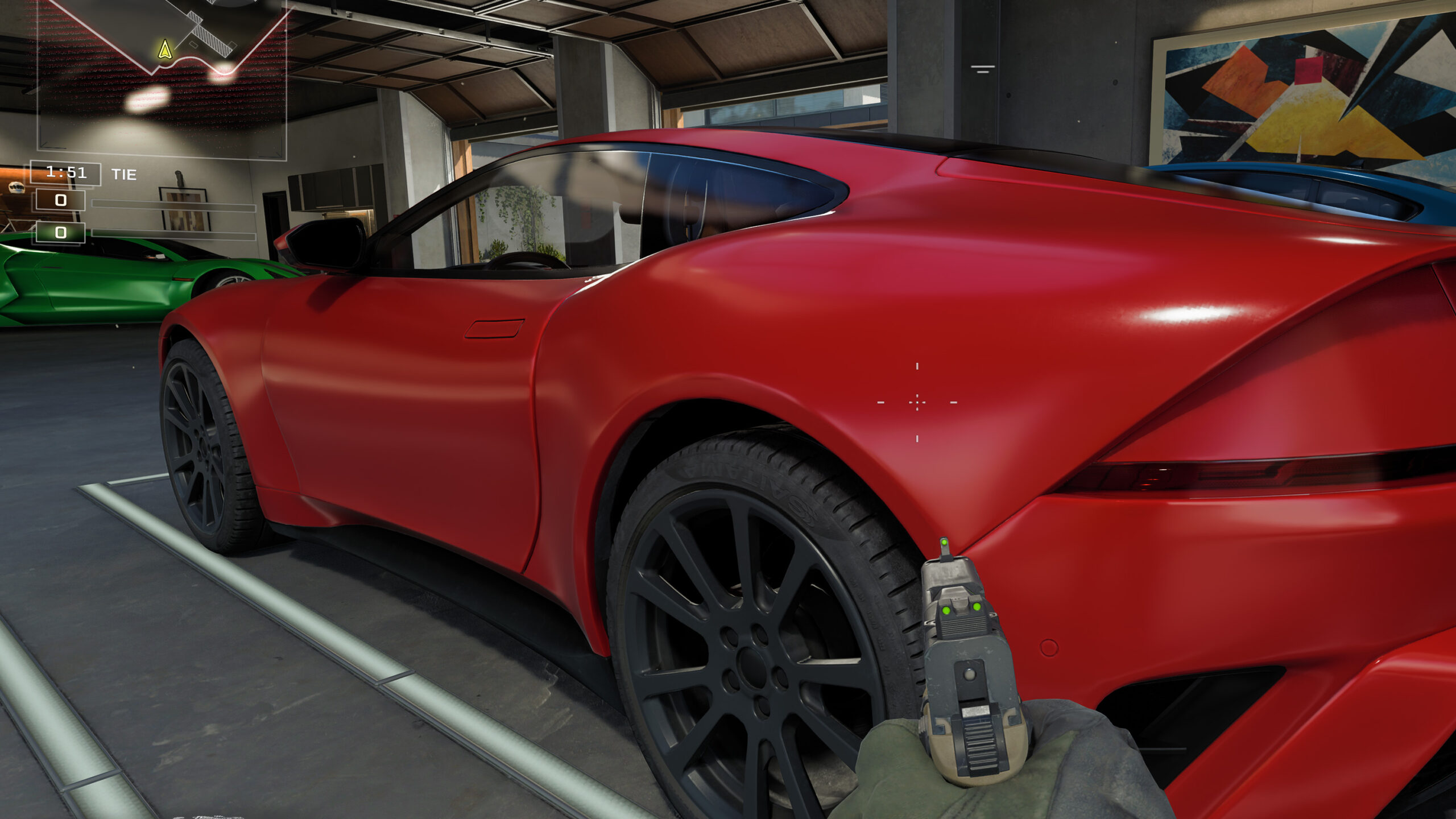
With the launch of the Radeon RX 9060 XT, AMD announced a second-half upgrade to its FSR suite, codenamed Project Redstone. Although the official debut is slated for December 10, we’ve already had an early look thanks to enhanced ray-traced reflection reconstruction shipped with Call of Duty: Black Ops 7. In this preview, we assess the impact on image quality and benchmark performance on the Radeon RX 9060 XT and RX 9070 XT.
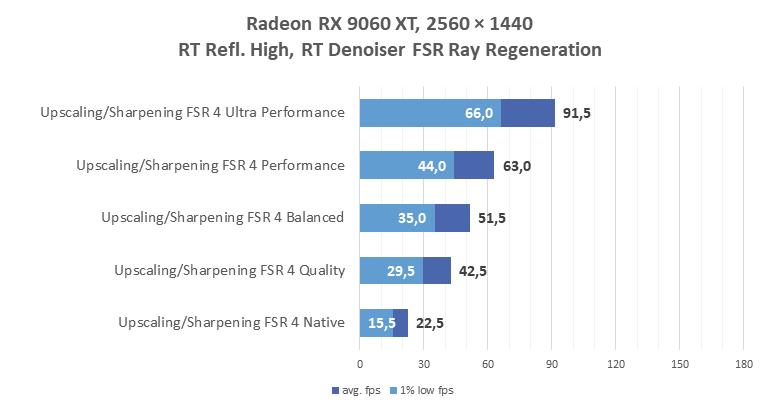
In the next set of results, we’ll examine the impact of the upscaling quality settings with reflections maxed out and Ray Regeneration enabled.
Radeon RX 9060 XT
In the first set of tests, I also tried a trio of sharpening and upscaling modes in native resolution. Performance is practically identical between native resolution, CAS sharpening, and FSR4 in native resolution.
In native resolution, the image without sharpening is blurry in motion and can’t be said to offer the highest quality. During movement, graininess around the edges of moving objects and artifacts are commonly visible. With CAS active, the image is sharper, but artifacts remain. With FSR 4 Native AA, the image is more stable, and graininess around object edges is better filtered. However, the average frame rate is too low for comfortable gameplay.

At 2560 × 1440 resolution, you’ll need at least FSR 4 Balanced mode on the RX 9060 XT with ray tracing, and more likely Performance mode.
Radeon RX 9070 XT
With the Radeon RX 9070 XT, performance is sufficient for normal gameplay at Full HD across all FSR 4 levels. At 2560 × 1440 resolution, you’ll need at least FSR 4 in Quality mode.


⠀




interesting, when I check benchmarks on youtube I see people running RT high 1080p at Extreme in high 50s with this setup. That must be because they enable upscaling with FSR4 and that just upscales instead of creating true 1080p frames.