Graphics cards from the latest generation are still pricey, but more affordable models have become easier to find in stores. The Radeon RX 9070 Gaming OC is one of the more reasonably priced options. It uses the same cooling and board layout as the more powerful Gigabyte AMD Radeon RX 9070 XT Gaming OC, but thanks to lower power consumption, it runs cooler and quieter—making it a more compelling choice for many users.
Fan behavior, noise level
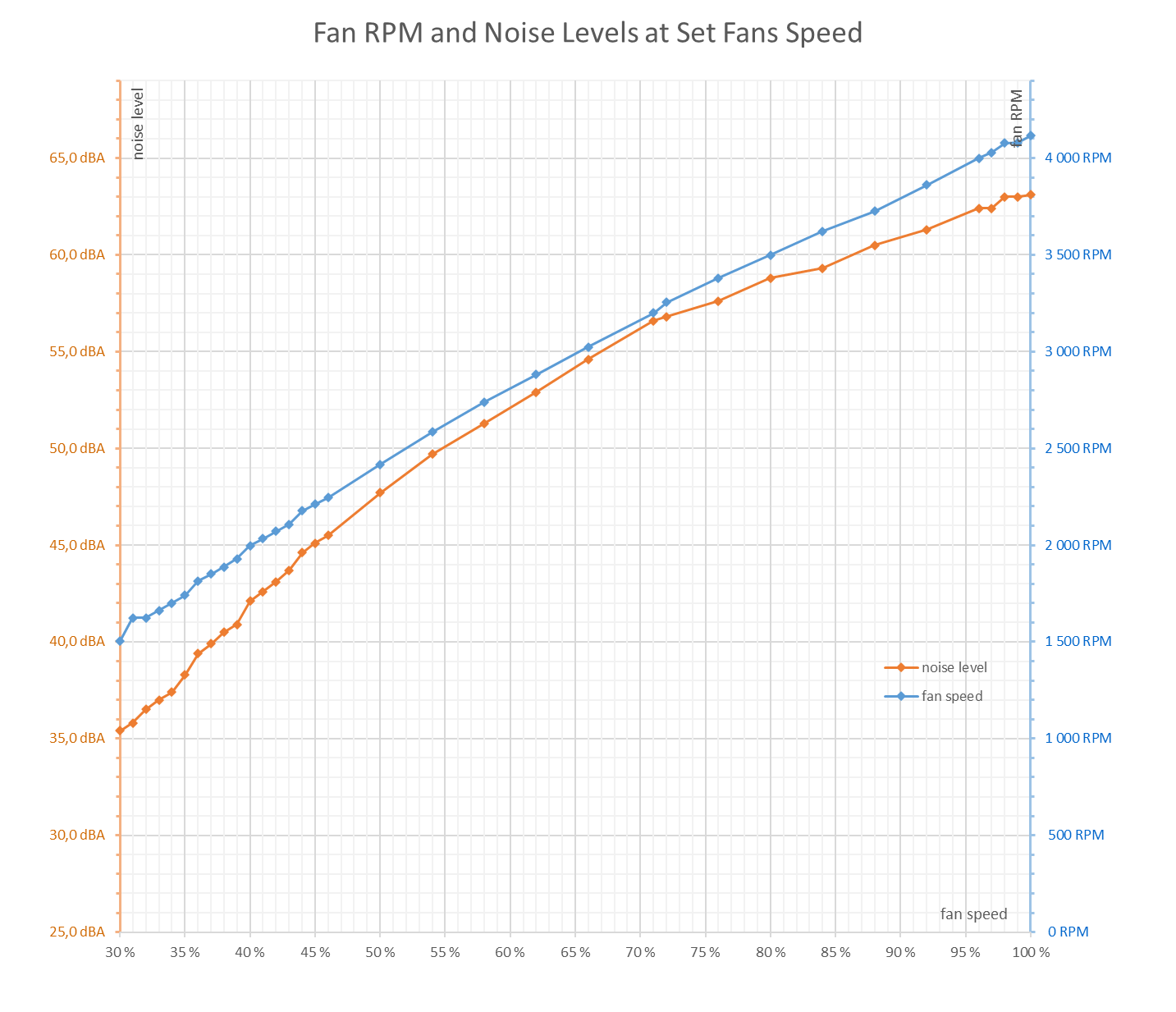
Featuring smaller-diameter fans than most competing high-performance cards, these achieve comparable noise levels at higher RPM. The minimum adjustable setting (20%) maintains ~1010 RPM at 30.2 dBA, becoming audible around 1600-1700 RPM.
This model operates significantly quieter than the tested Radeon RX 9070 XT Gaming. In Silent mode, sustained loads keep fans below 1500 RPM while maintaining sub-35 dBA noise levels. While average GPU temperatures remain excellent, hotspot and memory temperatures show slightly elevated readings.
Performance mode delivers lower temperatures at the cost of increased fan speeds (~1700 RPM, 37.4 dBA) – still substantially quieter than typical noise levels from budget-oriented cards.
The premium RX 9070 XT Gaming OC pushes fans to 2000 RPM (42 dBA), transitioning from quiet to merely average acoustic performance.
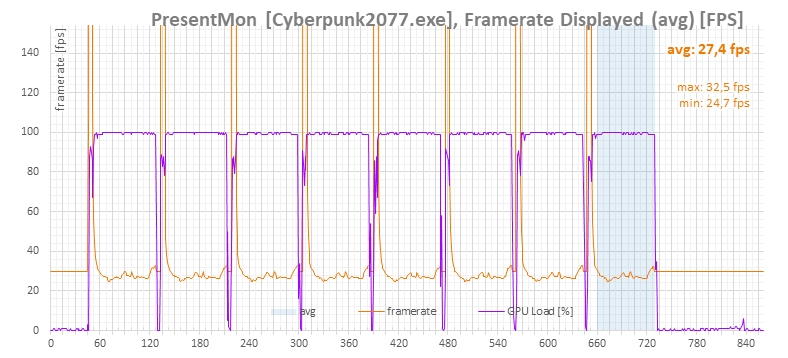
Cyberpunk 2077, RT Medium, 3840 × 2160, BIOS Performance
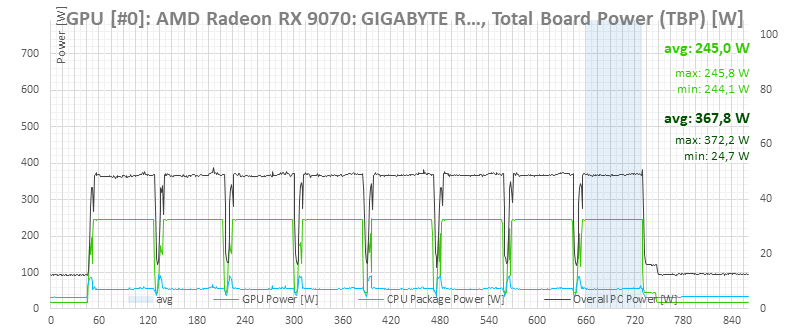
Our first test series uses Cyberpunk 2077 at 3840 × 2160 resolution with RT Medium settings, fully loading the GPU across eight consecutive benchmark runs.
Graphs display the final run, from which an average is calculated with the card warmed up, though the initial run appeared to engage frame generation (despite being disabled in configuration files).
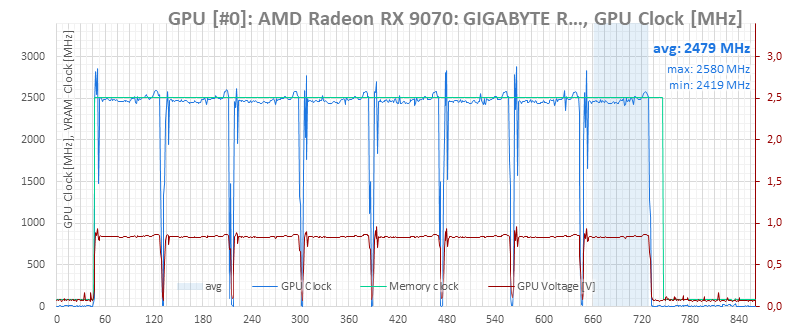
The GPU clock fluctuates between 2419–2580 MHz, averaging 2479 MHz – just 18 MHz higher than Silent mode’s 2461 MHz average, resulting in mere tenths of fps difference.
Card power consumption (light green) maintains its 245W limit.
Dark plots show total system power measured via UT71E multimeter.
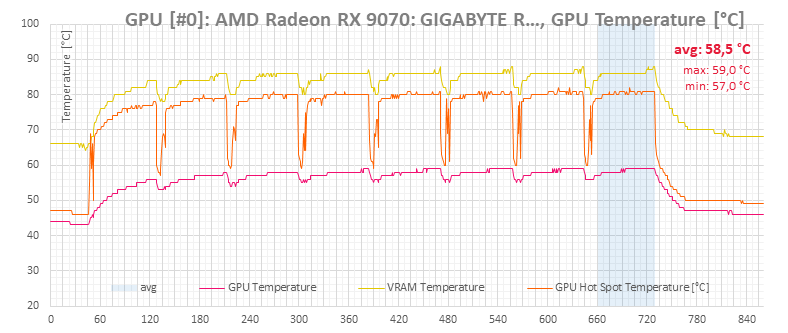
Average GPU temperatures remain low, as does the hotspot reading. While memory runs warmer, thermal throttling isn’t a concern.
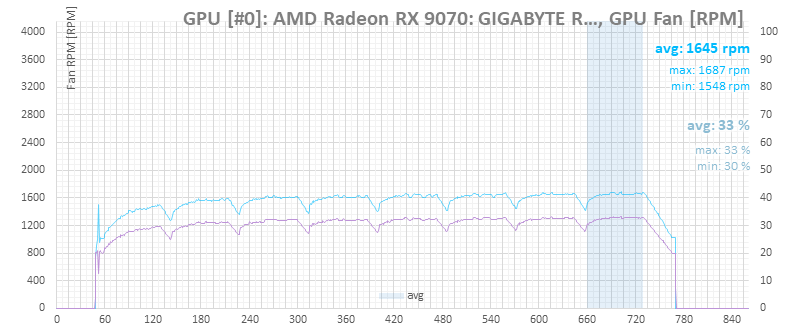
However, this comes at the cost of higher fan speeds, reaching up to 1,700 RPM. At this performance level, they become audible, though it wouldn’t be accurate to call them loud.
⠀