In this article we cover the basic details of power supplies intended for PCs. That means the content will explain how supplies are classified by size and electrical standards, what connectors they use to power computer components, and what lies behind their operation. Why does something like a computer power supply exist—why isn’t the computer powered directly from the mains (without a PSU)?
Main parts from the outside…
The connector with three large pins is found on every PC power supply. It is used to connect the mains power cable to the PSU. Some power supplies also include a power switch that interrupts the circuit. If it is in the “0” position, no voltage ever enters the PSU, and therefore neither the power supply nor the PC can be turned on (this only becomes possible once the switch is flipped to “1”). These are the two typical elements on the back of a PC power supply—the socket for the mains cable and the power switch. In addition, the rear panel also features a grille for cooling purposes, allowing heated air to be exhausted out of the PSU and away from the case interior.
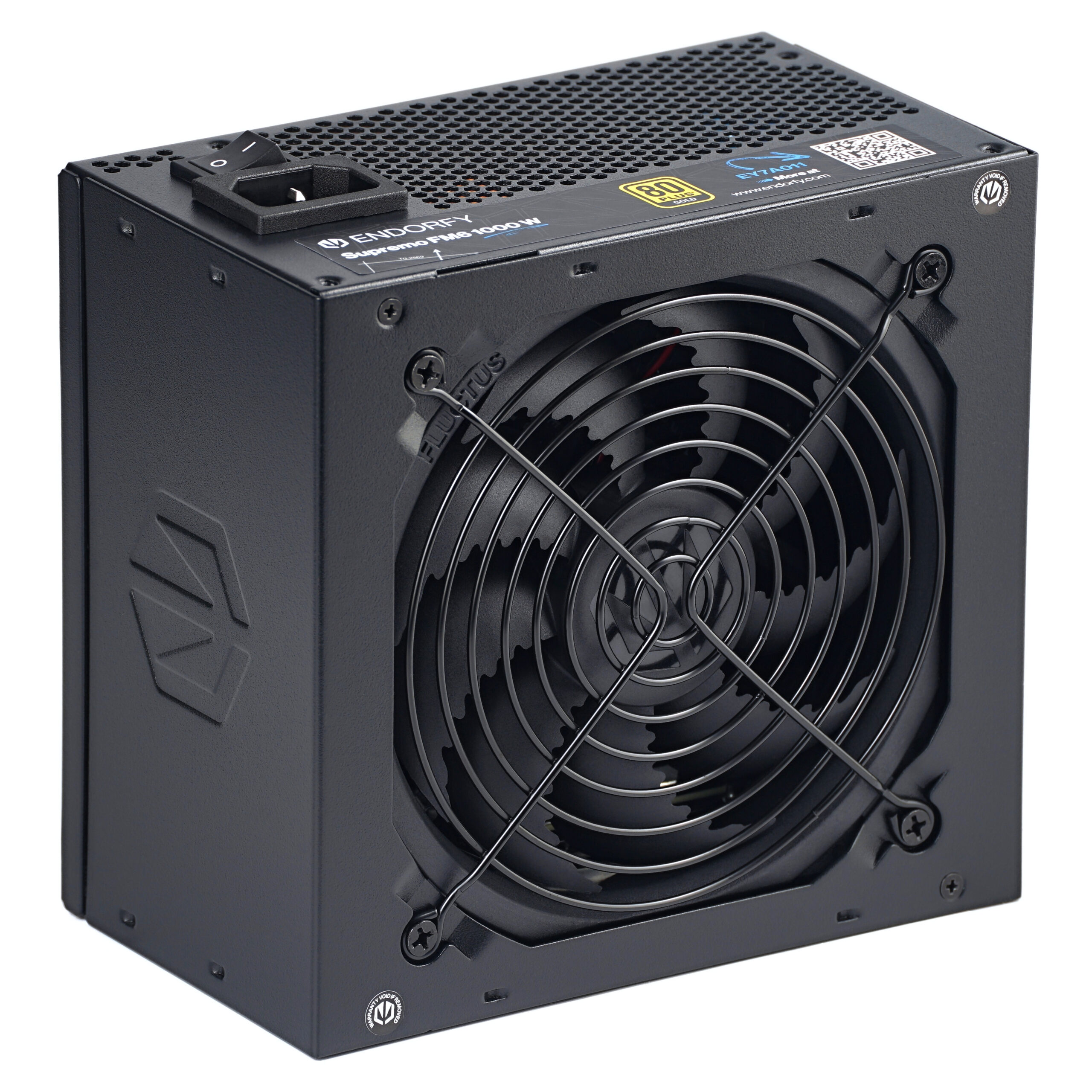
On the PSU housing inside the PC, there is usually another grille in front of the fan. This protects against unwanted objects entering the PSU and also supports cooling. Through this grille, the fan draws in air to cool the PSU’s critical components. Often, behind the fan there is also a plastic filter acting as a deflector, guiding airflow into areas where the most intense cooling is required.

The sides of the PSU are usually solid (without perforations), just like the opposite wall. That side typically only carries a label with specifications, which, in addition to the rated power output (given in watts), usually also lists the maximum continuous current for each voltage rail. For example, the +12 V rail, and if there are multiple +12 V rails, then for each of them individually, as well as +5 V, +3.3 V, and sometimes the –12 V rail. However, the latter is not present on all power supplies, only on some.

…. and from the inside
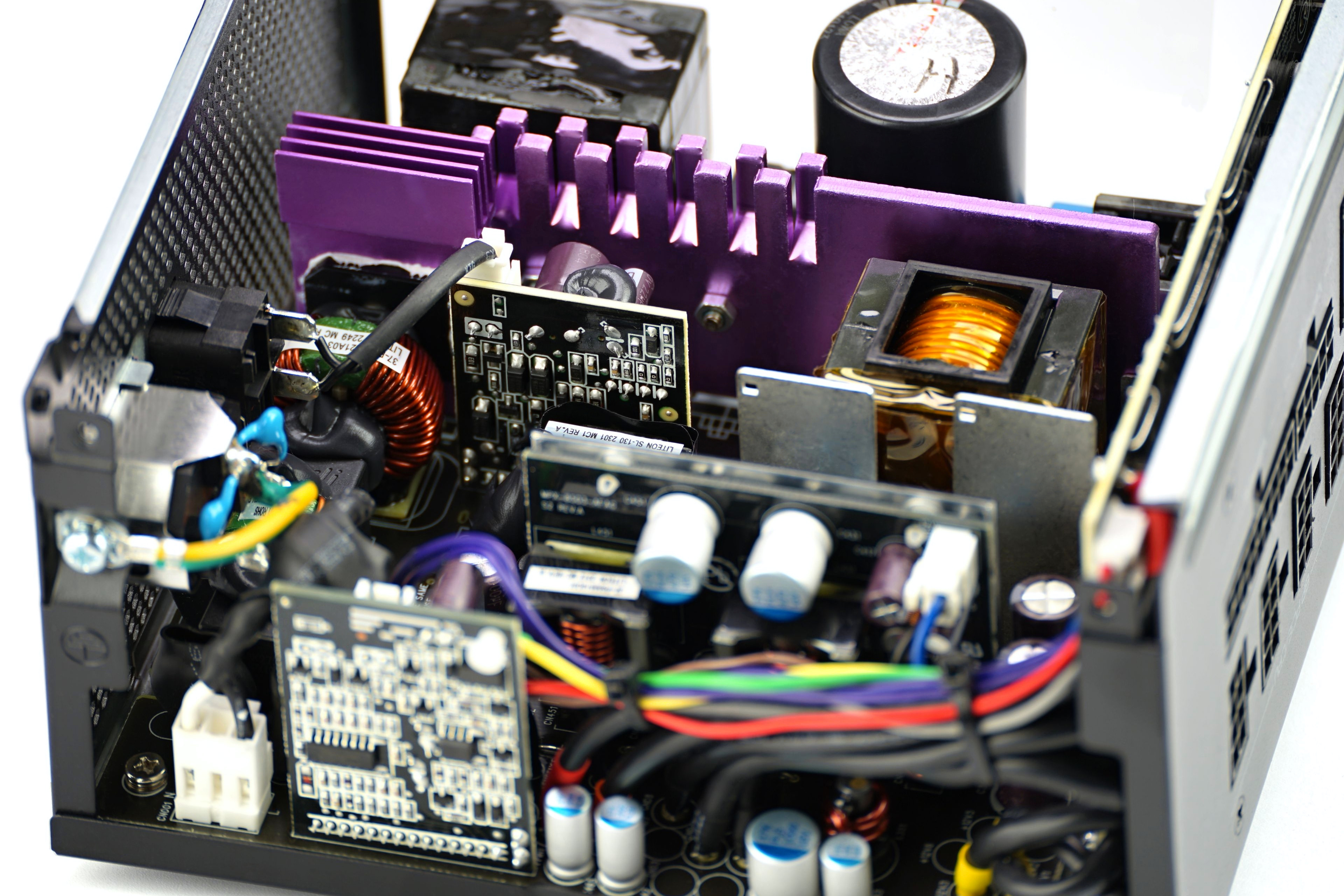
Once the cover is removed (typically the panel with a fan, connected to the side walls—essentially forming a tunnel), you can see the electrical components inside, such as the transformer, inductor, transistors, or capacitors. Keep in mind that these components form an electrical circuit and remain under voltage as long as the PSU is connected to the mains.

Servicing these areas (for example, during a repair) should only be carried out by certified electricians with the appropriate qualifications. The poster accompanying this article illustrates where each component is located. Below is a photo of what a power supply looks like without its casing.