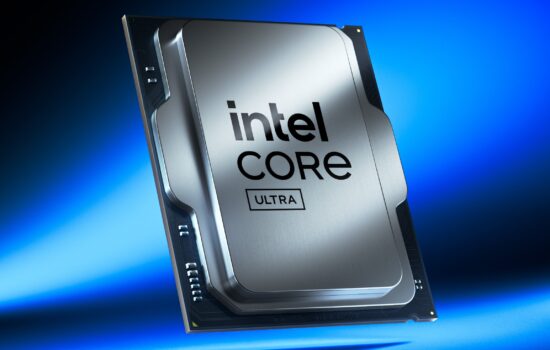
Next-gen Intel Core Ultra 400 “Nova Lake” processors are expected to launch later this or early next year, bringing major changes to the desktop platform. The new LGA 1954 socket will support dual compute die CPUs, akin to AMD models such as the Ryzen 9 9950X, but with up to 52 cores. As a result, these processors are expected to have unprecedented power draw and we have finally learned just how high that figure will be.
Earlier this month, we reported that the Z990 chipset would also have higher power consumption due to its fairly extensive PCI Express lane configuration (three PCIe 5.0 ×4 interfaces), reaching up to 14 W. The same source, Laurent’s Choice, which apparently has access to various details about LGA 1954 motherboards being prepared for Nova Lake processors, has now also published power consumption figures for the highest-end 52-core Nova Lake processor models.
We have known for some time that their TDP, or base power, is expected to be 175 W, but we are now learning the more important figure. Intel has set the so-called PL2, or maximum turbo power, at 474 W. While TDP is of little practical significance today, PL2 is the key specification—it indicates how much power the processor will consume under maximum multithreaded workload. Power draw in games is typically much lower, as is power consumption in single-threaded applications.
This 474 W limit is expected to apply to processors running in the so-called Performance profile, which should be the default setting on most motherboards. Expensive high-end boards may also offer some kind of Extreme profile that unlocks even higher power consumption, although that profile will likely not be enabled by default. Conversely, less expensive motherboards, whose VRMs are not designed to handle such high current, will most likely implement only the Baseline profile, reducing maximum power consumption to a more moderate level. If a 52-core processor is installed in such a motherboard, power consumption will be capped at this lower limit, and the CPU will operate at lower clock speeds and deliver lower performance to stay within that limit.
According to the leaker known as Jaykihn, Intel had previously considered a lower PL2 value of only around 400 W, which means that the bar was pushed higher to increase performance. On the other hand, rumors of 700 W power consumption that were spreading at a point, have not been confirmed. Though it’s good to remember that it was known that the 700W figure did not refer to Intel’s official PL2 limit, but rather to estimates of how much power a 52-core CPU could consume if all power limits were removed. However, if the aforementioned Extreme profile does exist, its limit could potentially fall somewhere in the 600–700 W range. Similarly high power consumption could naturally also occur if users manually disable the limits and start overclocking or increasing the supply voltage. The question, however, is what level of processor power draw will actually be within the ability of generally available CPU coolers to dissipate the heat.

Nova Lake Motherboards May Feature Up to Three CPU Power Connectors
Some higher-end motherboards (typically those based on the Z990 chipset) will feature three CPU power connectors, as demonstrated by samples shown behind closed doors at Computex. These boards use a combination of two EPS connectors—that is, the familiar 8-pin CPU power connectors—and one PCIe power connector normally used for graphics cards. This is apparently because most power supplies include only two EPS cables. Intel has reportedly since revised the specifications and now recommends equipping motherboards with three EPS connectors instead, perhaps for consistency and to simplify installation.
However, three connectors will not be hard requirement for operating the dual-chiplet 52-core processors, nor will they automatically translate into higher performance. According to Intel’s guidelines, two connectors are sufficient, and a motherboard equipped with only two connectors does not automatically have to operate with a lower power limit.
The third connector is intended to be an “optional” feature, much like a high-end motherboard having more VRM phases than are actually necessary. A similar situation exists with GPUs, where some graphics card models include three 8-pin power connectors even though the card itself requires only two. The additional connector can be viewed as extra headroom for overclocking, an assurance of greater reliability (because the current is distributed across more cables), and similar benefits.
Sources: Laurent’s Choice (1, 2, 3), Jaykihn (1, 2, 3)
English translation and edit by Jozef Dudáš
⠀