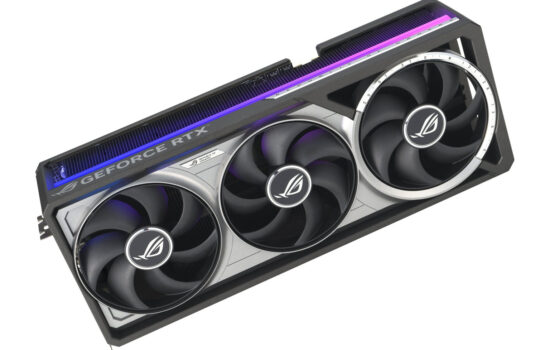
MSI’s Gaming series cards no longer sit at the top of the company’s lineup—they’ve now moved into the mid-range segment. Still, they offer an excellent mix of features and performance. A card like the GeForce RTX 5070 is likely to be popular among gamers, as it should handle sub-4K gaming comfortably for the next few years and remains relatively affordable. Let’s see how the RTX 5070 12G Gaming Trio OC compares to other models we’ve already tested.
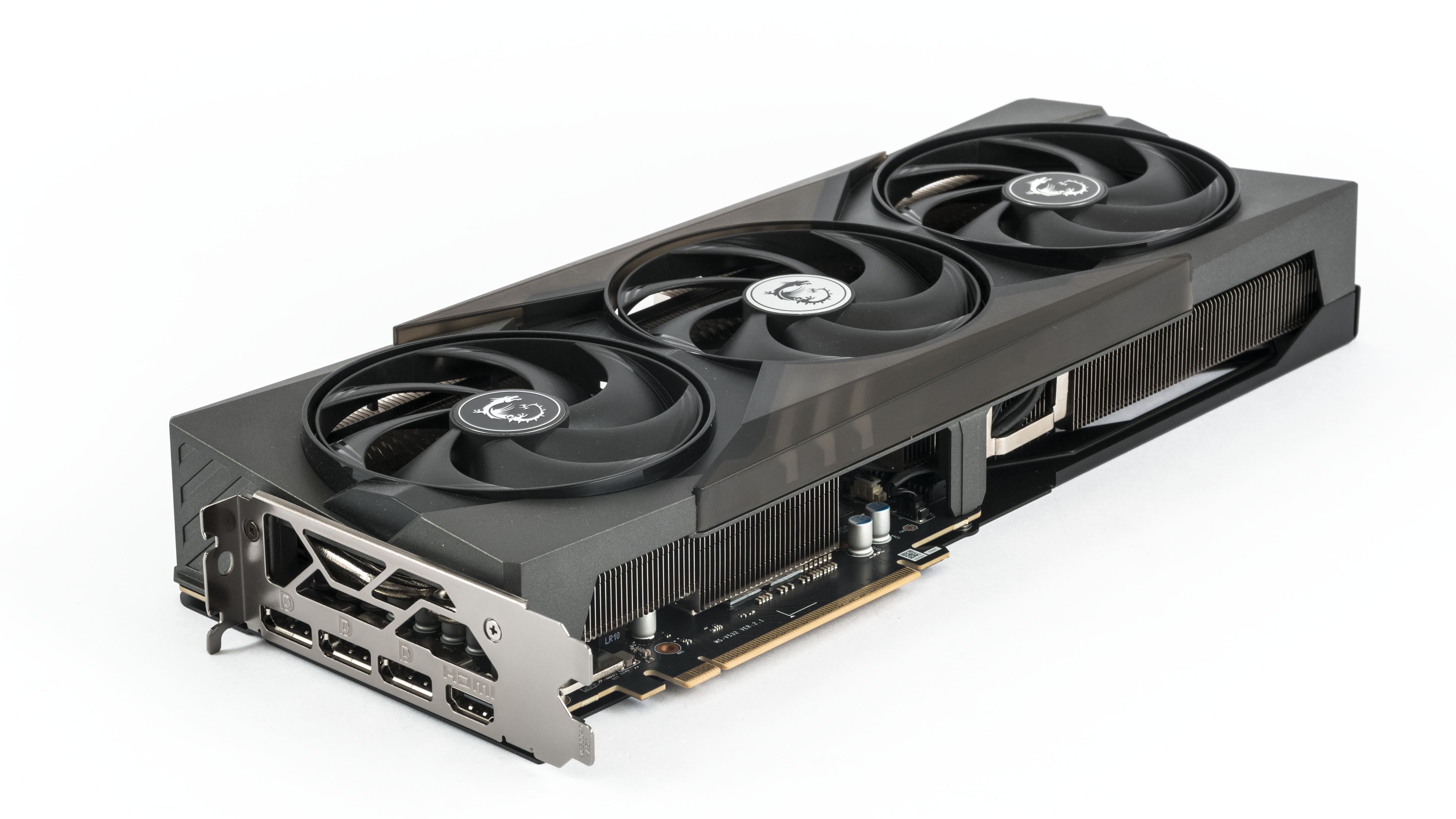
The card features a 2.5-slot cooler with three fans blowing onto a heatsink with transverse fins. The shroud is made from a mix of plastics: a metallic gray base, black elements, and dark translucent sections.
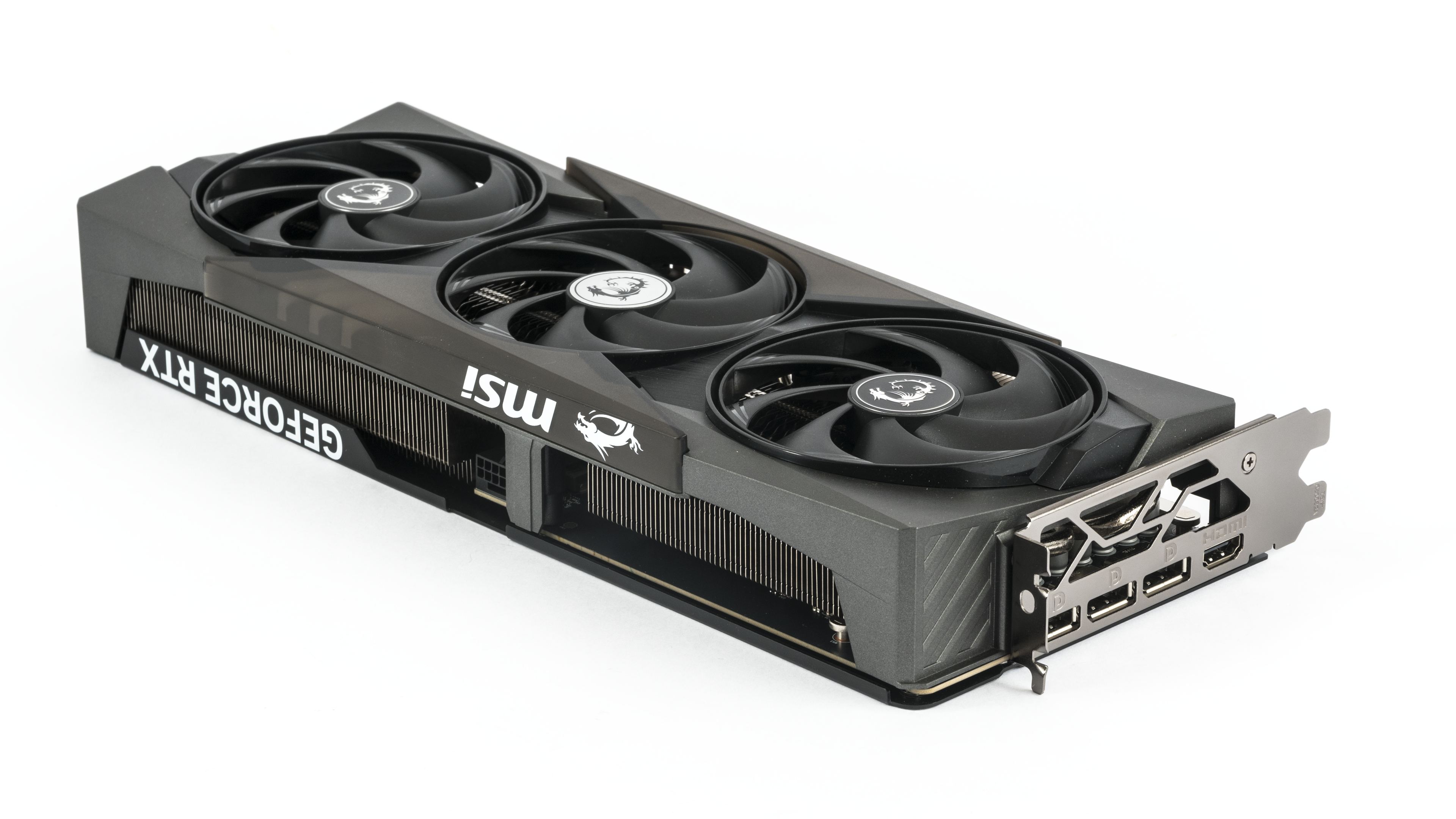

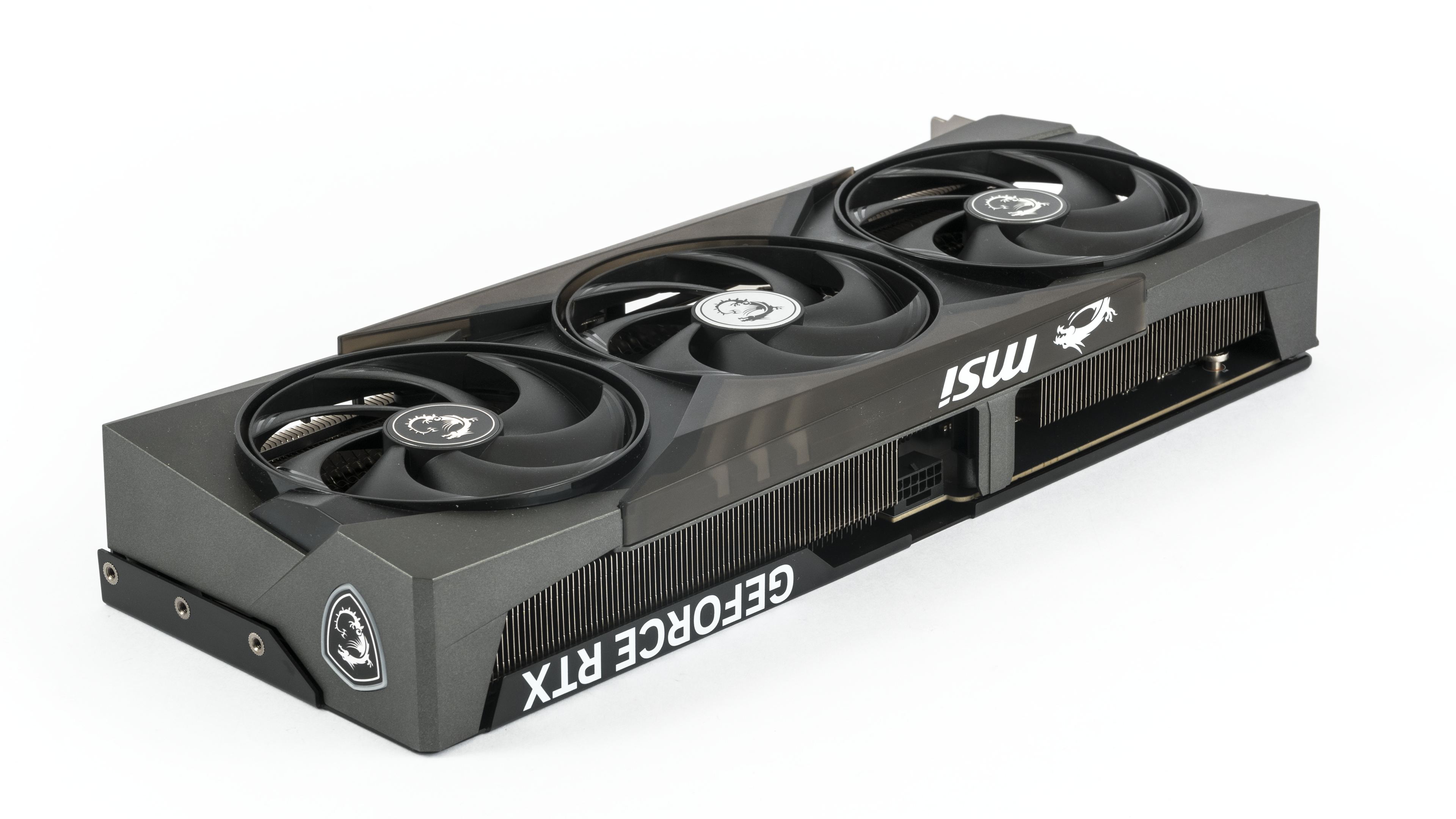
The backplate is metal. At the rear end, there’s an opening through which some of the heated air can exhaust upwards. There’s another perforation in the backplate in front of this opening. A silver logo and stripes at the edge of the PCB are illuminated using addressable RGB LEDs.
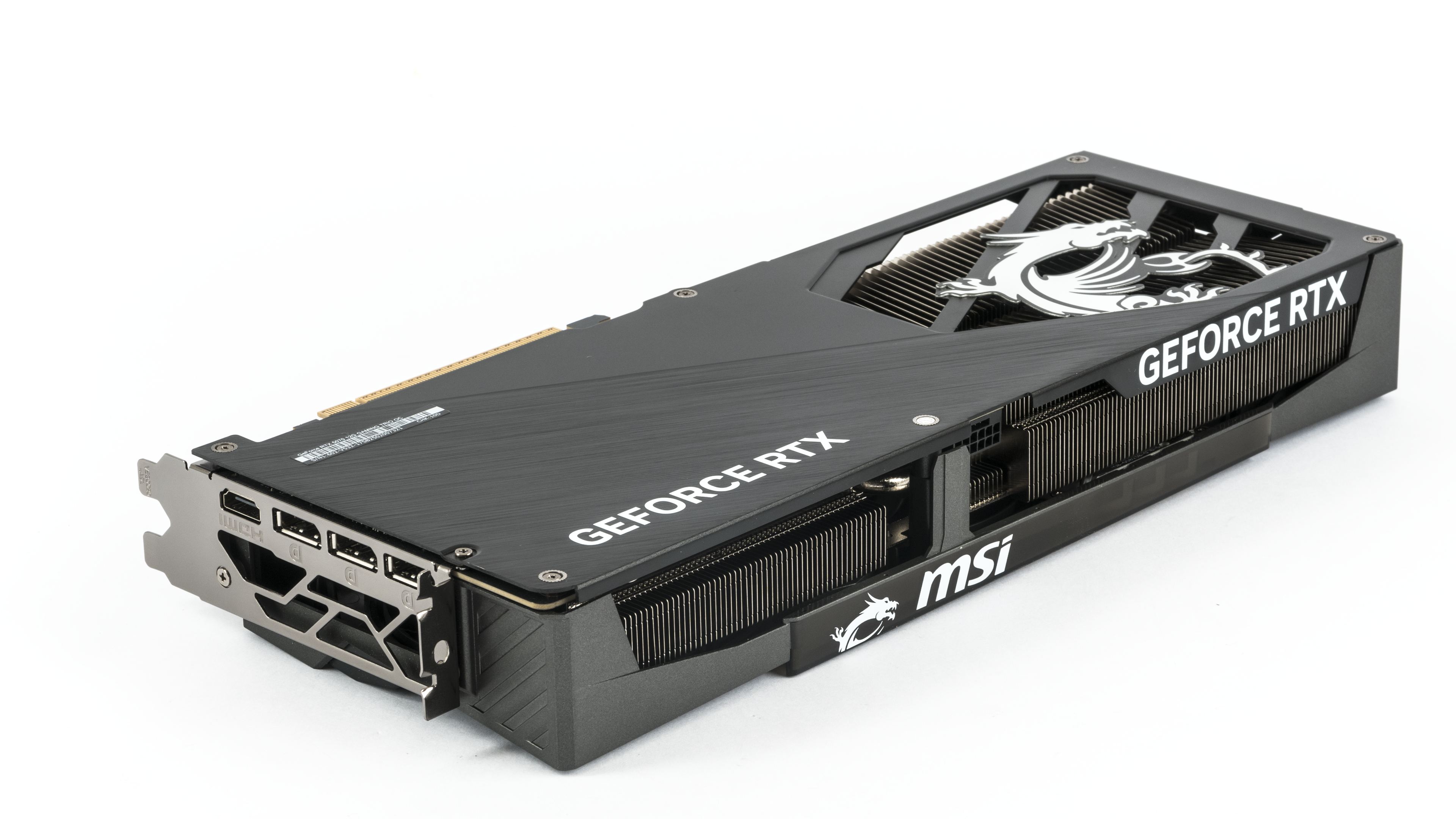

A large portion of the heatsink behind the rear fan, and partially under the middle one, is fully pass-through. The dragon emblem no longer significantly blocks the airflow, as it did with the dual-fan RTX 5060 Ti Gaming variant, but placing it over the vented section still doesn’t seem ideal – especially when there’s unused space nearby on the solid section of the shroud.
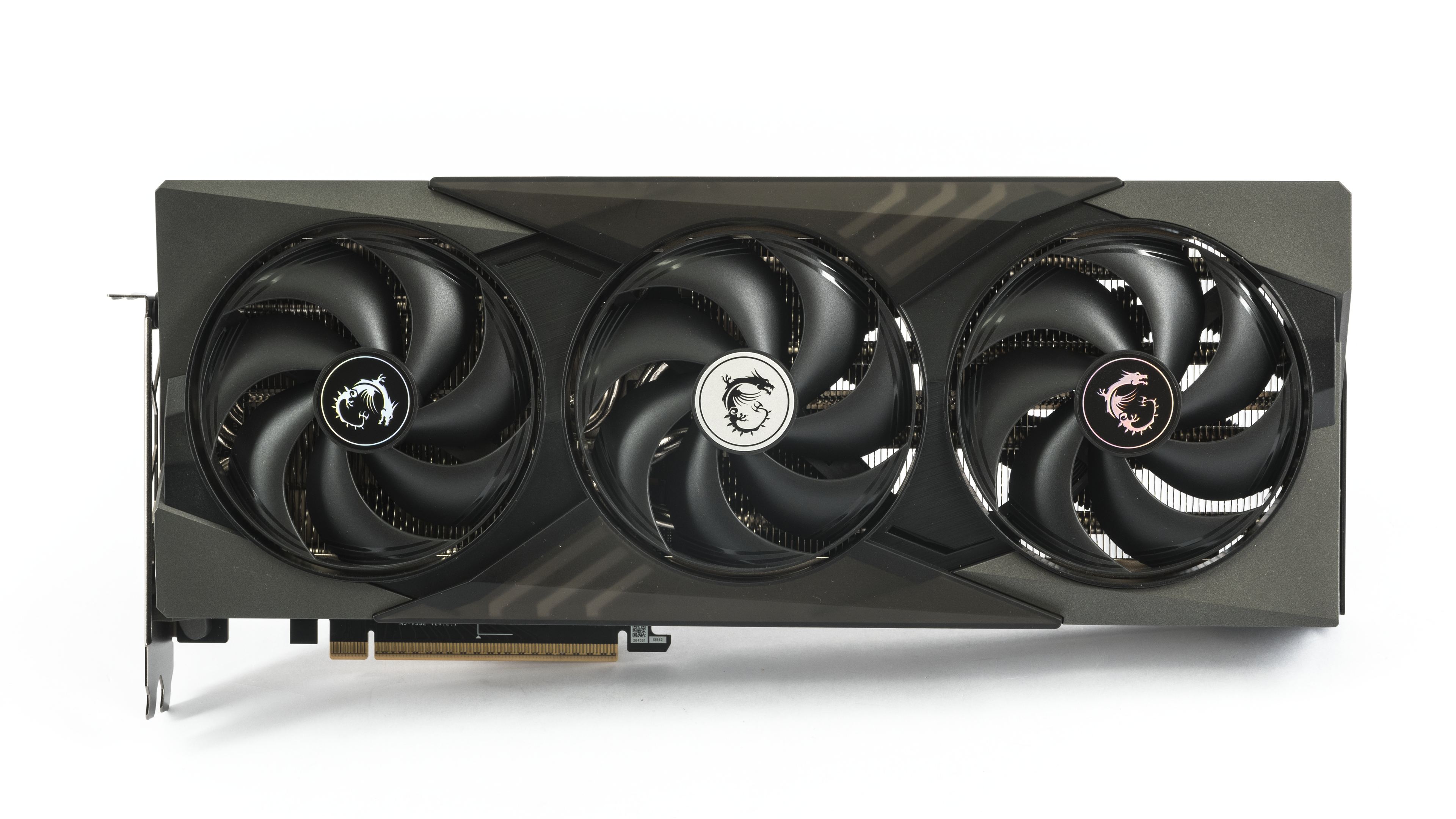
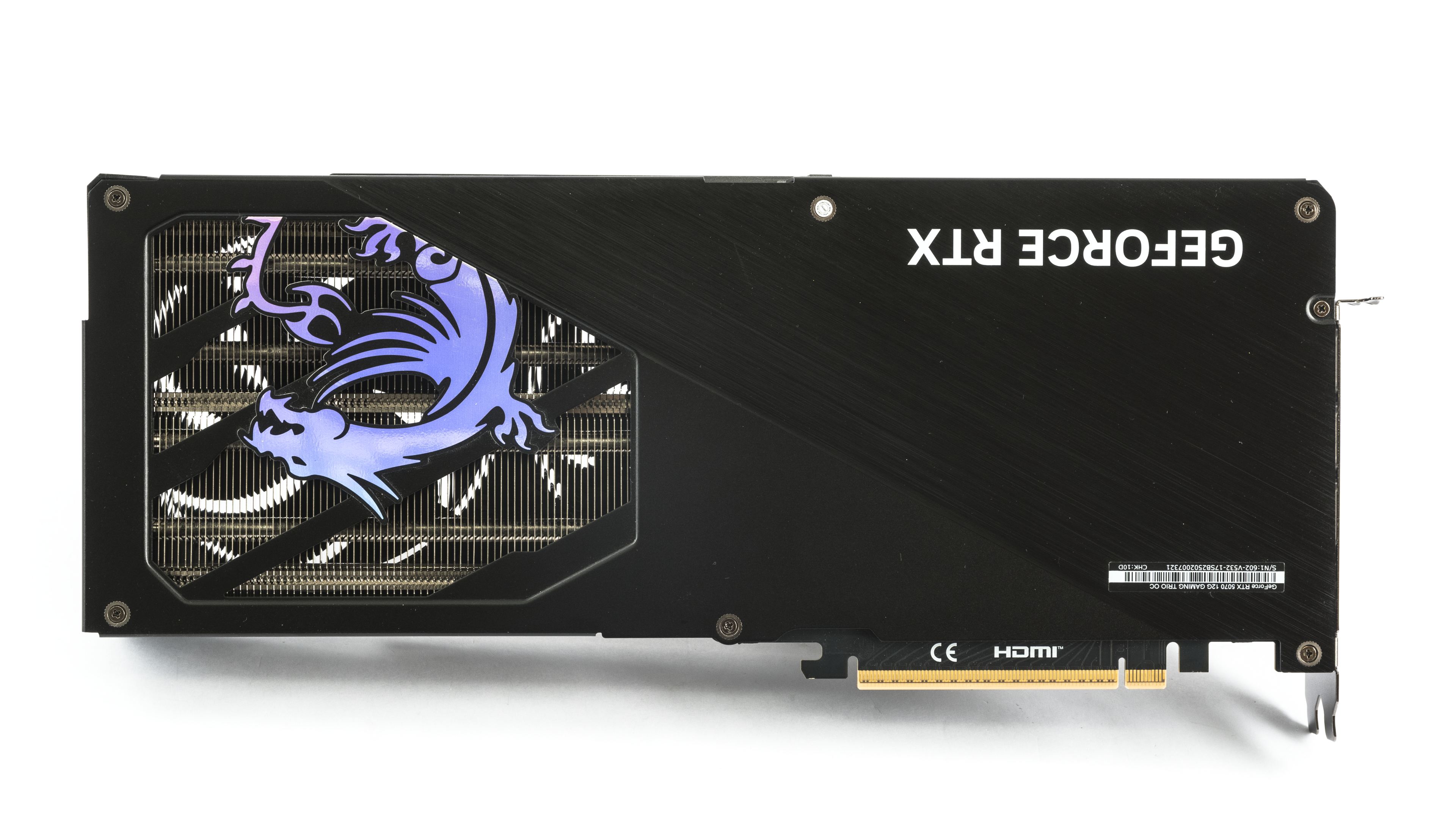
The heatsink with transverse fins fills most of the space under the shroud.
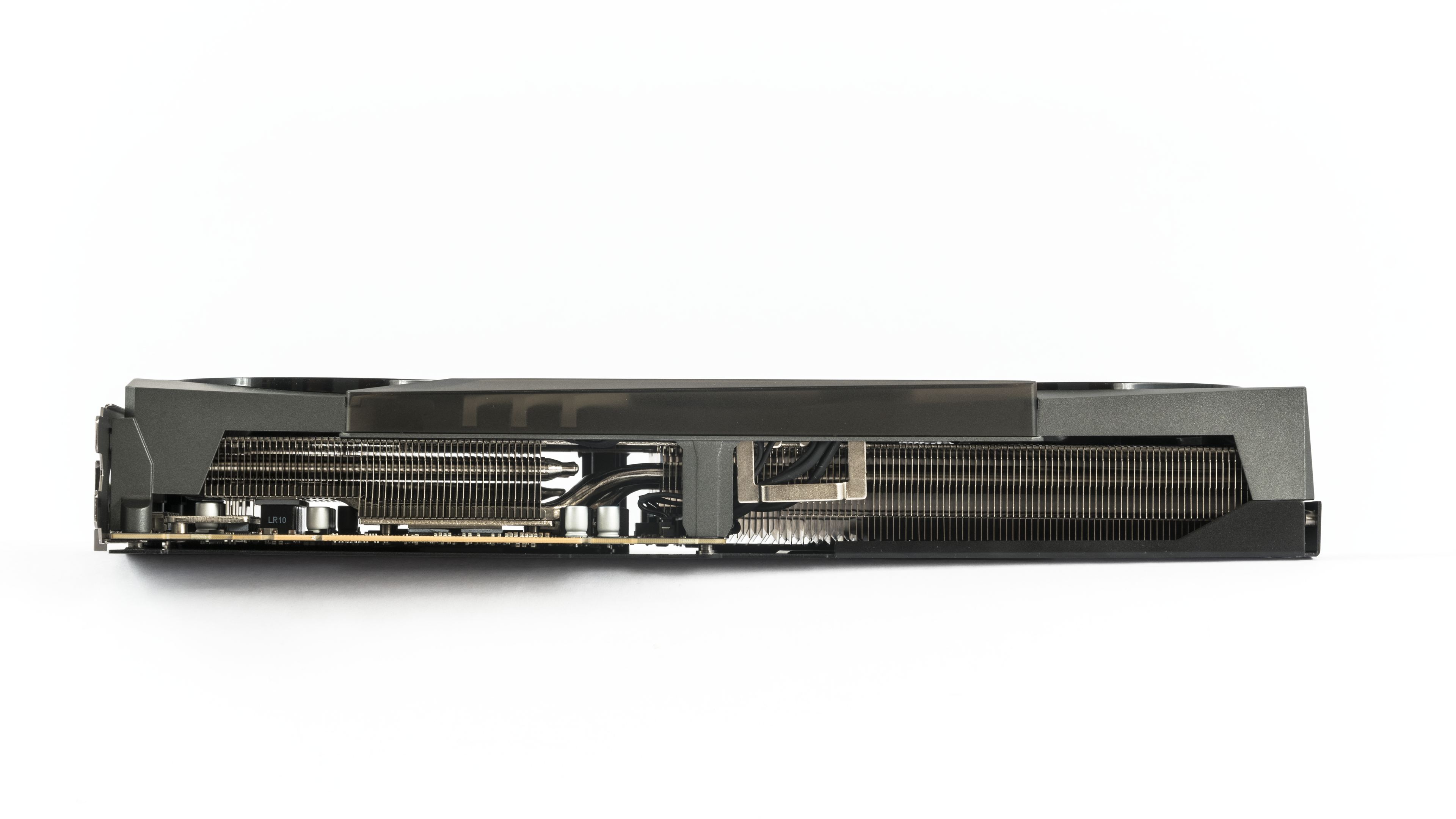
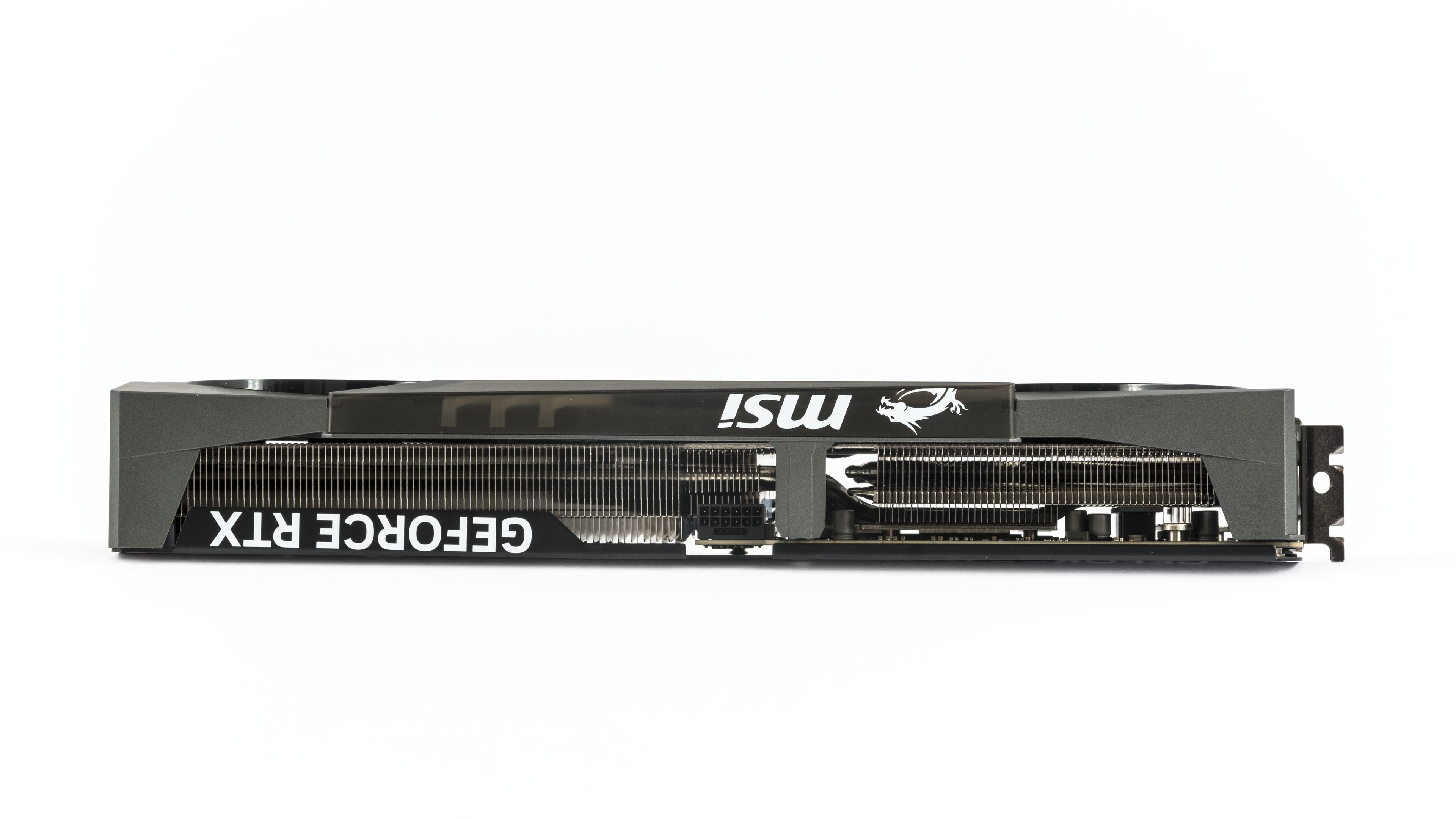
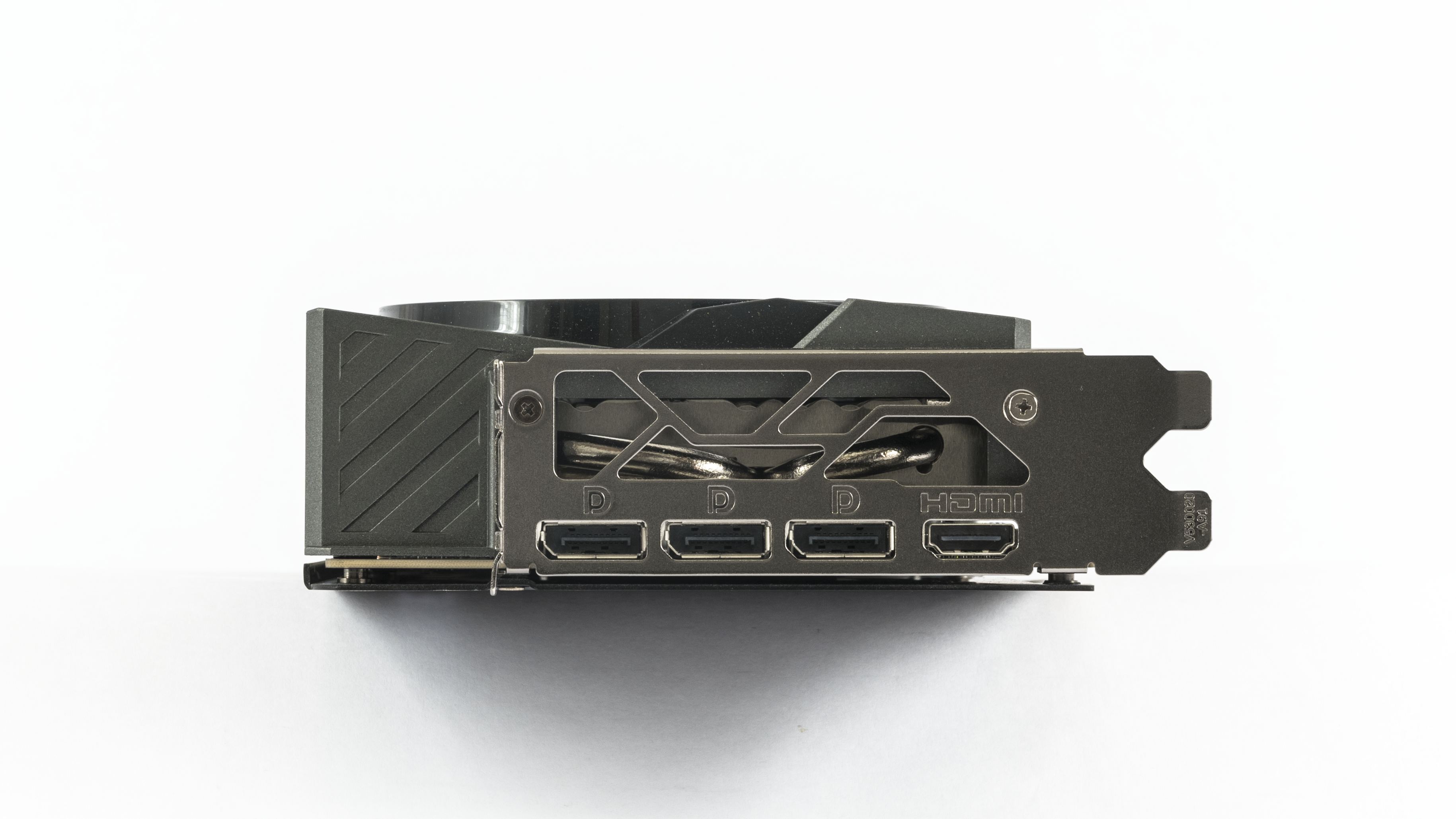
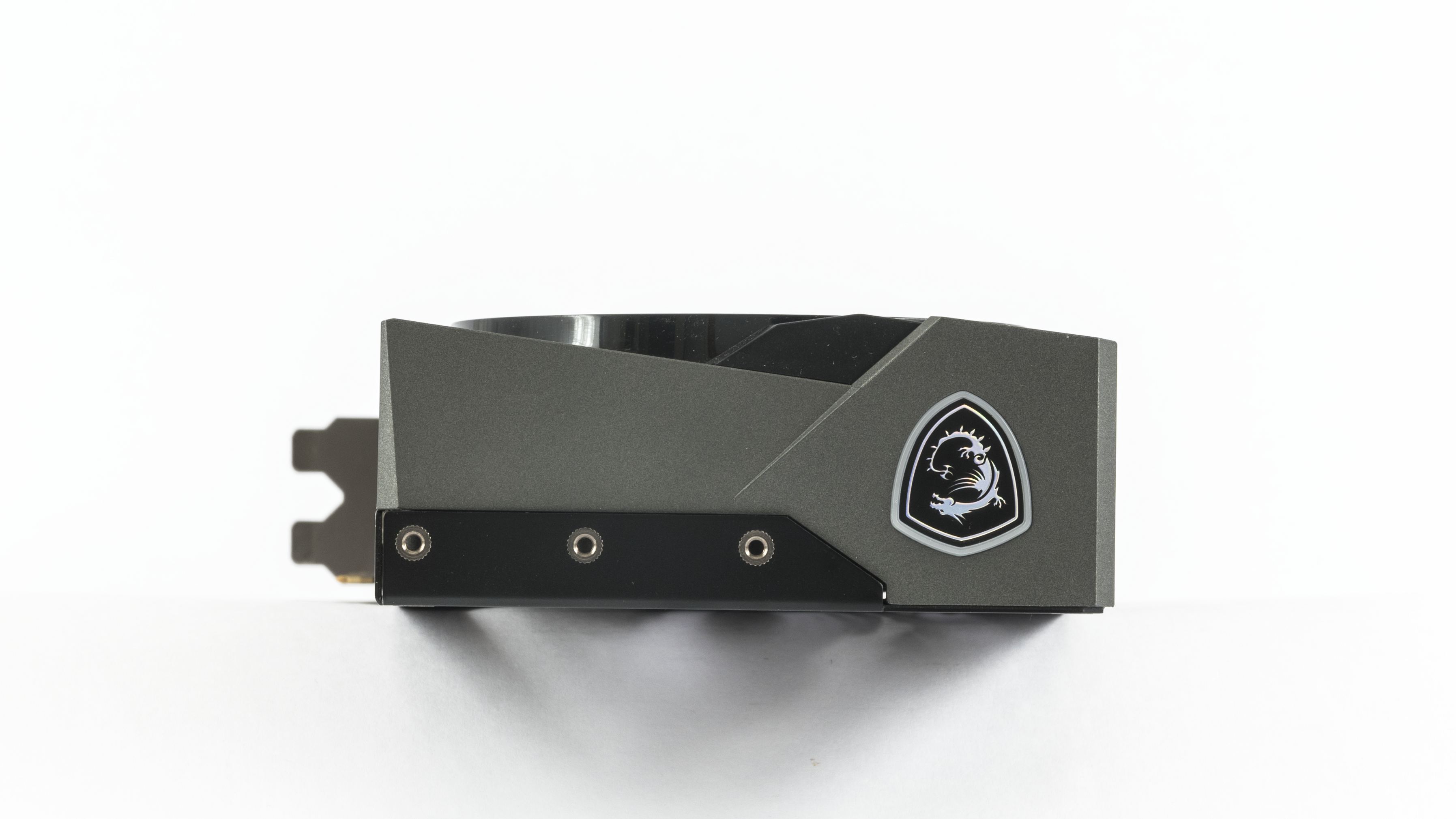
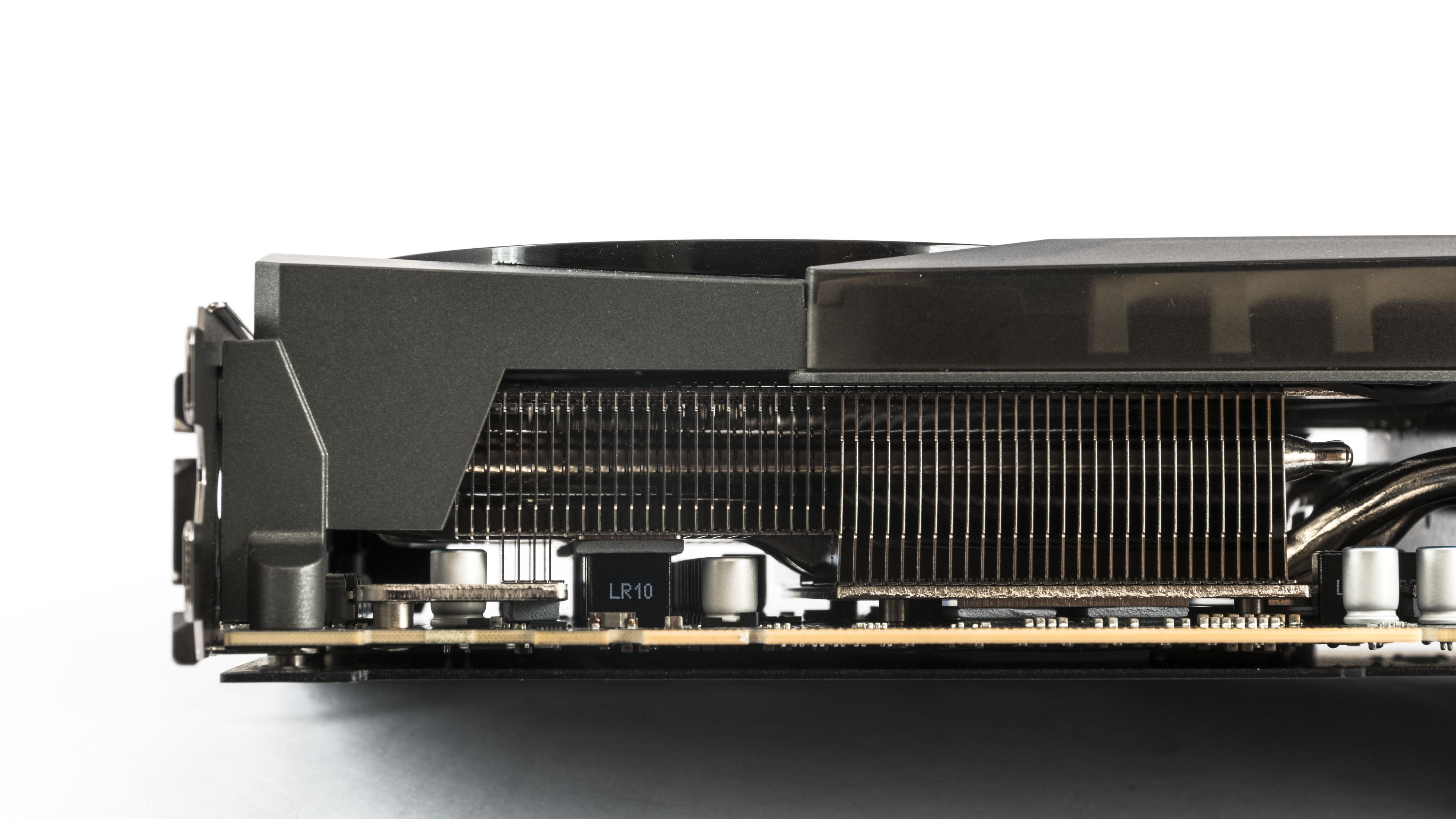
In the close-up, you can see the cooling of MOSFETs and coils on the power delivery circuit. Heat from the MOSFETs is drawn into a thick base and then dissipated into the large heatsink fins. However, between the backplate and the PCB, thermal pads are missing – they’re only visible under the GPU.
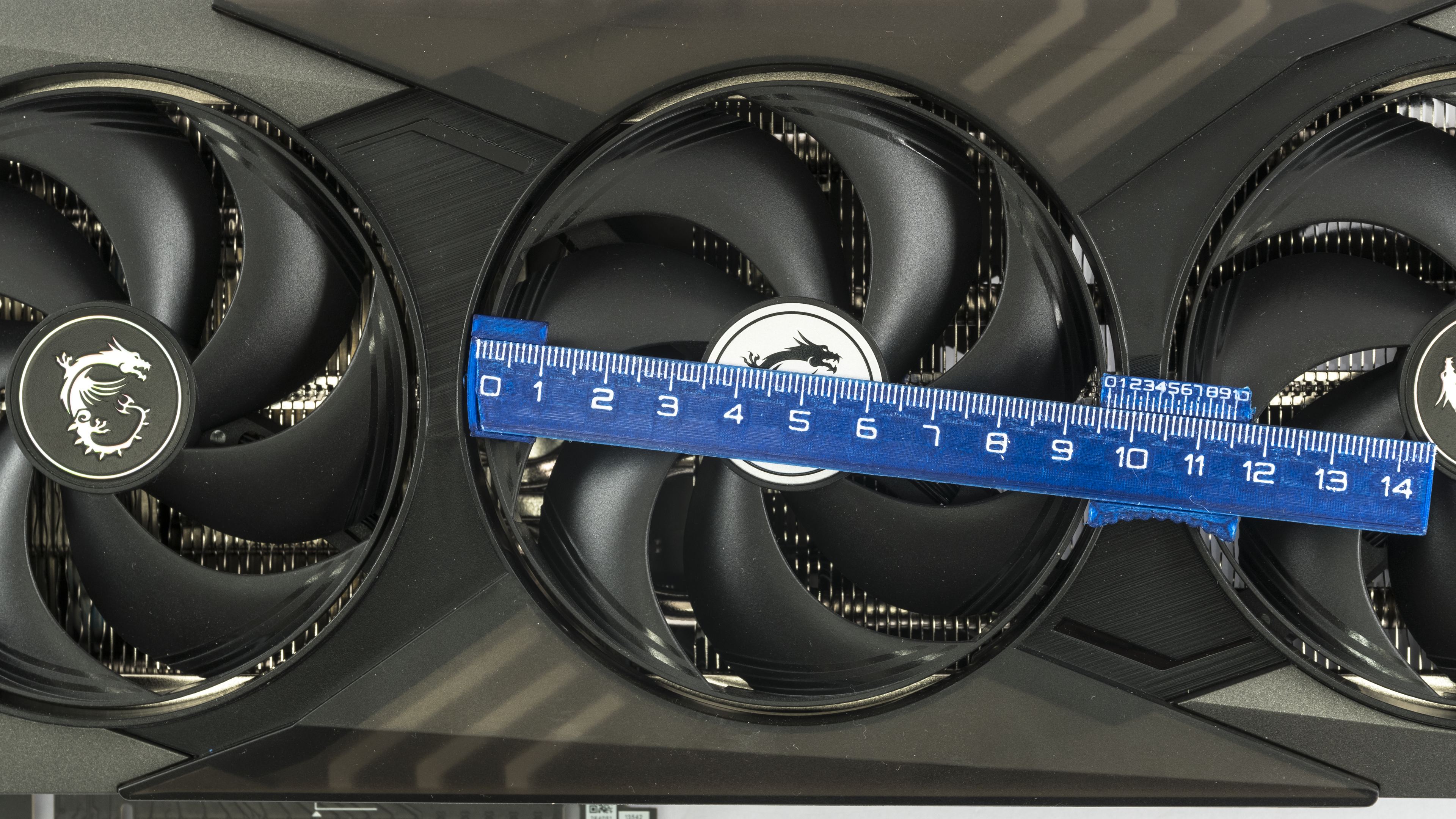
The fan sizes are somewhere in the midrange for today’s cards – the impeller diameter is an above-standard 96 mm, but the height is only 9 mm. This makes them low-profile and relatively slim, and at similar RPMs, they’re quieter than taller fans with larger blade surface areas.

The card weighs 1100 g without the power adapter, which now places it among the lighter models.

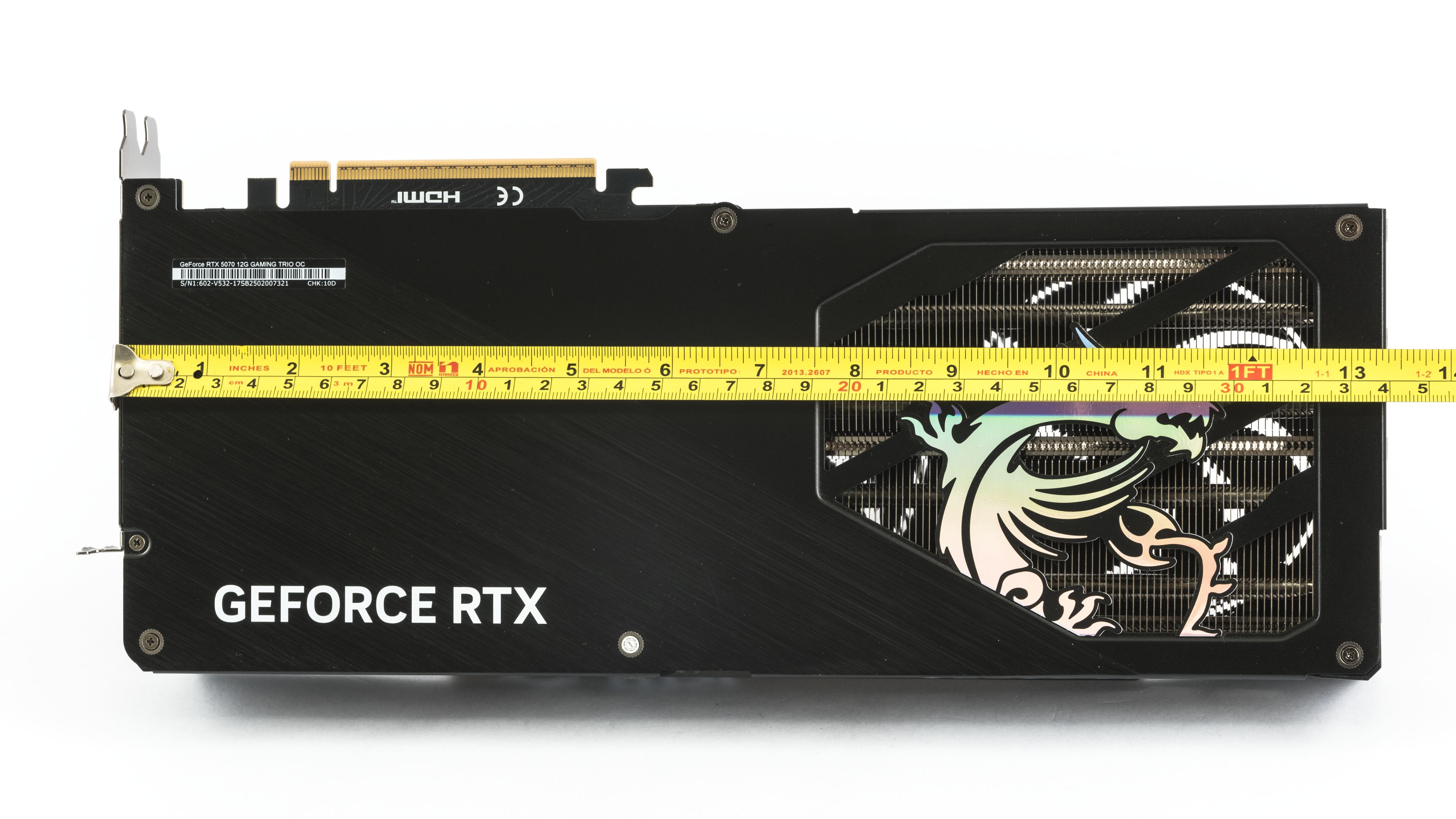
At 34 cm in length, it belongs to the longer cards, but it should still fit without issue in all standard cases, except for particularly compact ones.
The card is about 3.5 cm wider than the bracket, and the space of three slots is enough in height, leaving a bit of clearance underneath.
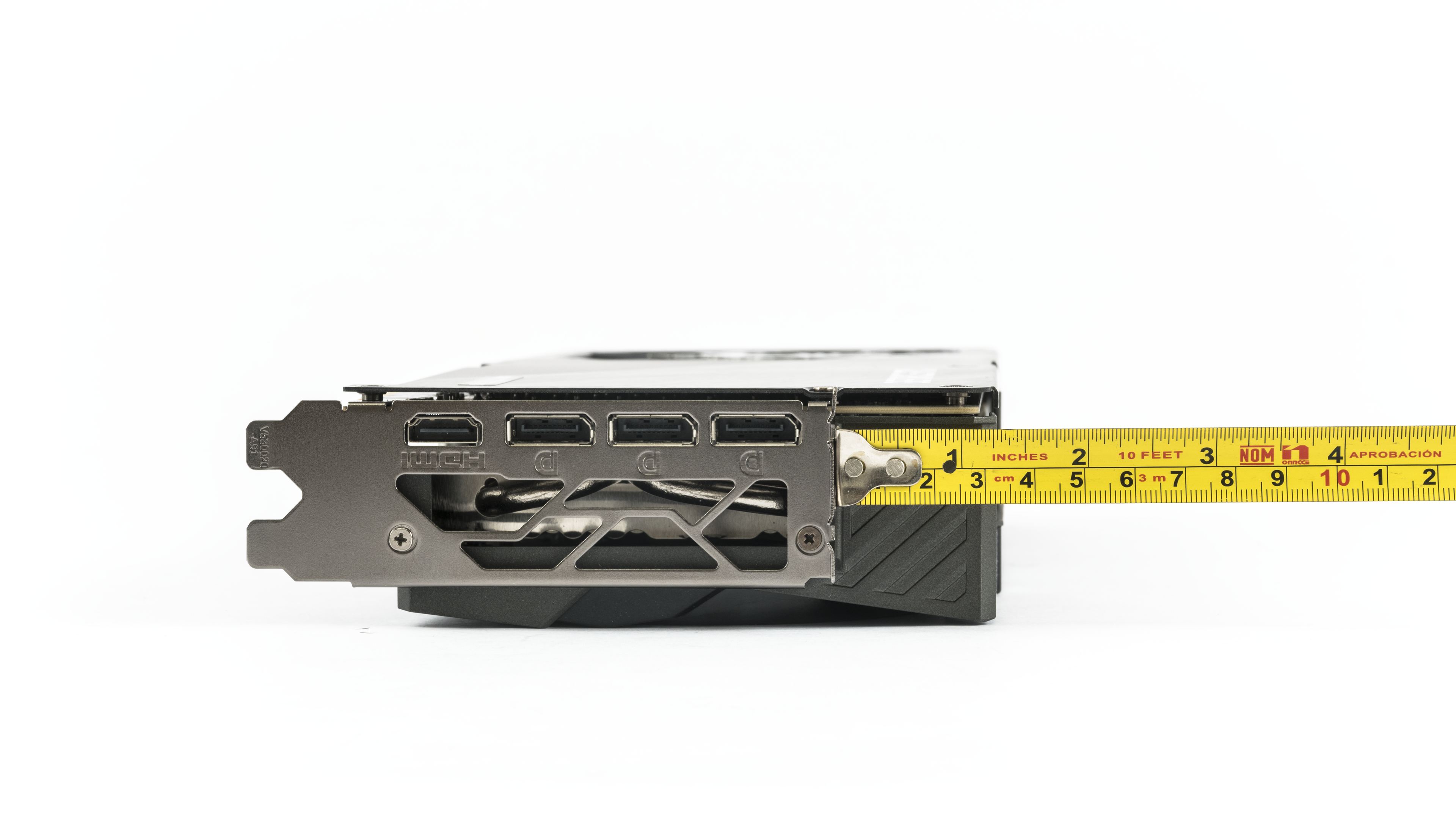
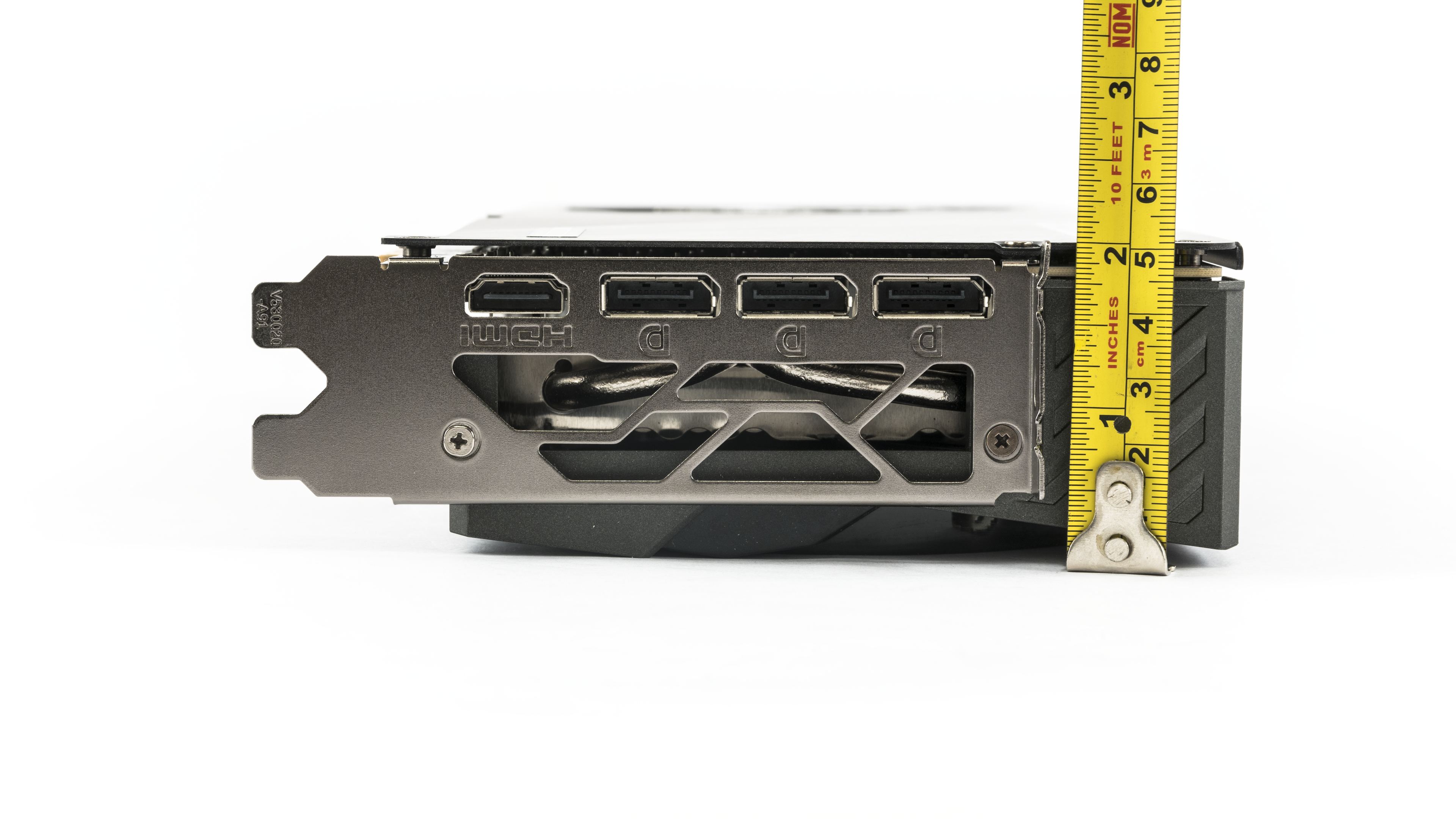
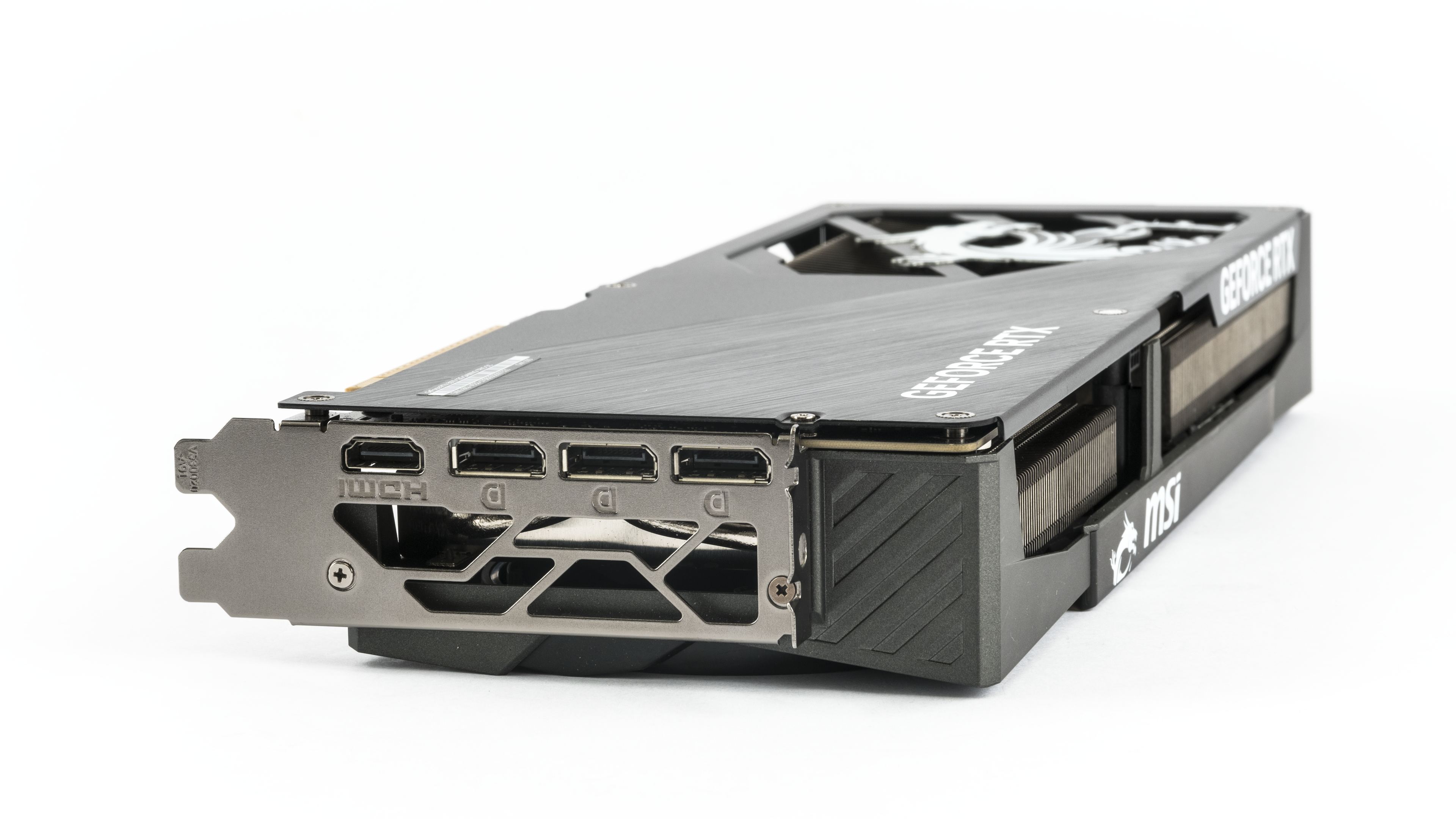
The bracket has the standard output configuration – three DisplayPort 2.1b connectors with UHBR20 and one HDMI 2.1b port.
For auxiliary power, it uses a 12V-2×6 connector; the 300W variant is sufficient for this card’s consumption. The included power adapter uses a splitter to connect to two 8-pin connectors.


We’ve covered the design, let’s move on to how it performs.
⠀