


The AMD Radeon RX 9070 XT delivers better price-to-performance than competing GeForce cards and 4 GB more memory than the RTX 5070. The Radeon RX 9070 XT Gaming OC 16G is the more affordable of Gigabyte’s two RX 9070 XT models. While it doesn’t match premium variants in overall performance, it offers more capable power delivery, a higher power limit for factory overclocking, and greater overclocking headroom than base models.
The card is equipped with a cooler featuring a black plastic shroud with gray accents. Fans with sleeve bearings and graphene nano lubricant blow air onto a heatsink with transverse fins.

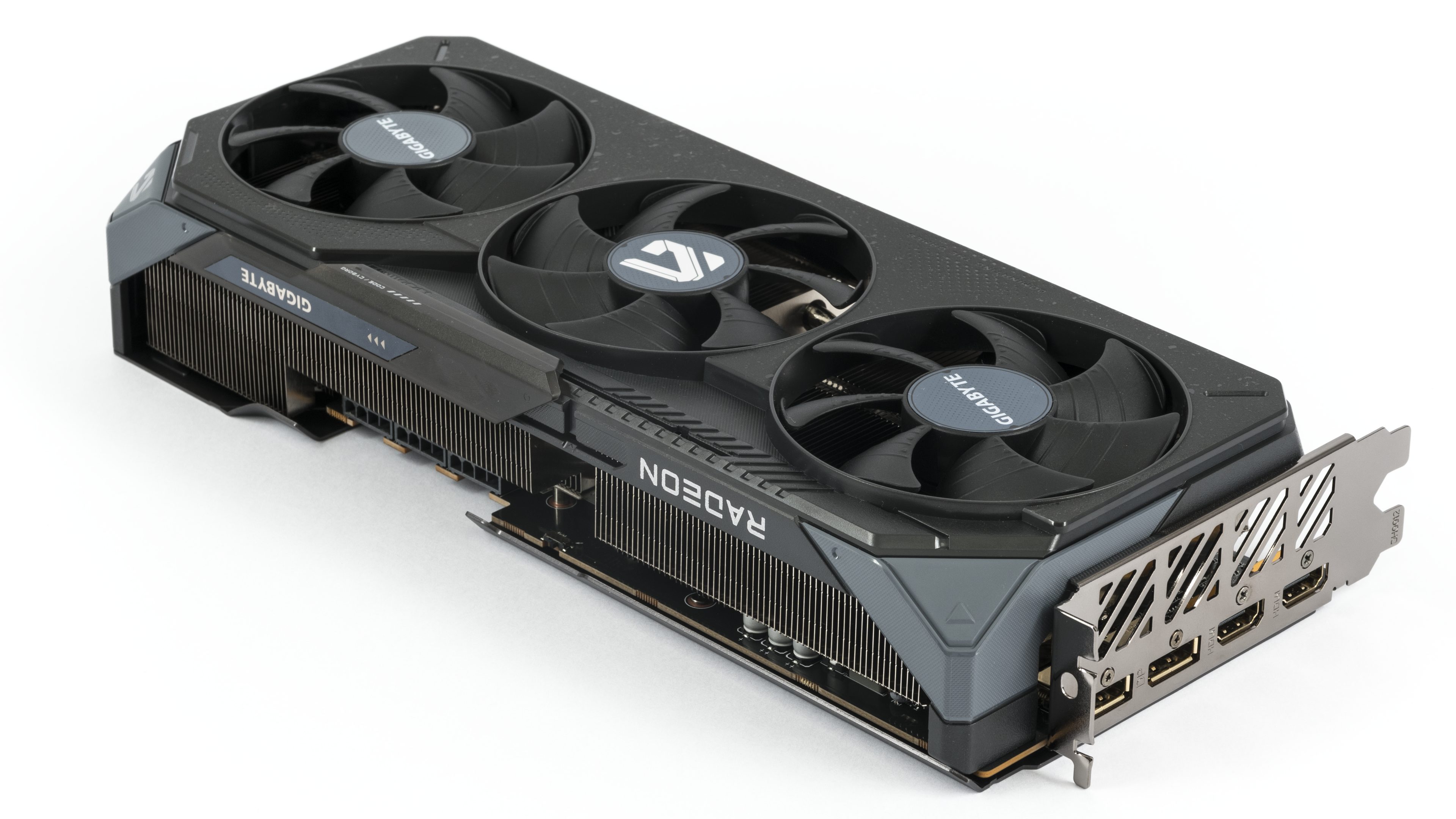
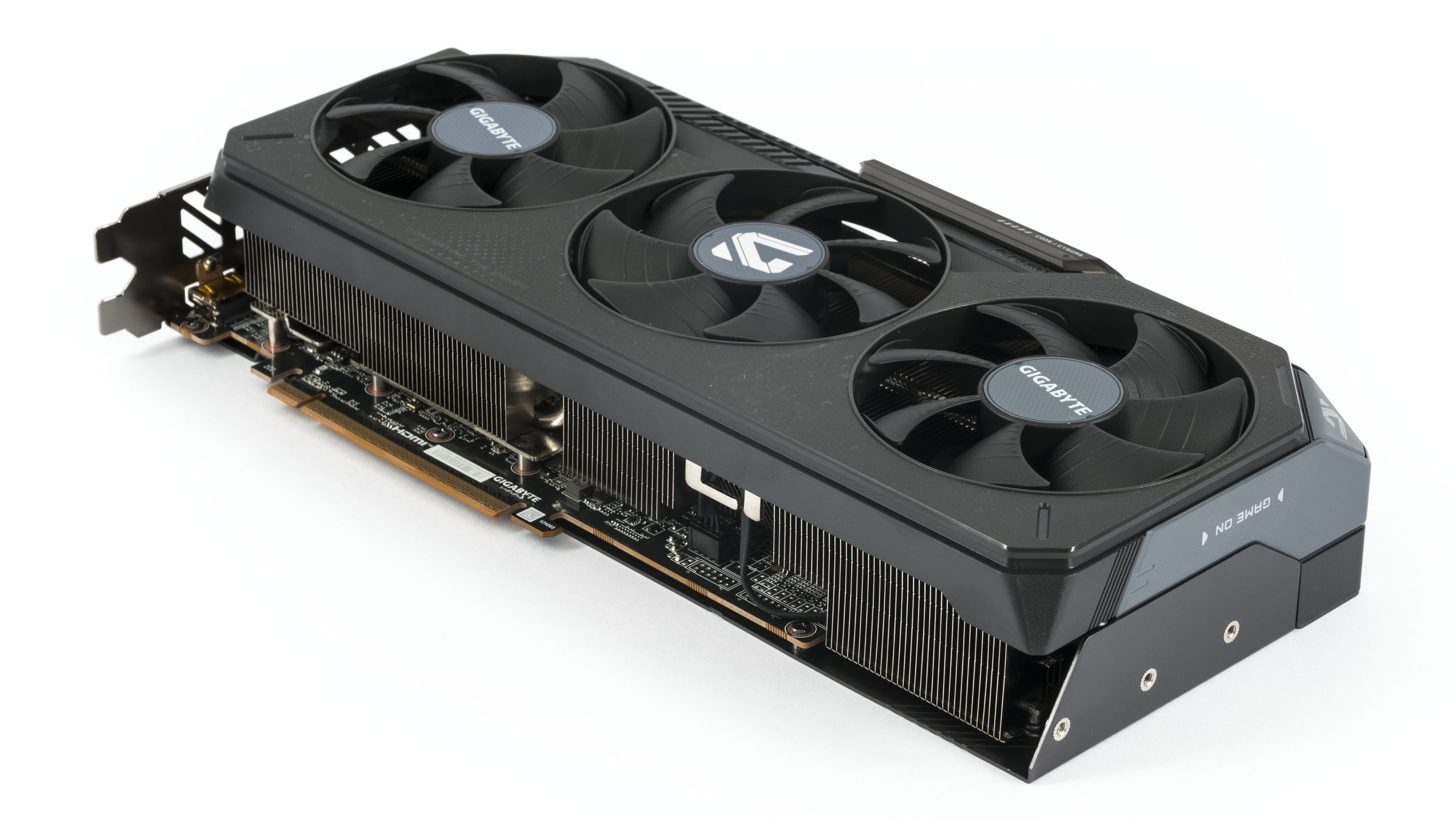

The rear of the PCB is protected by a shaped metal backplate. At the rear, there’s a large opening with freely accessible heatsink fins.
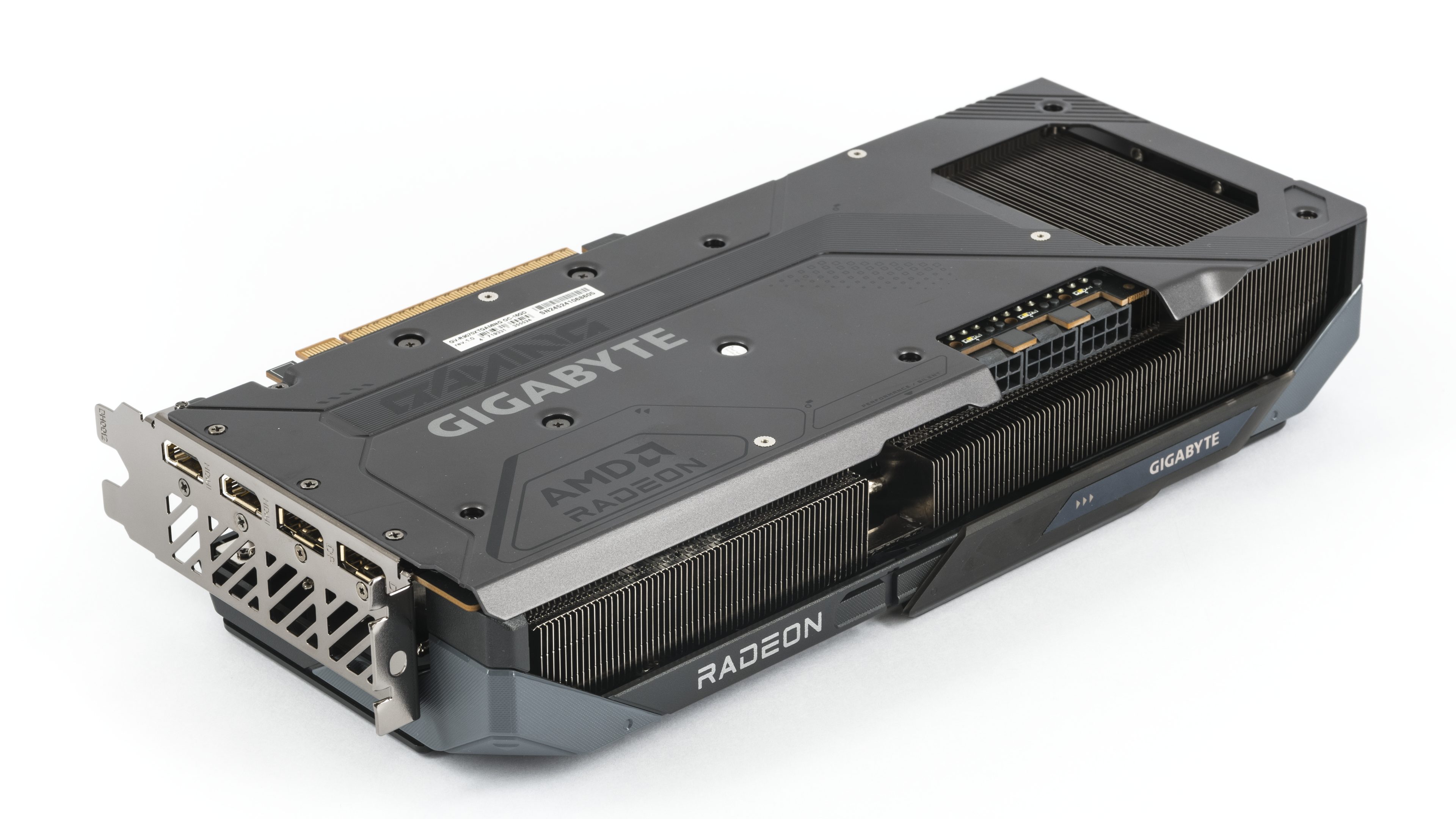
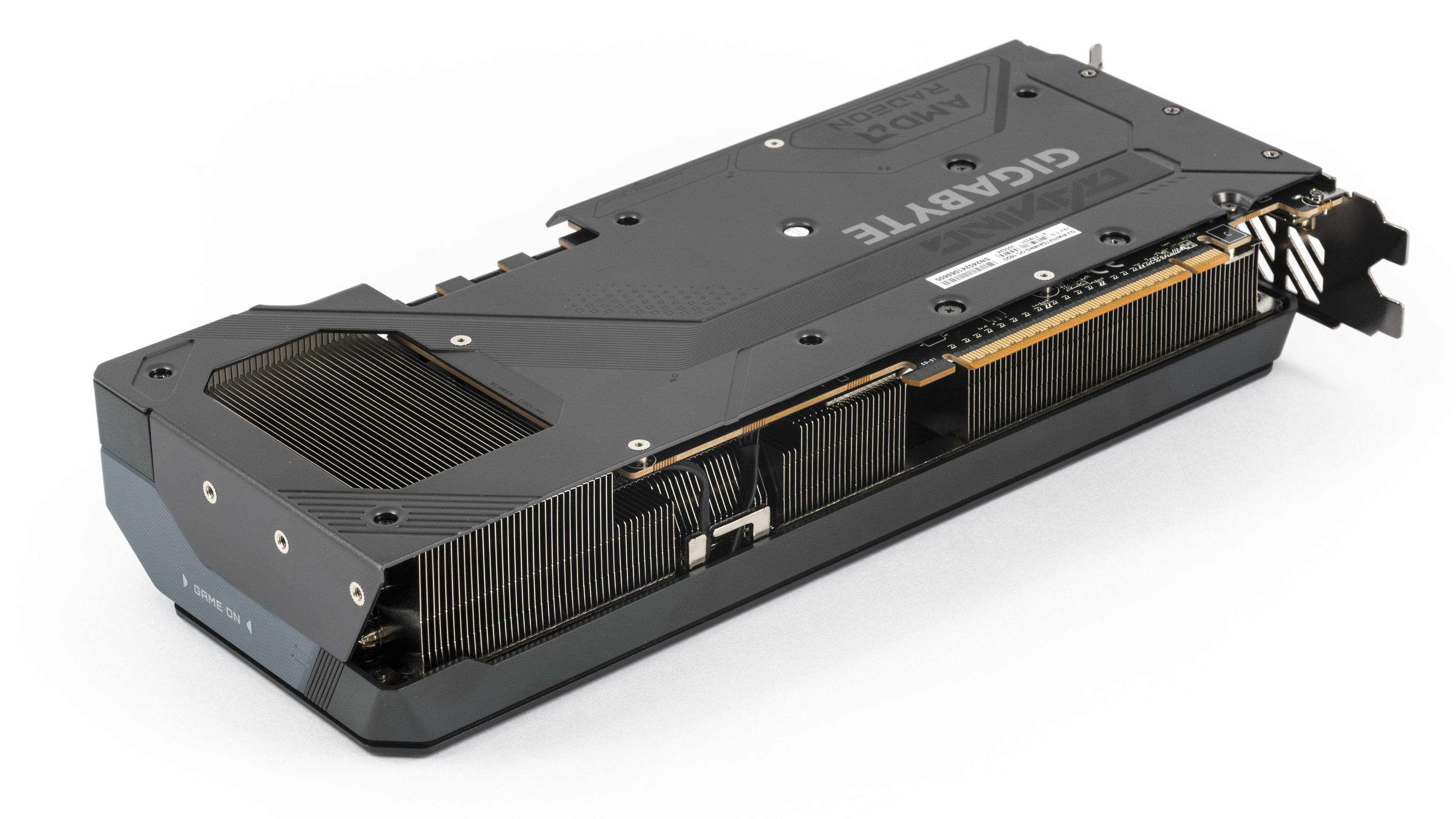
Near the outer edge of the card is a sliding cover; the transparent Gigabyte logo can be moved over a strip backlit by ARGB LEDs.
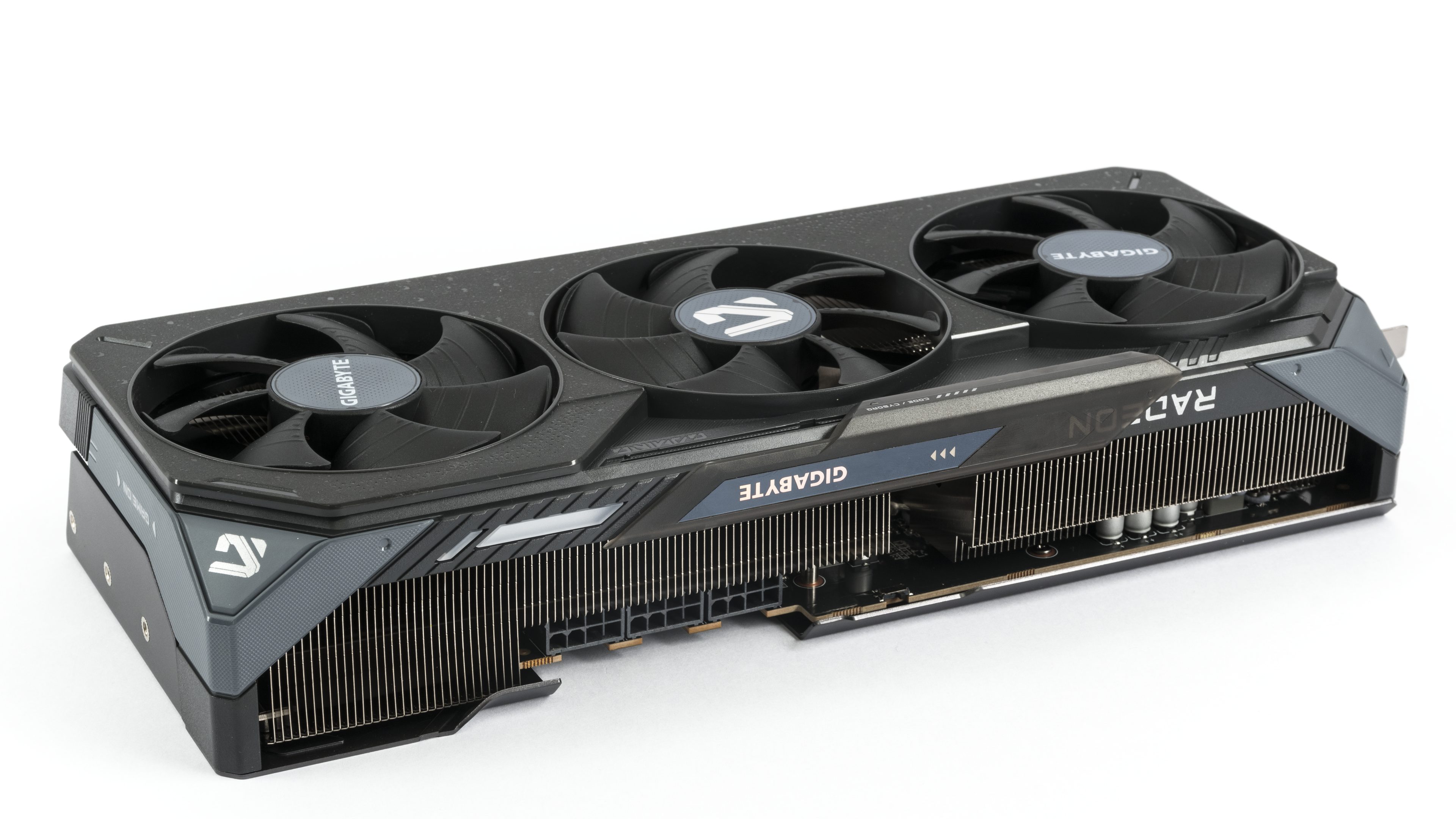
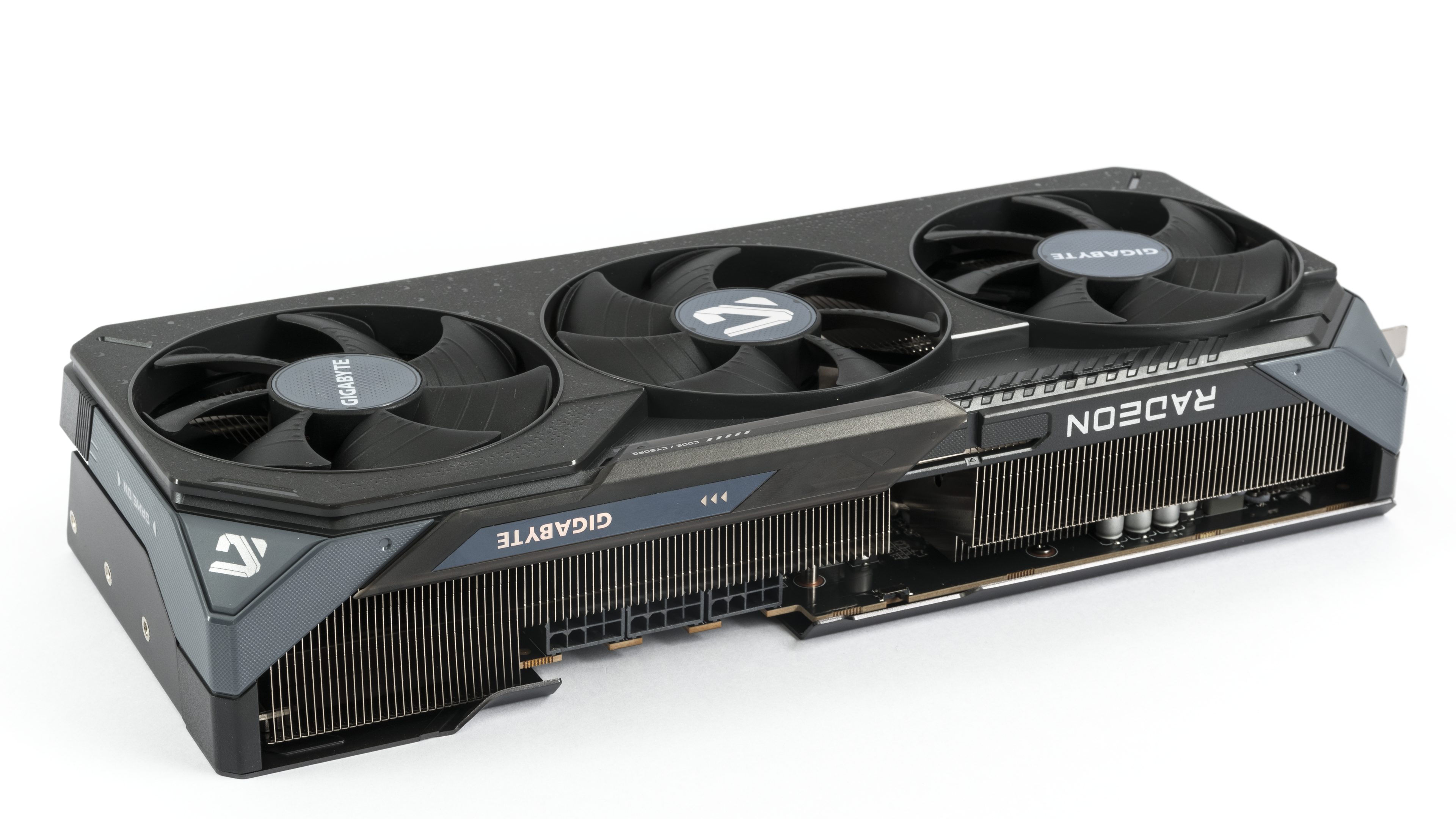
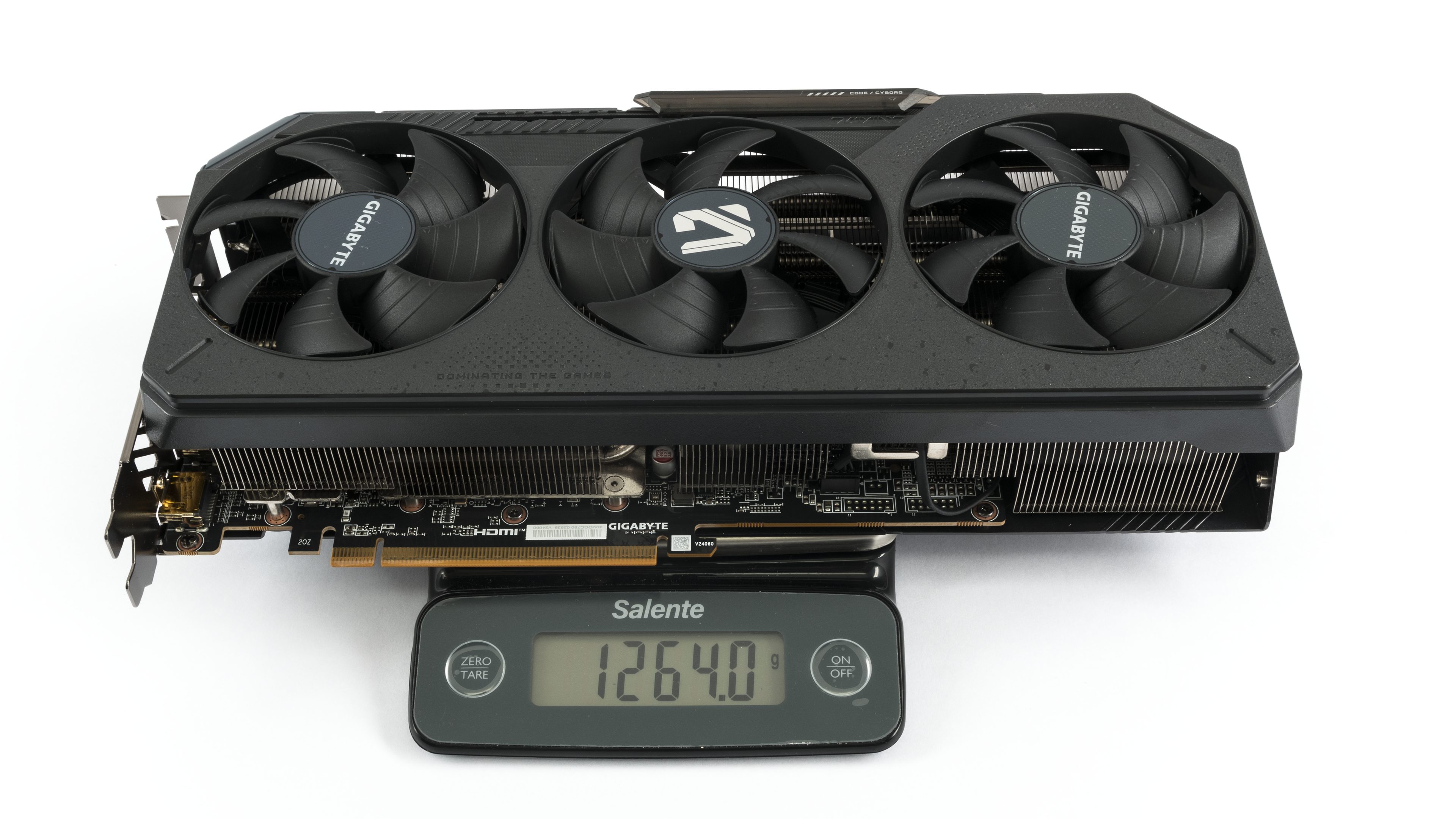
Weighing 1.26 kg, the card is among the lighter ones, similar in weight to the larger Pulse RX 9070 XT.
The fans are 11 mm tall, but the impeller diameter is just under 9 cm, so the blades have more classic proportions.
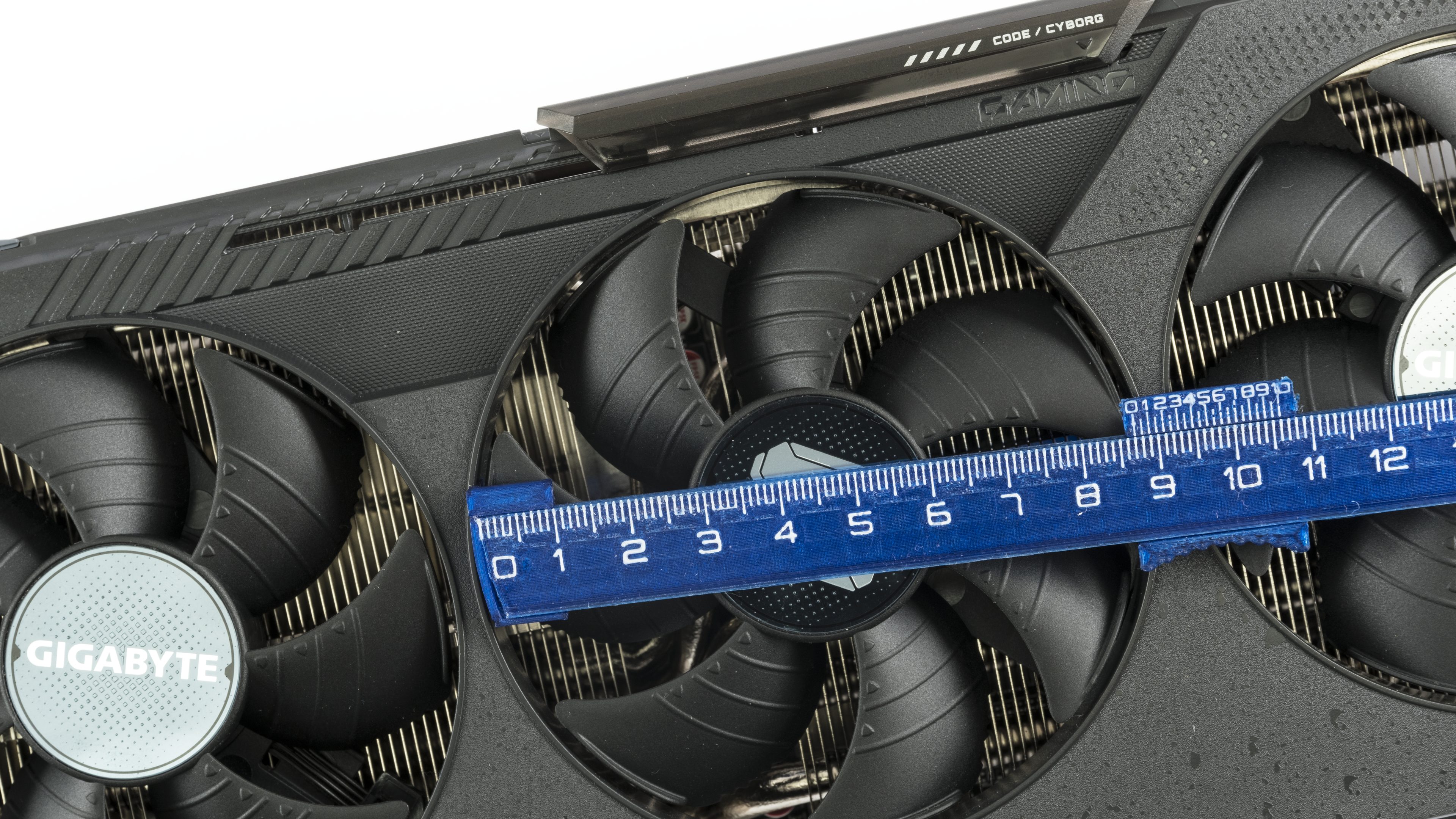
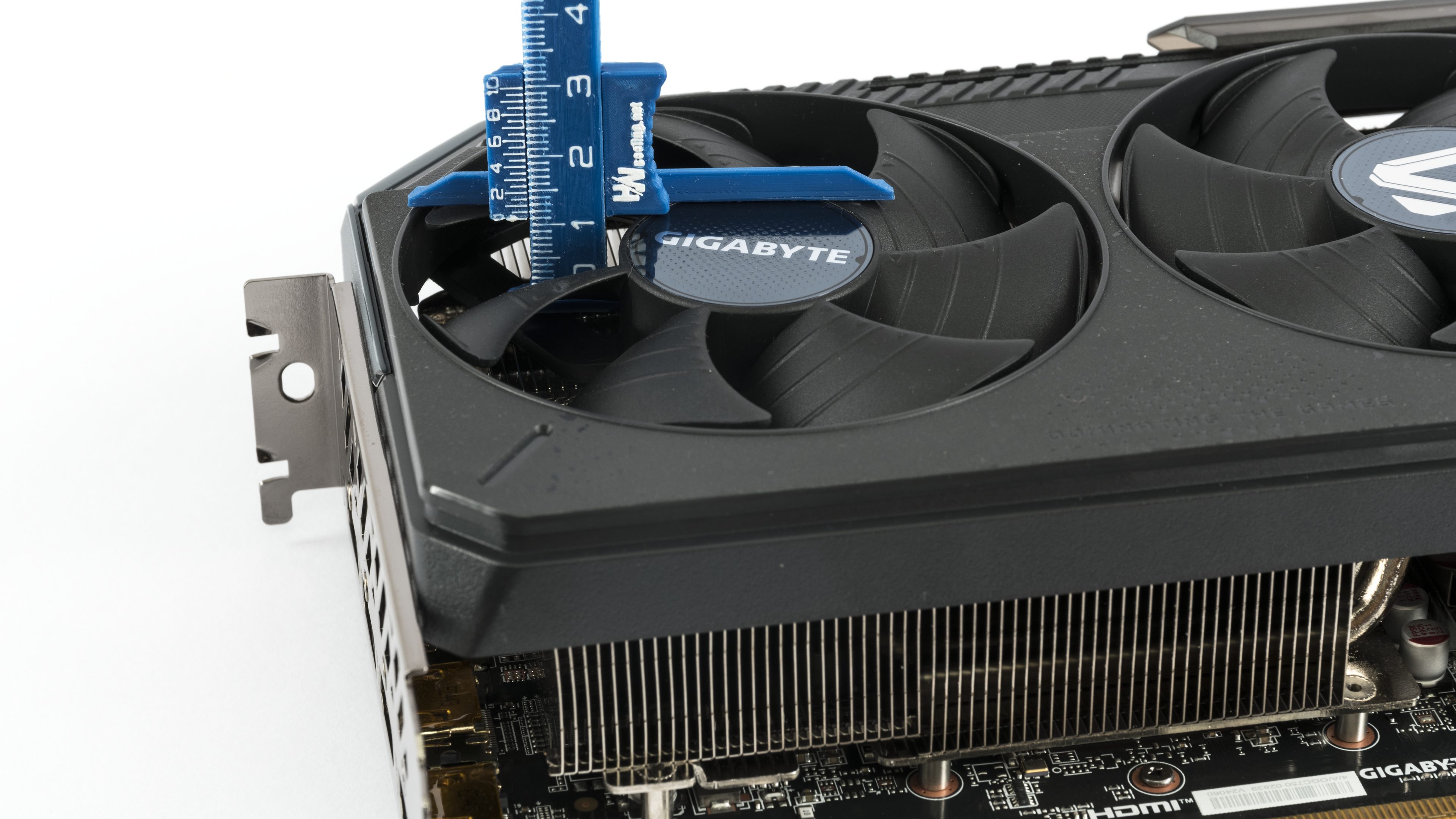
The fans are counter-rotating. The middle one rotates in the opposite direction. At the rear, under the third fan, there’s a large vent. Through it, heated air can flow freely over the card.

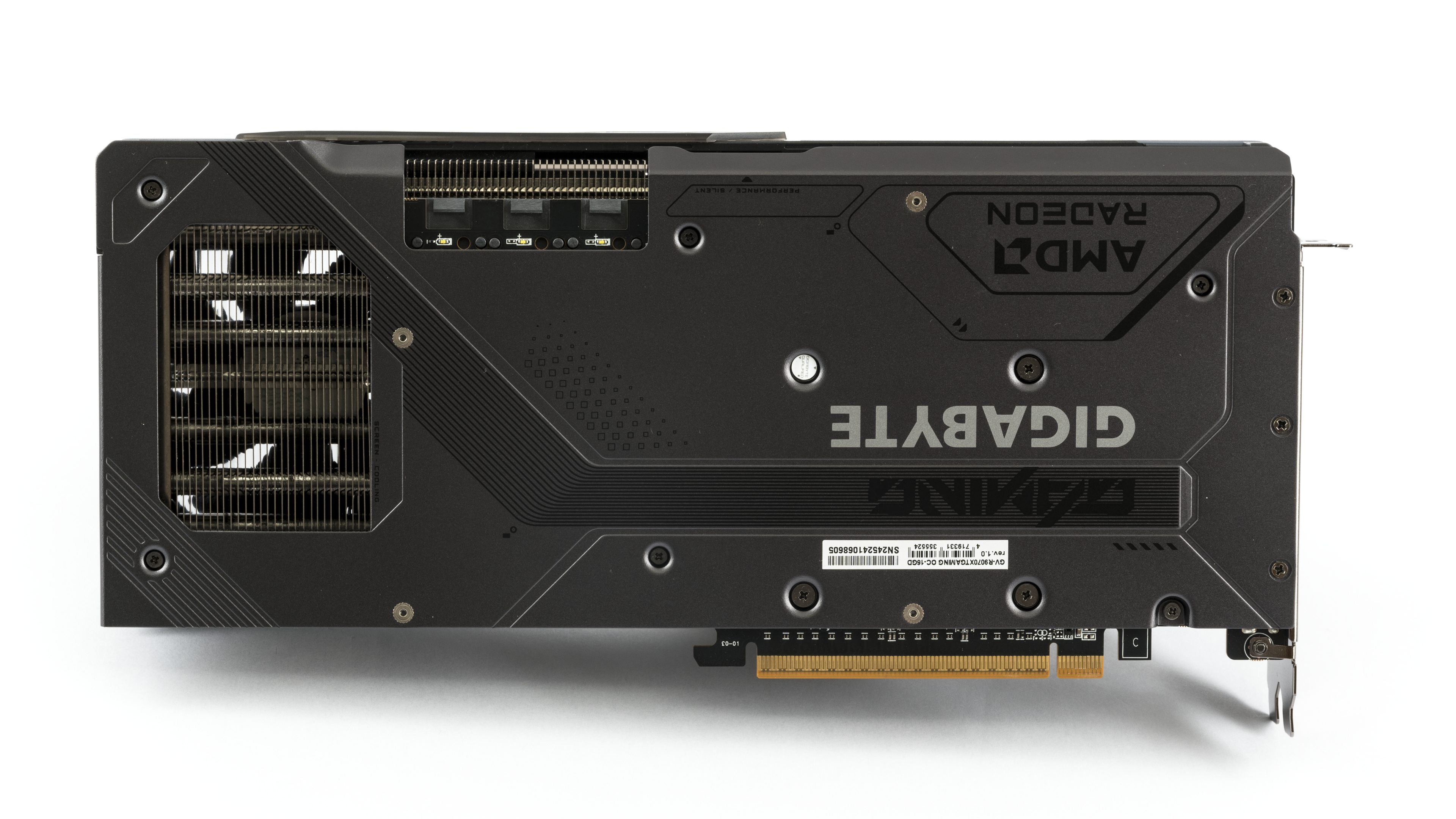
The card is shorter than the previously tested Radeons from Sapphire, measuring 29 cm in length.
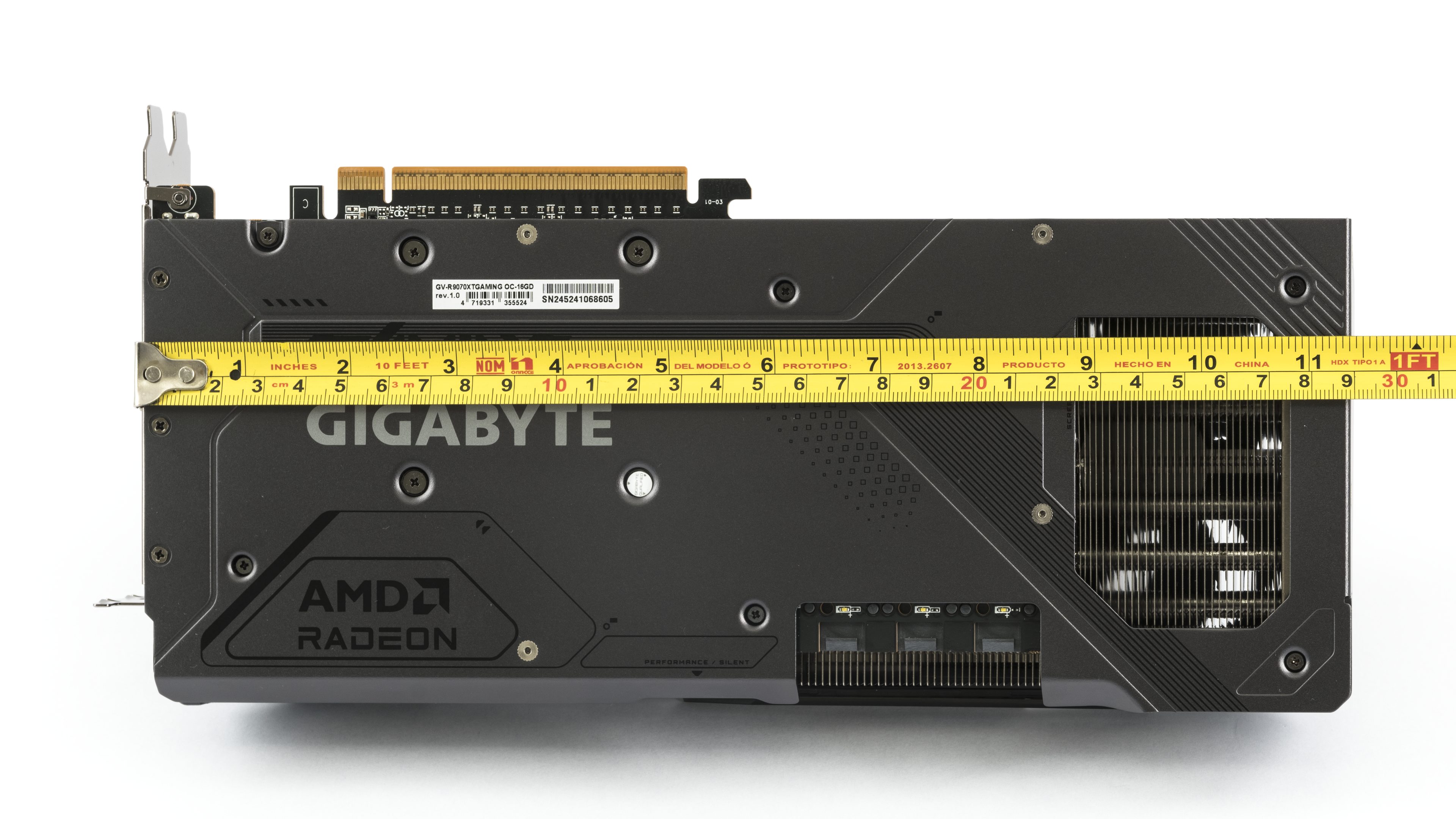
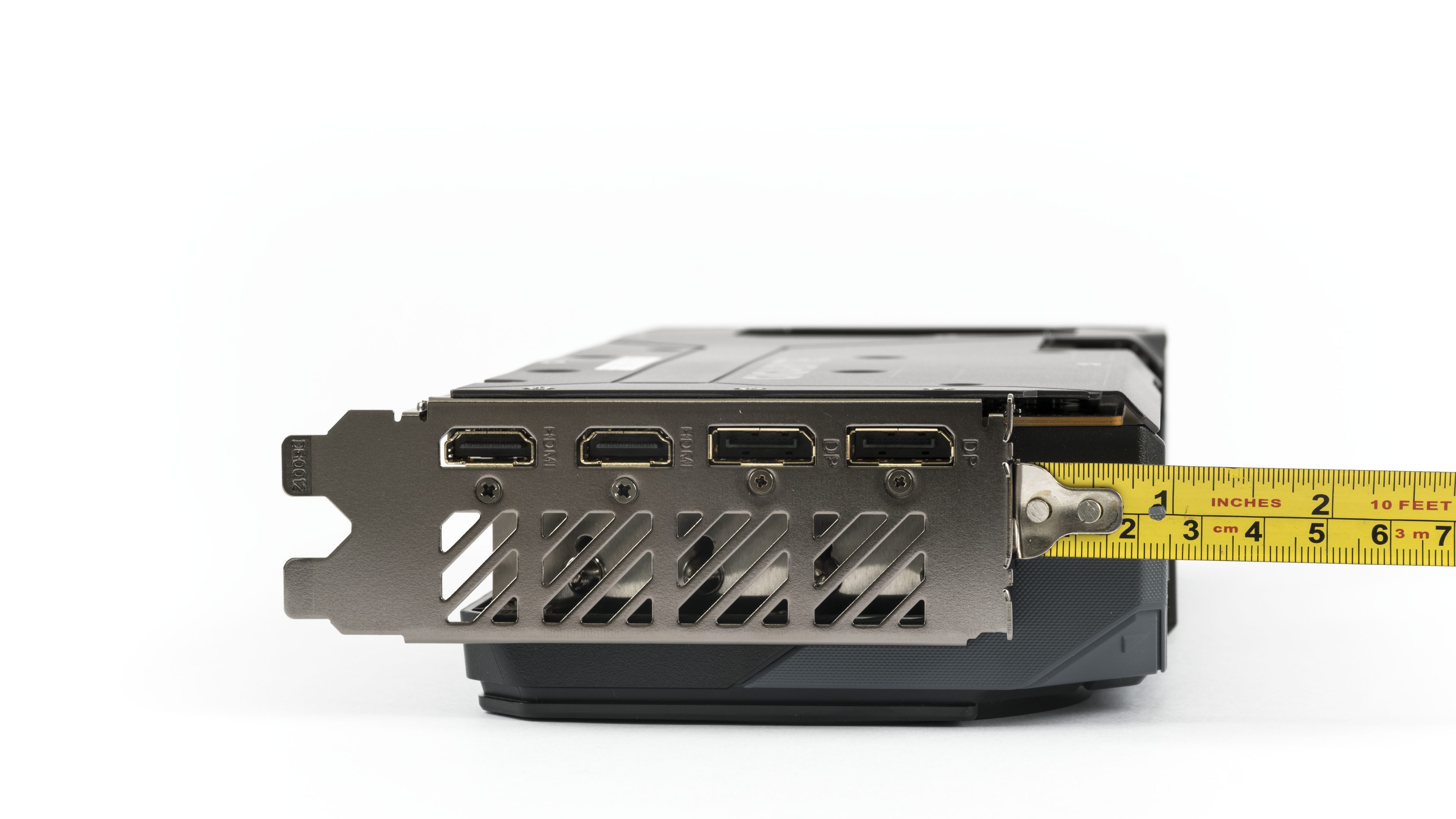
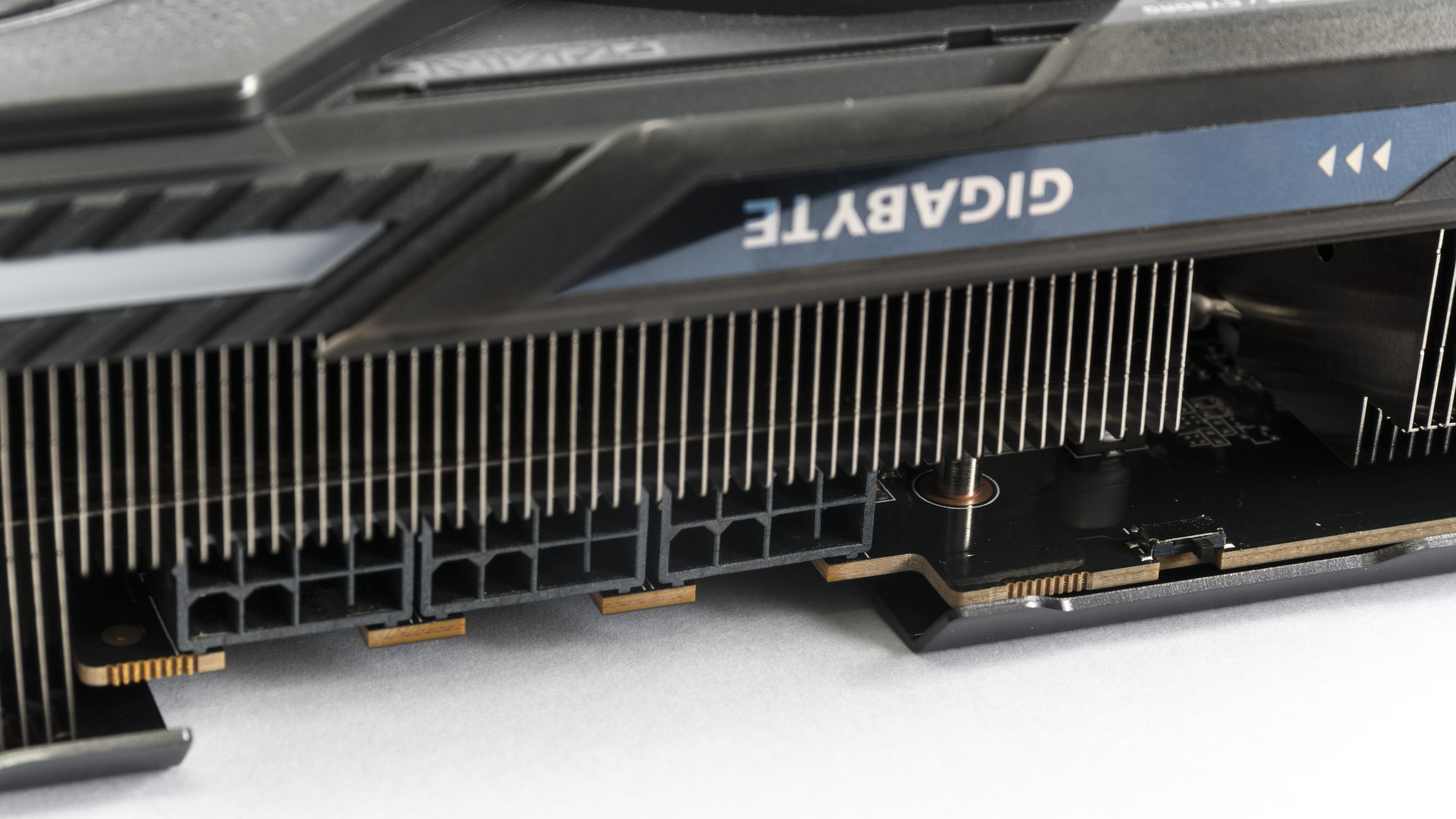
It extends less than 3 cm beyond the bracket. The power connectors are recessed into the card’s body, making it compatible with narrower cases. It occupies two slots in height, so plan for at least three slots in your case, and for better airflow under the card, ideally four slots.

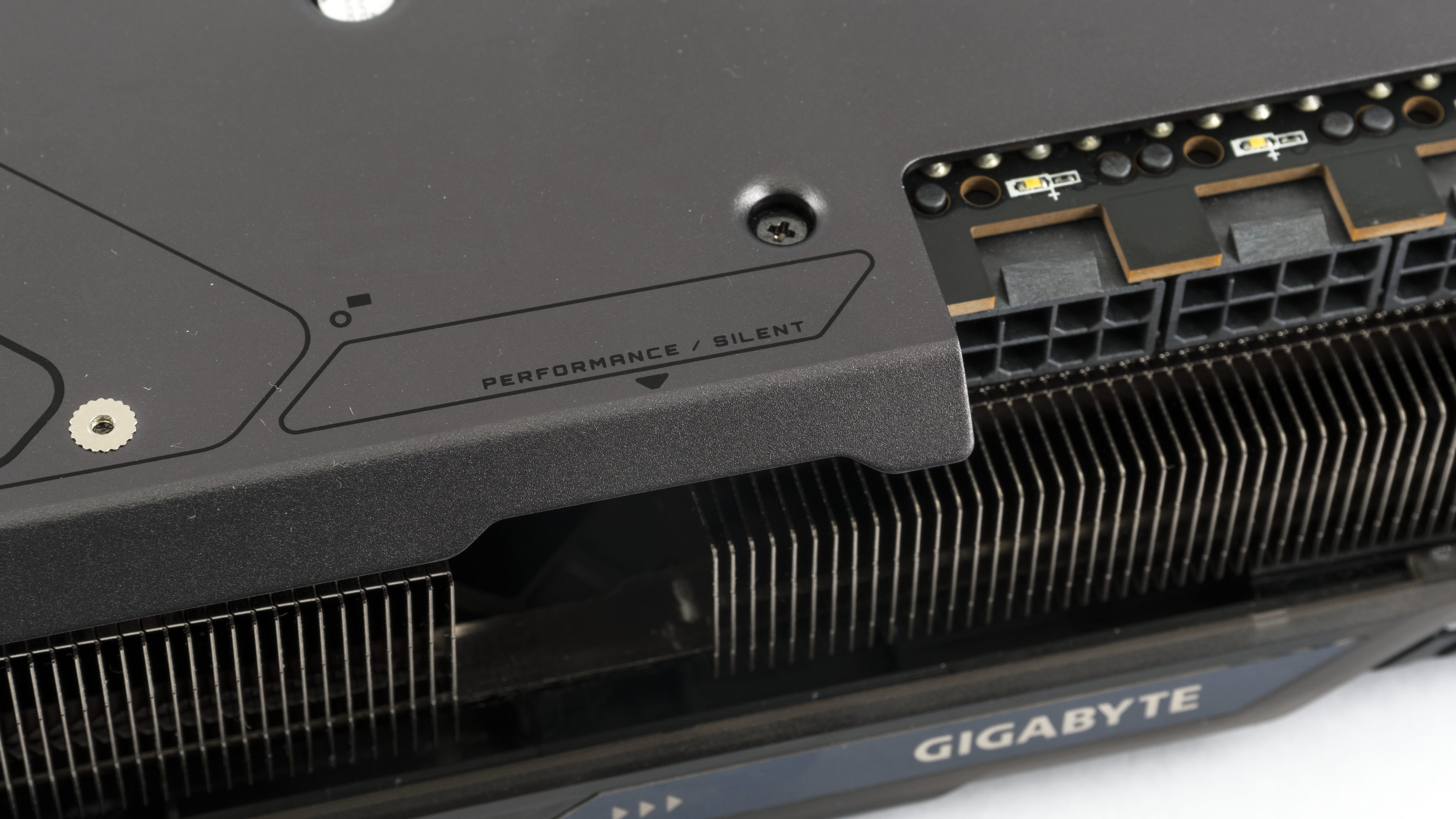
The BIOS switch is located next to the auxiliary power connectors, allowing you to choose between performance and silent modes, with performance being the default.
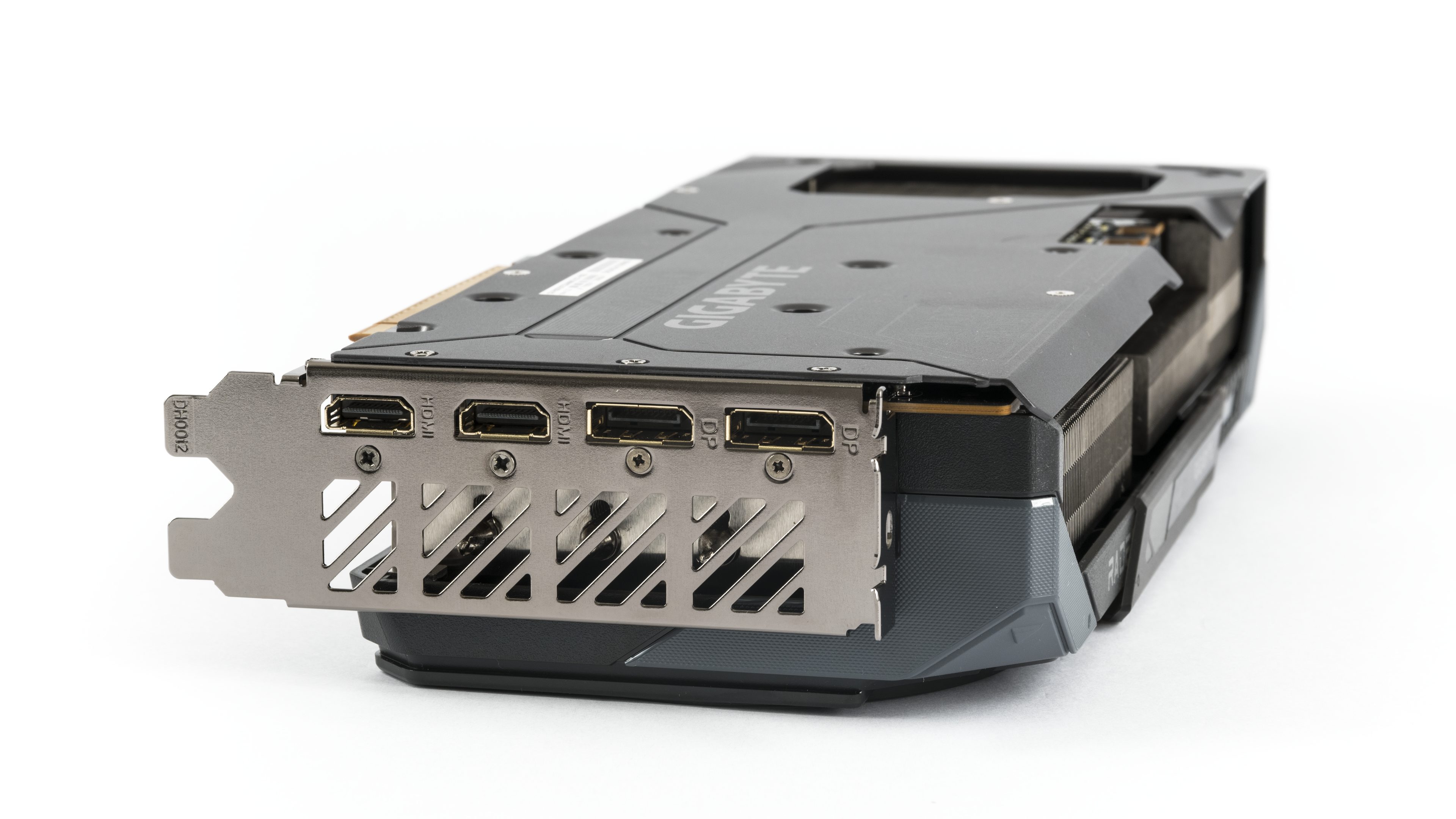
The connector setup differs from the usual configuration. Instead of three DisplayPort 2.1b ports, there are only two, with the third DisplayPort replaced by a second HDMI 2.1b connector. The DisplayPorts support UHBR13.5 mode, while GeForce cards already support the faster UHBR20 mode.
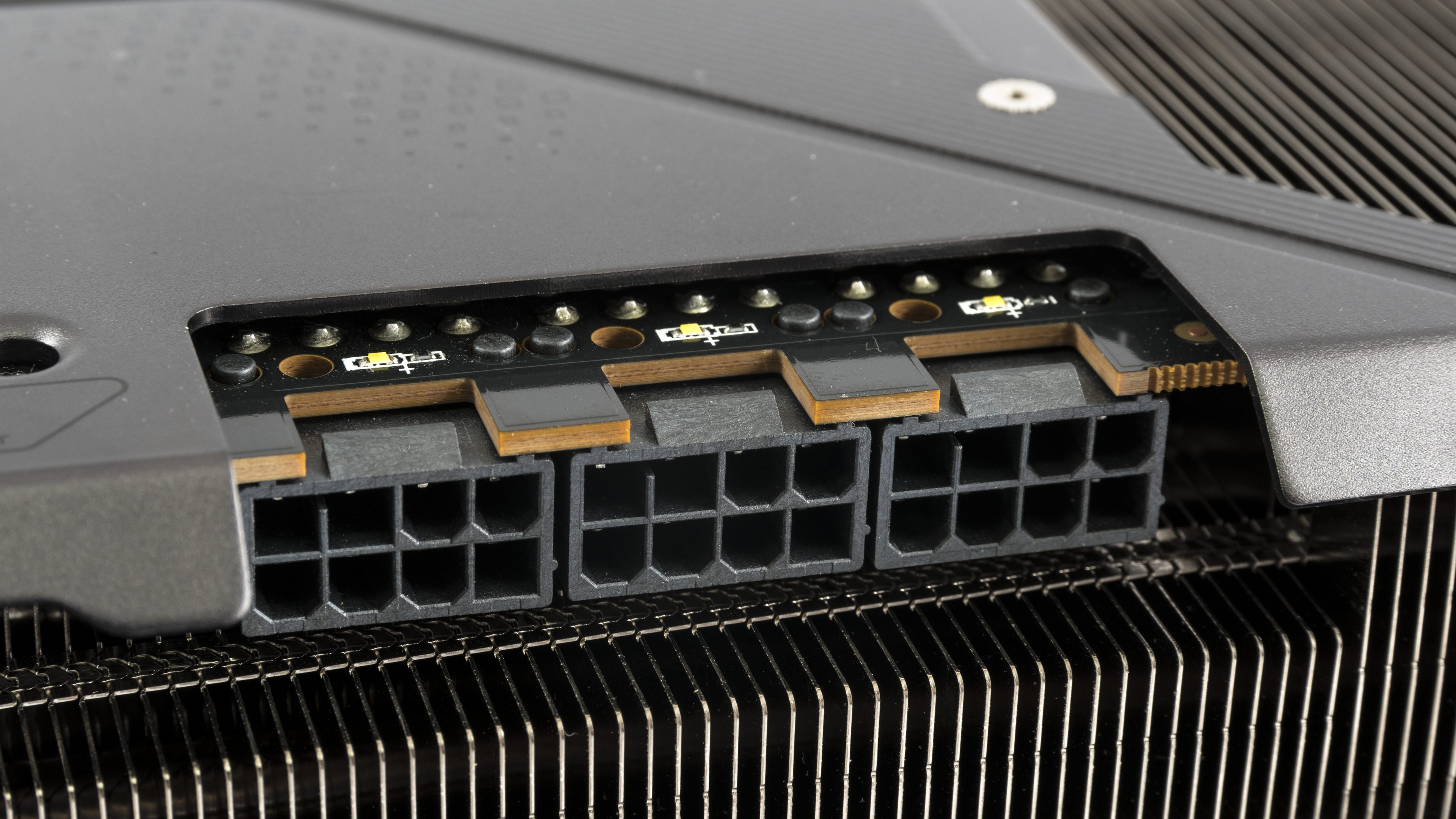
For additional power, there are three classic 8-pin connectors. Each has an LED indicating power issues. The reason is likely the 330 W power limit, with the possibility of further increase to 363 W.
⠀



I simply love your review format, now back to these cards…
In this day and age is shameful that (both Ngreedia and Amd) charge this much for this level of performance but here we are. I won’t buy one until the price comes down a lot.
Really makes me think about switching to a console or a Steam deck if they keep it up.
In my opinion you really need to introduce an UE5 game in your reviews just to see how bad performance is in those.
Robocop Rogue City, Stalker 2, Black myth Wukong etc.
Thanks for your work, keep it up.
Thanks. I am already testing Black Myth: Wukong and Satisfactory, I just need to retest some cards to add charts. More games will follow as soon as I will have time to play them for a few hours and find optimal locations for testing.
I am able to test Stalker 2, Robocop, Hogwarts Legacy, Frostpunk 2, Fornite, God of War Ragnarok, Gray Zone: Warfare and some other games, the only thing I don’t have is the time to play it and prepare for testing. :(.
When it comes to performance, I assume that developers already rely on TSR/FSR/DLSS and this shift is now irreversible.