


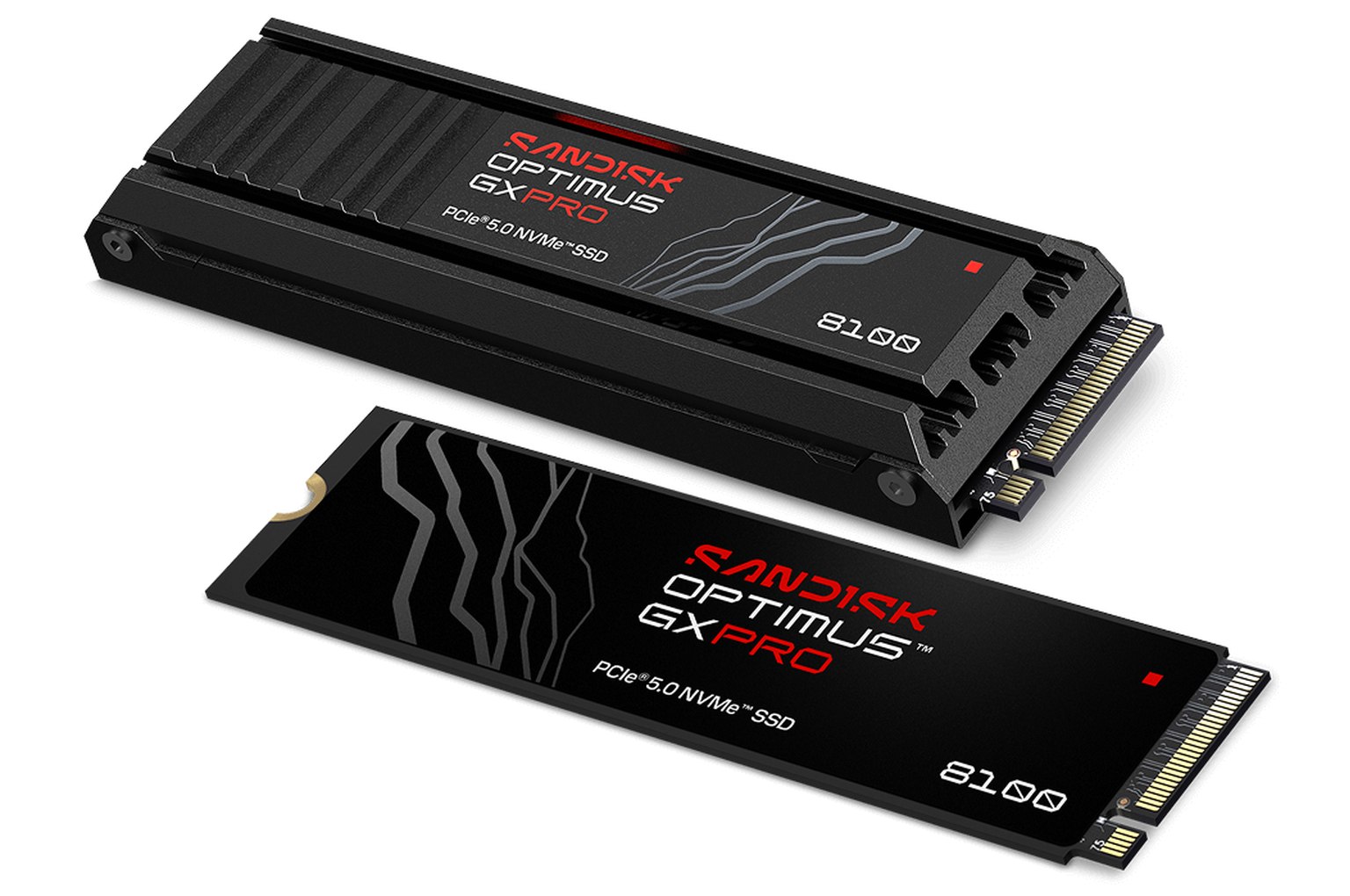
A year ago, Western Digital, who historically associated with mechanical (magnetic) HDD technology but then expanded into SSDs as well, announced the SSD business would move under the Sandisk name. WD acquired this formerly independent NAND and SSD manufacturer ten years ago. It took a while, but now this change is happening for real—all SSDs are being renamed, so let’s take a look at what names you should now be searching for.
Until now, WD used similar naming for SSDs as it previously did for consumer HDDs, with the Green, Blue, and Black labels. This color-based differentiation is going away (and it will no longer be reflected even in the module design—the SSDs are moving to a black design for all the product tiers). After the move under the Sandisk brand, all NVMe modules will carry the name “Optimus”, which according to marketing is meant to express product excellence, unlocking further business growth, and so on.
Optimus
The already launched modules that are inprodution now will also be rebranded. The Blue line, whose current model is the SSD WD Blue SN5100 that we tested recently, becomes simply Optimus line, and the SN5100 modules are renamed to Sandisk Optimus 5100. The base Optimus line is meant to offer a balance between speed and price, for example for content creators (and likely also for any “ordinary” users).
- Read more: How good can a QLC SSD be? We tested the WD Blue SN5100 (Test)
Optimus modules without additional suffixes will represent the base lineup. There is no mention of the Green series, so perhaps this low-end line is ending, or it will later be labeled simply with the Sandisk brand and a number, as is popular today (see “Intel Processor”, which replaced Pentium and Celeron branding). For example Sandisk SN3000—but that is speculation.

Optimus GX
Above the base Optimus will be the somewhat more expensive mid-range Optimus GX series, which includes former lower-tier models of the higher WD Black line. This series is intended for gamers, with a greater emphasis on performance—it should represent the upper mainstream. It will include modules previously sold as WD Black SN7100, which will be renamed to Sandisk Optimus GX 7100. The compact WD Black SN7100M version in the M.2 2230 form factor for handhelds is also being relabeled, becoming Sandisk Optimus GX 7100M.

Optimus GX Pro
Positioned above these will be the “flagship” high-end segment of the fastest SSDs. These are intended for enthusiasts or the most demanding gamers for whom price is no concern, as well as for professional users such as software or AI developers. These SSDs will carry the Optimus GX Pro designation. Currently this includes the WD Black SN8100 PCI Express 5.0 modules which will be renamed to Sandisk Optimus GX Pro 8100, as well as the older PCIe 4.0 WD Black SN850X series (which becomes Sandisk Optimus GX Pro 850X).
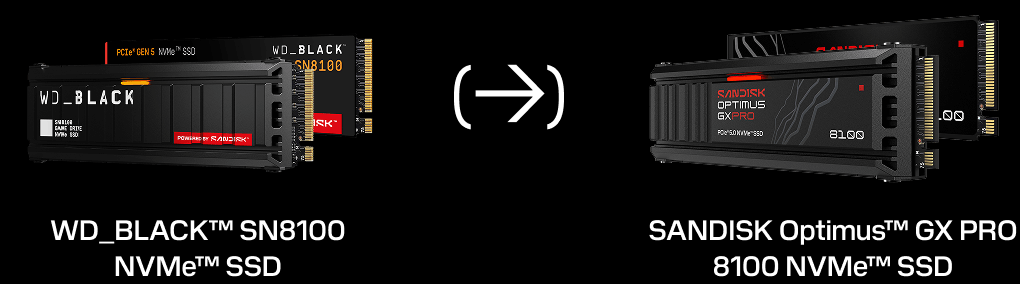

Stock with the old naming will be gradually replaced
As you can see, matching old SSDs to the new ones is not difficult. Just look at the trailing number, which remains the same—only the SN prefix is going to disappear. On the Sandisk website, modules with the old WD branding can still be seen alongside imagery already showing the new look, so the renaming process is only just beginning. The old-style modules will still appear in retail for some time, but only until existing stock is sold out. Newly branded Sandisk modules will replace them gradually, with the process expected to take place roughly over the first half of this year.
Although the names are changing, the modules should remain the same technologically—we do not expect specification changes. This rebranding comes at a time when NAND memory prices and thus SSD prices are rising sharply, so it may raise suspicions that the company could use the name change to alter parameters (for example replacing higher-grade NAND memory with cheaper chips).

We don’t think this is likely not happen—the move of WD’s SSD portfolio under the Sandisk brand was decided a year ago, when this development was probably not anticipated. The fact that the final rebranding step coincides with the current memory price crisis is therefore likely a coincidence.
WD (Sandisk) explicitly states that under the new branding, modules will have the same level of reliability and performance as before, and that the warranty on modules bearing the old branding is not affected by the transition to Sandisk. Sandisk, after all, is and remains part of WD.
Source: Sandisk
English translation and edit by Jozef Dudáš
⠀


