



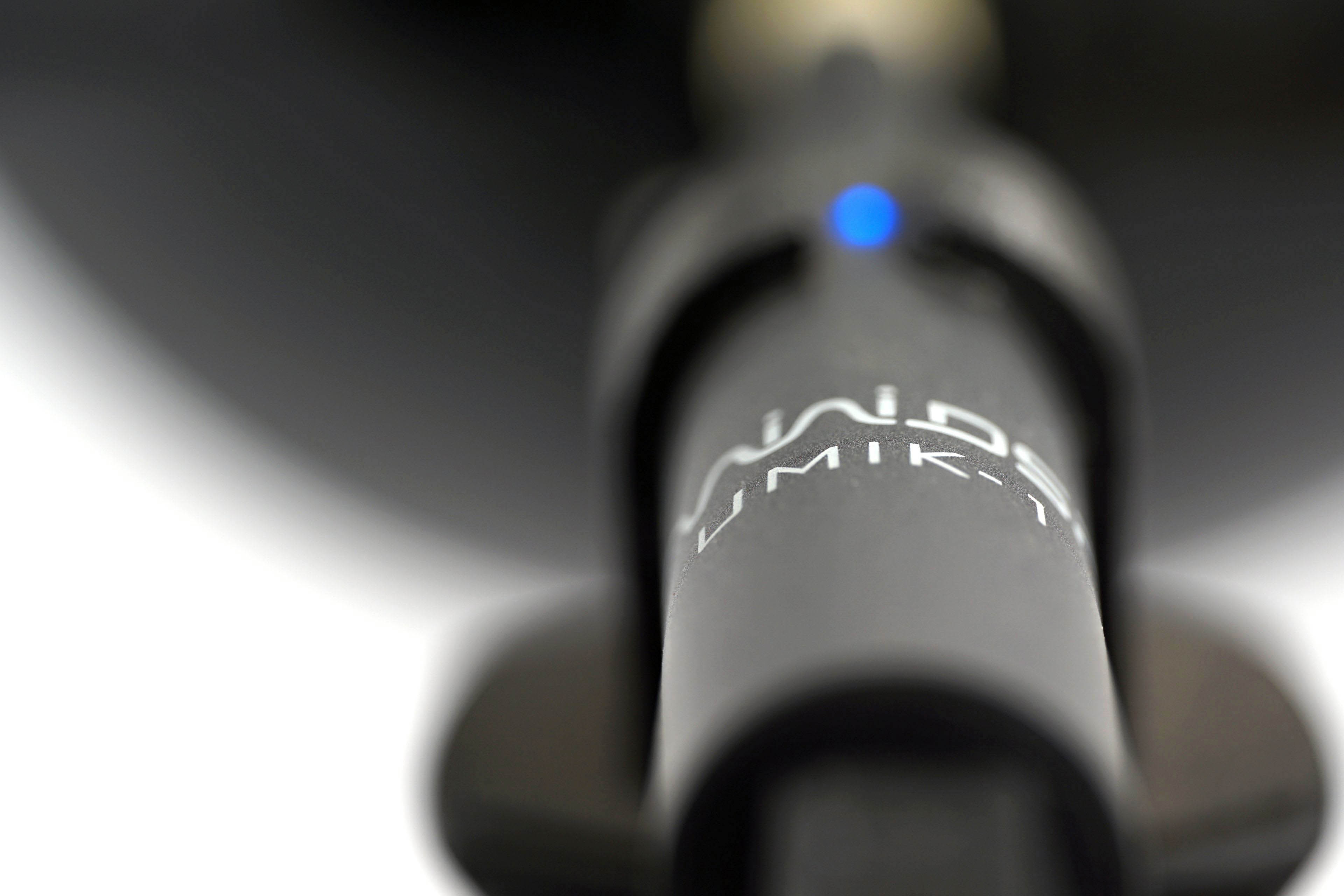
It’s heating up. We have added the first triple-A fan to the tests, which has been viewed “some way” for years, and now it will turn out how it is exactly – what are its weaknesses and what are its strengths. Some have also debated whether the Silent Wings 3 happens to be the most efficient fan ever. But as it happens, it’s a bit more complicated than a one-word answer like yes or no.
Results: Frequency response of sound w/o obstacles
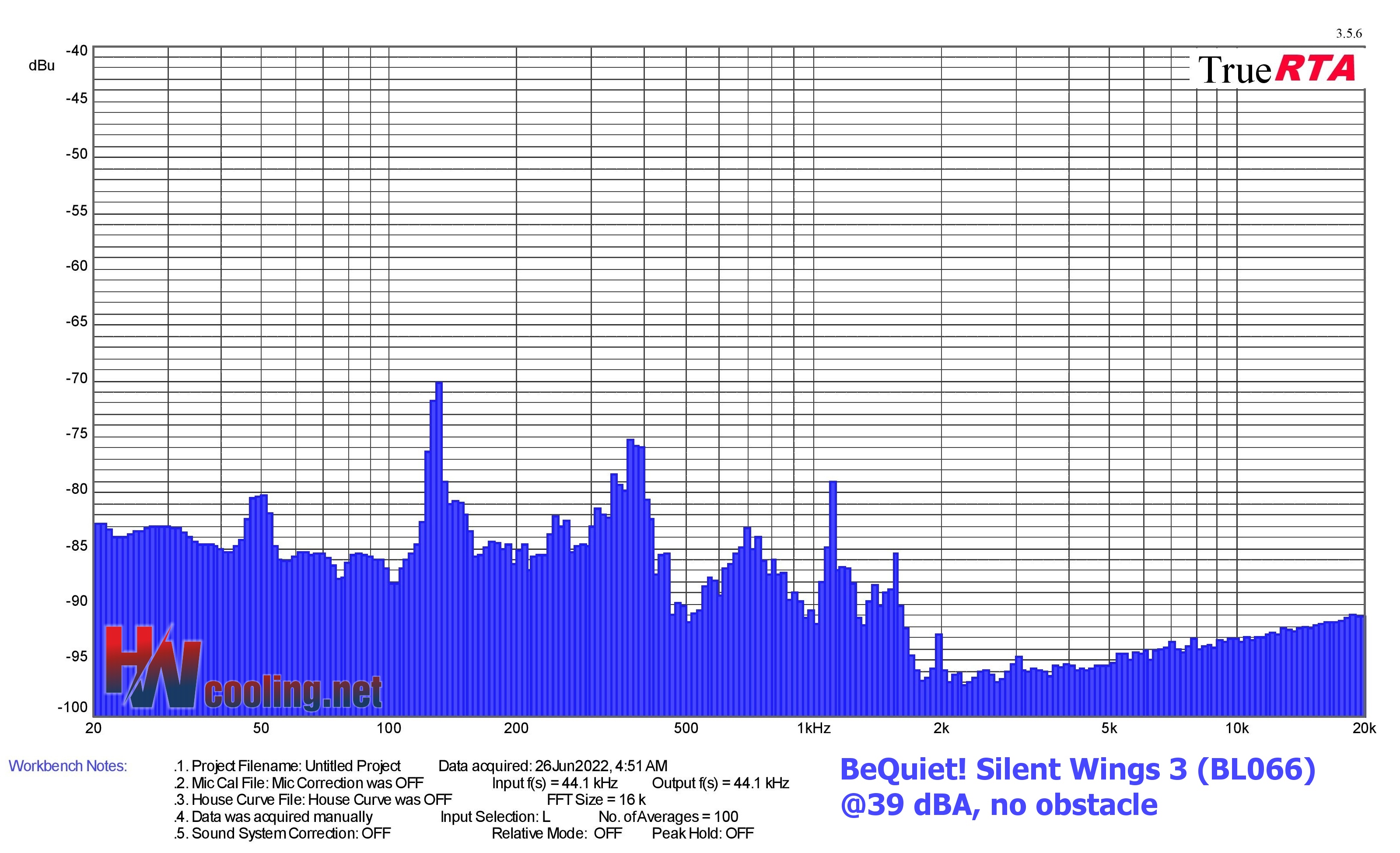
Measurements are performed in the TrueRTA application, which records sound in a range of 240 frequencies in the recorded range of 20–20,000 Hz. For the possibility of comparison across articles, we export the dominant frequency from the low (20–200 Hz), medium (201–2,000 Hz) and high (2,001–20,000 Hz) range to standard bar graphs.
However, for an even more detailed analysis of the sound expression, it is important to perceive the overall shape of the graph and the intensity of all frequencies/tones. If you don’t understand something in the graphs or tables below, you’ll find the answers to all your questions in this article. It explains how to read the measured data below correctly.
Noise levels in the tables below -85 dBu (but watch out for the negative sign, -70 dBu is louder than -80 dBu) can be ignored. They are in fact extremely weak and always far below the limit of human perception, and are often defined by the “noise” of the measurement string. Therefore, do not take even the dominant frequencies within the treble band that exceed 12 kHz too much into account.

| Fan | Dominant sound freq. and noise level, no obstacle@33 dBA | NF-F12 PWM | NF-A15 PWM | ||||
| Low range | Mid range | High range | |||||
| Frequency [Hz] | Noise level [dBu] | Frequency [Hz] | Noise level [dBu] | Frequency [Hz] | Noise level [dBu] | ||
| Gelid Zodiac | 119,9 | -71,1 | 380,5 | -80,9 | 19897,0 | -91,0 | |
| Fractal Design Dynamic X2 GP-12 PWM | 47,6 | -72,8 | 1015,4 | -79,9 | 19897,0 | -90,7 | |
| BeQuiet! Pure Wings 2 (BL039) | 47,6 | -78,3 | 958,9 | -79,6 | 18780,2 | -91,0 | |
| Gigabyte Aorus 120 ARGB | 130,7 | -82,8 | 369,7 | -80,7 | 19330,5 | -90,9 | |
| Arctic BioniX P120 A-RGB | 127,0 | -73,2 | 219,8 | -70,4 | 19897,0 | -90,9 | |
| Akasa OTTO SF12 | N/A | N/A | N/A | N/A | N/A | N/A | |
| Cooler Master SickleFlow 120 ARGB | Cooler Master SickleFlow 120 ARGB | 59,9 | -82,7 | 1076,3 | -83,1 | 19330,5 | -90,7 |
| Alphacool SL-15 PWM | Alphacool SL-15 PWM | 190,3 | -79,1 | 380,5 | -78,8 | 18245,6 | -90,9 |
| Arctic BioniX F120 | Arctic BioniX F120 | 123,4 | -76,5 | 246,8 | -80,0 | 19330,5 | -90,9 |
| SilverStone SST-AP123 | SilverStone SST-AP123 | 100,8 | -81,2 | 415,0 | -78,6 | 19897,0 | -90,8 |
| Noctua NF-P12 redux-1700 PWM | 103,7 | -76,9 | 329,4 | -73,2 | 19330,5 | -90,9 | |
| SilentiumPC Fluctus 120 PWM | SilentiumPC Fluctus 120 PWM | 130,7 | -76,5 | 369,7 | -80,9 | 19897,0 | -91,0 |
| MSI MEG Silent Gale P12 | 50,4 | -81,7 | 369,7 | -81,0 | 19897,0 | -90,8 | |
| Asus ROG Strix XF120 | 50,4 | -80,2 | 329,4 | -76,2 | 19330,5 | -90,8 | |
| Akasa Vegas X7 | 123,4 | -77,0 | 369,7 | -83,3 | 19330,5 | -90,7 | |
| Reeven Coldwing 12 | 38,9 | -79,7 | 1317,5 | -84,0 | 19330,5 | -90,7 | |
| Reeven Kiran | 138,5 | -80,6 | 369,7 | -83,3 | 19330,5 | -90,8 | |
| SilentiumPC Sigma Pro 120 PWM | N/A | N/A | N/A | N/A | N/A | N/A | |
| SilentiumPC Sigma Pro Corona RGB 120 | 92,4 | -83,0 | 369,7 | -78,0 | 18780,2 | -90,8 | |
| SilverStone SST-AP121 | 47,6 | -77,5 | 261,4 | -86,4 | 19330,5 | -91,0 | |
| SilverStone SST-FQ121 | 31,3 | -87,5 | 1208,2 | -79,9 | 19330,5 | -90,9 | |
| Xigmatek XLF-F1256 | 41,8 | -69,7 | 213,6 | -77,3 | 19330,5 | -91,0 |
| Fan | Dominant sound freq. and noise level, no obstacle@39 dBA | NF-F12 PWM | NF-A15 PWM | ||||
| Low range | Mid range | High range | |||||
| Frequency [Hz] | Noise level [dBu] | Frequency [Hz] | Noise level [dBu] | Frequency [Hz] | Noise level [dBu] | ||
| Gelid Zodiac | 146,7 | -66,0 | 369,7 | -73,4 | 19330,5 | -90,9 | |
| Fractal Design Dynamic X2 GP-12 PWM | 113,1 | -78,5 | 329,4 | -74,6 | 18780,2 | -90,9 | |
| BeQuiet! Pure Wings 2 (BL039) | 130,7 | -76,1 | 369,7 | -75,3 | 19330,5 | -90,7 | |
| Gigabyte Aorus 120 ARGB | 127,0 | -63,9 | 380,5 | -74,2 | 19330,5 | -90,6 | |
| Arctic BioniX P120 A-RGB | 50,4 | -77,9 | 439,7 | -72,4 | 18780,2 | -91,1 | |
| Akasa OTTO SF12 | 155,4 | -67,1 | 380,5 | -75,2 | 4431,5 | -87,2 | |
| Cooler Master SickleFlow 120 ARGB | 109,9 | -72,8 | 1076,3 | -72,4 | 18245,6 | -90,9 | |
| Alphacool SL-15 PWM | 184,9 | -73,4 | 380,5 | -73,1 | 19897,0 | -90,8 | |
| Arctic BioniX F120 | 151,0 | -69,3 | 369,7 | -75,3 | 18780,2 | -91,0 | |
| SilverStone SST-AP123 | SilverStone SST-AP123 | 164,7 | -75,1 | 369,7 | -74,7 | 19330,5 | -90,9 |
| Noctua NF-P12 redux-1700 PWM | 146,7 | -68,0 | 329,4 | -66,7 | 18245,6 | -91,1 | |
| SilentiumPC Fluctus 120 PWM | 190,3 | -69,2 | 380,5 | -68,8 | 19897,0 | -90,9 | |
| MSI MEG Silent Gale P12 | 23,1 | -73,5 | 380,5 | -73,3 | 18780,2 | -90,9 | |
| Asus ROG Strix XF120 | 130,7 | -70,9 | 369,7 | -75,2 | 19330,5 | -91,0 | |
| Akasa Vegas X7 | 127,0 | -77,8 | 369,7 | -76,1 | 19330,5 | -90,9 | |
| Reeven Coldwing 12 | 160,0 | -74,0 | 369,7 | -76,8 | 19330,5 | -90,9 | |
| Reeven Kiran | 184,9 | -75,2 | 369,7 | -75,2 | 17726,2 | -89,8 | |
| SilentiumPC Sigma Pro 120 PWM | 97,9 | -81,7 | 369,7 | -78,1 | 2635,0 | -86,2 | |
| SilentiumPC Sigma Pro Corona RGB 120 | 20,3 | -67,8 | 380,5 | -77,3 | 2487,1 | -85,6 | |
| SilverStone SST-AP121 | 103,7 | -76,2 | 339,0 | -73,4 | 2031,9 | -86,5 | |
| SilverStone SST-FQ121 | 138,5 | -75,2 | 1208,2 | -71,1 | 18780,2 | -90,9 | |
| Xigmatek XLF-F1256 | 190,3 | -77,1 | 761,1 | -75,5 | 19897,0 | -91,1 |
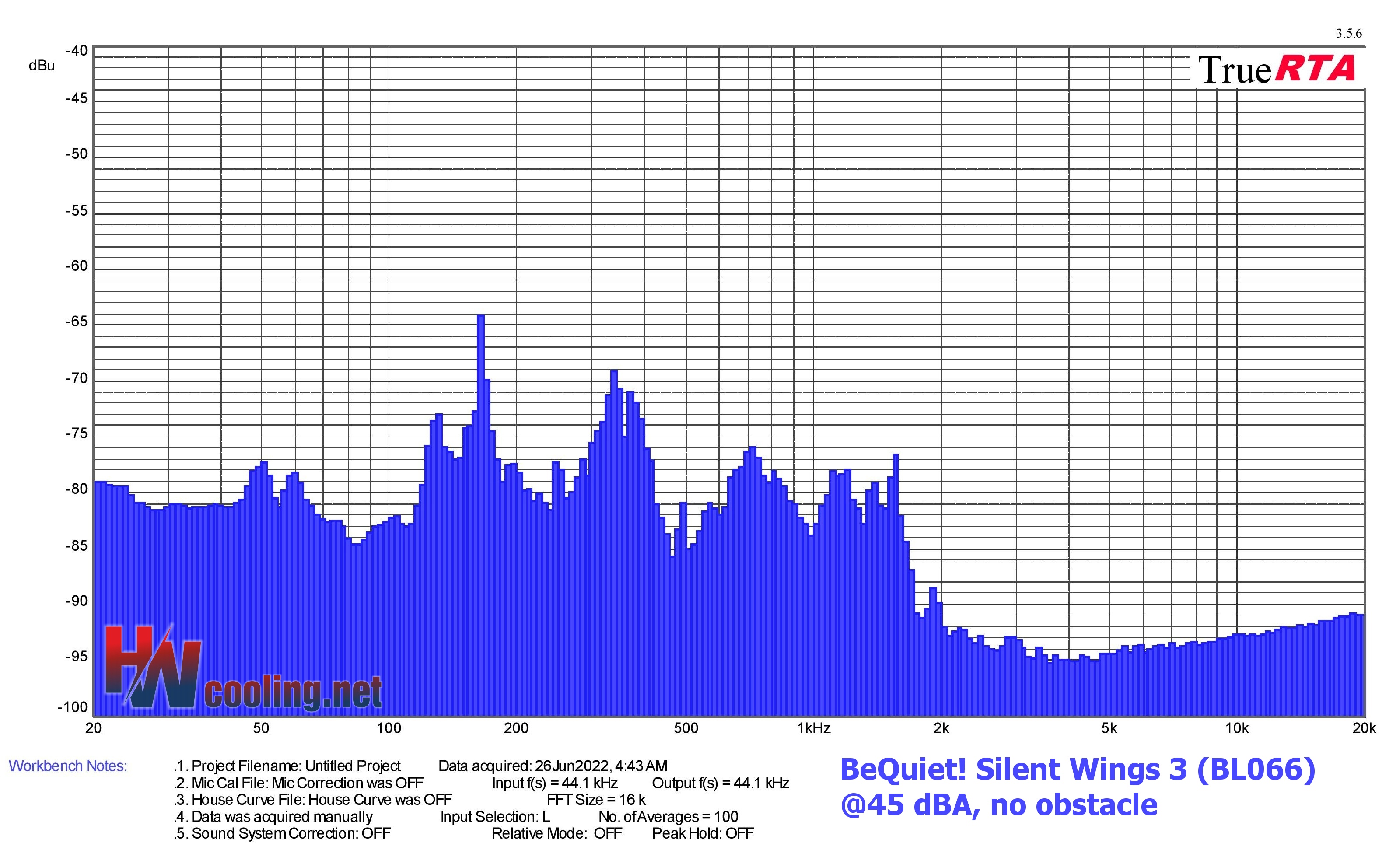
| Fan | Dominant sound freq. and noise level, no obstacle@45 dBA | NF-F12 PWM | NF-A15 PWM | ||||
| Low range | Mid range | High range | |||||
| Frequency [Hz] | Noise level [dBu] | Frequency [Hz] | Noise level [dBu] | Frequency [Hz] | Noise level [dBu] | ||
| Gelid Zodiac | 184,9 | -61,8 | 380,5 | -68,7 | 18780,2 | -90,8 | |
| Fractal Design Dynamic X2 GP-12 PWM | 146,7 | -72,2 | 391,7 | -71,5 | 2280,7 | -83,1 | |
| BeQuiet! Pure Wings 2 (BL046) | 130,7 | -71,3 | 369,7 | -69,3 | 19330,5 | -90,6 | |
| Gigabyte Aorus 120 ARGB | 160,0 | -61,9 | 369,7 | -70,4 | 2487,1 | -88,3 | |
| Arctic BioniX P120 A-RGB | 151,0 | -67,6 | 369,7 | -72.0 | 2873,5 | -90,6 | |
| Akasa OTTO SF12 | Akasa OTTO SF12 | 190,3 | -66,7 | 380,5 | -67,7 | 4695,1 | -86,3 |
| Cooler Master SickleFlow 120 ARGB | Cooler Master SickleFlow 120 ARGB | 138,5 | -66,7 | 1076,3 | -67,1 | 3835,7 | -89,2 |
| Alphacool SL-15 PWM | Alphacool SL-15 PWM | 151 | -71,5 | 232,9 | -66,5 | 2280,7 | -89,6 |
| Arctic BioniX F120 | Arctic BioniX F120 | 195,8 | -68 | 201,6 | -62,2 | 19330,5 | -90,7 |
| SilverStone SST-AP123 | SilverStone SST-AP123 | 130,7 | -70,9 | 369,7 | -67,7 | 19897 | -90,9 |
| Noctua NF-P12 redux-1700 PWM | Noctua NF-P12 redux-1700 PWM | 184,9 | -62,2 | 369,7 | -67 | 19897 | -91,1 |
| SilentiumPC Fluctus 120 PWM | SilentiumPC Fluctus 120 PWM | 25,6 | -69,6 | 239,7 | -62 | 2957,7 | -90 |
| MSI MEG Silent Gale P12 | MSI MEG Silent Gale P12 | 28,3 | -73,5 | 380,5 | -71 | 2487,1 | -85,9 |
| Asus ROG Strix XF120 | Asus ROG Strix XF120 | 23,1 | -62,9 | 369,7 | -71,7 | 2347,5 | -89,1 |
| Akasa Vegas X7 | Akasa Vegas X7 | N/A | N/A | N/A | N/A | N/A | N/A |
| Reeven Coldwing 12 | Reeven Coldwing 12 | 195,8 | -68,3 | 380,5 | -71,3 | 2031,9 | -90 |
| Reeven Kiran | Reeven Kiran | 130,7 | -73,1 | 219,8 | -70,2 | 17726,2 | -89,4 |
| SilentiumPC Sigma Pro 120 PWM | SilentiumPC Sigma Pro 120 PWM | 138,5 | -70 | 1522,2 | -71,9 | 2560 | -82,9 |
| SilentiumPC Sigma Pro Corona RGB 120 | SilentiumPC Sigma Pro Corona RGB 120 | 190,3 | -70,5 | 369,7 | -66,5 | 2416,3 | -82,4 |
| SilverStone SST-AP121 | SilverStone SST-AP121 | 130,7 | -66,8 | 439,7 | -66,1 | 2347,5 | -90,9 |
| SilverStone SST-FQ121 | SilverStone SST-FQ121 | 127 | -71,2 | 369,7 | -66,5 | 2031,8 | -81,4 |
| Xigmatek XLF-F1256 | Xigmatek XLF-F1256 | 130,7 | -71,5 | 239,7 | -60,9 | 18780,2 | -91,1 |




I have this fan as a part of the Dark Rock Pro 4 cooler – the front one. The inner fan is disabled for now. Unfortunately, I am thinking about replacing it. What’s driving me completely nuts is the fan start that gives a sound resembling powerful rubbing against a rough surface. It’s okay for folks who want to have the fan running constantly and encounter it only during boot but I want to have a fanless idle – 0 noise, no vibrations, extended fan life, and lower power draw. I wish such behavior was stressed in this and other reviews so that one can find safe alternatives for such requirements.
It’s a pity to encounter such an unexpected drawback, as this fan is much quieter than Arctic P12. At 700 RPM, it’s barely audible in my Nanoxia Deep Silence 8 in the night, and below 500 RPM basically inaudible.
What you are describing is happening with several fans. To an excessive degree with the Strix XF120 as well, where we also mentioned it. I have thought about how to measurably grasp those starts in the context of the interpretation of the results so that a simple comparison across fans is possible, but I don’t know yet.. anyway, it will probably be an initial phase with rotor centering, which is accompanied by higher vibrations in addition to the acoustic expression.
Perhaps the evaluation page can be divided into several labelled subsections, one being dedicated to observations like this for example.
My P14 Slim rev.1 does this initially too, but it’s gone now after I have mounted it tight. Perhaps quality control and tolerance also play a role here?
Maybe we are each talking about a slightly different phenomenon. The initial, let’s say start-up sound of Strix XF120 will certainly not be influenced by the strength of the mounting. With this fan, it’s just that it takes some time (be it very short, in the lower units of seconds) to get centered, and the operational sound is probably a bit different after, let’s say, warming up. I would attribute this purely to the influence of the motor and the bearings. In this case, I would not talk about an issue of a single unit in serial production. Sure, within lower manufacturing tolerances some minor differences in behaviour can be present, but if that feature disappeared completely, I assume it would be due to larger, targeted changes in the design, which for example are solved by various revisions. Unfortunately, most manufacturers don’t talk about them, with a few exceptions (Arctic, for example). So sure, a Silent Wings 3 from the early batches may behave differently than the latest pieces from the current sales. And while we’re on the subject of fan differences from piece to piece, we’ll release one unconventional test in September that will be of interest to you. 🙂
I would rather attribute the different sound after tightening the P14 rev. 2 to vibrations and the fact that with a different mounting there may not be such significant resonance frequencies of the case.