Phanteks T30-140 fan finally on the market

The long-anticipated 30 mm-thick fan in the 140 mm format has become reality. Albeit with a delay, Phanteks has finally expanded its official sales page to include the long-awaited new model—T30-140. The geometric foundation is derived from one size smaller “ready-to-wear size” of the T30-120 fan. The expectation of attractive results is therefore well grounded. The “legendary” T30 fan series has at last grown to include a bigger brother. Read more “Phanteks T30-140 fan finally on the market” »

PC fans in 2025. The biggest surprise?

The release of several attractive fans is associated with the year 2025. In this article, we will briefly focus on those that we tested this year and that deserve increased attention. In the end, however, we selected one “best” model—more precisely, the one that we consider the biggest positive surprise. And ultimately, the decision for such a fan is relatively straightforward. Read more “PC fans in 2025. The biggest surprise?” »

Shooting straight for the top: Asus announces the ProArt PF120 fan

It appears that Asus is taking fans seriously. The specifications and design elements of the new ProArt PF120 model look “dangerous”—that is, they suggest that cooling efficiency could be genuinely very high. Not only in terms of maximum speed (accompanied by higher noise), but also at noise-normalized levels comparable across products. This is hinted at by efficient geometry, LCP blades, a 28 mm thick profile, and many other factors. Read more “Shooting straight for the top: Asus announces the ProArt PF120 fan” »

Noctua NF-S12A PWM: Example of unfortunate design

They never were as brilliant and amazing as marketing materials depicted (and still depict) them. Fans that are supposed to be top-tier for system positions are, at best, average. Well, judge for yourselves. We wouldn’t subscribe to the notion that these are currently aerodynamically attractive fans for PC cases. For the reason that they are not. And we can go straight to the specific reasons and arguments. Read more “Noctua NF-S12A PWM: Example of unfortunate design” »

Beware: 1 A fan headers can be too weak

Multiple fans connected to a single header may exceed the capabilities of your motherboard (or potentially a fan hub). This is due to a higher current draw than the maximum rating. We’ll analyze when and under what circumstances you should be cautious in this article. The threat of permanent device damage is quite real, but it’s fairly simple to safely prevent it. So, let’s take a look at it. Read more “Beware: 1 A fan headers can be too weak” »

Thermaltake Toughfan 12 Pro: „Lower details“ are enough

A prime example of brute force. By that, we primarily mean the aerodynamically efficient geometry and the rigid impeller construction (from LCP). Thermaltake doesn’t rely on micro-optimizations, and yet the Toughfan 12 Pro achieves exceptionally attractive results. Especially when its low price is considered. Of course, several potentially undesirable cost savings stem from that price, and qualitative aspects are lower in some points. Read more “Thermaltake Toughfan 12 Pro: „Lower details“ are enough” »

Asus Prime MR120 ARGB: Lighting and airflow go well together

An affordable fan with lighting that still performs quite well. That sums up the Prime MR120 with ARGB LED. If you prefer lighting elements that highlight the fan’s frame rather than the impeller, this could also be an option—provided the aerodynamic properties of the Asus fan suit you. It must be reiterated that we are in a lower price tier, and the results correspond to that. Read more “Asus Prime MR120 ARGB: Lighting and airflow go well together” »

Sudokoo Mach120: Maximum (cooling) efficiency

Results-wise, it’s an absolute top performer. This holds true even in combination with various obstacles. In other words, the competing Phanteks T30-120 often ends up merely as the “next in line.” And the Mach120 has aesthetic advantages over it as well. The operation of the Sudokoo (Mach120) fan is also characterized by lower vibrations. You also get high maximum airflow along with reliable operation even at low speeds. Read more “Sudokoo Mach120: Maximum (cooling) efficiency” »

NF-S12B redux-700: Noctua’s quietest fan no longer justifiable

An old, yet still-selling aerodynamic design. Despite being attributed with excellent properties, we dare to disagree. It’s not quite the ideal system cooling fan that the NF-S12B-redux impellers were historically famed for either. Yes, it is quiet—but without the “airflow”. By that logic—where low noise carries the utmost weight—one could quickly conclude that the best fan is no fan at all. “Zero” noise, but substantial airflow isn’t happening here either. Read more “NF-S12B redux-700: Noctua’s quietest fan no longer justifiable” »

An SFF fan? Endorfy Zephyr 92 is now available, for 4 EUR

They are in the minority, but when a fan larger than 92 mm doesn’t fit in your case, it’s great to have an option like the Zephyr 92. This smaller, budget-friendly fan from Endorfy is primarily aimed at smaller PC cases and builds where, alongside compact dimensions, a potentially lower price is also a consideration. The new Zephyr 92 fans are characterized by their accessibility in this regard as well. Read more “An SFF fan? Endorfy Zephyr 92 is now available, for 4 EUR” »

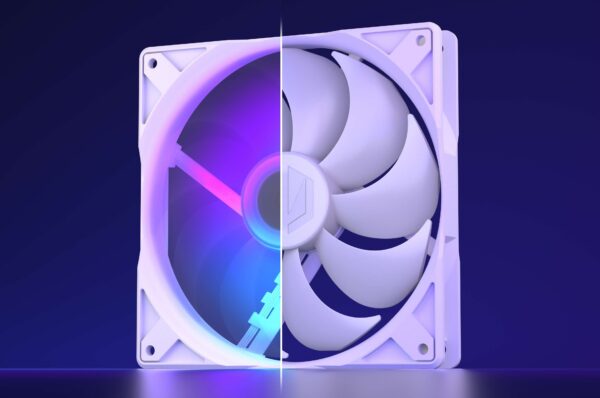
Endorfy in white. A „bright“ premiere in the Stratus line

Offering a choice between two color variants (a light one in addition to the dark) is a trend that Endorfy is also responding to. The very first, completely white fans to be created under this brand are the Stratus fans with ARGB lighting. These are available in both a smaller (120 mm) and a larger format (140 mm). We have tested both fan variants in black, so there is a functional performance baseline to reference. Read more “Endorfy in white. A „bright“ premiere in the Stratus line” »

CPS PCCooler F9 R120: Rising to the top with 30 mm (of thickness)

We can state that, regardless of noise levels (indeed very high at maximum), the CPS PCCooler F9 R120 is the highest airflow fan in the 30 mm-and-below profile category. Yes, even the Phanteks T30 comes out “worse” here. However, if your priority is the highest possible airflow at low noise, the picture changes—and it’s not such a happy one, especially with obstacles. That will become clearer in the detailed analysis. Read more “CPS PCCooler F9 R120: Rising to the top with 30 mm (of thickness)” »

Thermalright TL-B14 in a wide comparison of 140 mm fans

The fan carrying one of the most popular brands in the field has been tested against the latest competitors. Among them are the new Arctic P14 Pro (A-RGB), Noctua NF-A14x25 G2 PWM and Thermaltake Toughfan 14 Pro. And many others (including the FD Momentum 14/RGB) with which the TL-B14 will cross paths. In any case, the geometry of the Thermalright impeller is efficient, the price is low, and the results are impressive. Read more “Thermalright TL-B14 in a wide comparison of 140 mm fans” »

Arctic P14 Pro PST: The Best “Price-to-Performance” Ratio

The concerns were unwarranted. The Arctic P14 Pro (PST) fans are, at a comparable price, more appealing than their predecessors—the P14 series. They’re a step up in engineering refinement, pushing the limits across all key aspects you can think of. It’s clear that Arctic knew exactly what it was doing, and even after a major aerodynamic redesign, the company still holds the crown for overall excellent budget-friendly fans in the 140 mm format. Read more “Arctic P14 Pro PST: The Best “Price-to-Performance” Ratio” »

Arctic P14 Pro A-RGB: Dominance Continues

It would be unfair to highlight only the exceptional radiator performance of the Arctic P14 Pro A-RGB fans in the title. They’re remarkably appealing in other scenarios as well. Whether they’re more attractive than the Fractal Design Momentum 14 RGB is something you’ll have to judge for yourself. In many respects, these new fans have the upper hand—though it must be said their manufacturing costs are somewhat lower. Read more “Arctic P14 Pro A-RGB: Dominance Continues” »