



It’s five years since Nvidia began pushing upscaling into gaming with first-generation DLSS on GeForce RTX 2000 GPUs. The approach has caught on, and now both AMD and Intel have their own alternatives in FSR and XeSS. The big drawback is that each of these technologies has to be added to games separately. Microsoft is now coming to the rescue, standardizing upscaling within DirectX, so you’ll no longer be limited by whose GPU you own.
Some time ago, a setting for the (Auto) Super Resolution feature was found in Windows Insider Previews, which led us to believe that Microsoft was going to add their own upscaling technology to the kitchen sink of specific upscaling technologies from GPU manufacturers. But apparently that’s not the case, instead something different and better is in the works.
Microsoft has now announced that an API called DirectSR will be added to DirectX on Windows, which will form an interface between games and upscaling technologies provided by GPU manufacturers. So the upscaling (a “super resolution” filter) itself will not be provided by Microsoft, but by your GPU and its drivers. This means that if you turn on DirectSR in a game, you’ll get DLSS on Nvidia graphics cards, FSR on AMD graphics cards, XeSS on Intel graphics cards or even possibly something completely different and new on alternative GPUs (like Qualcomm’s Snapdragon processors).
DirectSR is based on the fact that the principle of how these technologies are implemented in games tends to be very similar (as shown by unofficial mods that can, for example, replace DLSS with FSR). Modern upscaling technology (by which you can think of DLSS 2.x and later or FSR 2.x and later) needs frame data with pixels and information about motion vectors and other metadata from the game. It then passes its output to the game so that, for example, the game’s post processing or GUI and OSD can be drawn on top of the upscaled output rather than the low-resolution frames before upscaling. This is why games need to explicitly more advanced upscaling and it can’t be forced from the outside.
But DirectSR removes that incompatibility because it standardizes the communication format between the upscaling technology of a particular GPU and the game. Instead of integrating FSR or DLSS, games will be written against the standardized DirectSR API and will be able to switch on upscaling regardless of which GPU brand provides it. In turn, GPU manufacturers will implement upscaling separately from the game in their drivers, which will provide the other part beyond that DirectSR interface (which will again, be agnostic to what game will eventually use it).
If the game can run DirectSR, it will automatically run DLSS, FSR and XeSS
If this can be successfully adopted in the gaming ecosystem on the PC platform (and potentially consoles), upscaling support will eventually be agnostic, so that the game doesn’t even need to know what type of upscaling it uses, and should even work with graphics cards and upscaling technology that didn’t exist at the time of the game’s creation, for instance from some new GPU manufacturer entering the market. If its manufacturer implements that standardized interface, all older games should work with its upscaling at once. At the same time, there may be quality differences between implementations. The game will be able to use technologies that run internally on AI (like DLSS) or conventionally on shaders (like the current FSR), it will depend on what the installed GPU makes available.
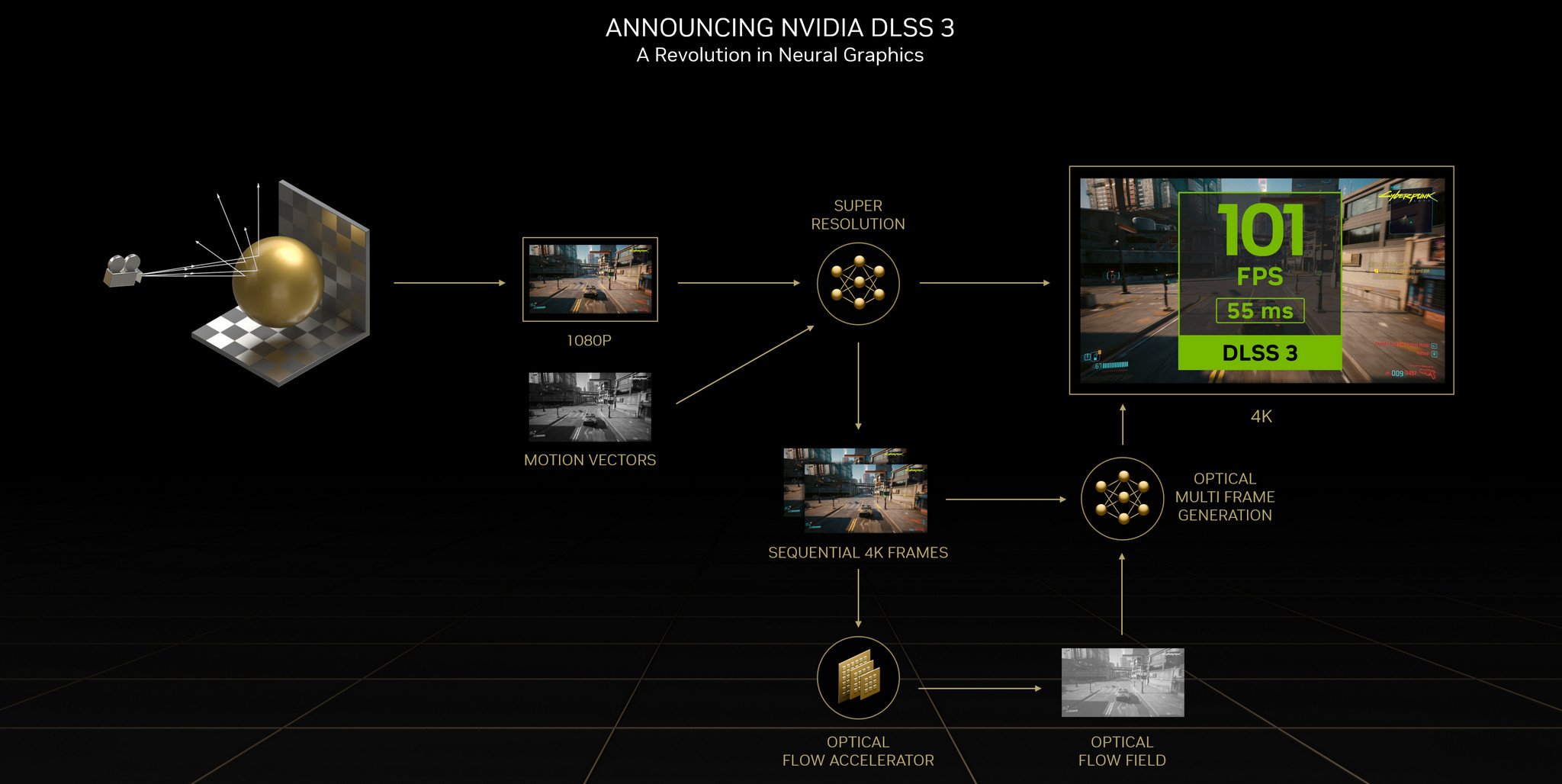
There is also the advantage that upscaling libraries will be automaticall updated with the GPU driver and will not be tied to whether the game manufacturer updates them (who will usually be slower and stop updating after a while).
DirectSR is expected to appear in Microsoft’s Agility SDK soon, but we don’t yet know how quickly support might be coming to actual games. The good news is that Microsoft is developing DirectSR in coordination with AMD and Nvidia, which should hopefully ensure that the technology actually gets used and GPU manufacturers won’t ignore it and instead push their own incompatible solutions (an eventuality you could probably suspect particularly from Nvidia with their dominant grip on the market).

Microsoft will formally introduce DirectSR at GDC 2024 as part of a presentation on March 21. Engineers from Microsoft as well as Nvidia and AMD are listed as “key partners”. So it’s true that this presentation (DirectX State of the Union) will probably feature introductions of other new features in DirectX, not just DirectSR. But hopefully the fact that Nvidia will attend shows that they are on board for this technology as well.
Sources: Microsoft Dev Blogs, VideoCardz
English translation and edit by Jozef Dudáš
⠀

