


At the Brno Exhibition Centre, Maker Faire Brno 2025 gathered hobbyists, makers, students, schools, makerspaces, and companies. Robotics, drones, 3D printing, electronics, and space research projects dominated. Visitors saw everything from ideas and prototypes to finished products. Alongside ran GameDev Connect for game development, featuring Czech studios and indie creators.
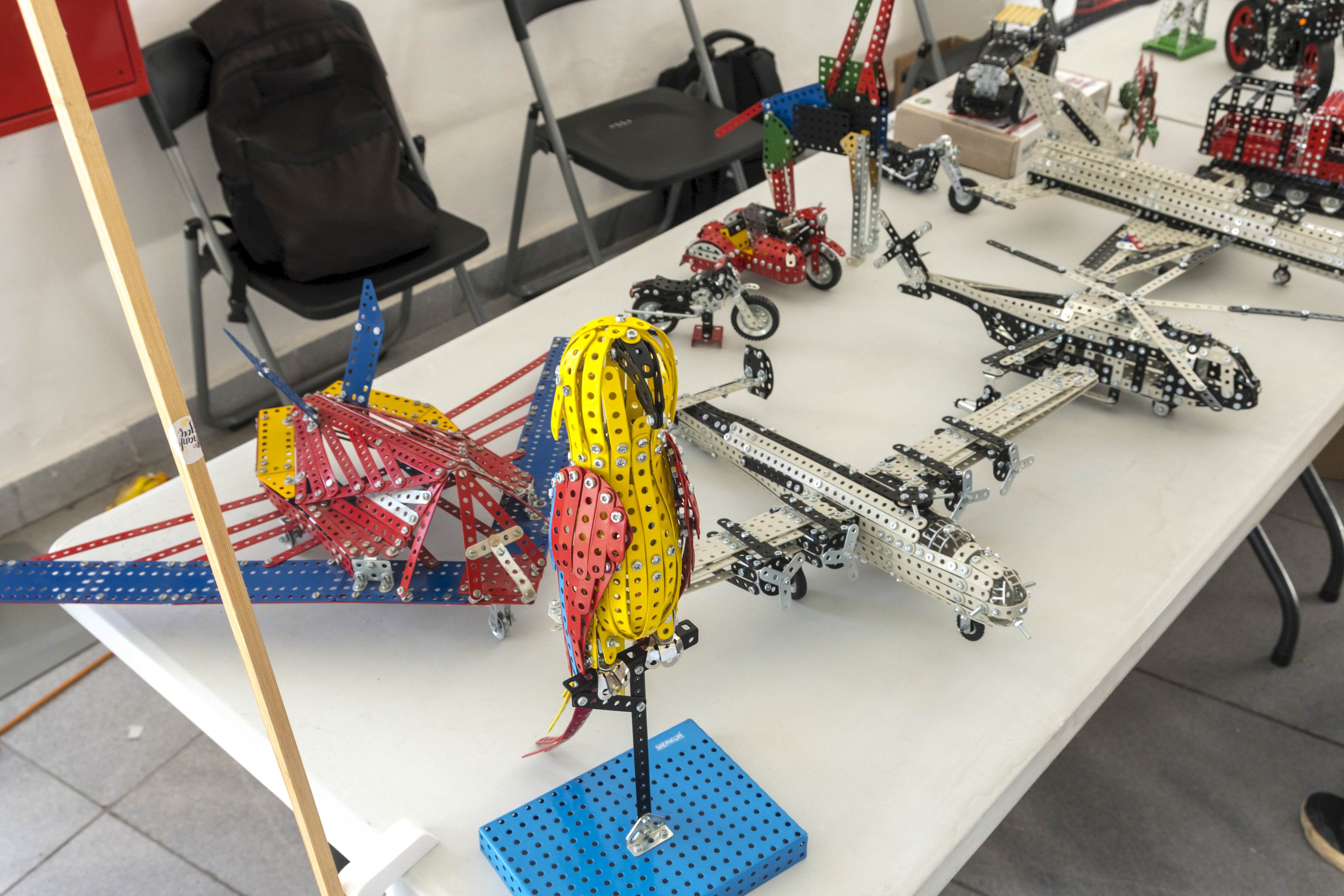
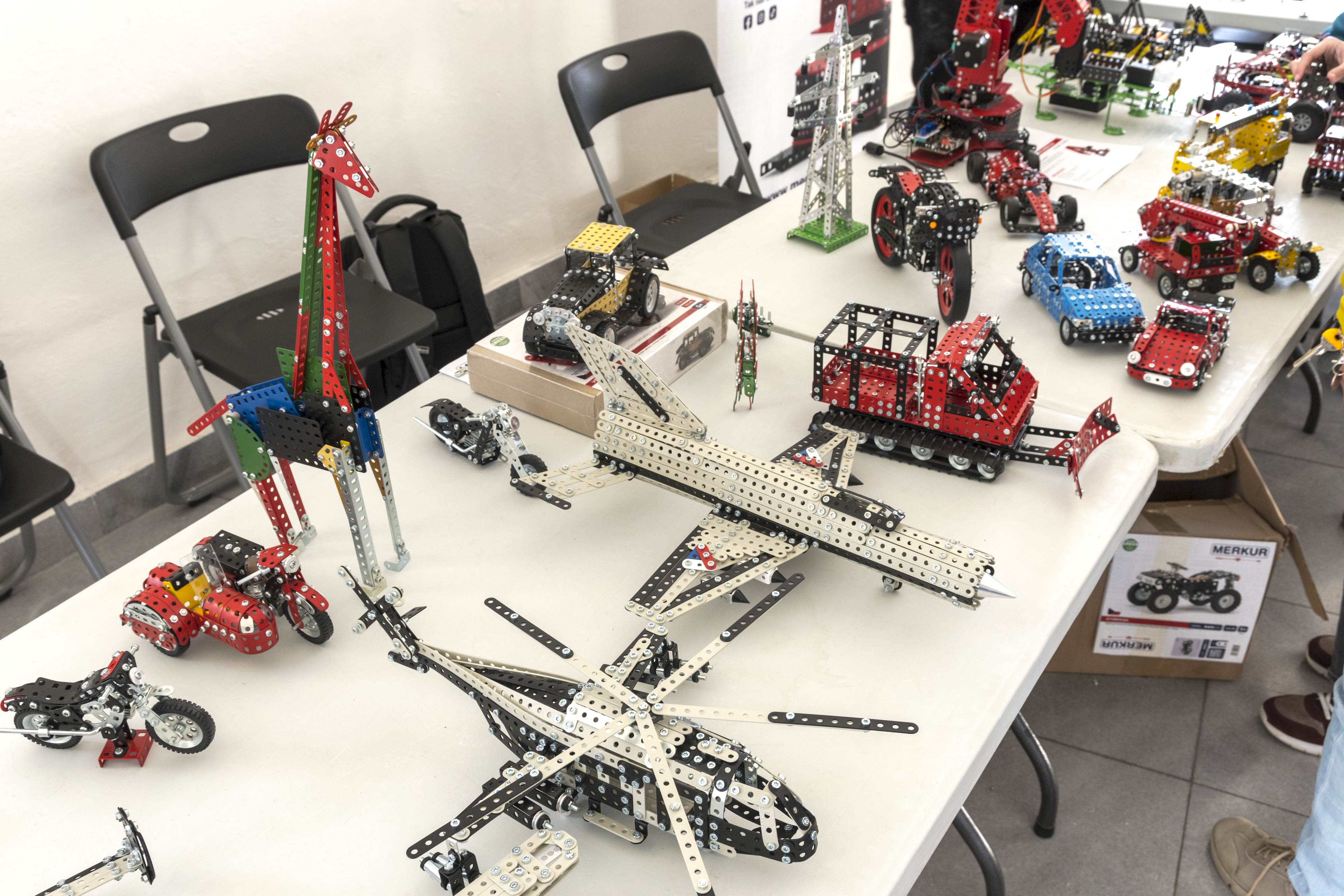
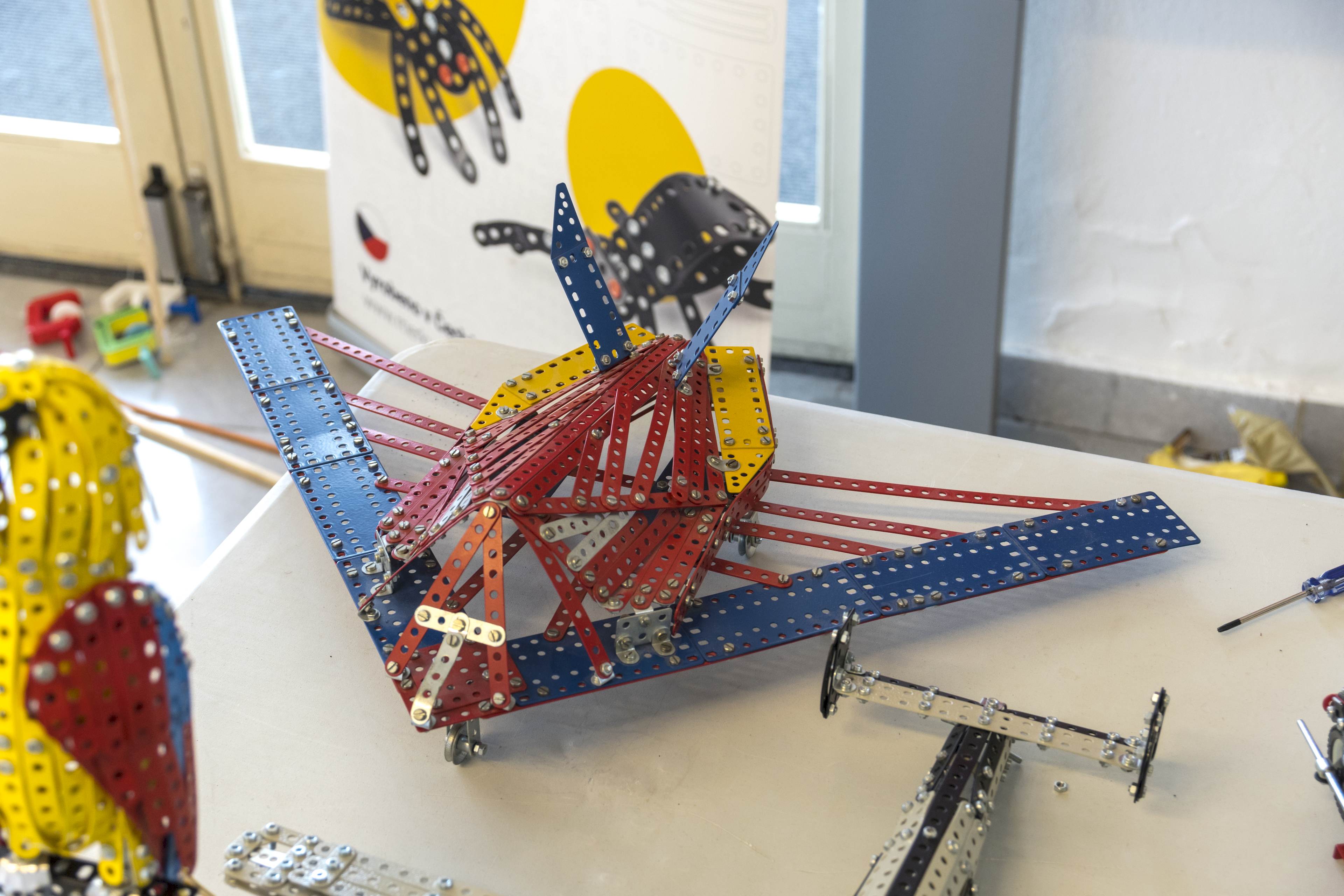
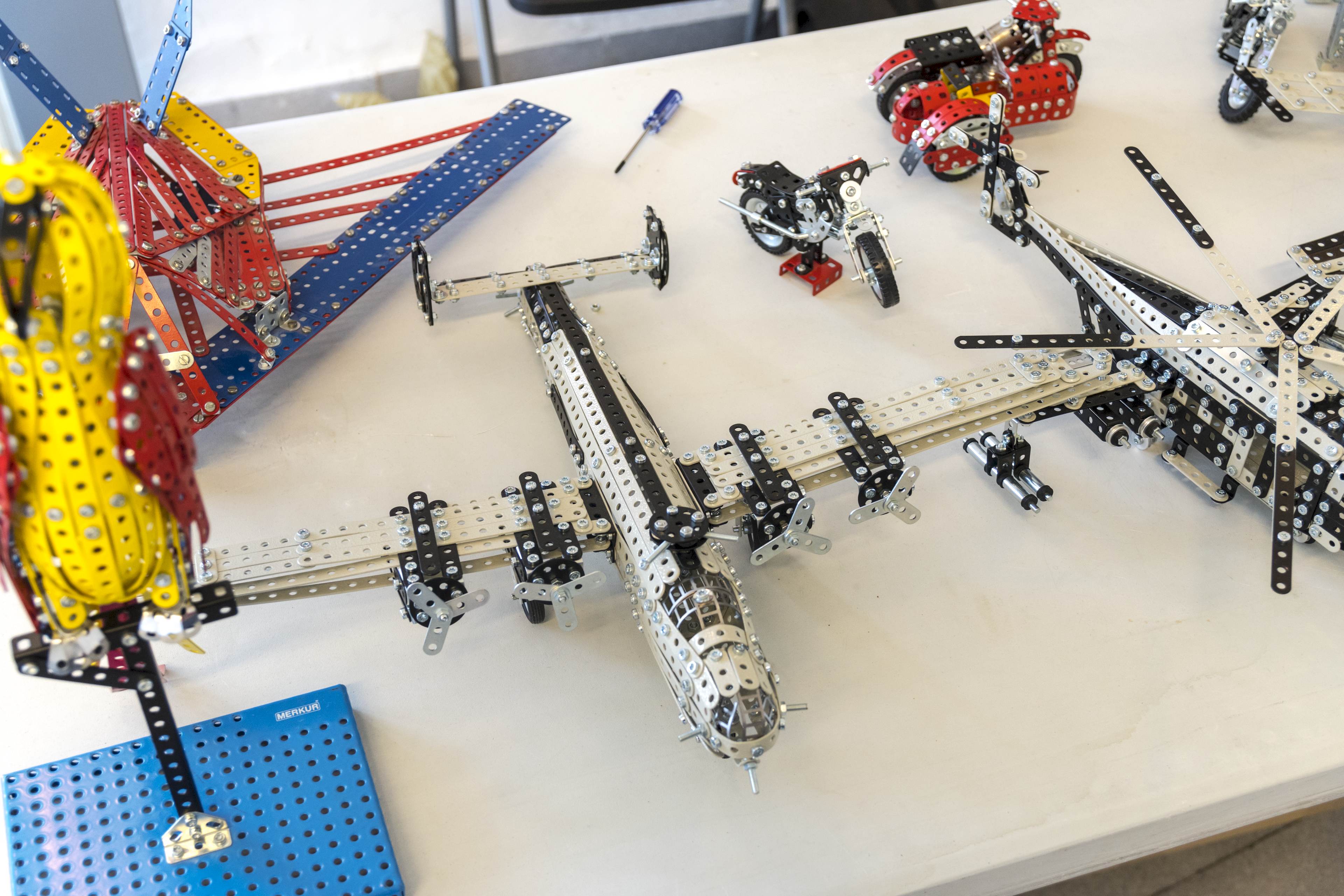
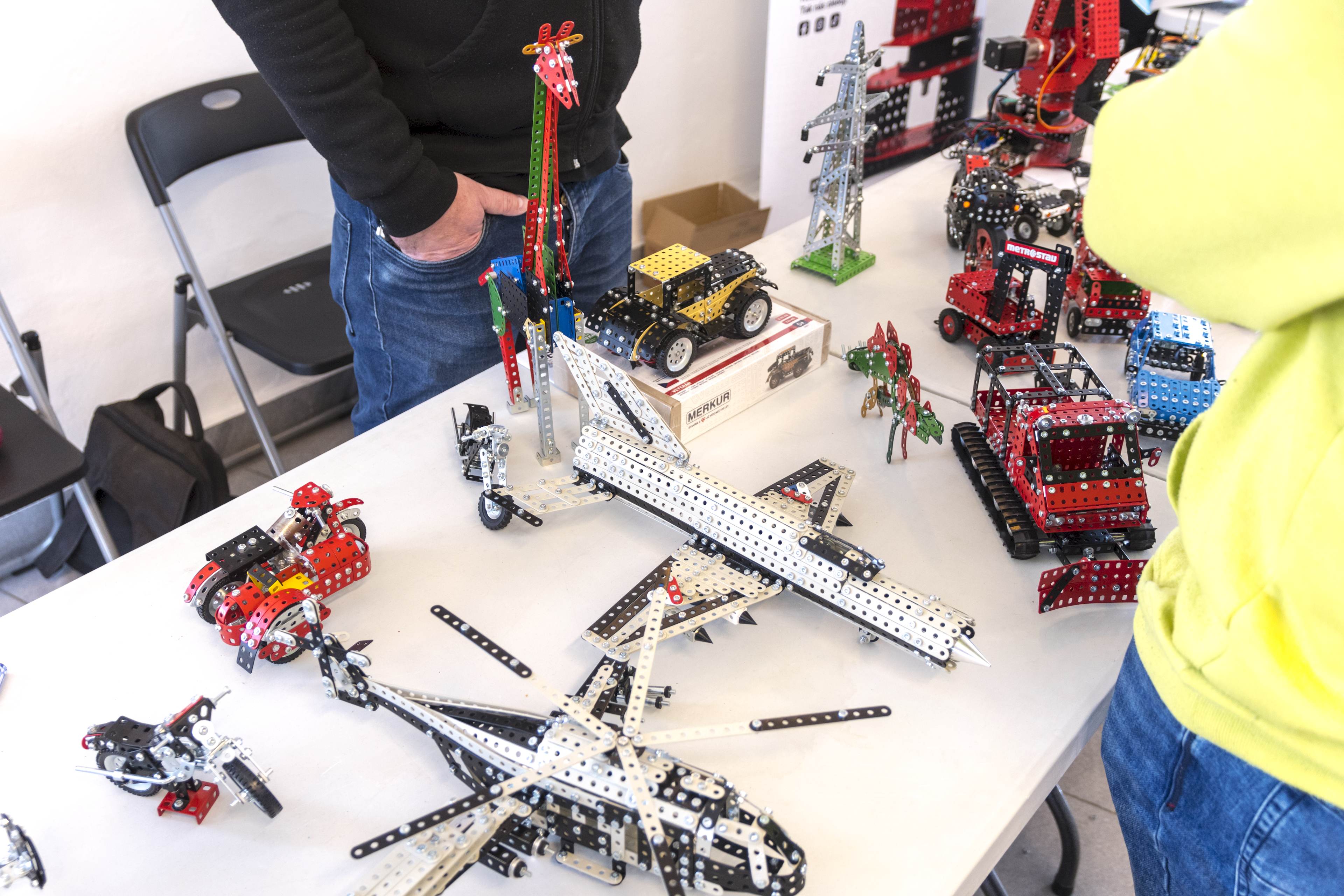
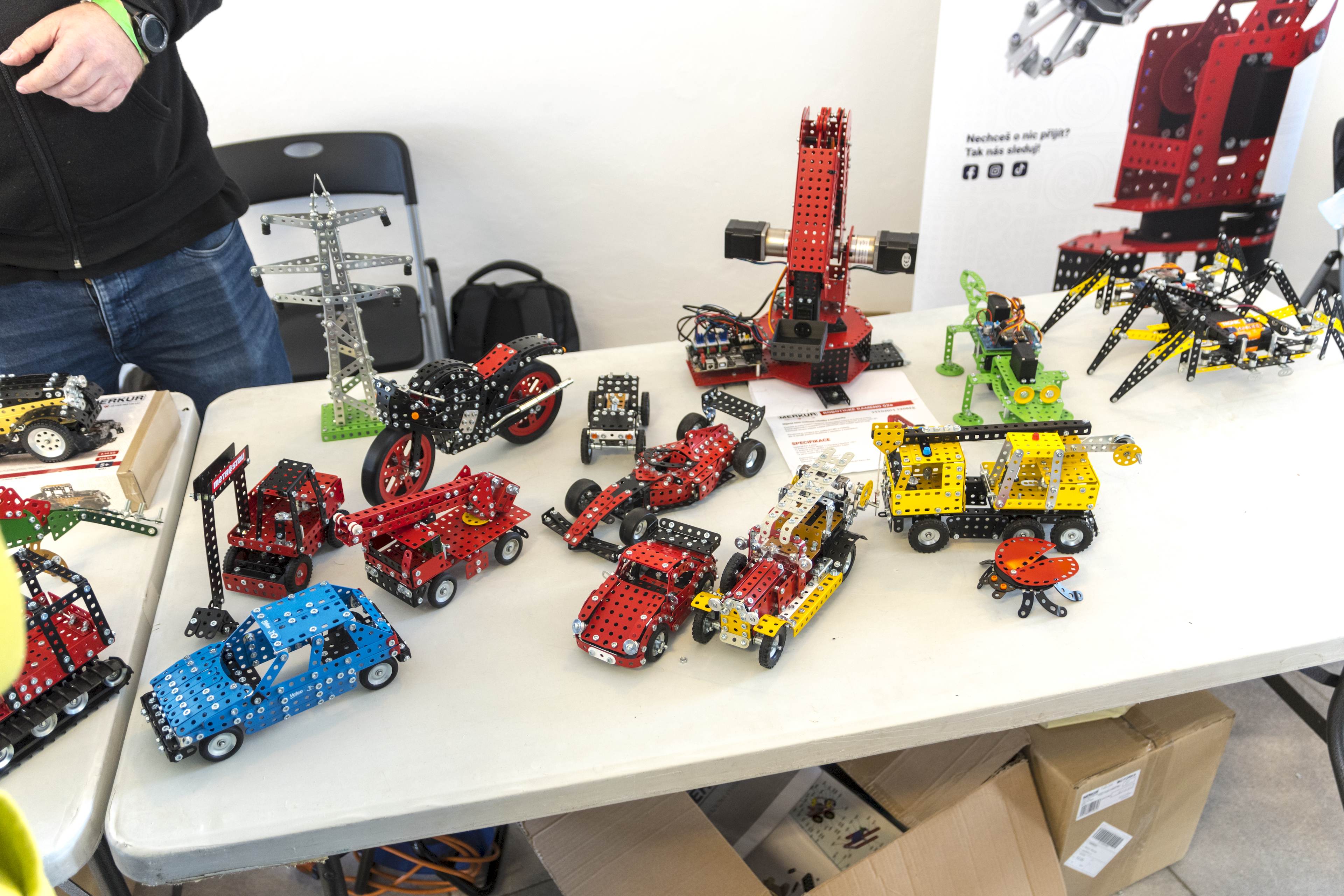
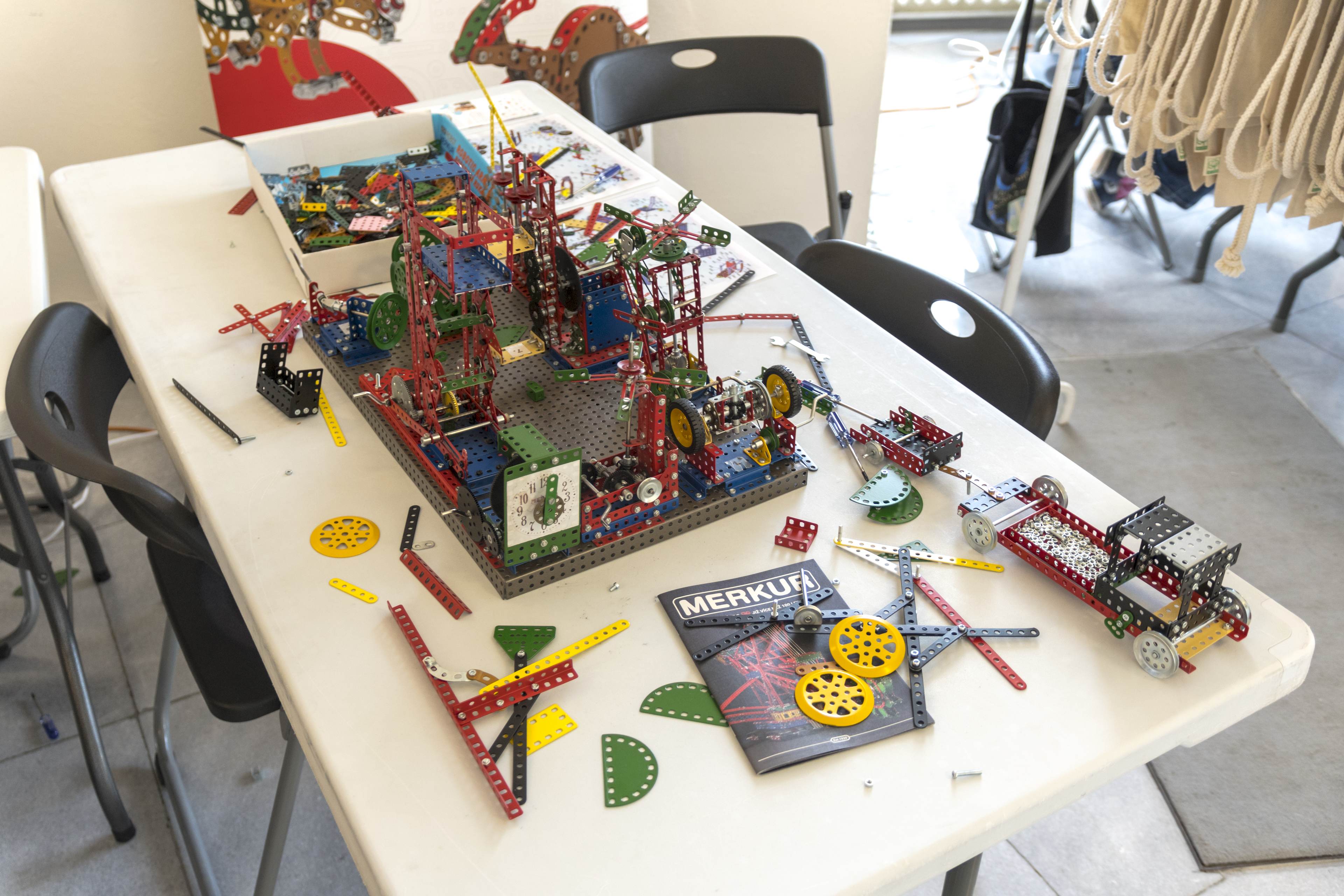
Part of the exhibition also belonged to brands well-known to makers and tinkerers. Near the entrance, the company Merkur had a booth—a local equivalent of the popular Meccano construction set. Augmented with modern electronics, it can serve as a foundation for various machines, electronic toys, or robots.



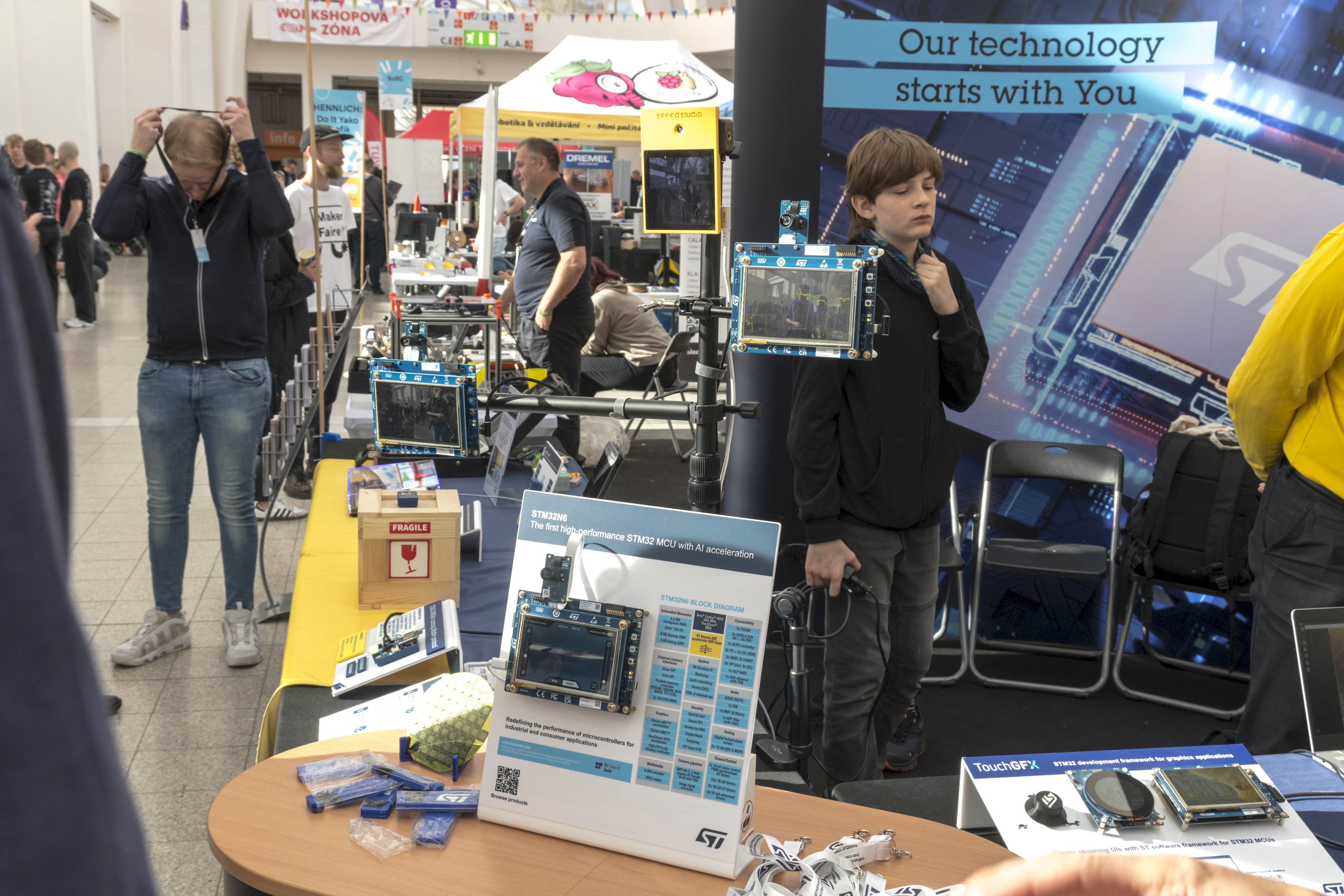
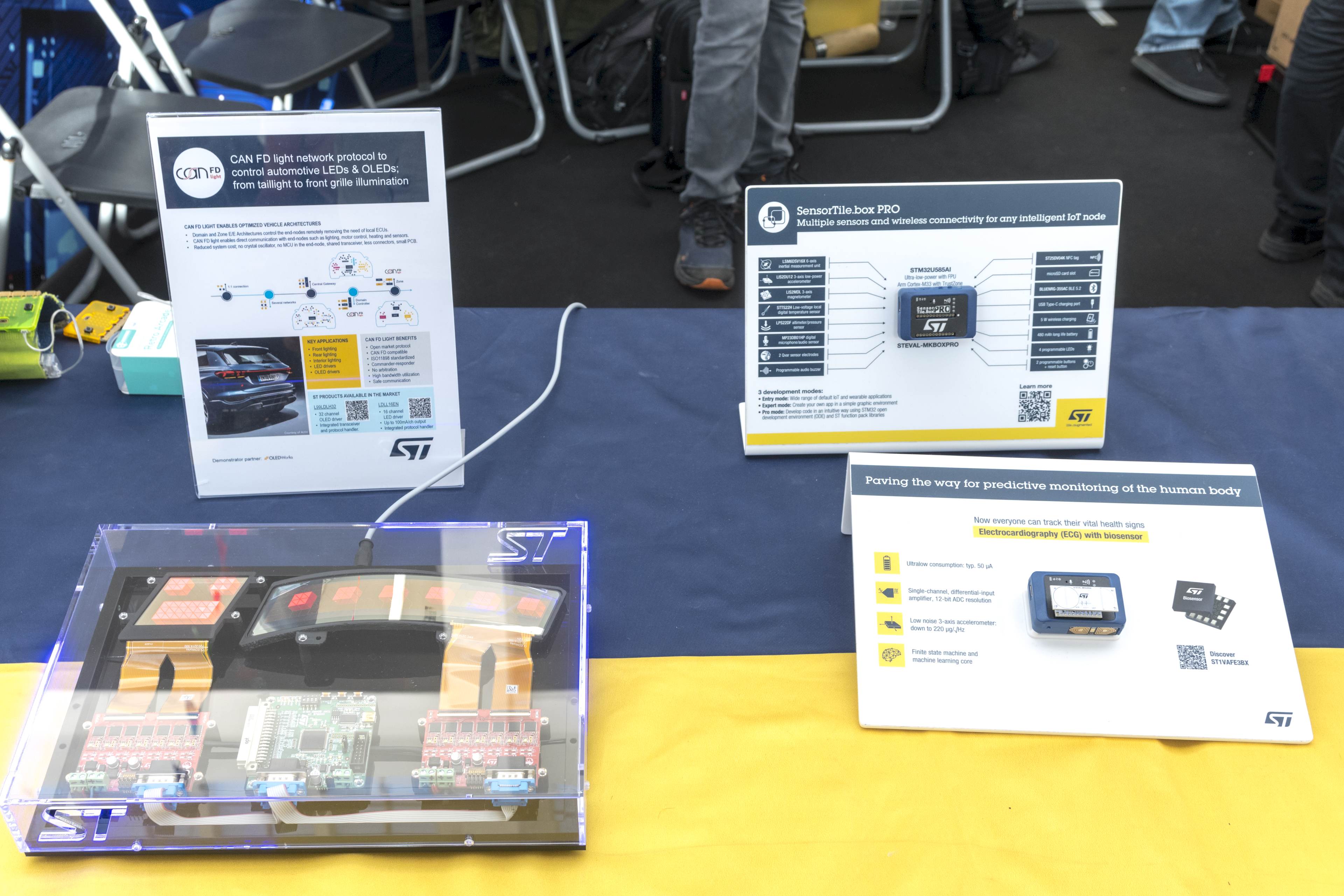
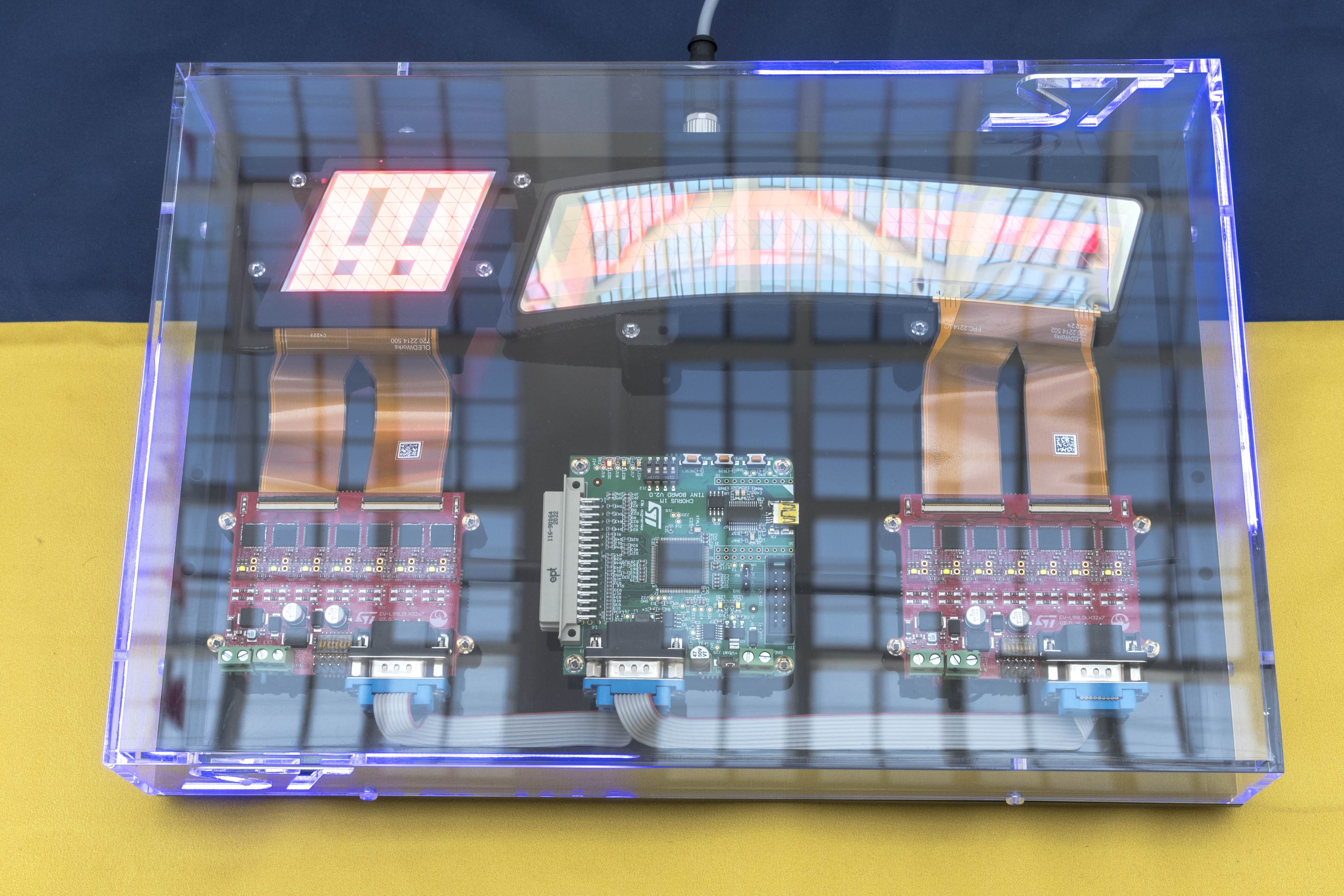
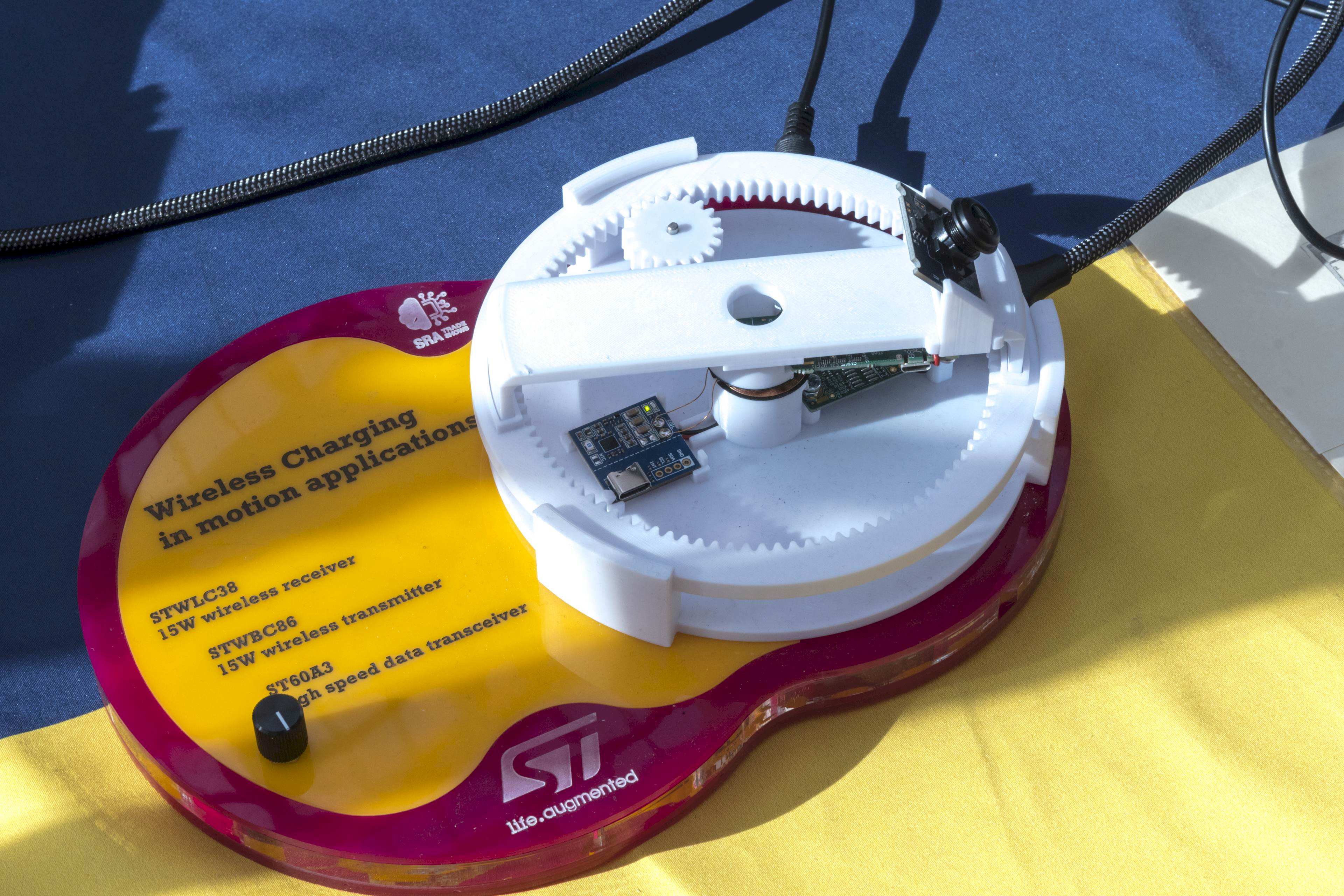
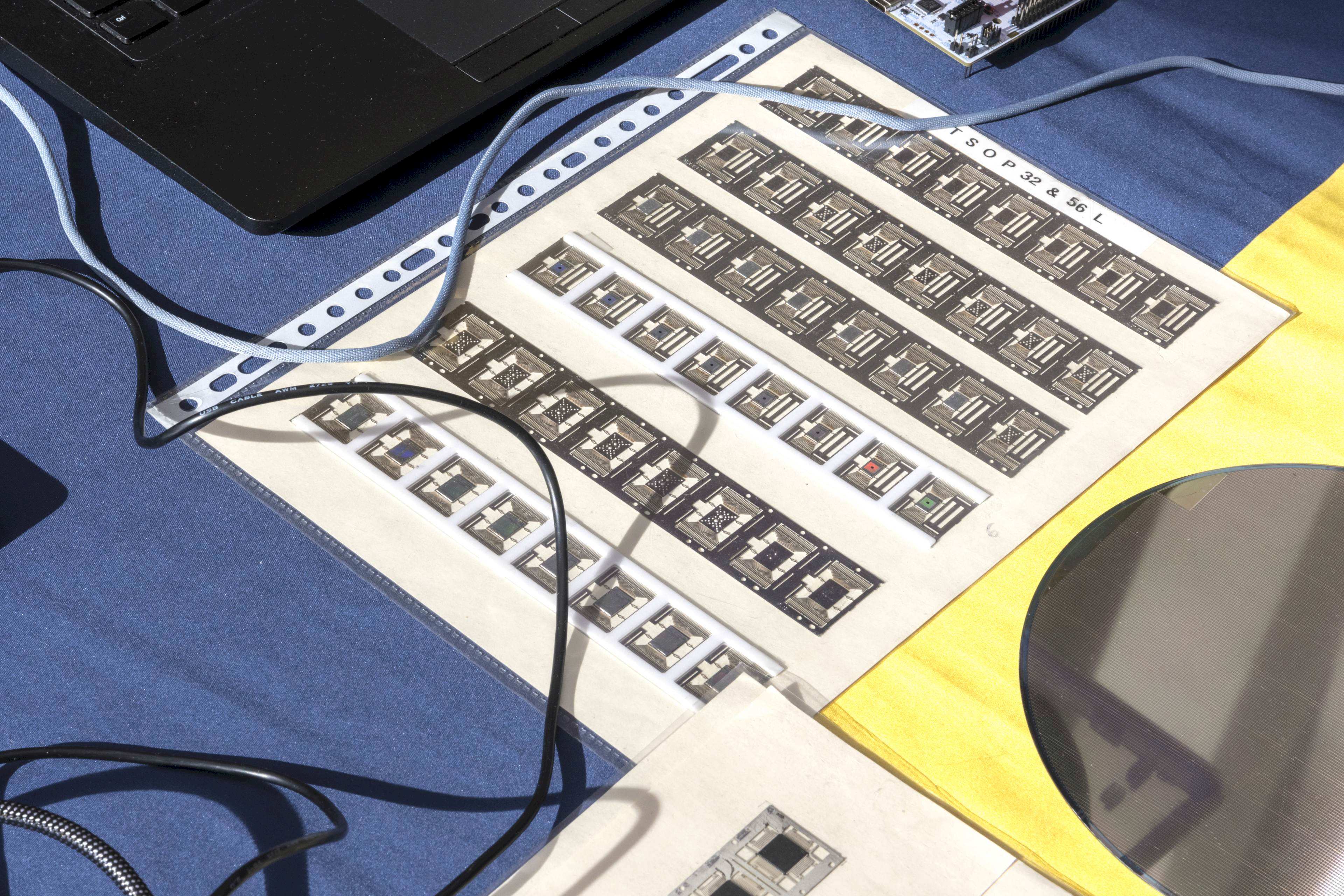
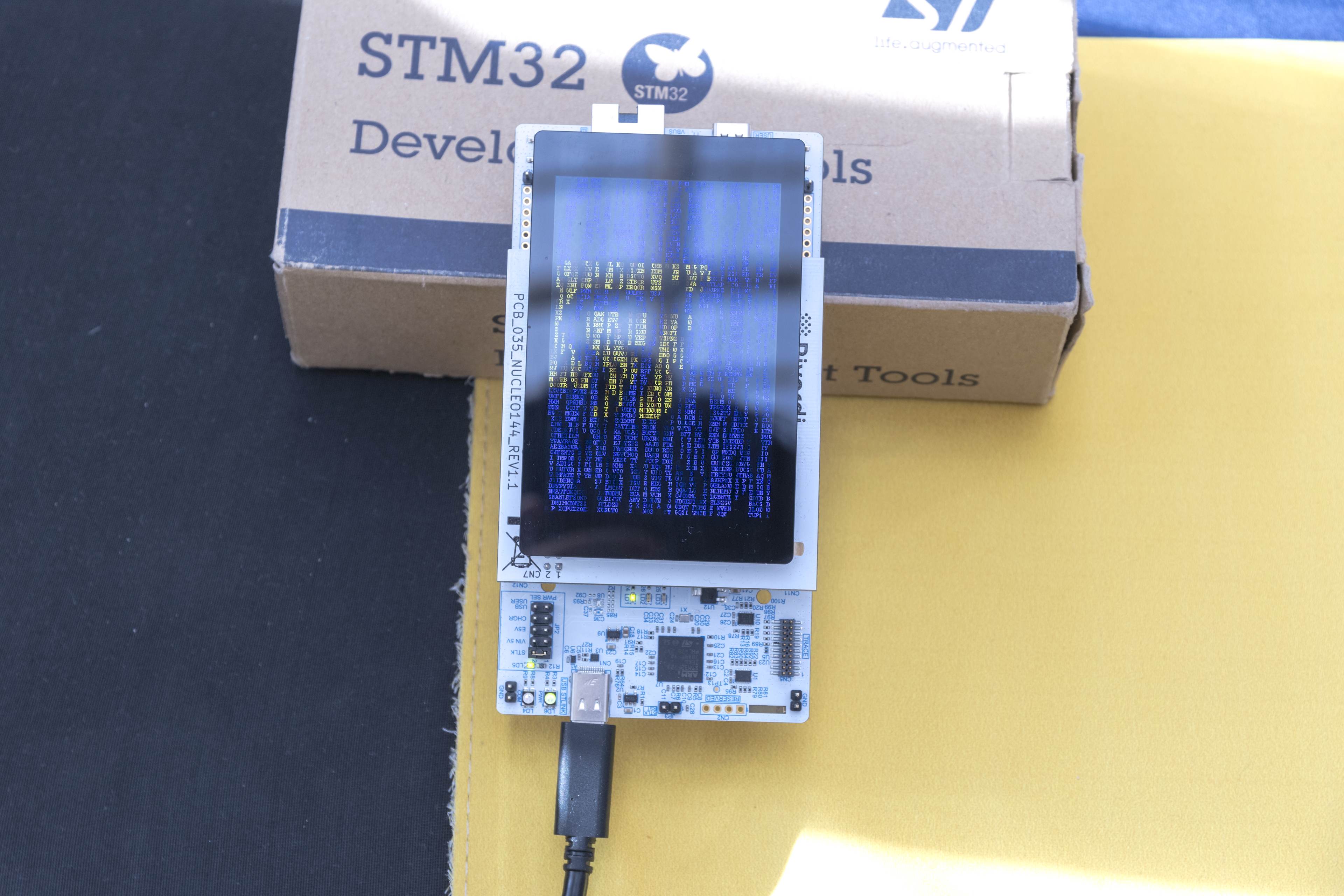
STMicroelectronics (STM) is a global manufacturer of semiconductor components headquartered in Switzerland with main development centers in France and Italy. It focuses on STM32 microcontrollers, sensors, analog circuits, power electronics, and newly, AI acceleration directly on chips. Their technology is used in automotive, industry, consumer electronics, and IoT—from simple devices to systems with advanced data processing directly at the network edge.
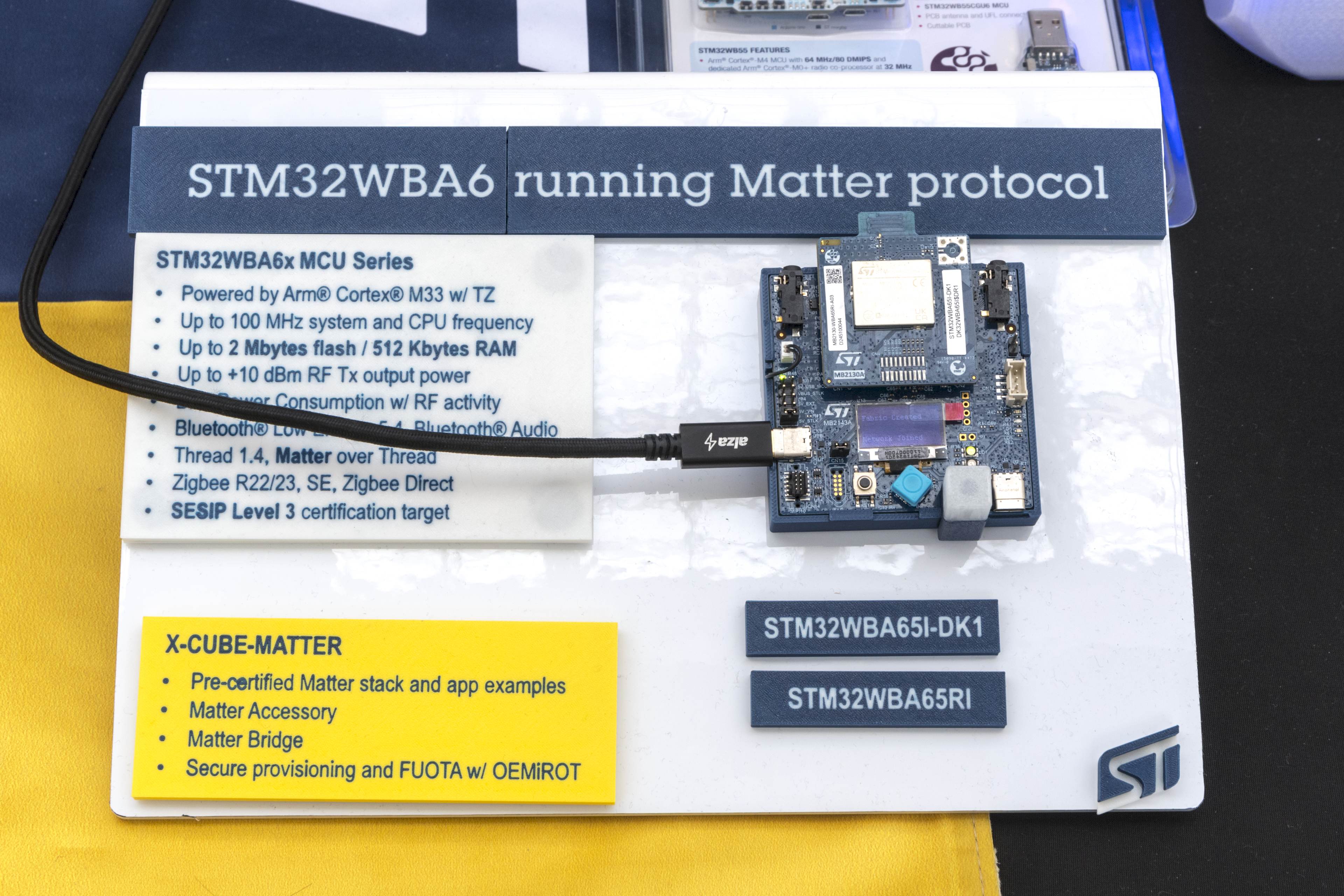
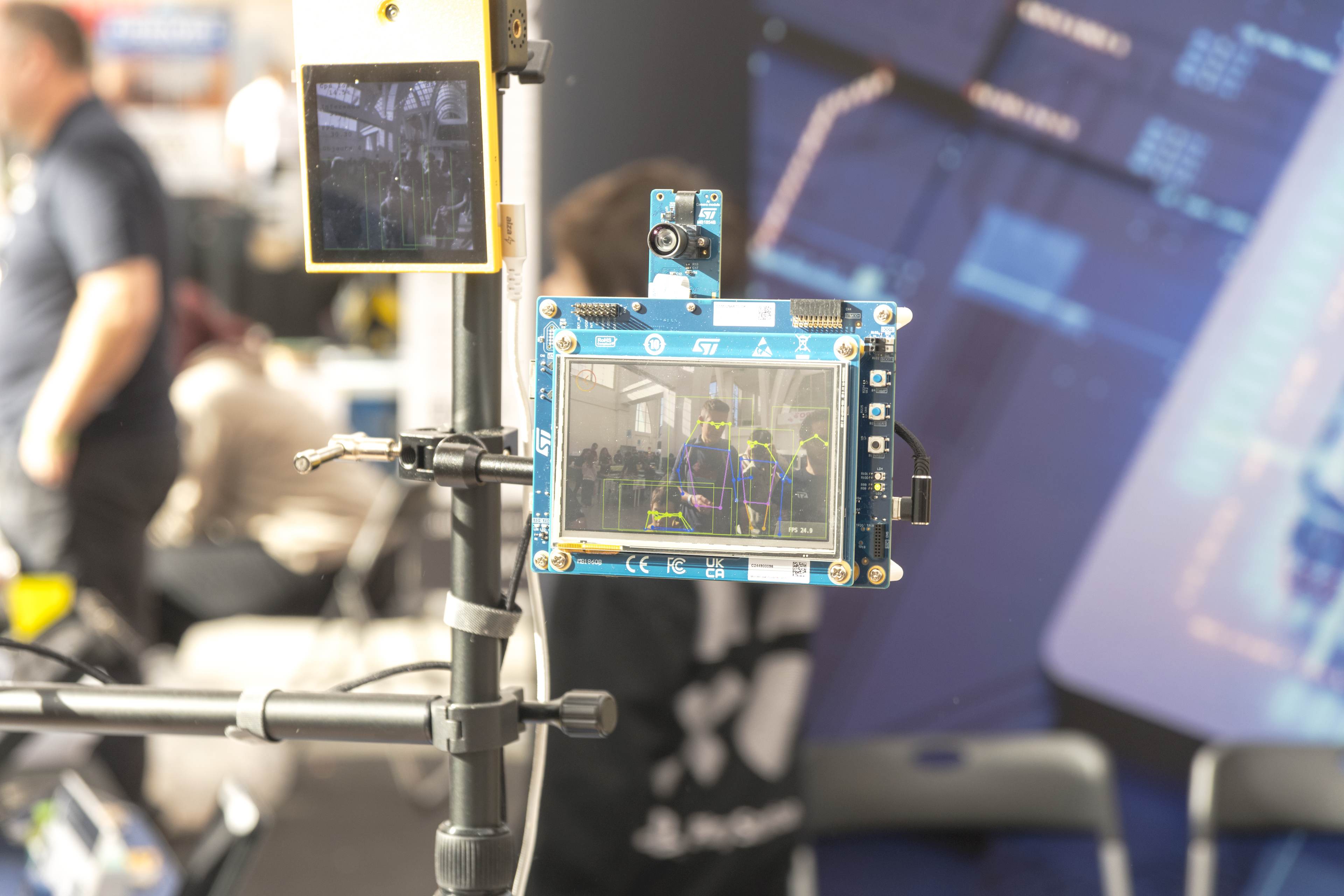
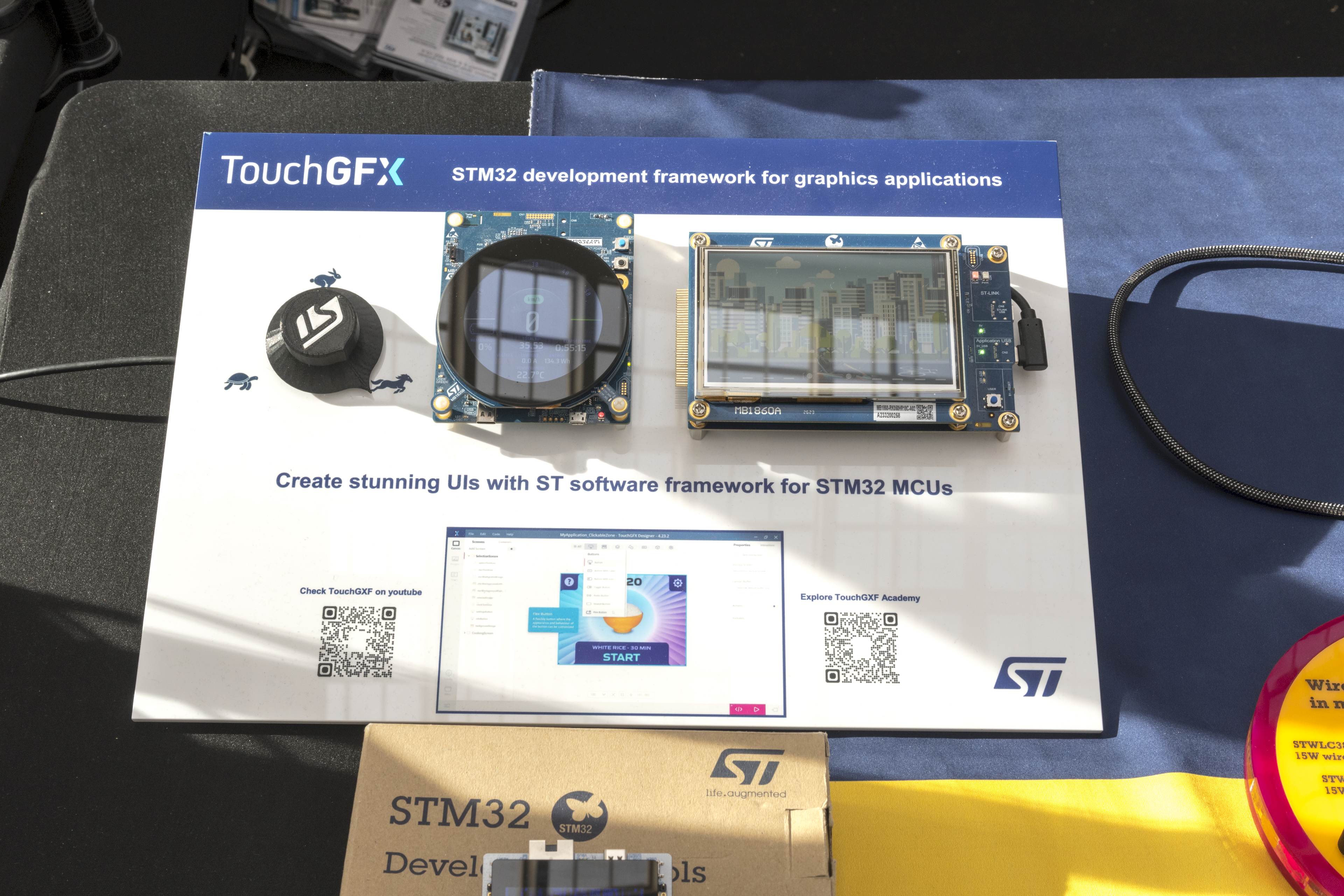
At the Brno Maker Faire 2025, STMicroelectronics mainly demonstrated TouchGFX GUI on STM32 and Matter/Thread demo on STM32WBx. Besides these demonstrations, ST also presented AI projects focused on processing image and sensor data directly on microcontrollers. The main attraction was the Vision AI demo with Ultralytics YOLO running directly on the new STM32NG (AI-accelerated MCU), showing the possibilities of object detection without the need for a cloud connection.
Part was dedicated to gesture recognition using MEMS sensors and machine learning models, which ST has been developing long-term within its “magic-wand” and ToF (Time-of-Flight) demonstrations. These projects complement their direction towards “edge AI”—intelligent systems capable of evaluating data directly on the device.



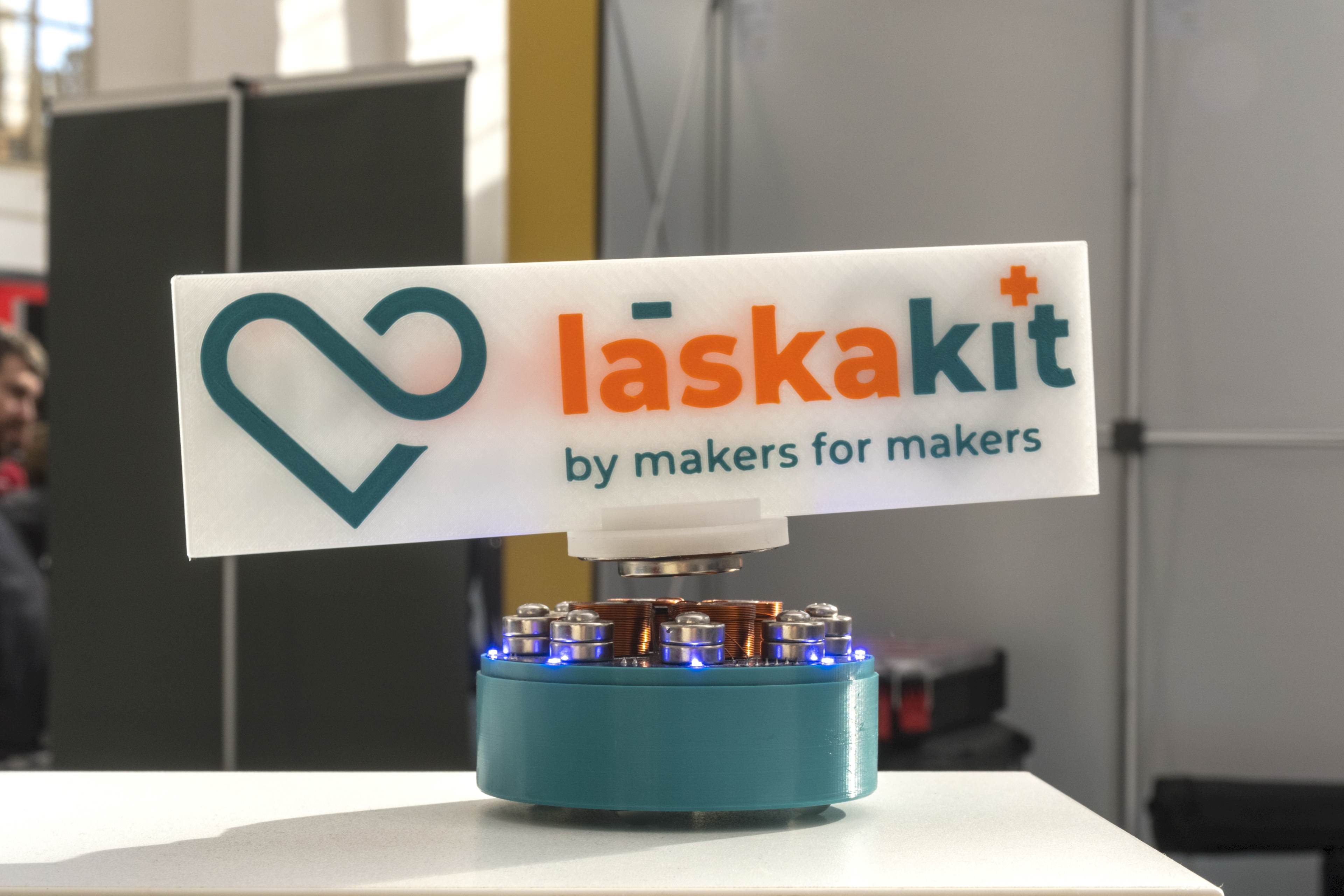
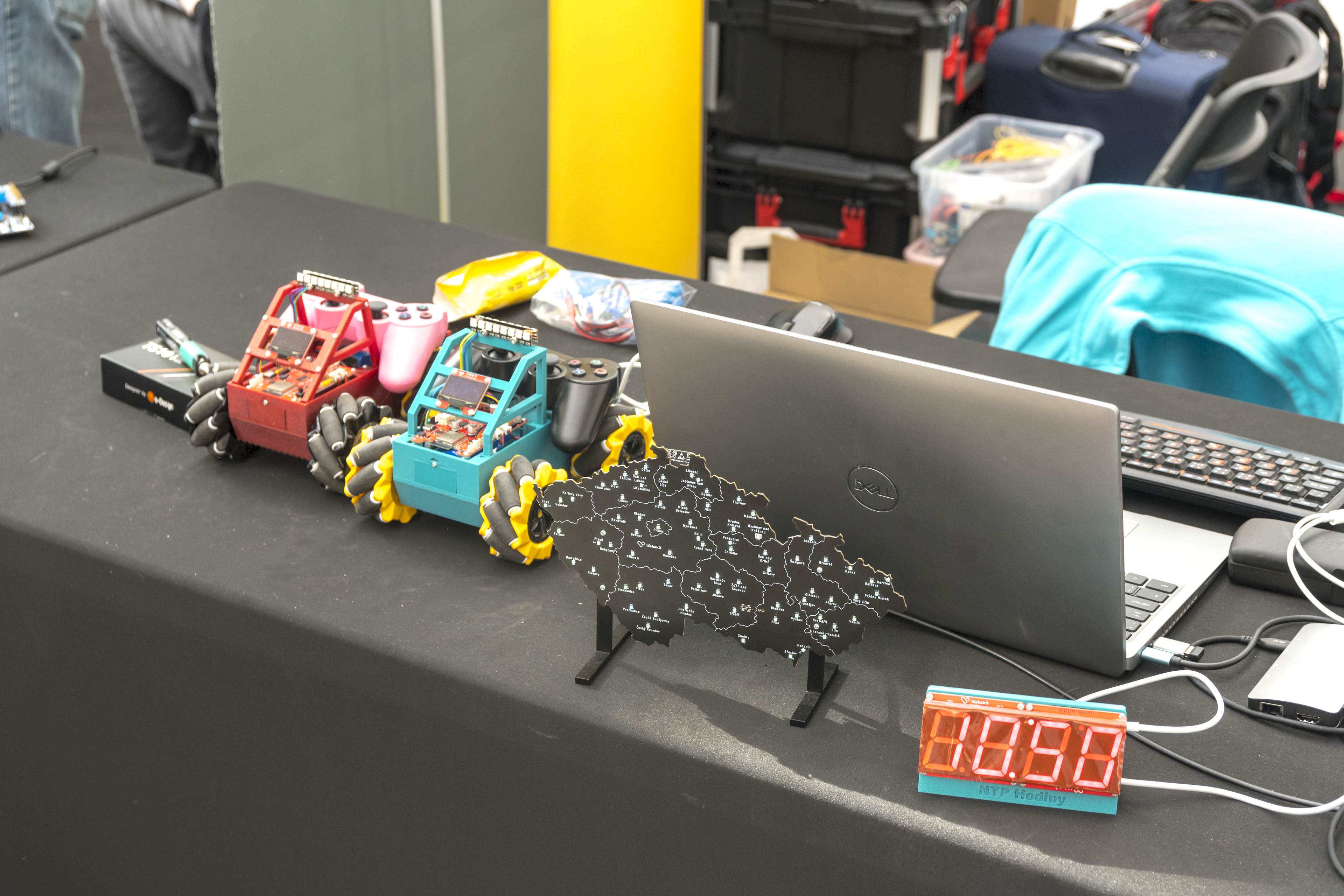
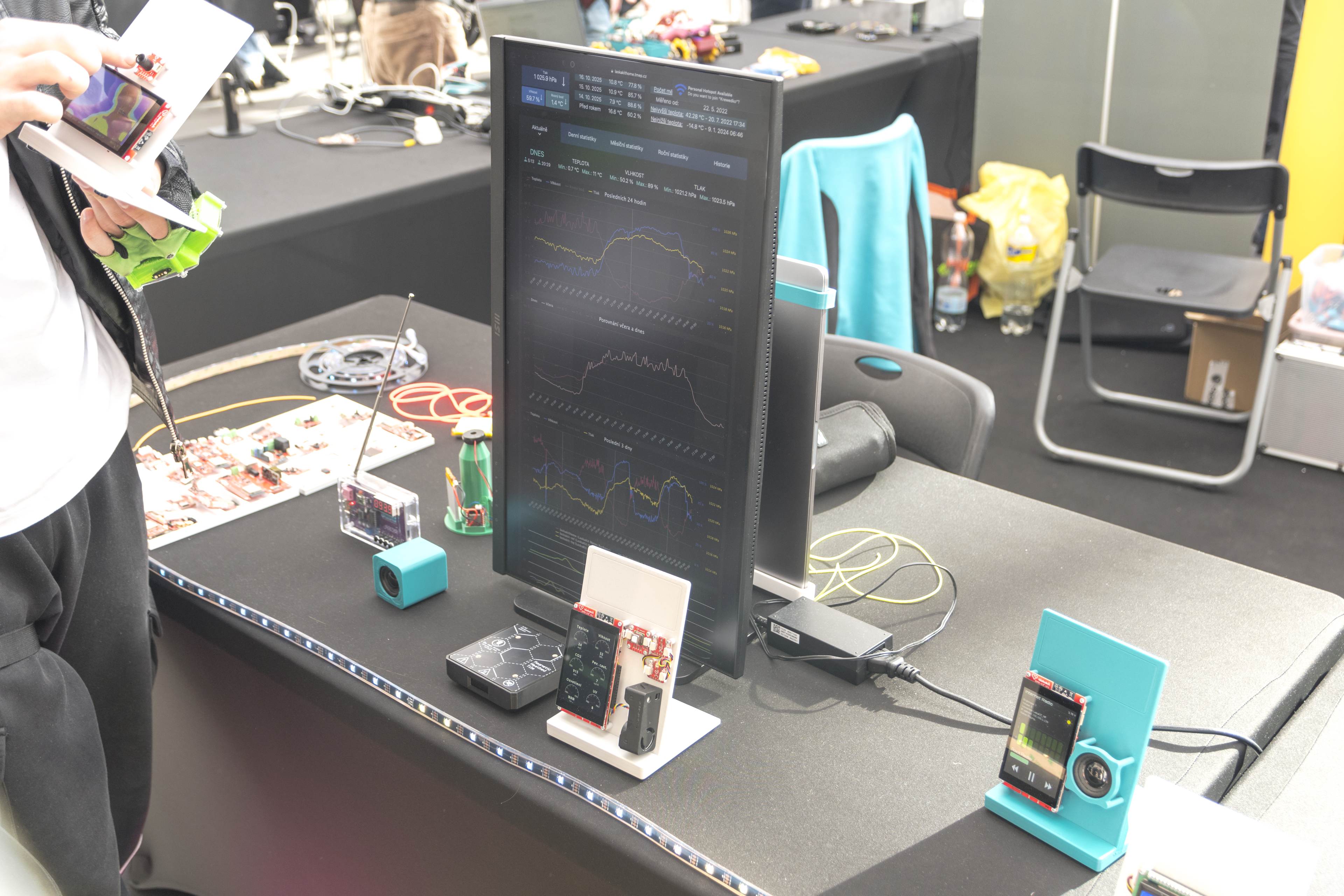
Laskakit has long supported the Czech maker community and shares tutorials and open projects for hobby electronics on its website. At the Maker Faire Brno, it presented its community electronics projects and modular kits for tinkerers.
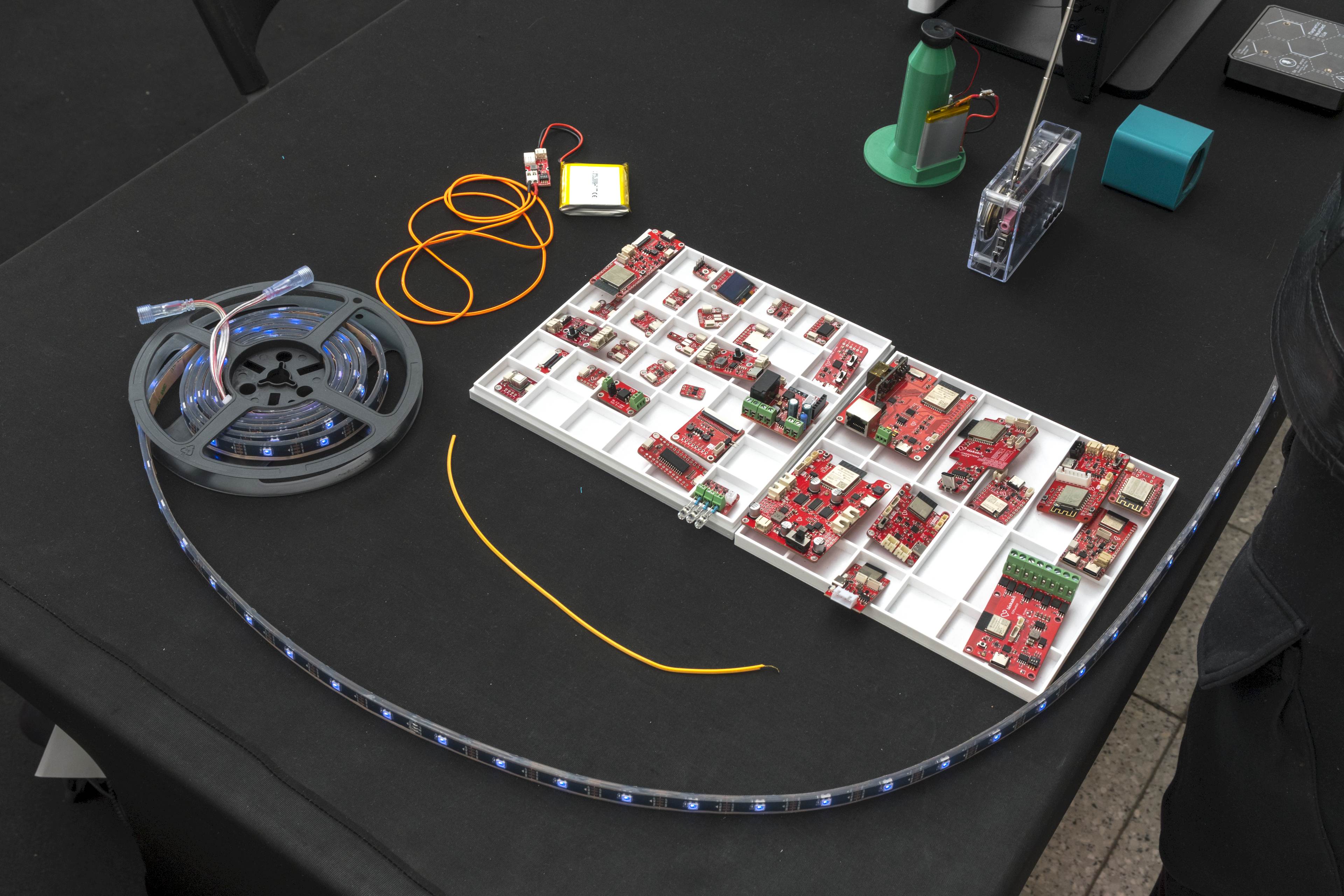
The company doesn’t just sell modules from others but combines the sale of verified modules with its own development where a suitable product is missing, building on quality testing and a community approach. They themselves design and iteratively develop their own boards over the long term, assemble various kits, and supply 3D-printed boxes and parts of their own manufacture for them. They have the printed circuit boards manufactured externally, but handle the assembly, packaging of kits, and mechanical parts internally (including custom 3D printing as needed).
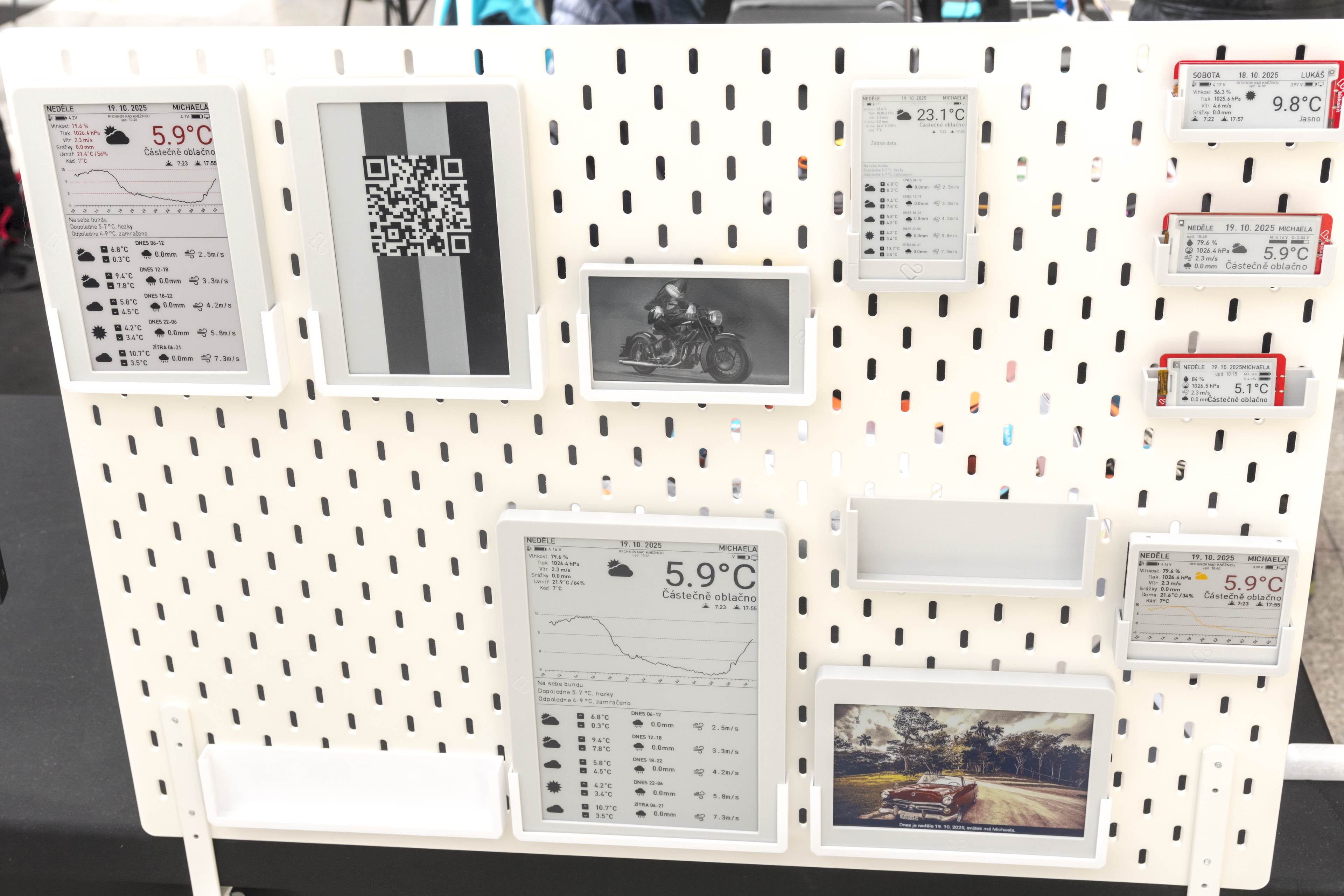
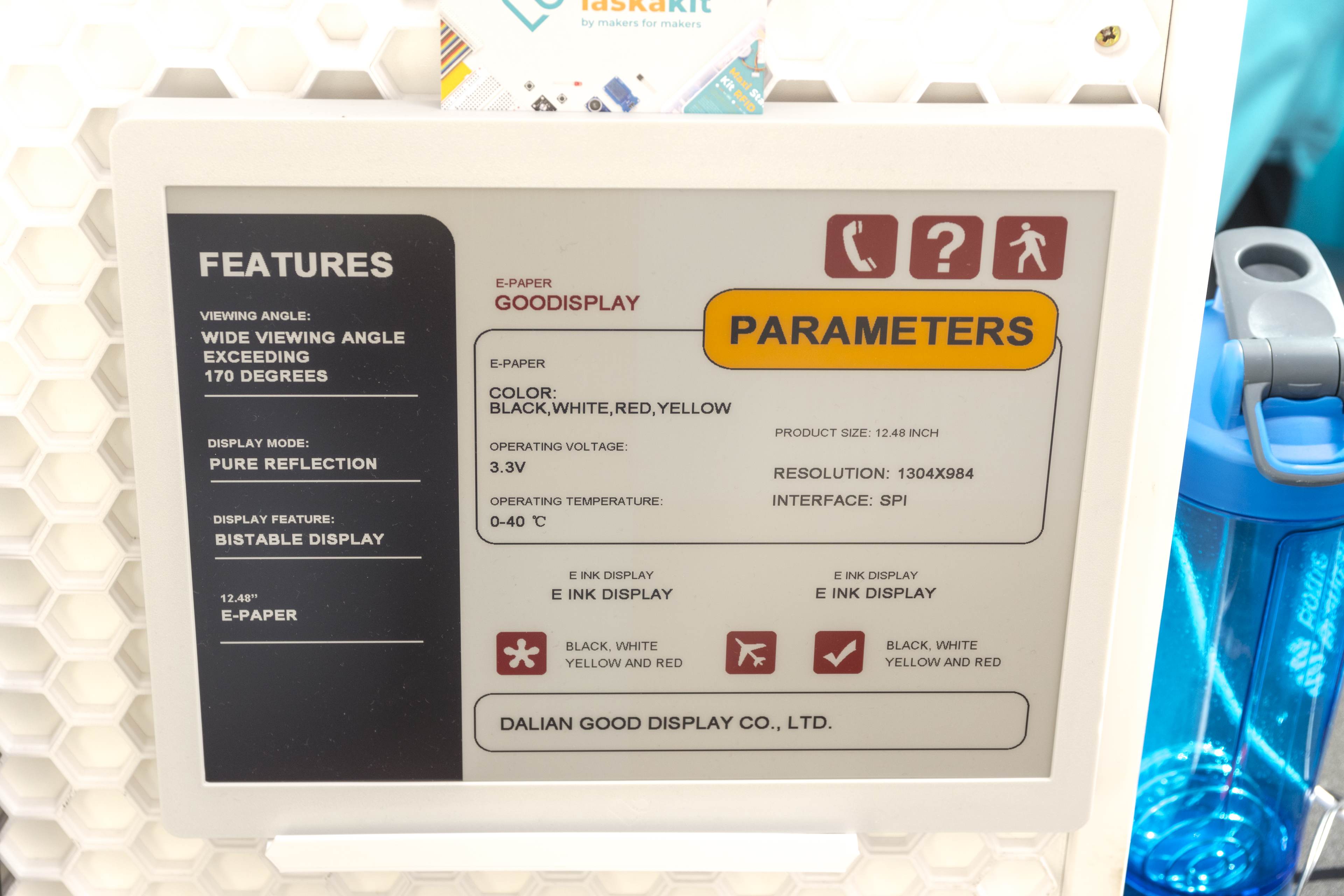
The stand was dominated by low-power electronic ink displays, which can show things like weather forecasts, calendars, or smart home status. Furthermore, you could see weather stations, control boards, and sensors that visitors could try out themselves or purchase directly as DIY kits.



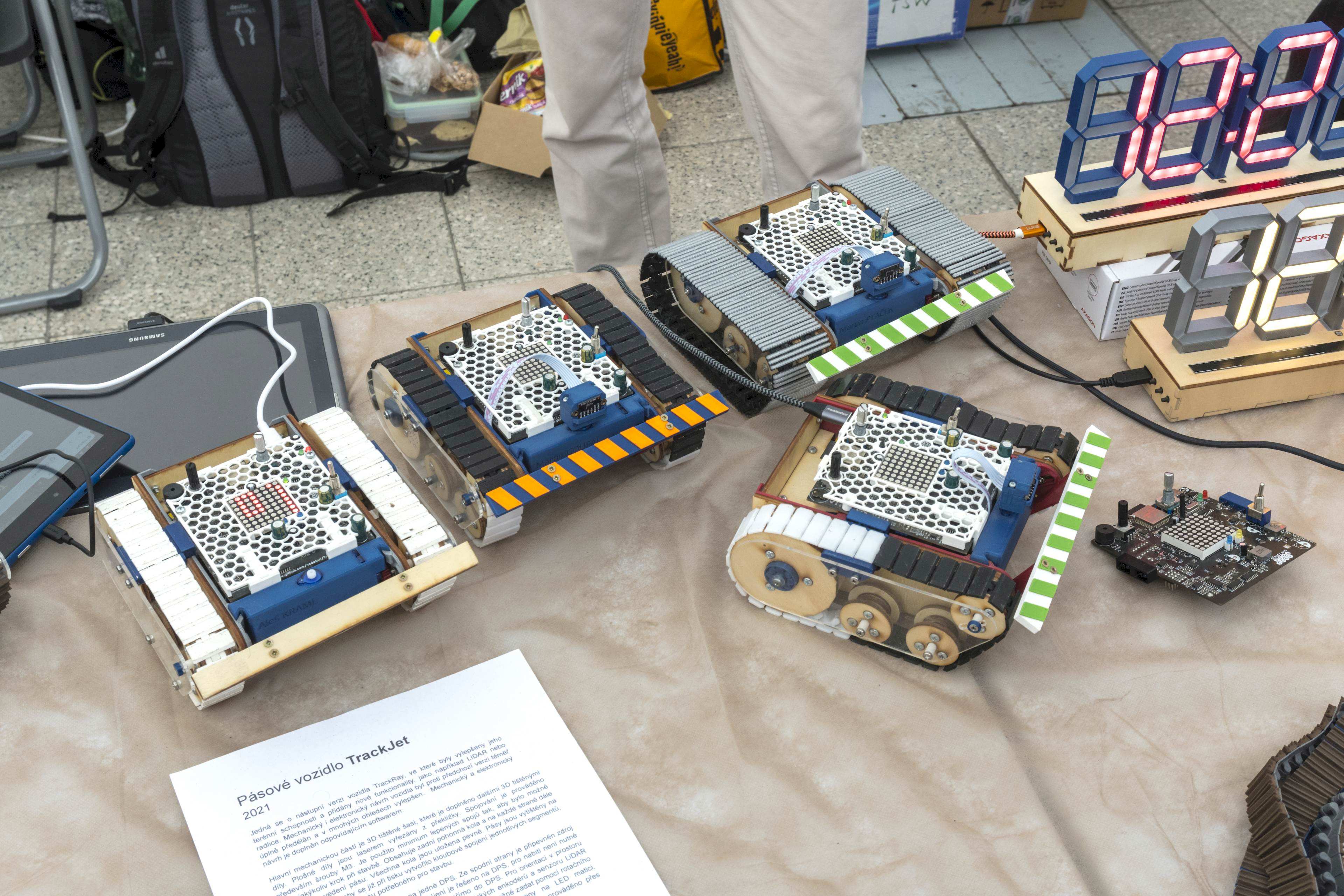
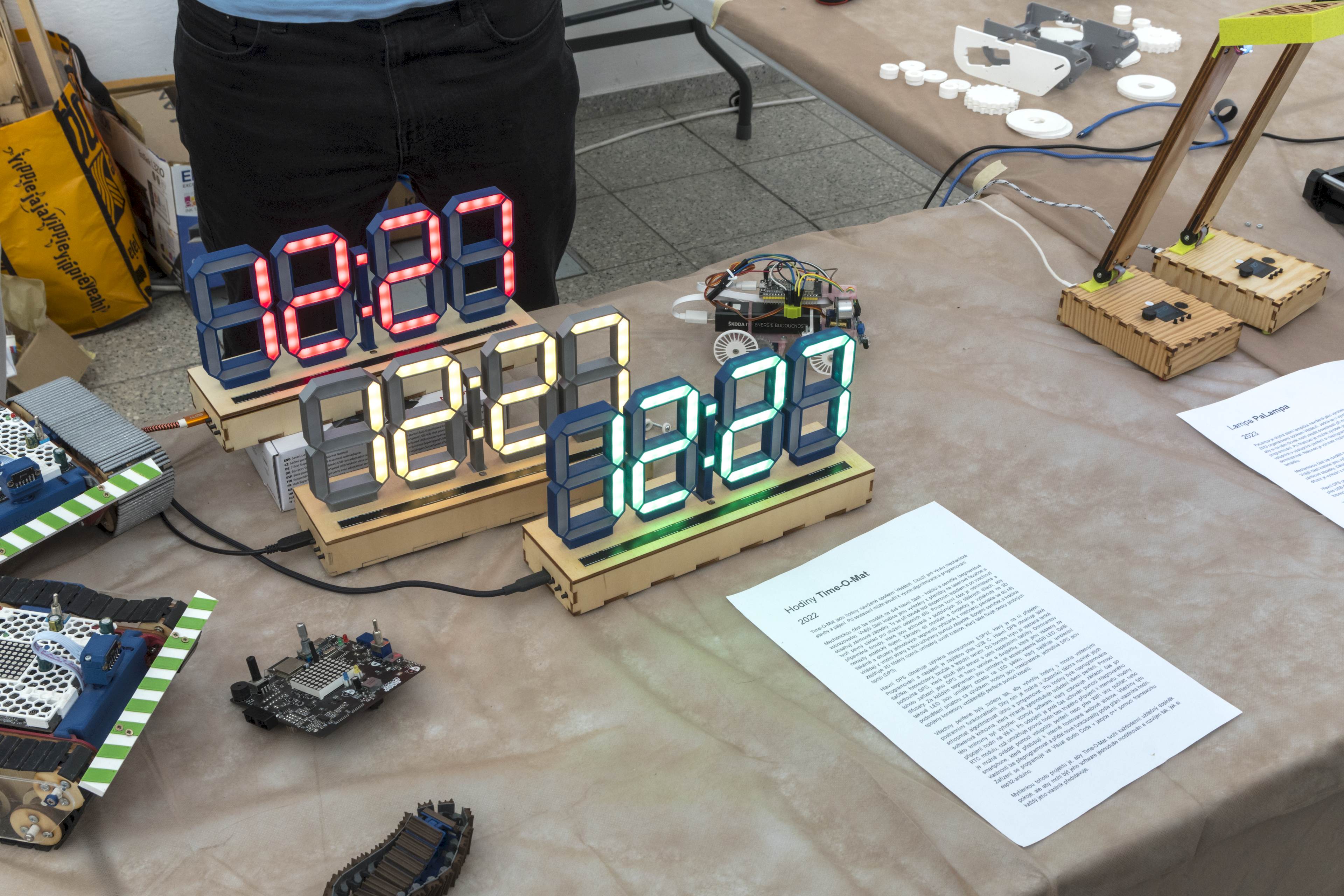
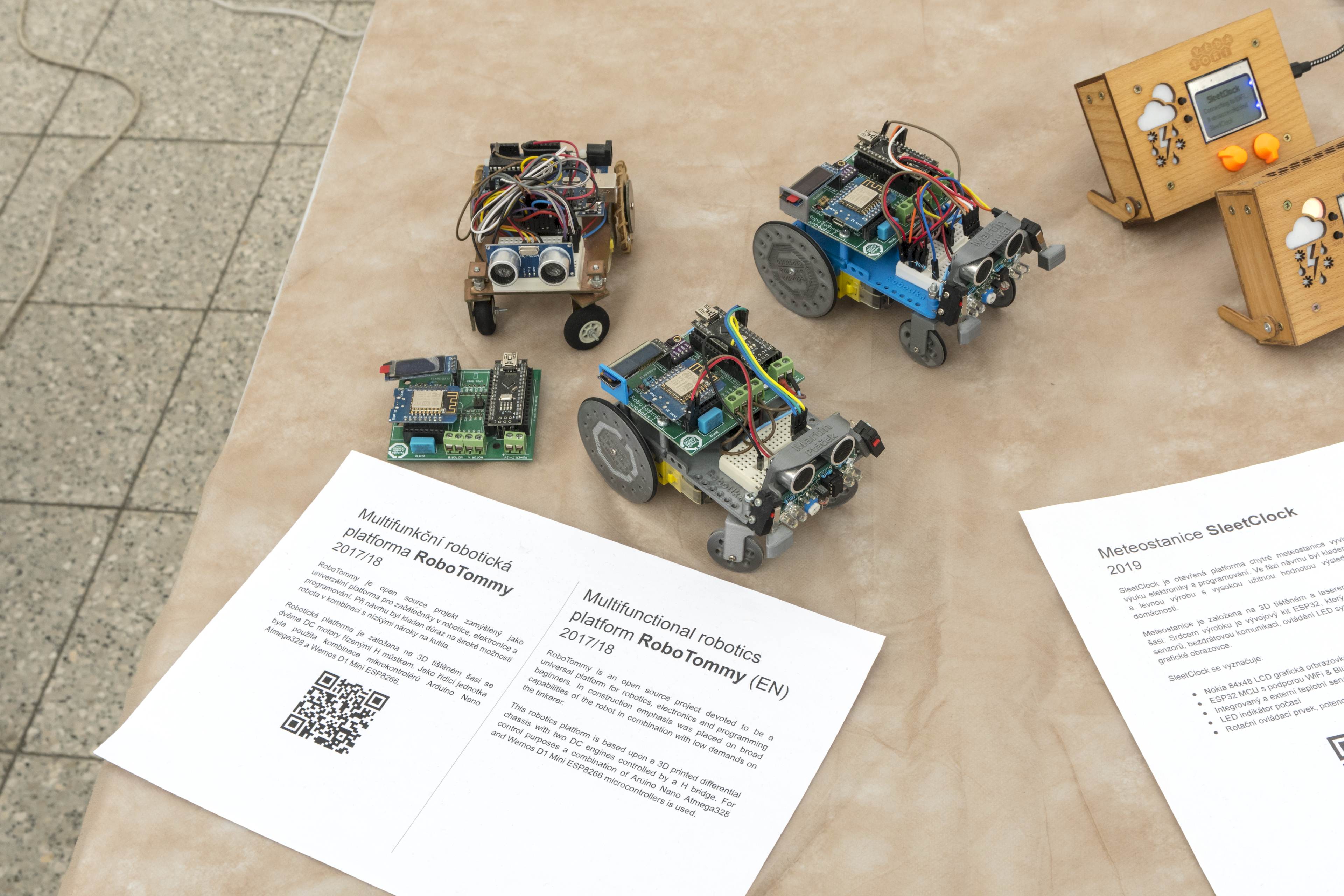
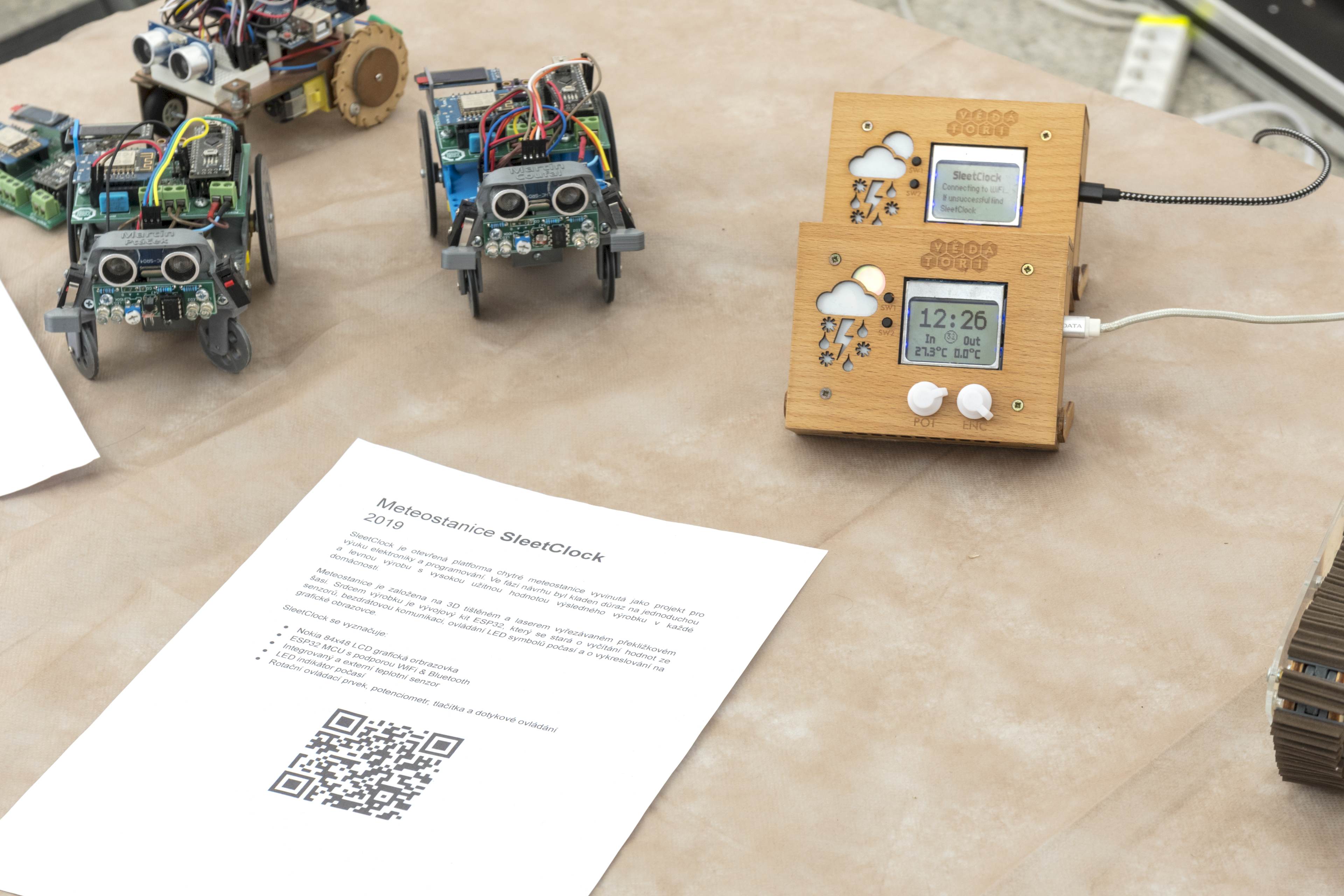
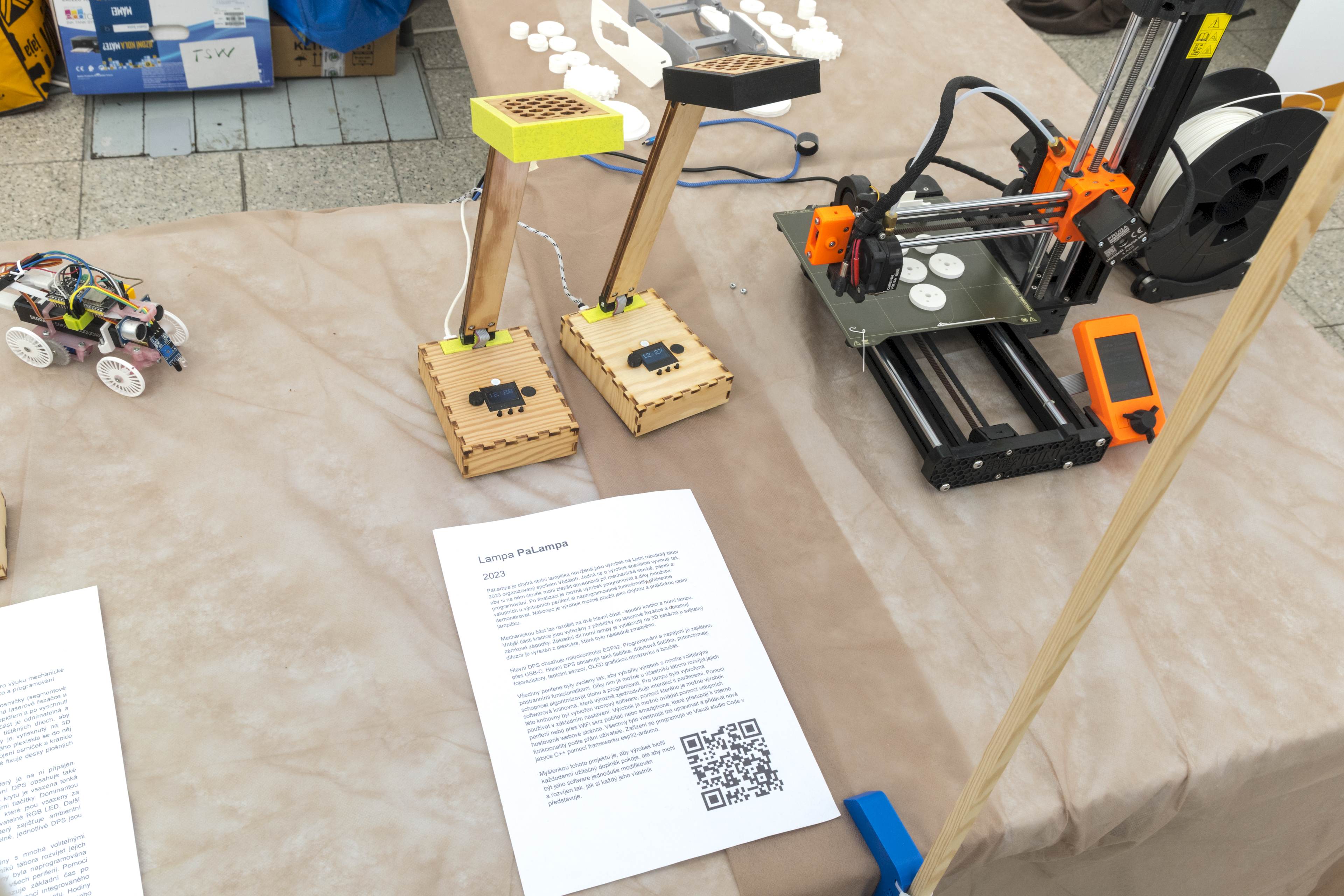
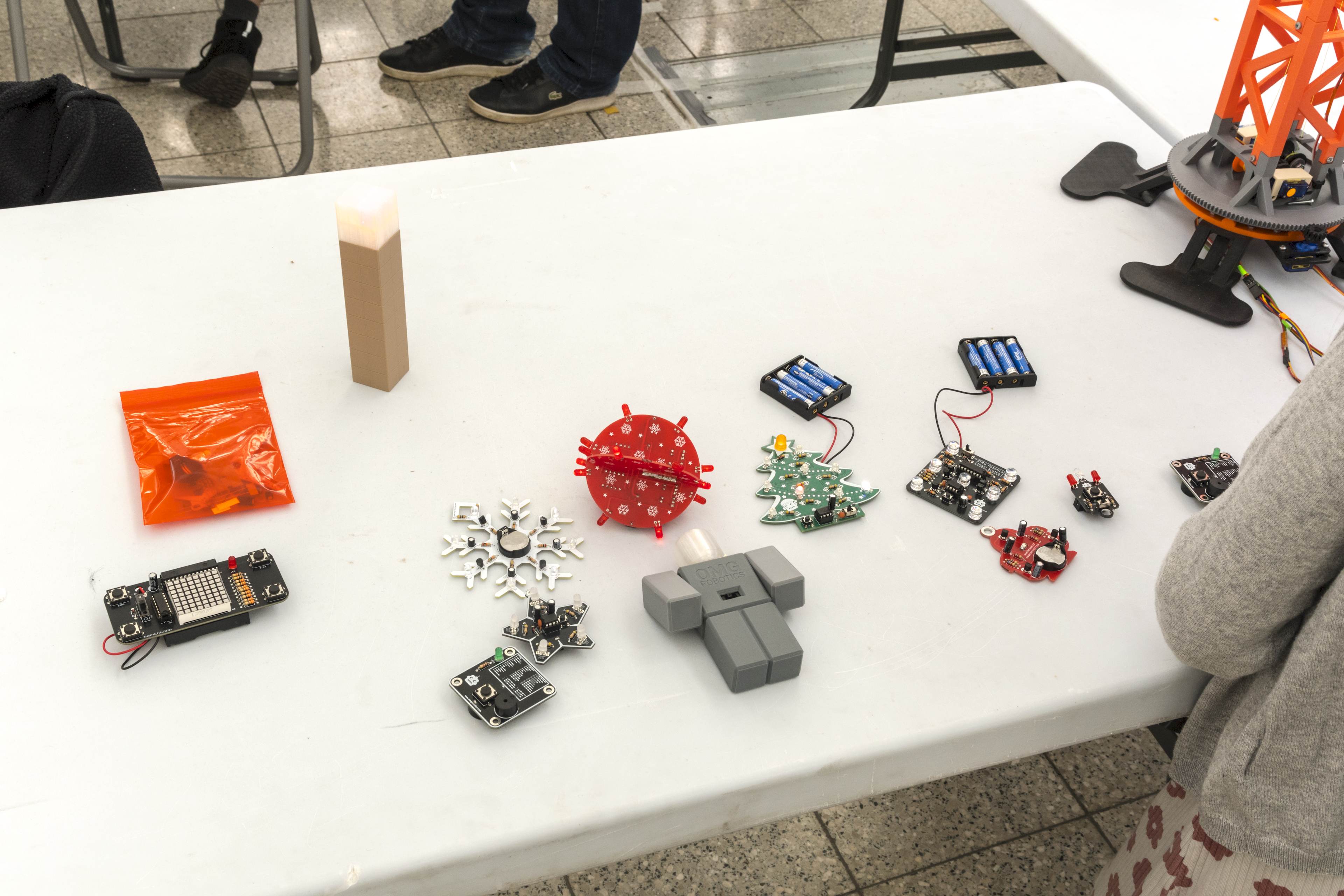
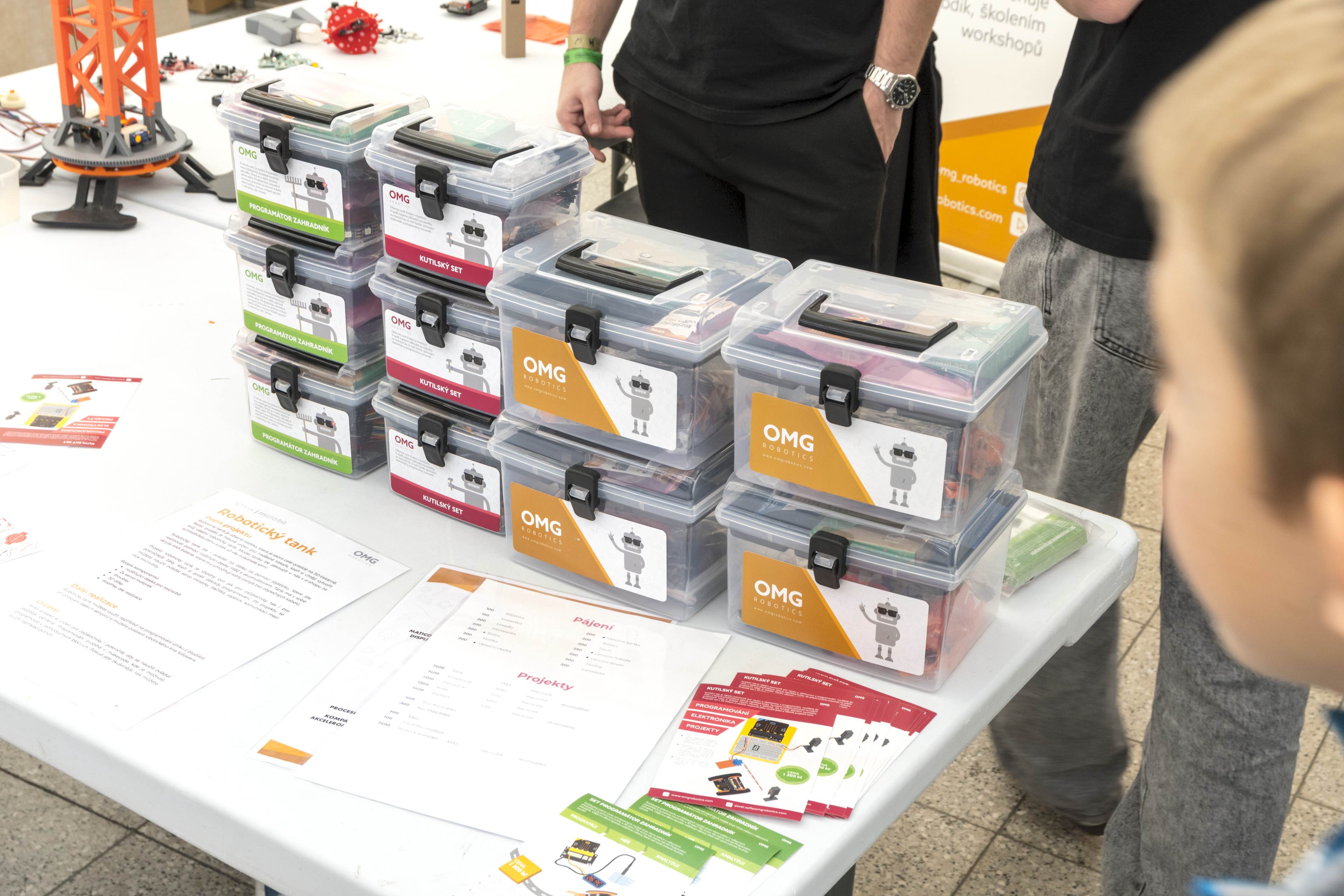
OMG Robotics is a student and hobby team that brought several interactive robotics projects to Maker Faire Brno 2025.
Visitors could program their own code and run it directly on the robots, try out a programmable remote-control car, or meet again popular attractions from previous years—for example, a crane for fishing out 3D-printed toys.



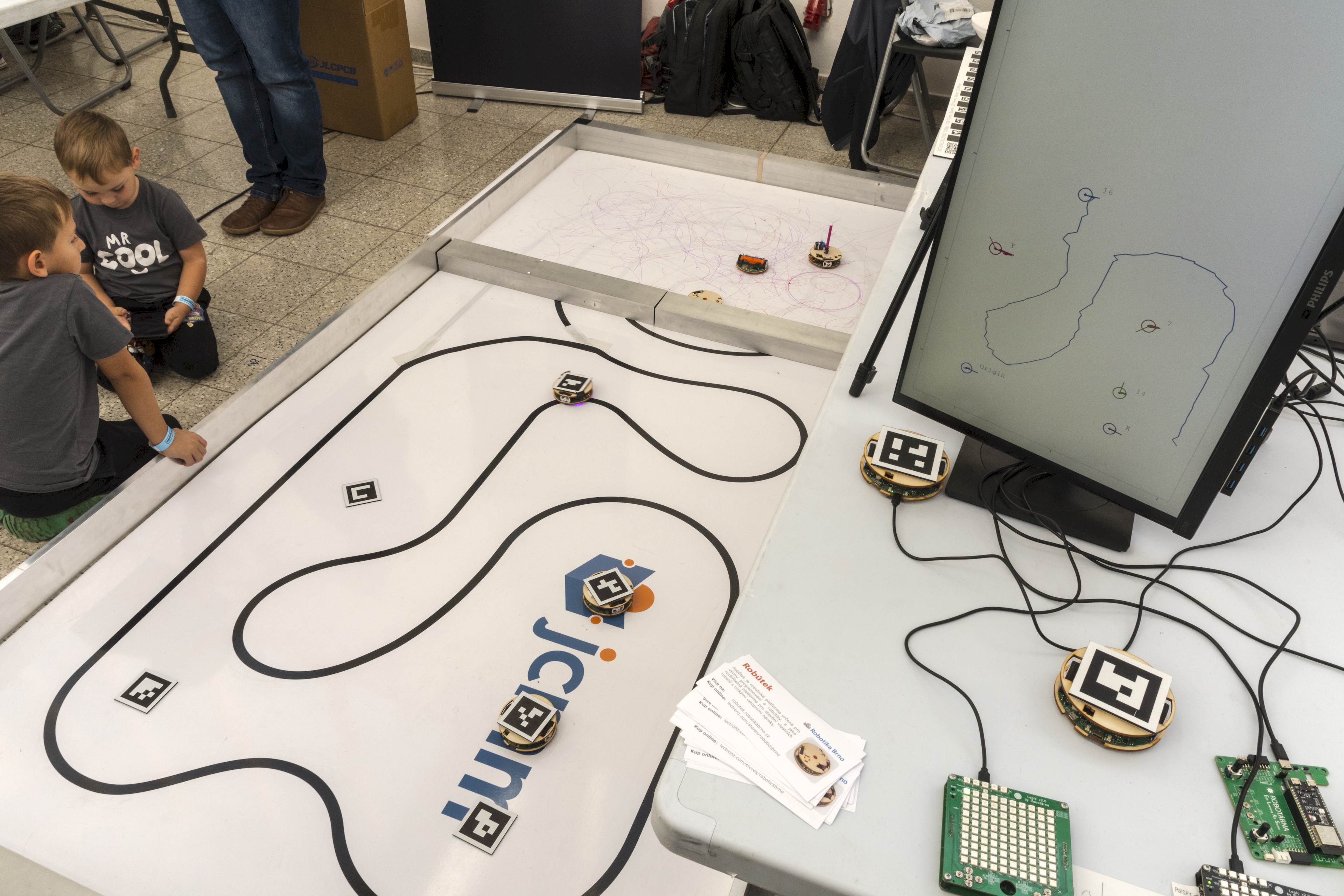
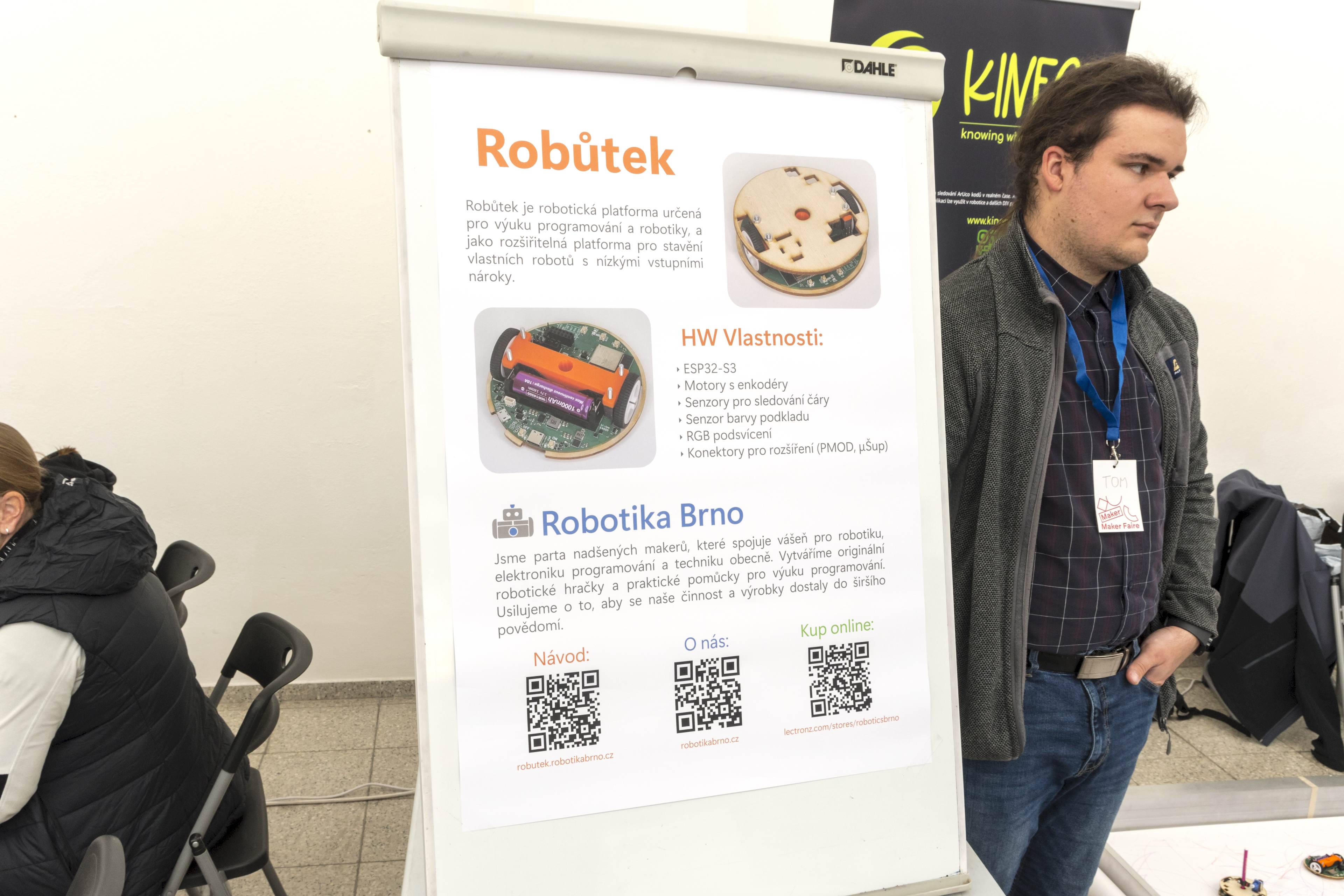
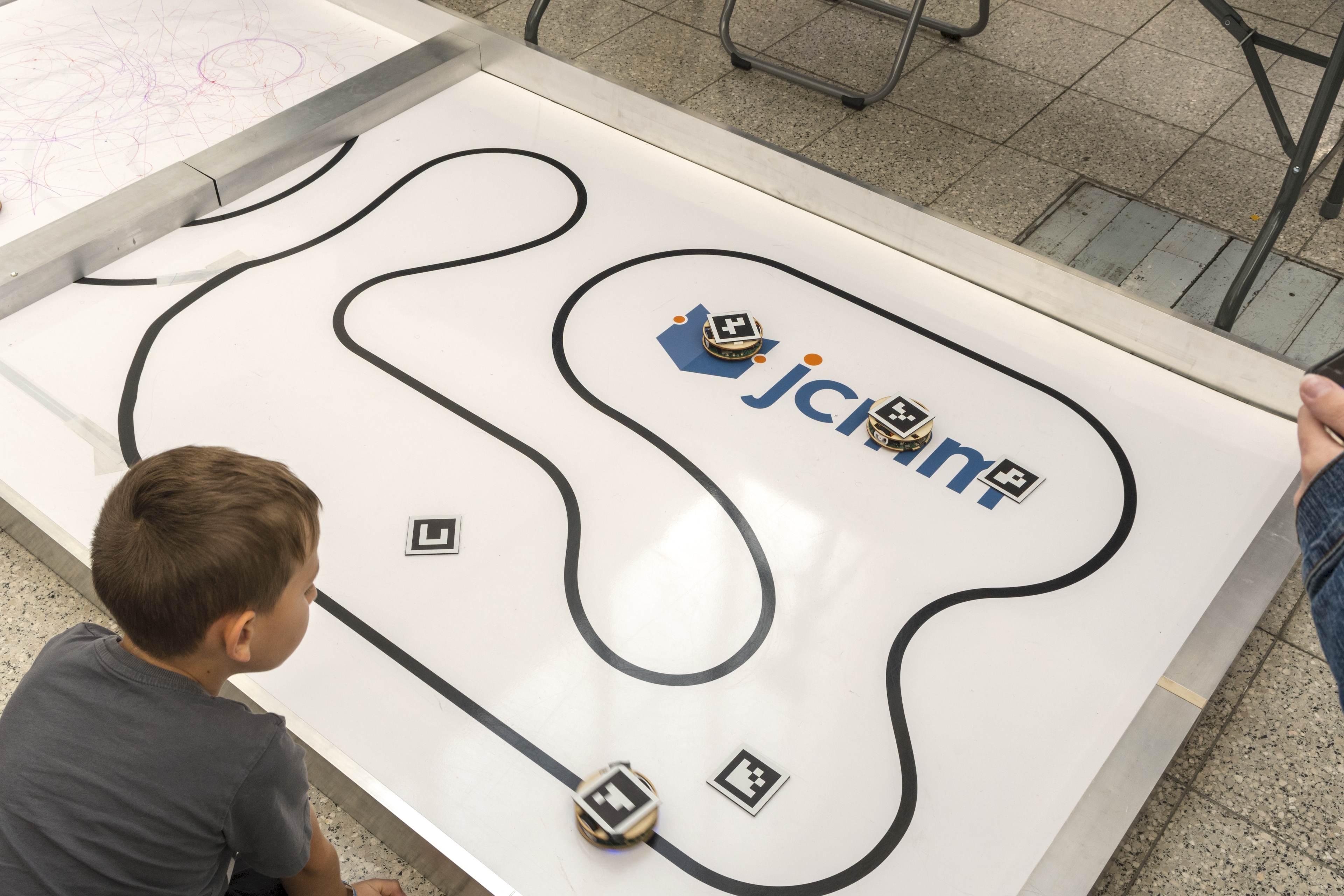
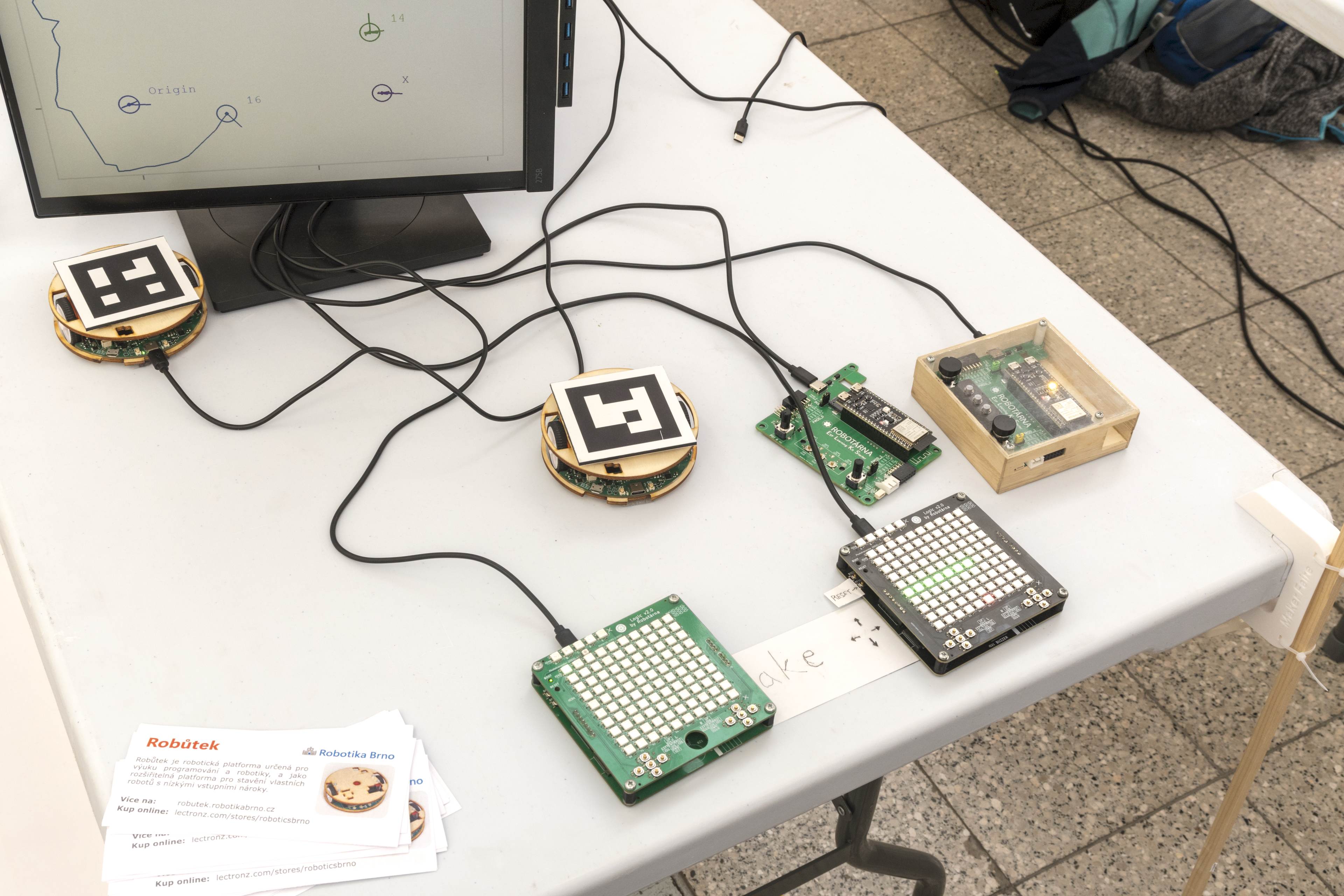
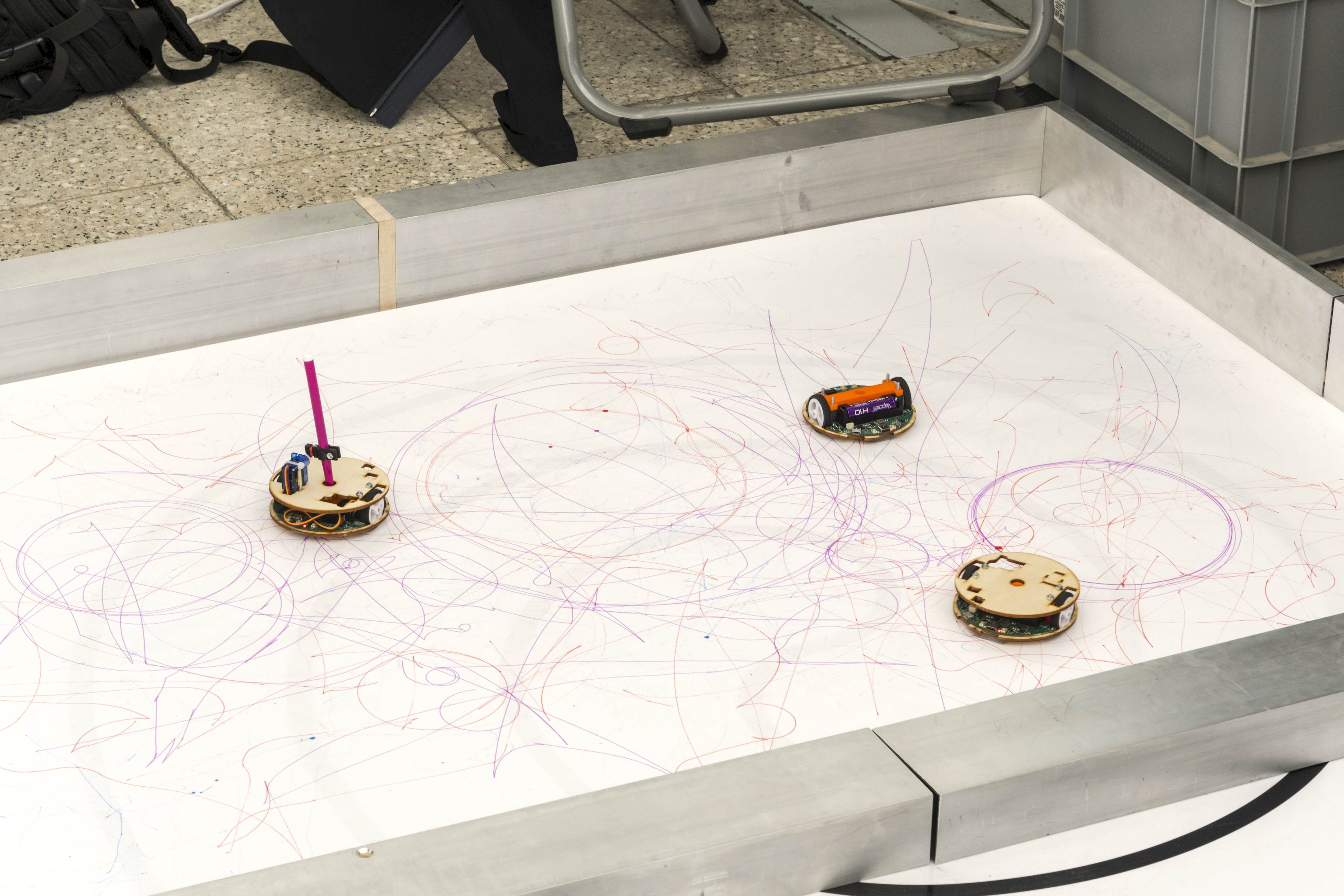
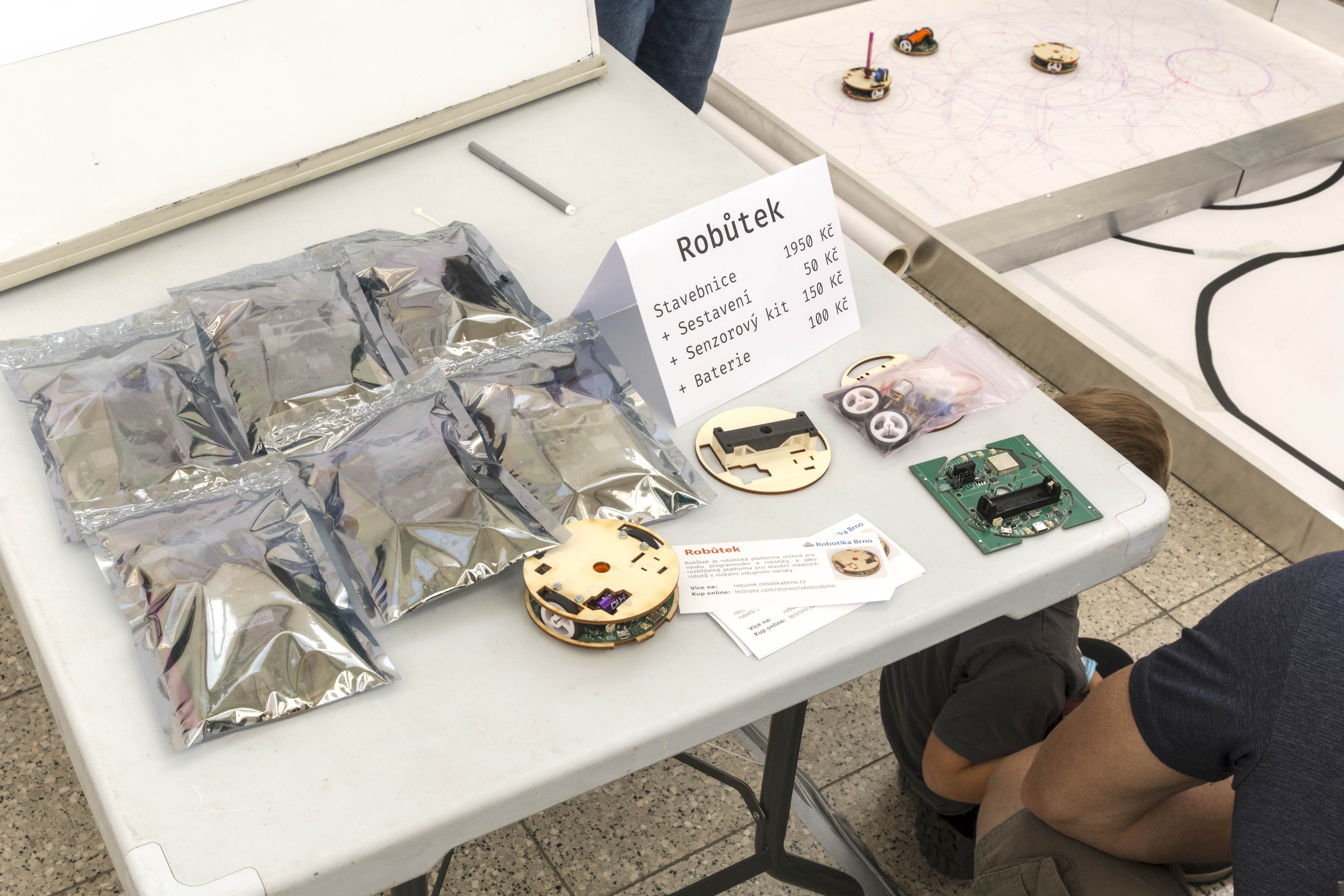
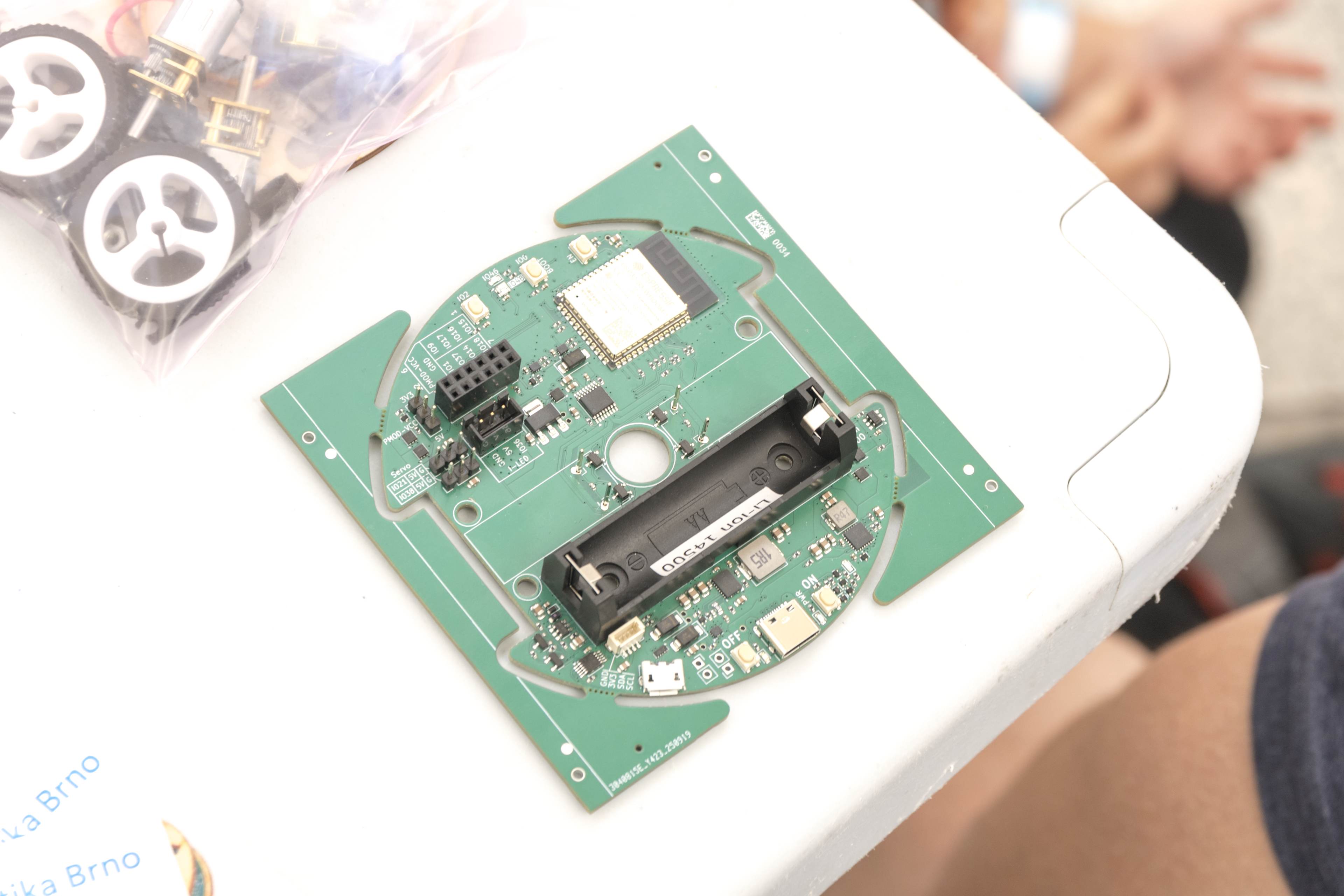
Robůtek is an open robotics platform focused on teaching programming and robotics, as well as for the rapid construction of custom robots with low entry costs. The stand featured a circular chassis with a mainboard and accessories, designed for demonstration runs on a marked track and for simple experiments.
Hardware-wise, it is based on the ESP32-S3, uses motors with encoders, and includes sensors for line following, surface color detection, RGB underlighting, and expansion connectors. The design is battery-powered and built with expandability in mind—from add-on modules to custom experiments.
The system also enables real-time tracking of the robots’ movement—each ‘Robůtek’ has an identification tag (AprilTag) on its top side, which allows a camera and software to precisely determine its position and trajectory on a screen.


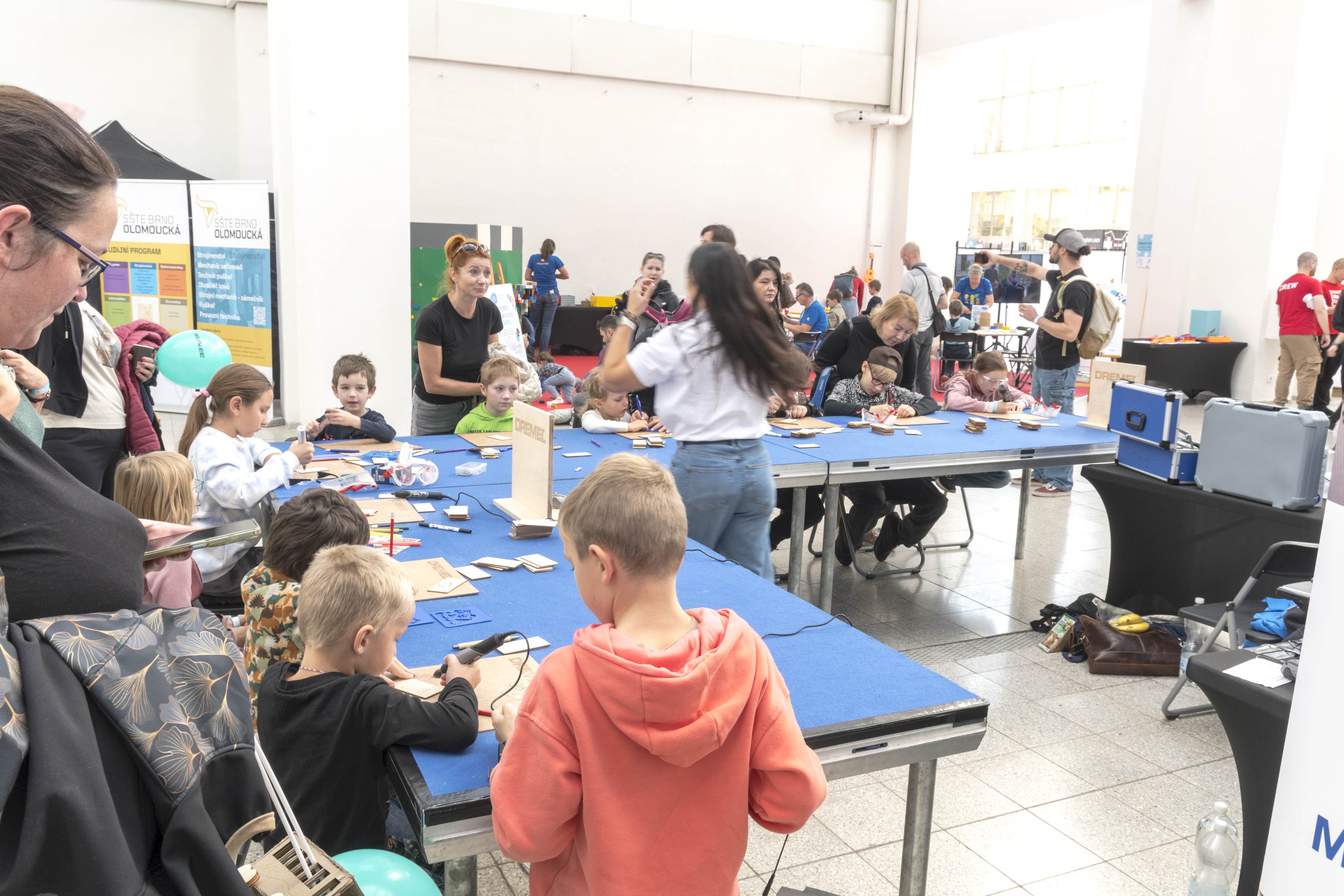
Dremel is a manufacturer of rotary tools for cutting, grinding, engraving, drilling, and polishing. It targets home workshops, model makers, repairers, designers, and schools, where control over detail and quick accessory changes are useful. At the stand, you could try out micro-tools and accessories for precision work.

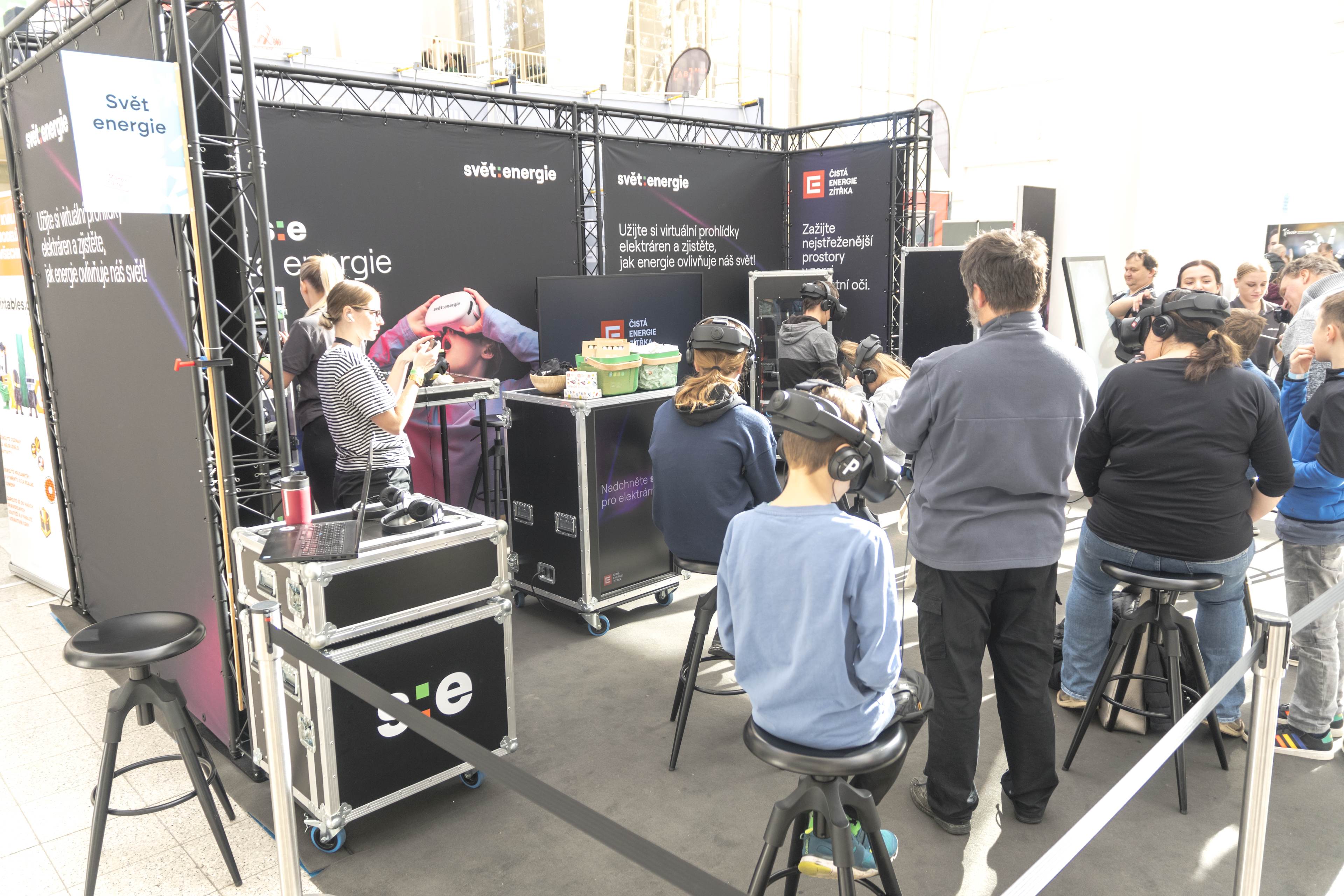
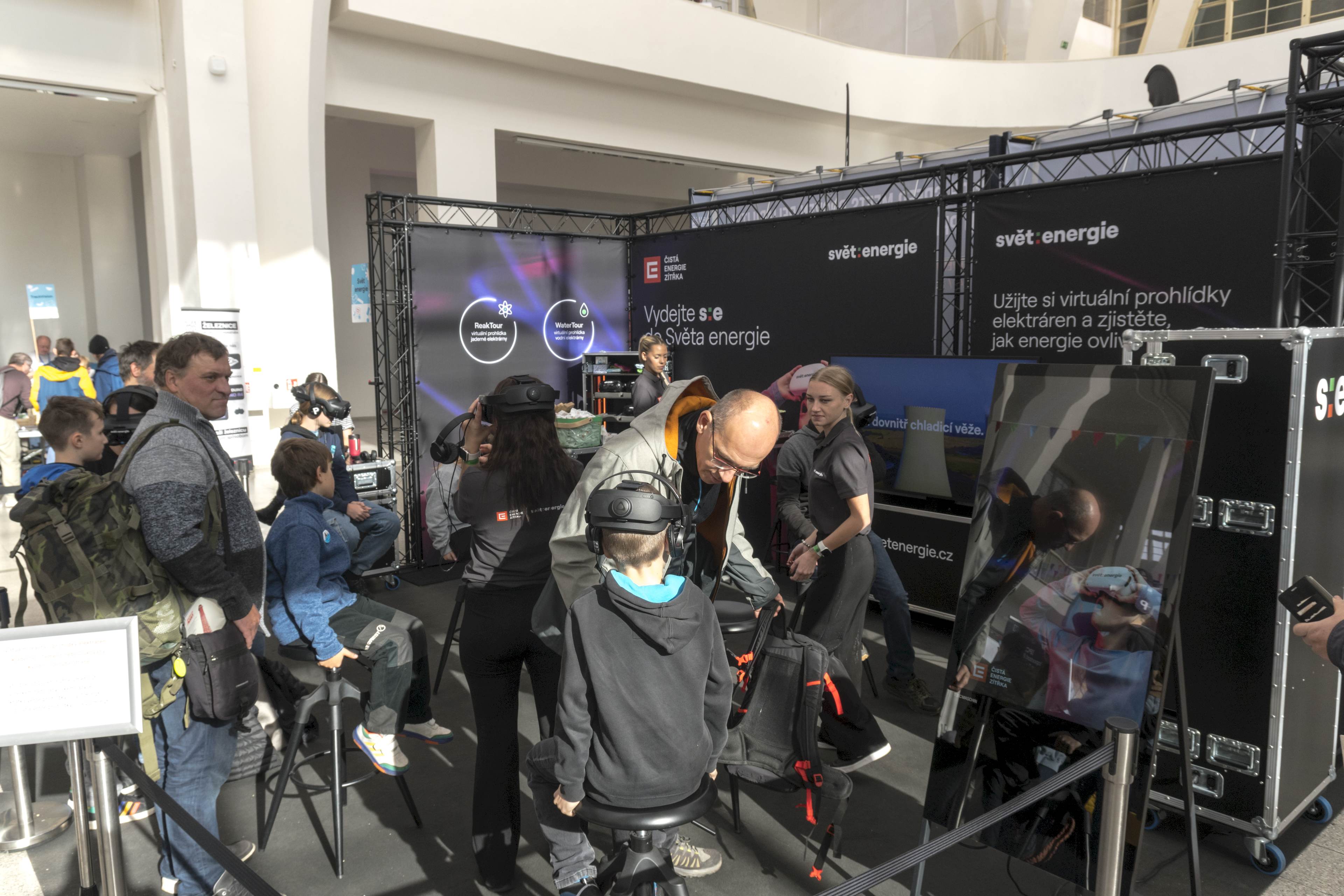
In the ReakTour installation by ČEZ Group, visitors could take a virtual tour of a nuclear power plant using VR headsets and peek into areas that are normally off-limits—such as the reactor hall and the control room.
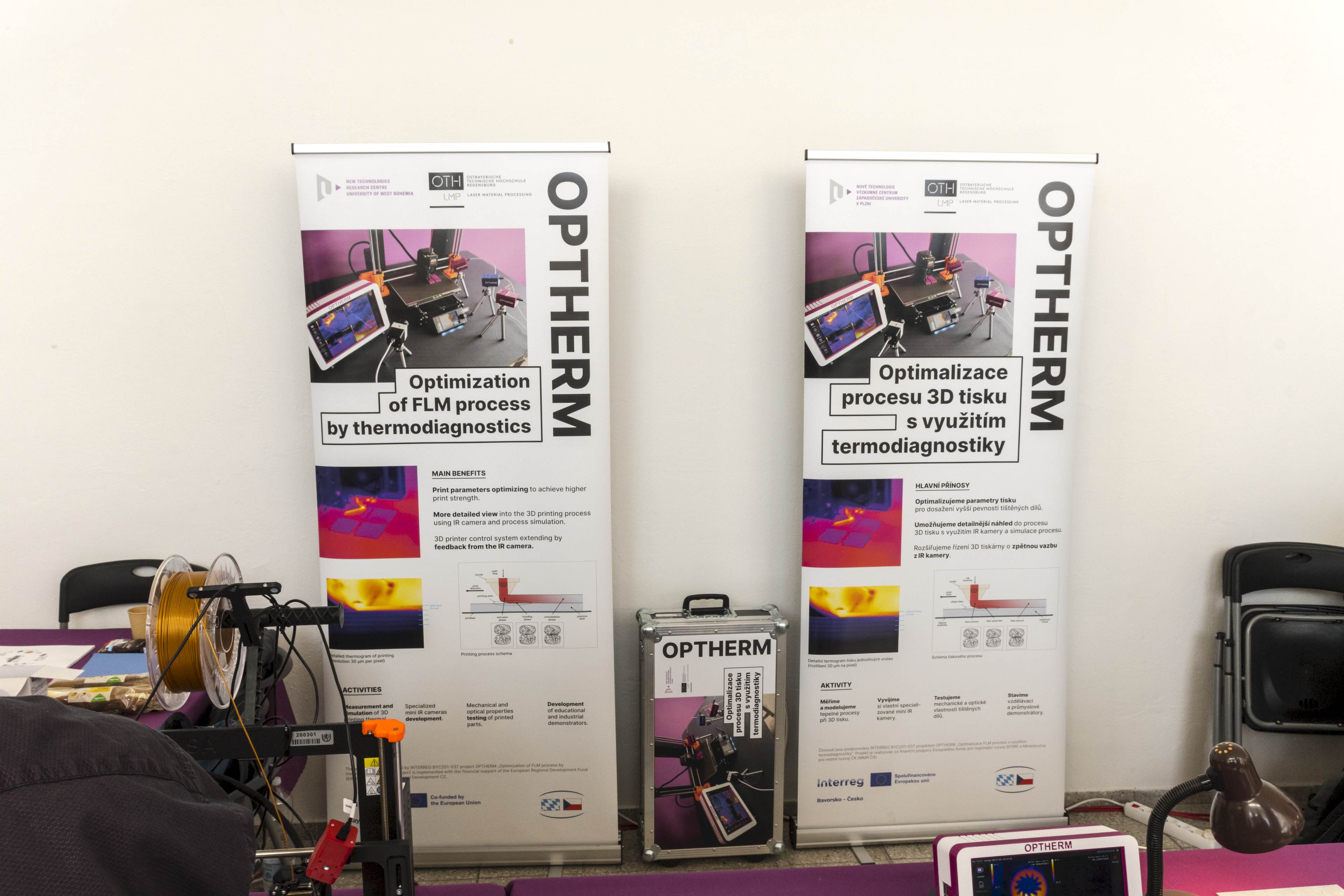
The OPTHERM stand featured a system of mini IR cameras designed for monitoring the FDM printing process. It’s not just individual cameras, but a complete solution with a special mini-computer to which multiple sensors can be connected simultaneously. The developed software allows for real-time display, analysis, and storage of thermal data from the print for quality control and parameter tuning.


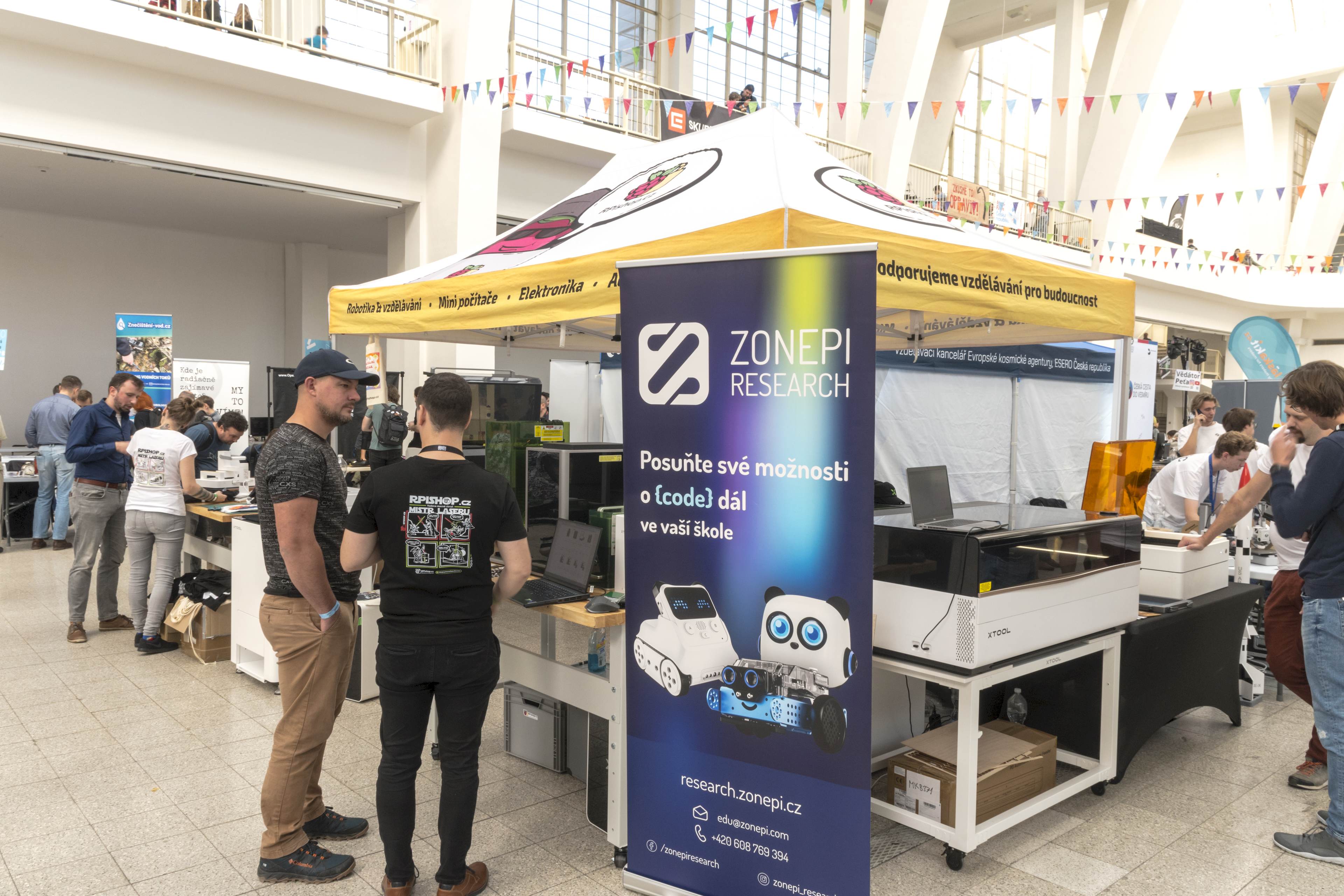
RPishop.cz, in collaboration with Zonepi Research, presented the exposition Technology at Your Fingertips: From Laser Engraving to Smart Robotics. The stand featured the latest laser systems from the xTool brand—from desktop engravers to the Metal Fab laser welding system designed for working with metals. The presentation also included a digital apparel printer, where visitors could create their own custom print on a t-shirt or textile accessory.

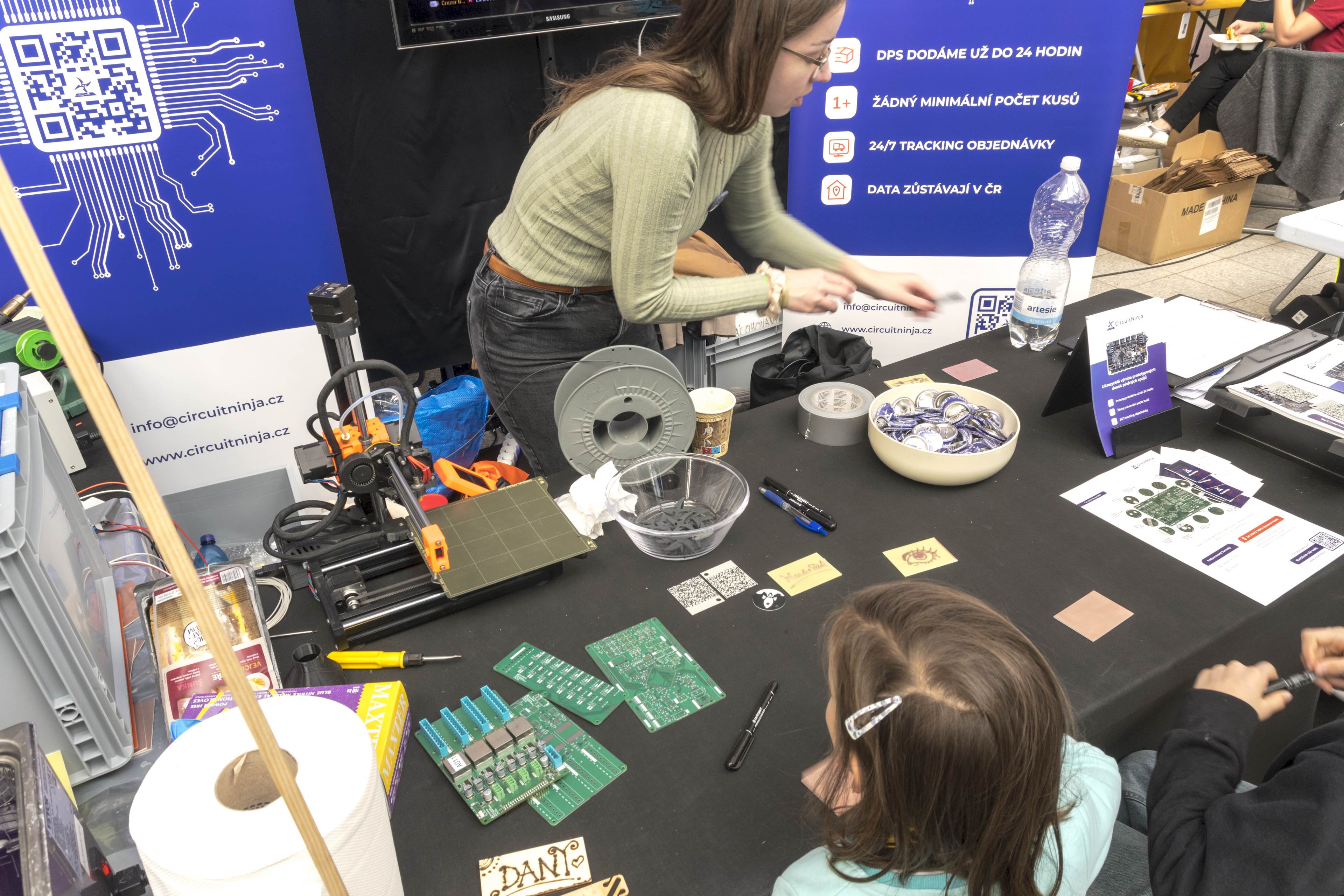
CircuitNinja presented its own system for rapid prototype PCB production, cutting the usual turnaround from weeks to a single day. The project aims to show that designing and manufacturing working electronics can be dramatically accelerated through automation and optimized workflows. Visitors could walk through the entire process—from board design to a finished prototype delivered within 24 hours.
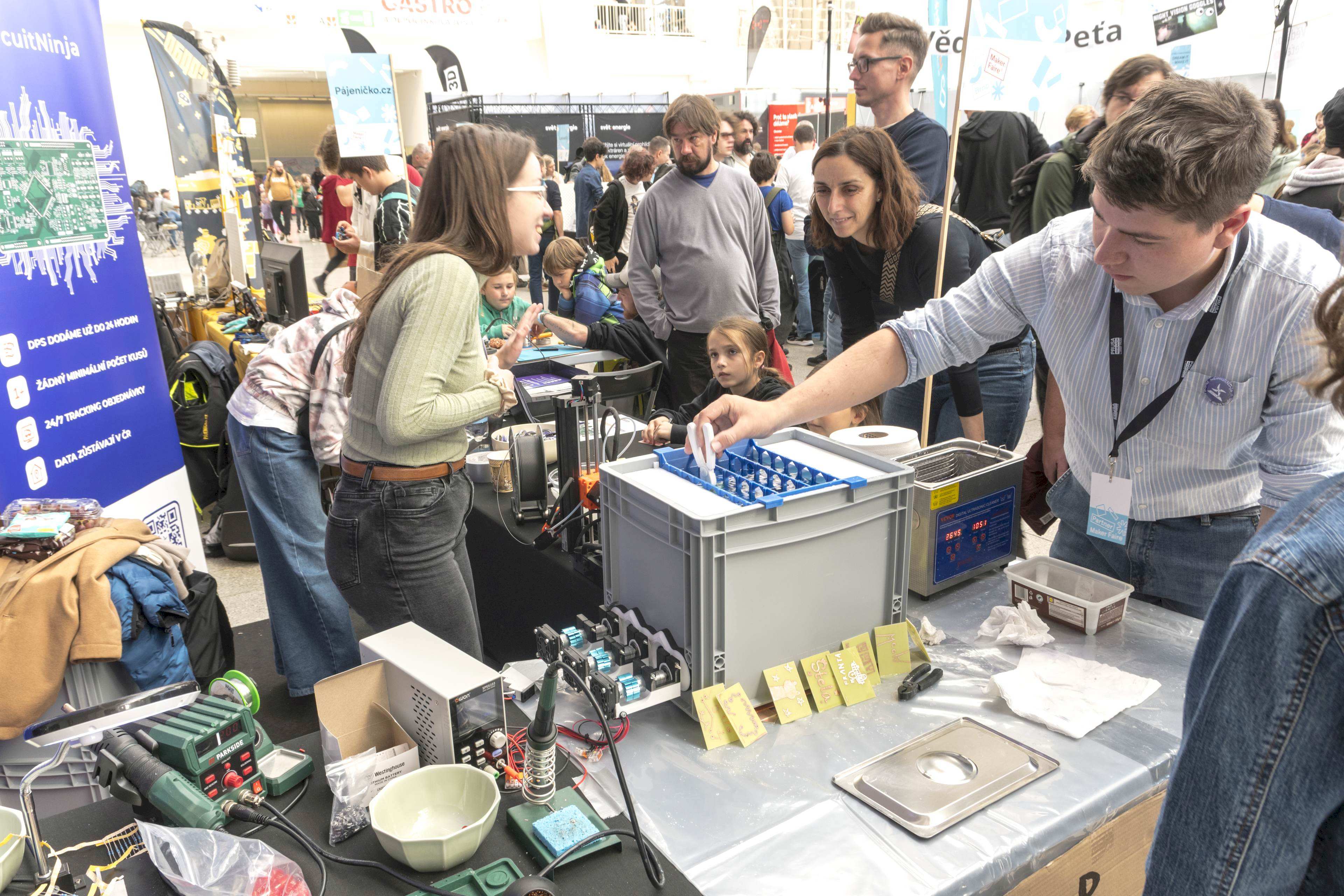
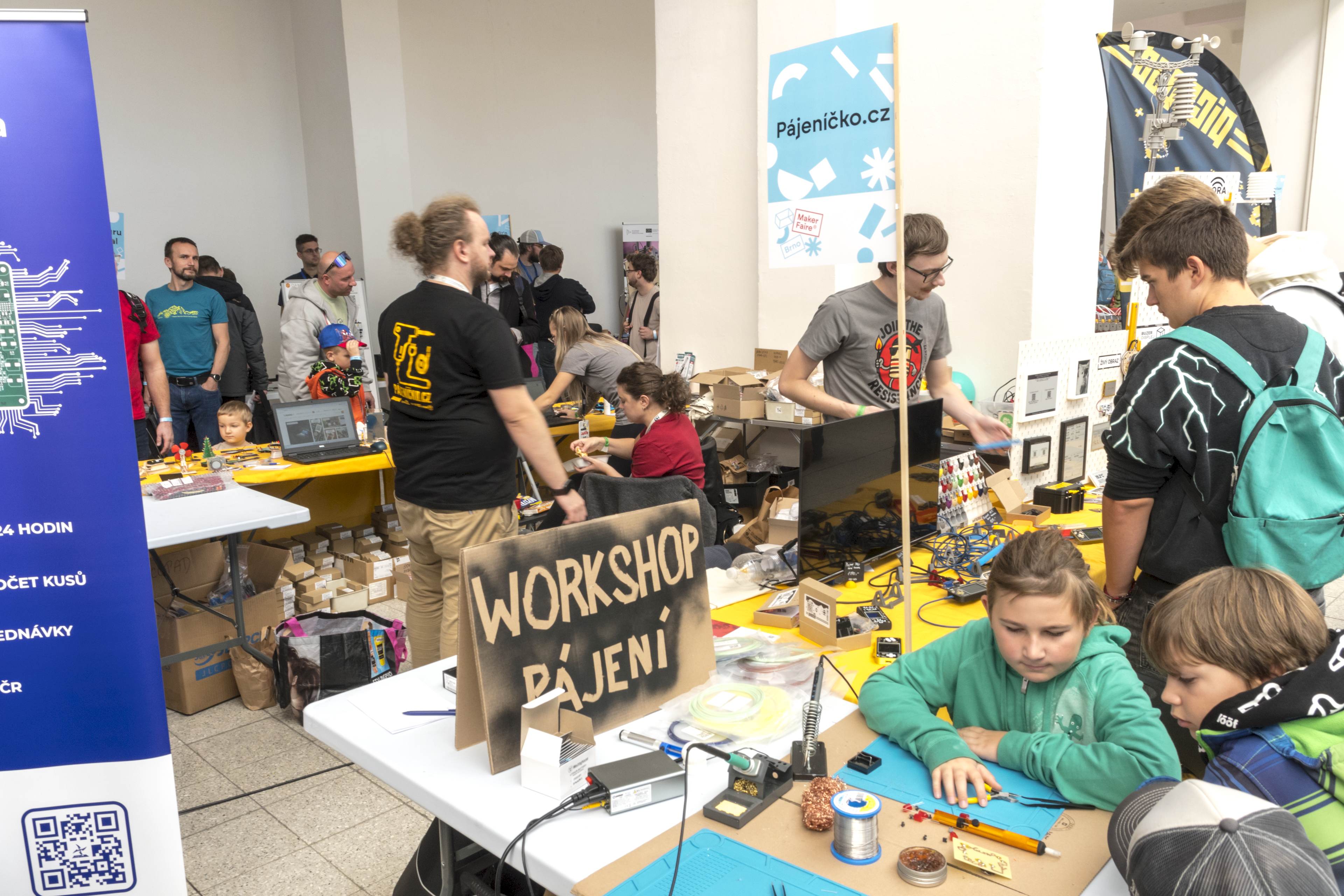
Pájeníčko.cz (soldering) is a community project focused on electronics and tinkering. At Maker Faire, they presented their own small electronics projects—from simple household circuits to playful interactive toys. You could try soldering small components and take home the finished product, making this exposition another of the festival’s practically oriented workshops.

⠀



