Maker Faire festivals are a beautiful showcase of what modern technology makes possible. The whole maker world feels like a big playground for both kids and adults. It’s incredible to think about what anyone can create at home today, on a small budget, using programmable controllers and online resources. And there’s no need to be especially handy anymore—you can leave most of the work to 3D printers or home CNC machines.
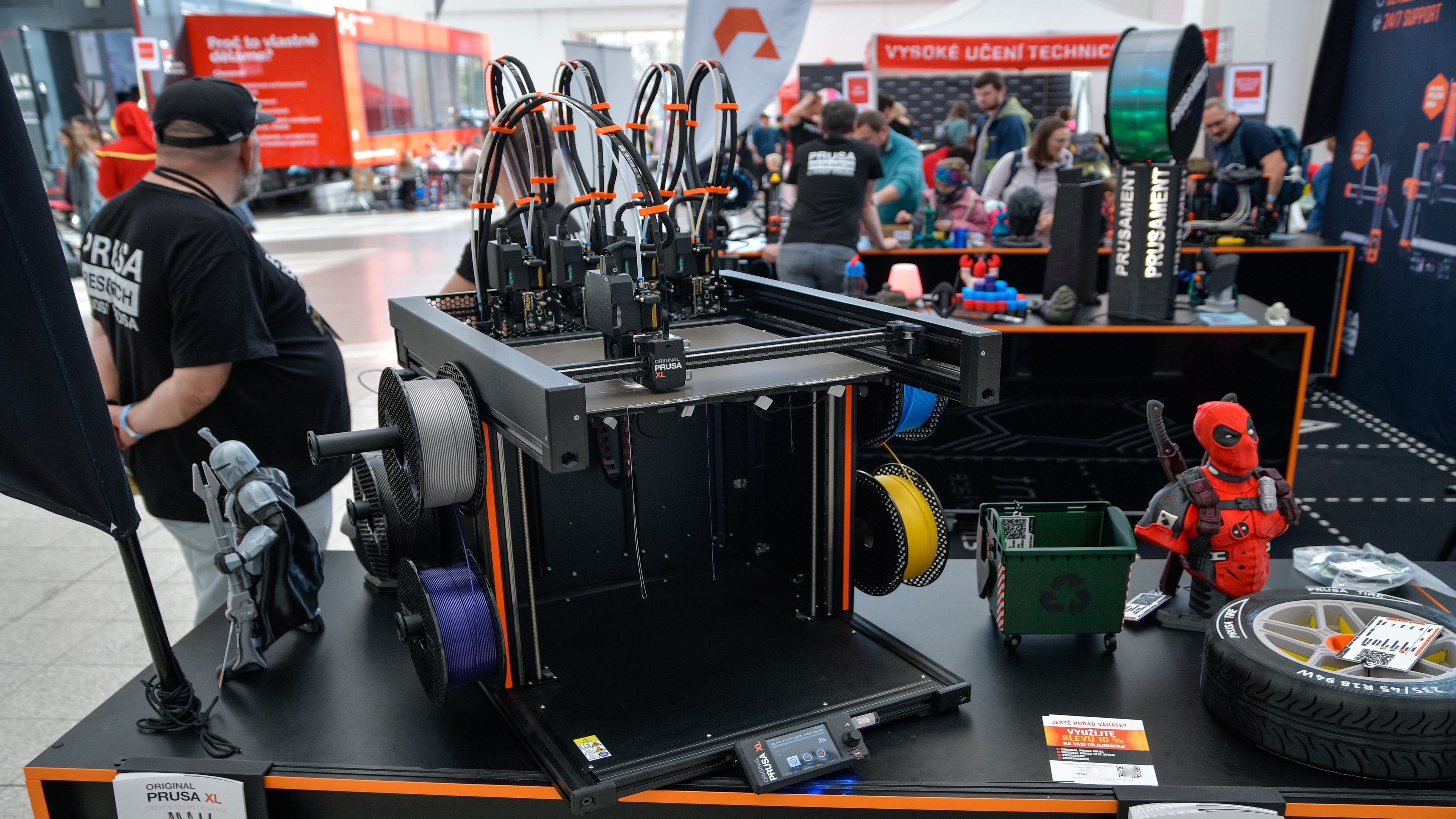
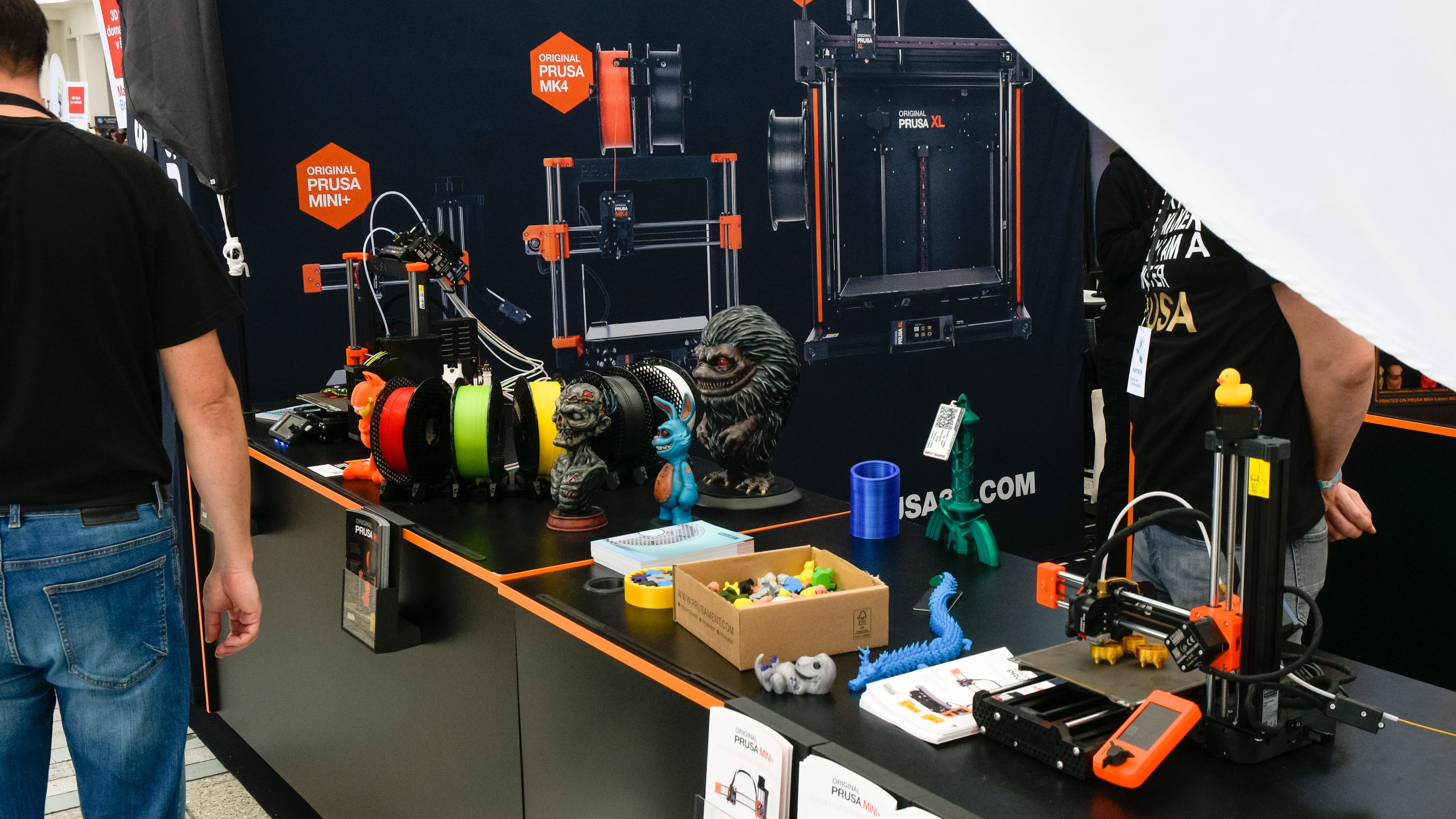
It is probably not surprising that the largest space dedicated to 3D printing was occupied by products from the Průša factory. The stand was dominated by the Prusa XL printers, introduced last year, which offer a large printing area of 36×36×36 centimetres and up to five print heads for multi-material printing. There is a separate extruder for each filament, so changing materials is very fast and the nozzle does not need to be cleaned when changing them. This saves a lot of time and material compared to cheaper single-head printers that pull the print string out of the head and don’t have to spit aside filament contaminated with previous material.
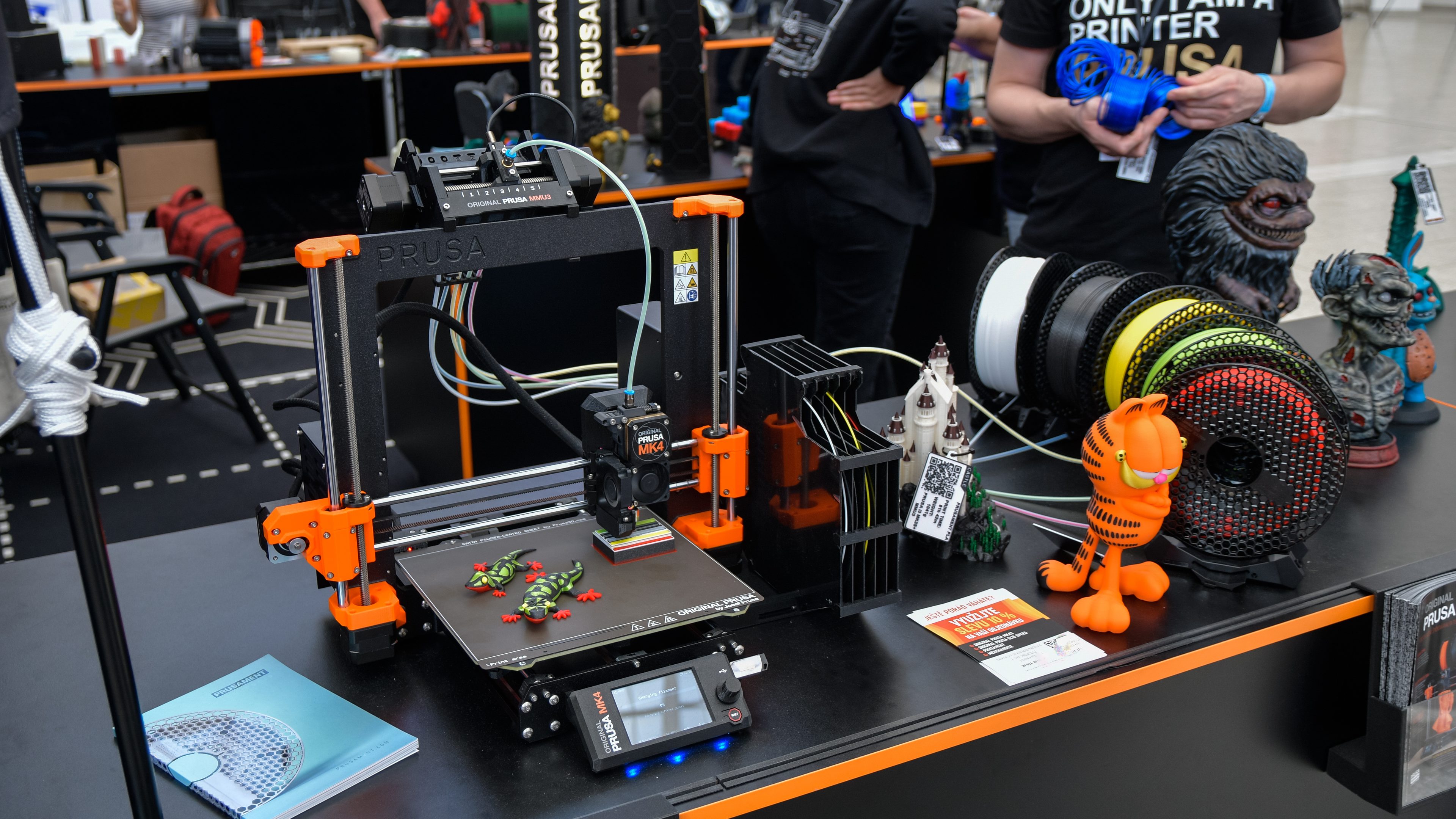
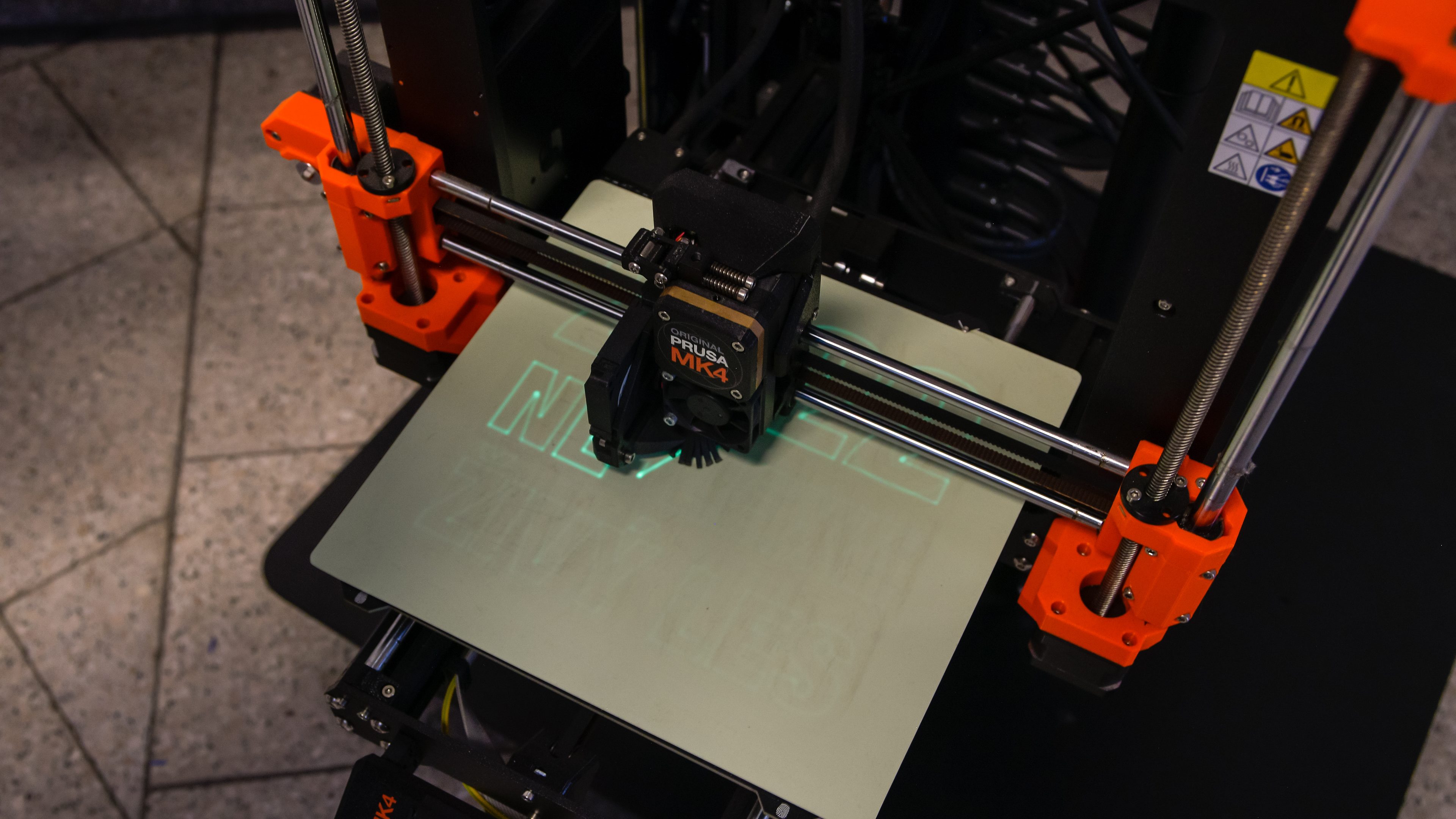
The MK4 is the successor to the most successful line of printers. It was also seen on the stand with the MMU3 upgrade for multi-material printing.
And the ticket to the Prusa ecosystem in the form of the Prusa Mini+ cannot be missing either


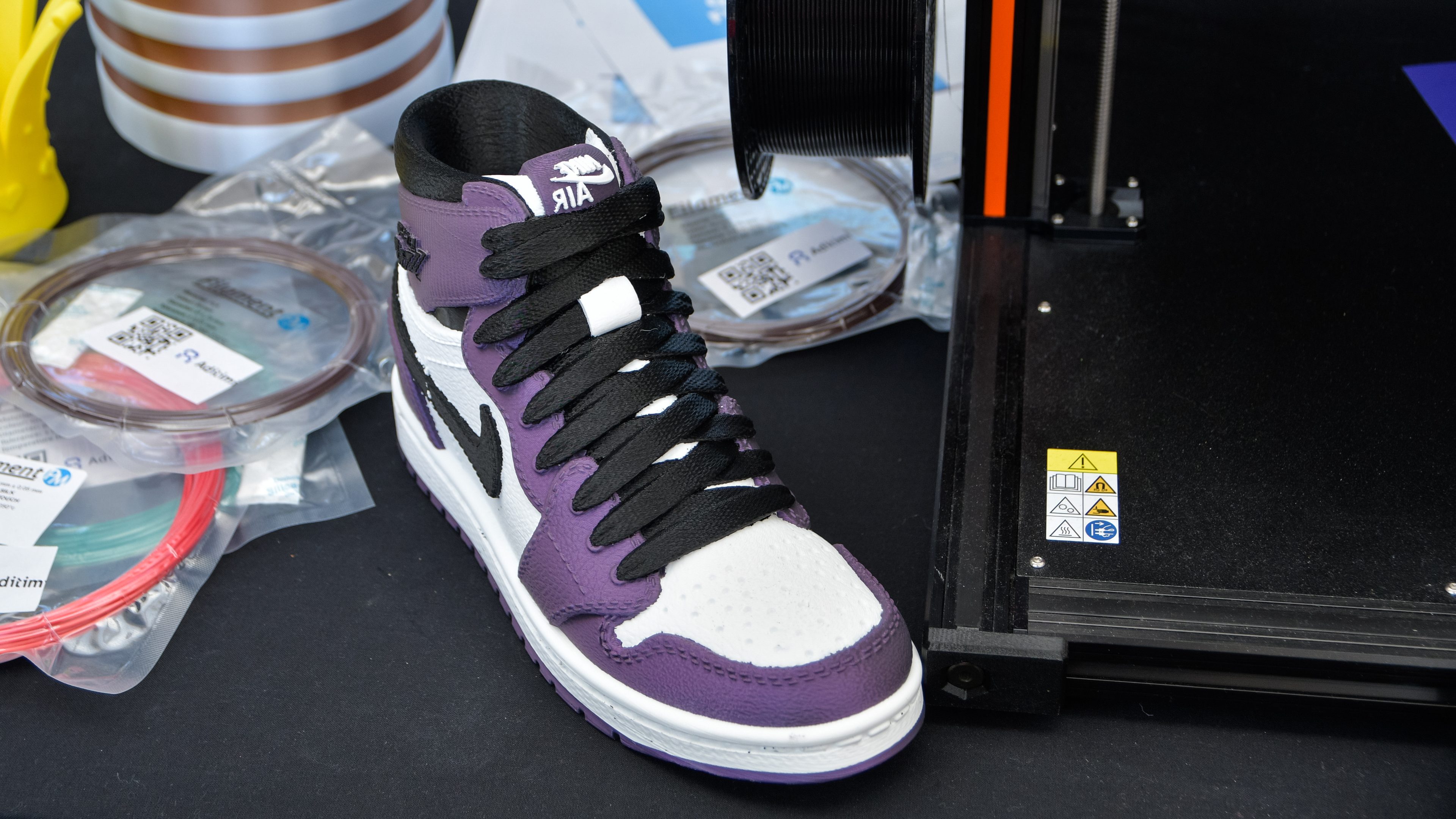
The plastic shoe, whose model probably has its origin in an industrial 3D scanner and is printed by multi-material printing, looked alive. You can see the threads and burrs; if you stick your nose right up to it, you’ll notice the different layers of printing.

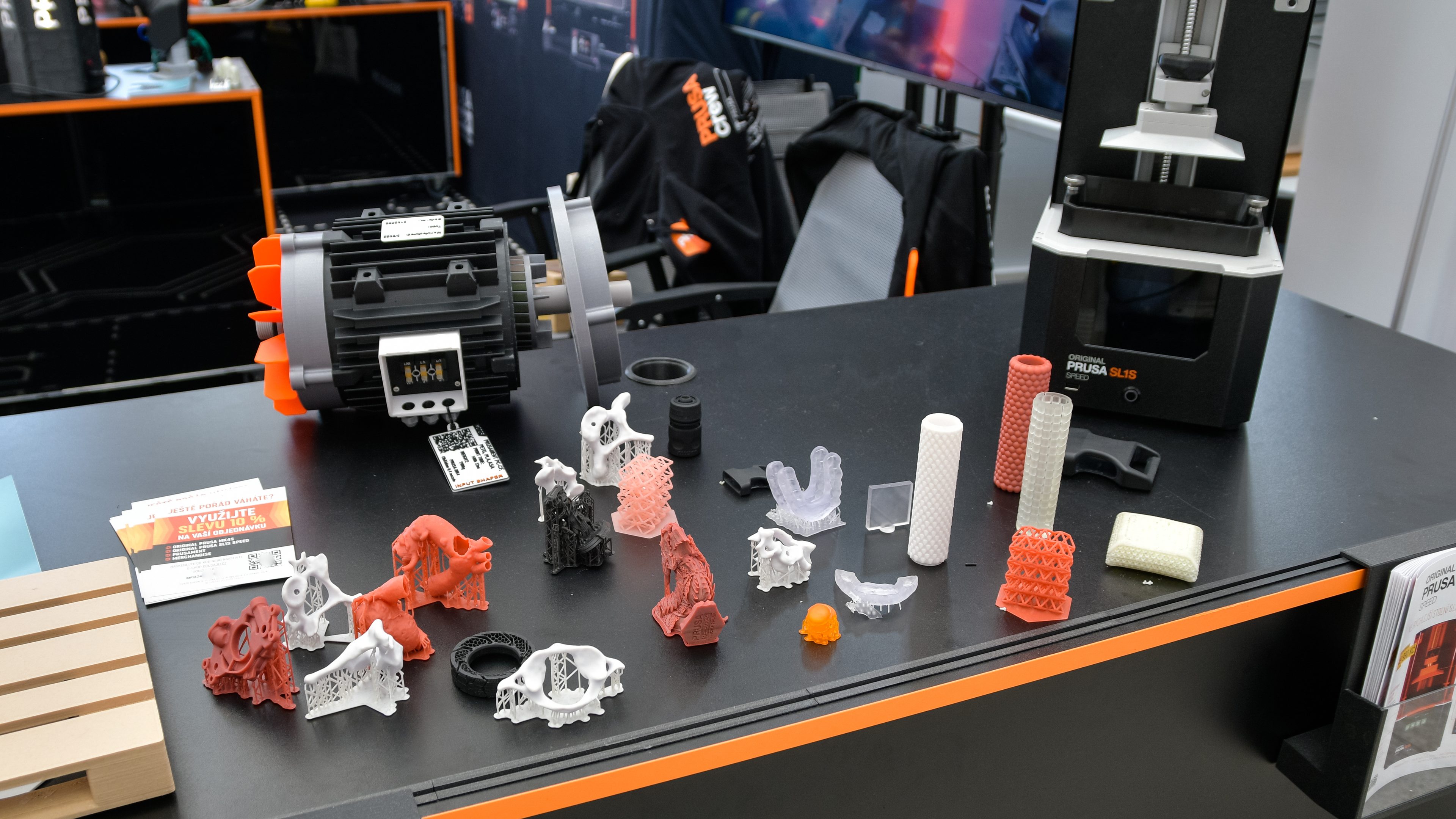
Another recently introduced product is the SLA printers.

And there was also an art installation…
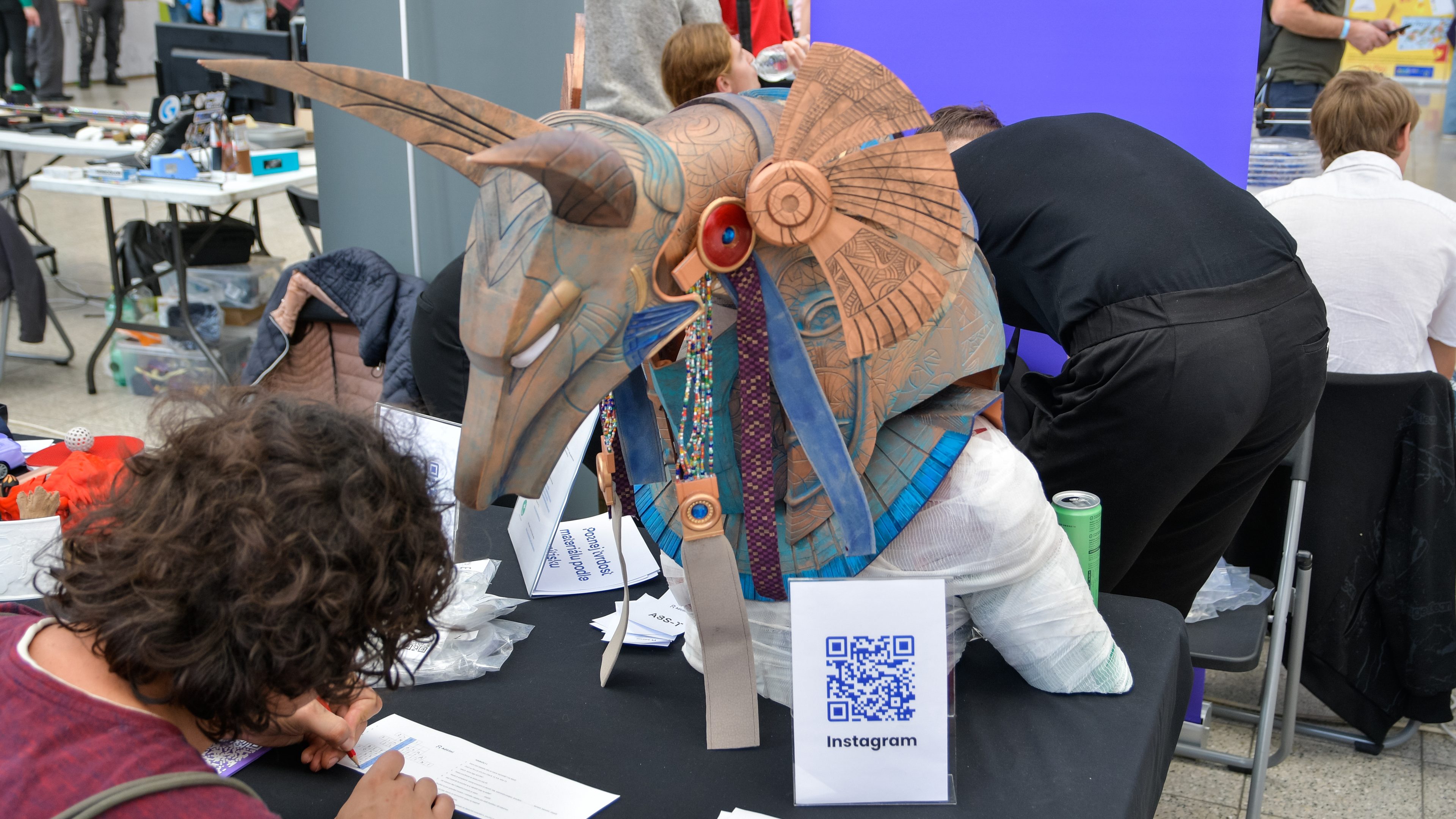
If you watch some 3D printing videos here and there, you may have been fed some shorts from Aditimi on YouTube, who do printing courses, training and even run a 3D printing eshop with printers, accessories and supplies.
Build an open-source Voron
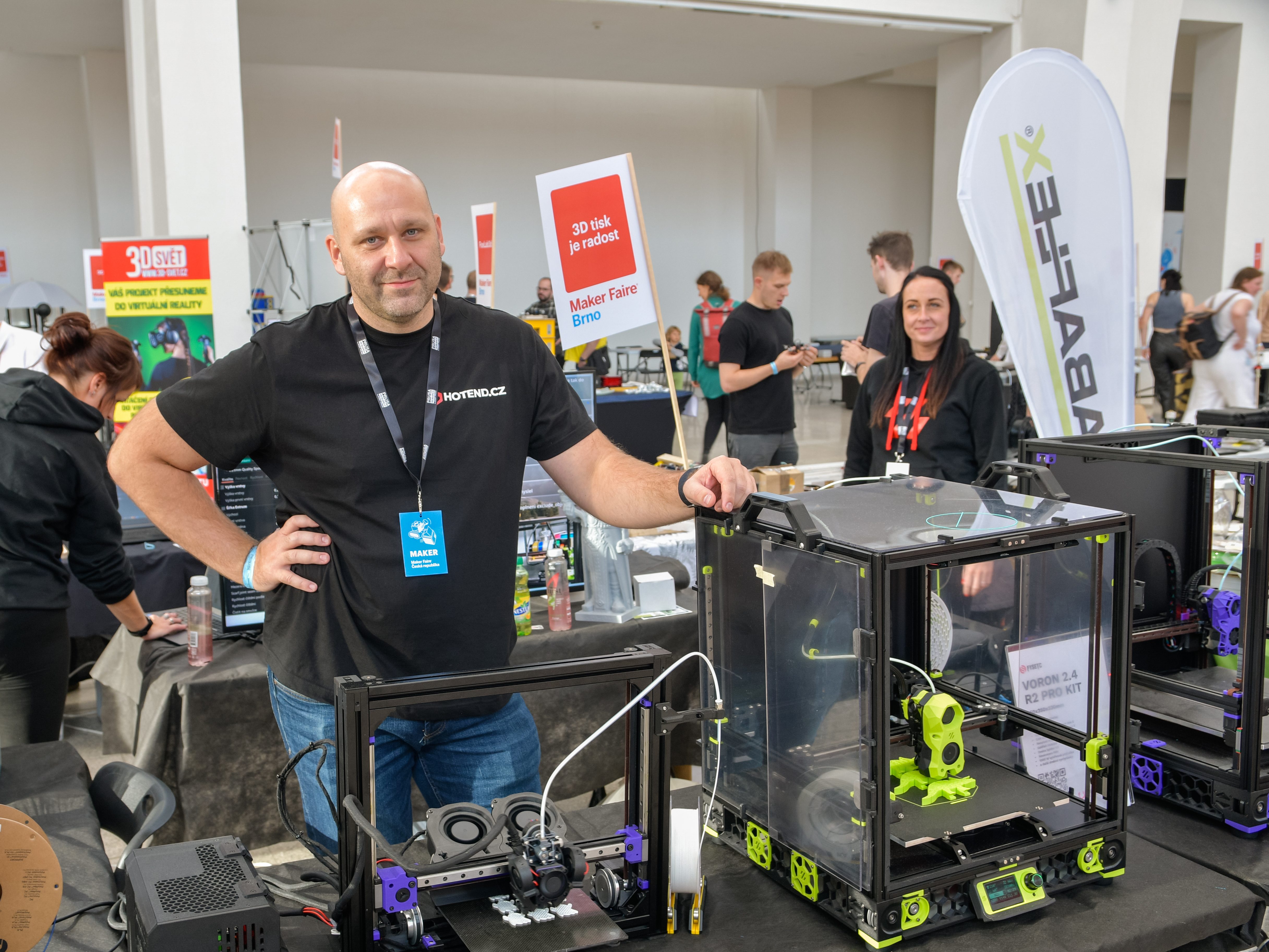
The results of the work of the community around the open source Voron 3D printers were shown at the booth of Pavel Tajduš, who once fell in love with 3D printing and now plans to drag others into it. He focuses on building and modifying 3D printers for the more demanding users and 3D printing on his YouTube streams, manages a number of local discussion groups and his discord channel, organizes printing courses, has his own e-shop with 3D printer kits and parts for Vorons and other brands, consumables, tools and merch for Vorons.


At the booth, there was also the ultra-fast LH Stinger, which Pavel put together a few months ago on his streams.

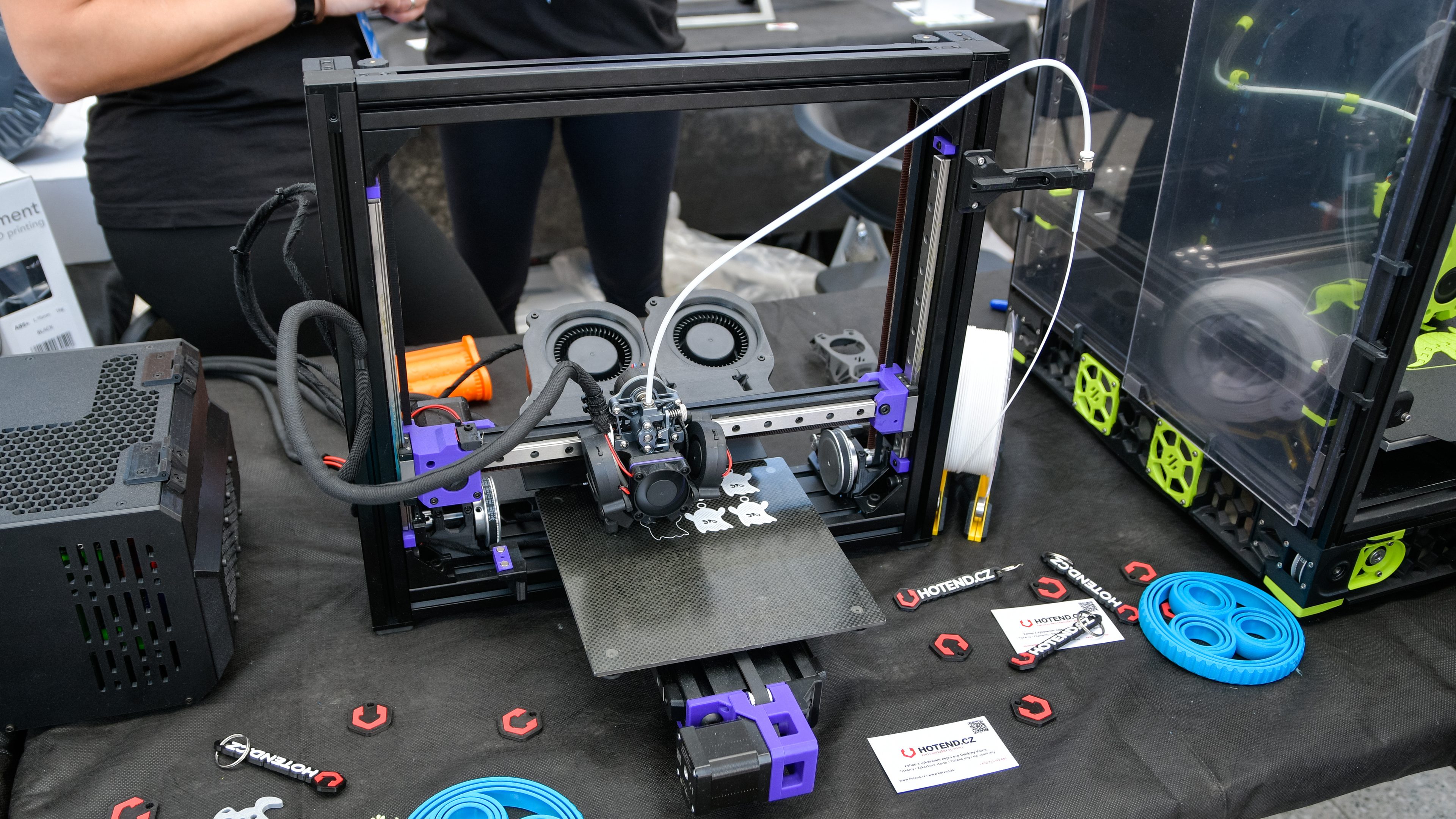
Its print head can fly over the pad at such speeds that it looks like a blur not only on camera, but also in person.
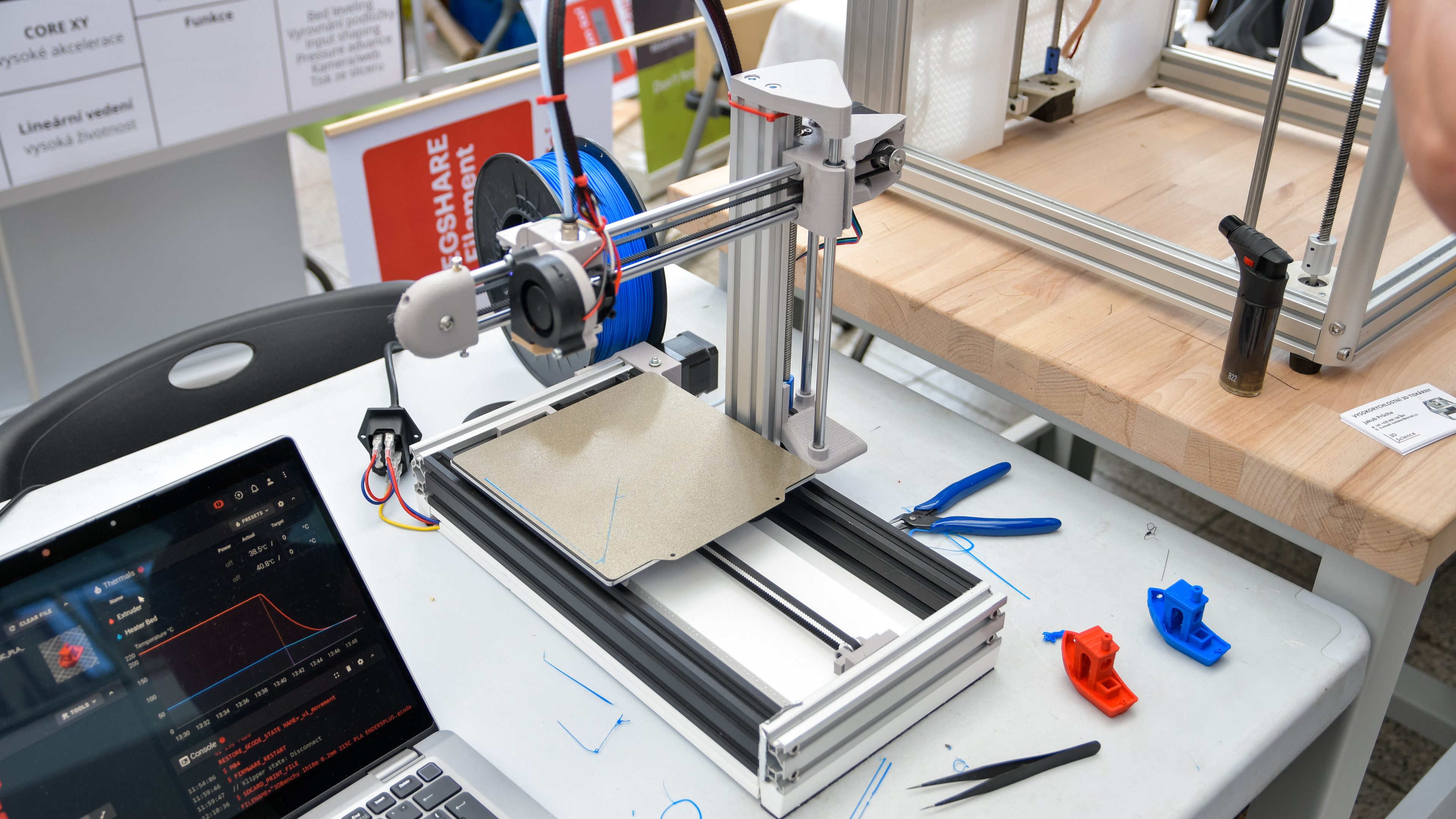
Another young and talented builder is Jakub Průcha, who exhibited robust high-speed printers of his own design.

One of the best-selling 3D printers in history is Creality’s Ender 3. Because of its low price, many 3D printers started out on it, and because of its lower quality, many printers learned what plays a role in 3D printing, what parts can be replaced with better ones, and why and how to improve the results of their prints. You can get old Ender 3 units in second hand shops for around 85 USD.
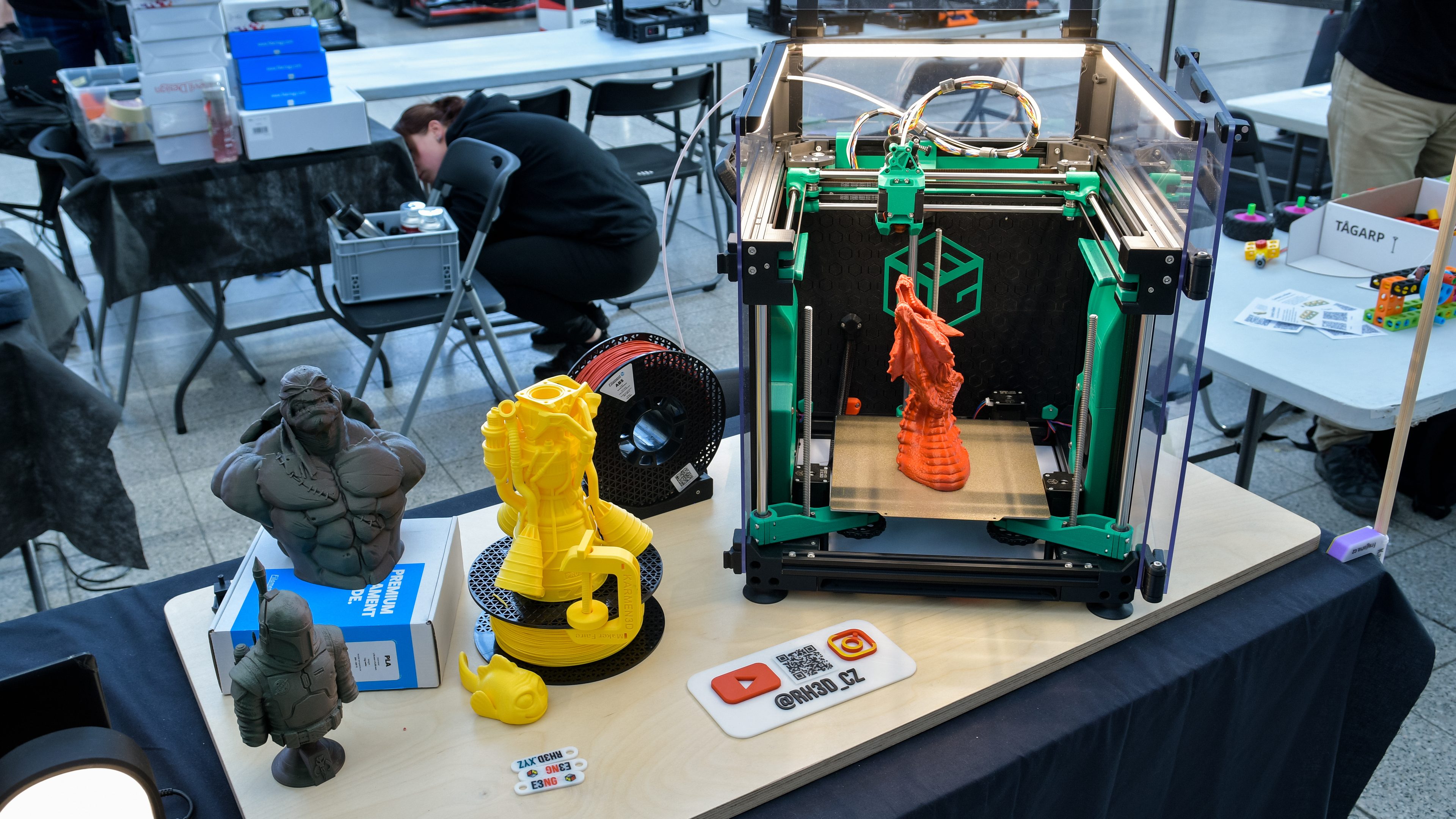
Ender 3 NG / E3NG is a project of converting ordinary Ender 3 (and Ender 3 Pro or v2) 3D printers to CoreXY printers with incomparably better features and capabilities comparable to new generations of printers. And many of the owners of these printers who were planning the conversion are clearly excited about it.
They try to maximize the use of original parts. And like most things from Maker Faire, the necessary materials, documentation and models are free to download. The project has its website at rh3D.xyz.

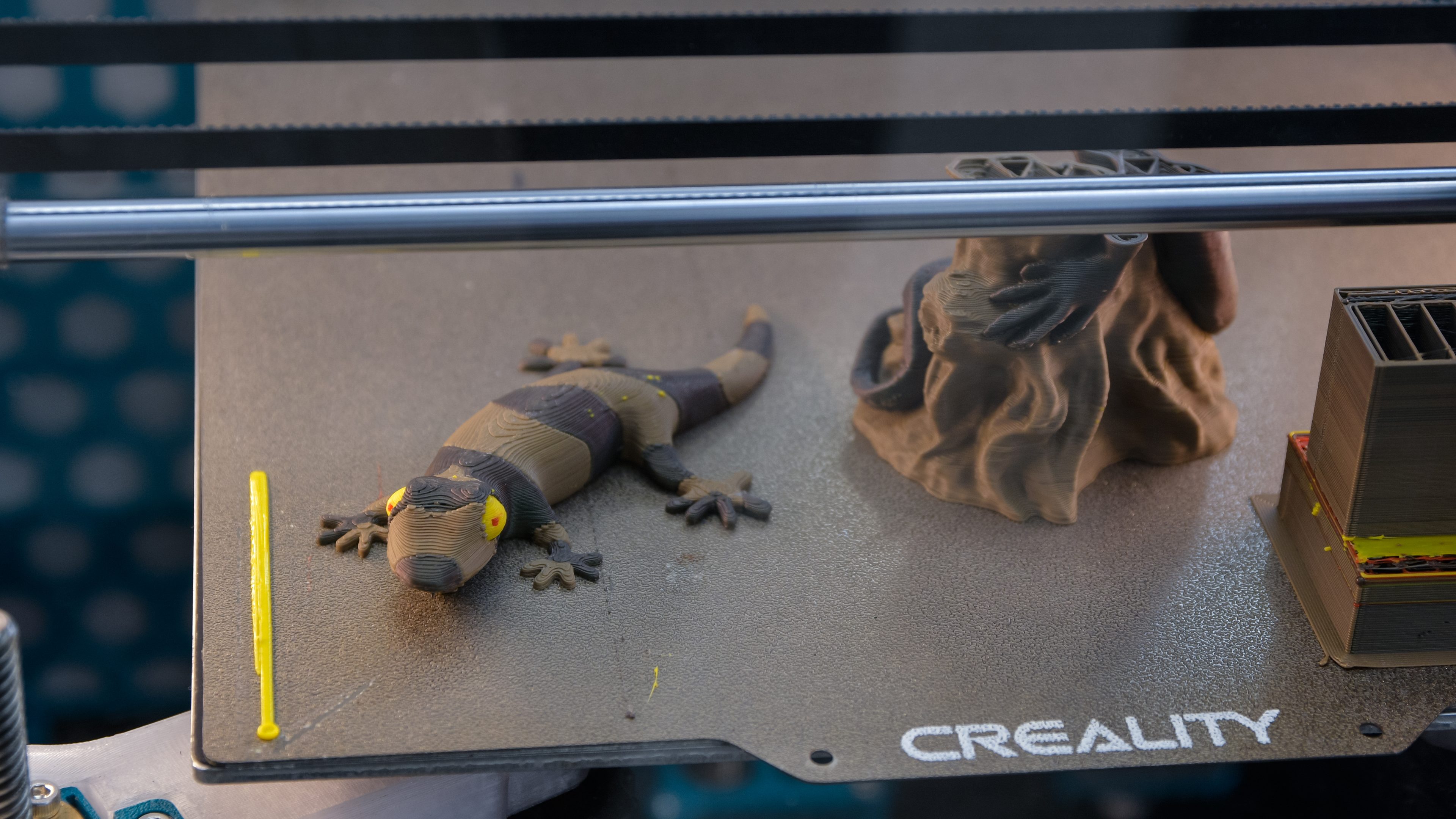
Multi-material printing is also expected, and the Chinese are already offering some conversion kits for it.


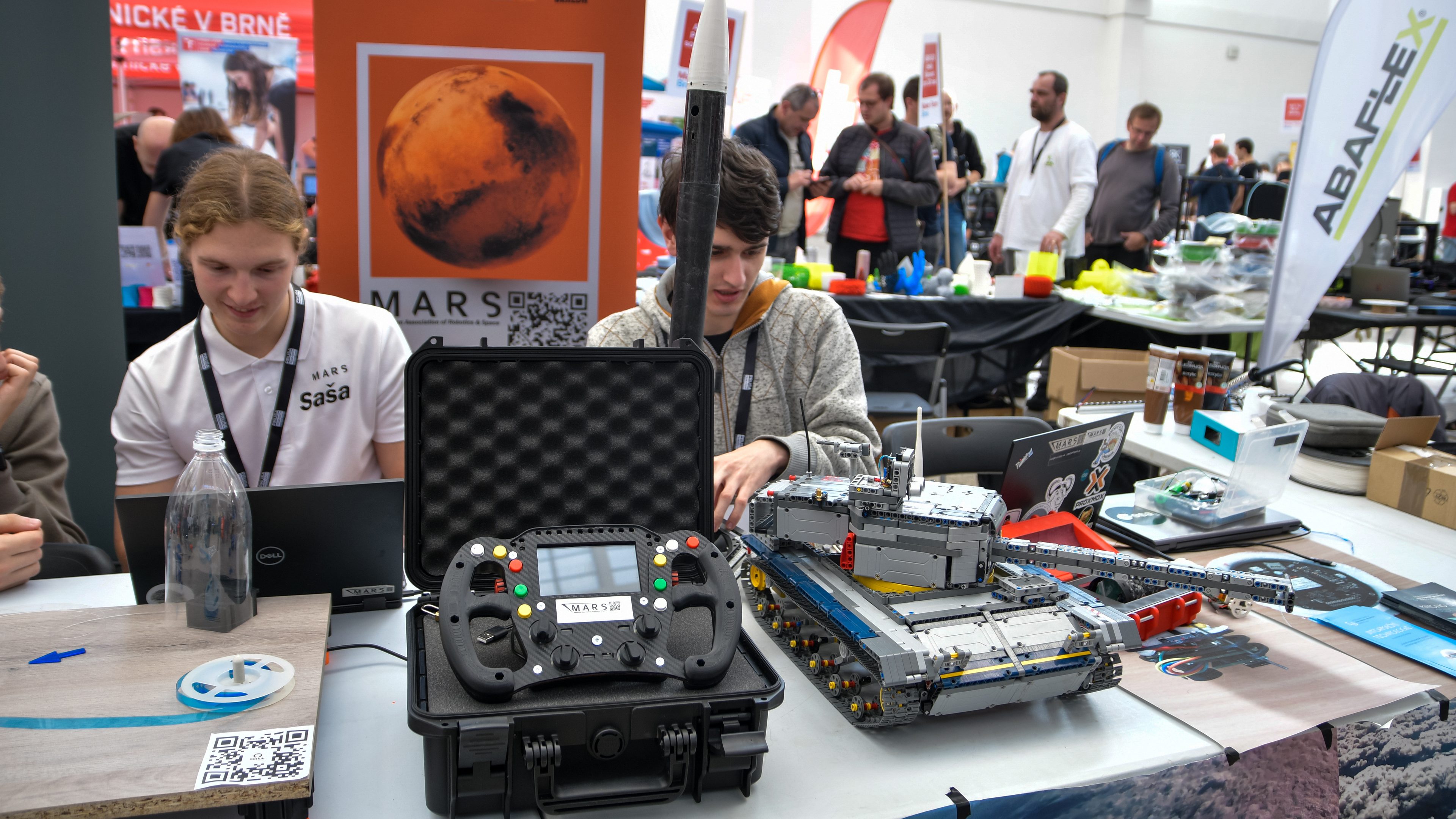
The most expensive part of 3D printing is the time and consumables. You can help with the latter by recycling plastics. The easiest way to get plastic for printing for virtually free is to use PET bottles. Cut the bottle into strips and feed it through an extruder through an extruder to form a string for 3D printing. A small home production line for filament was shown by the guys from MARS. 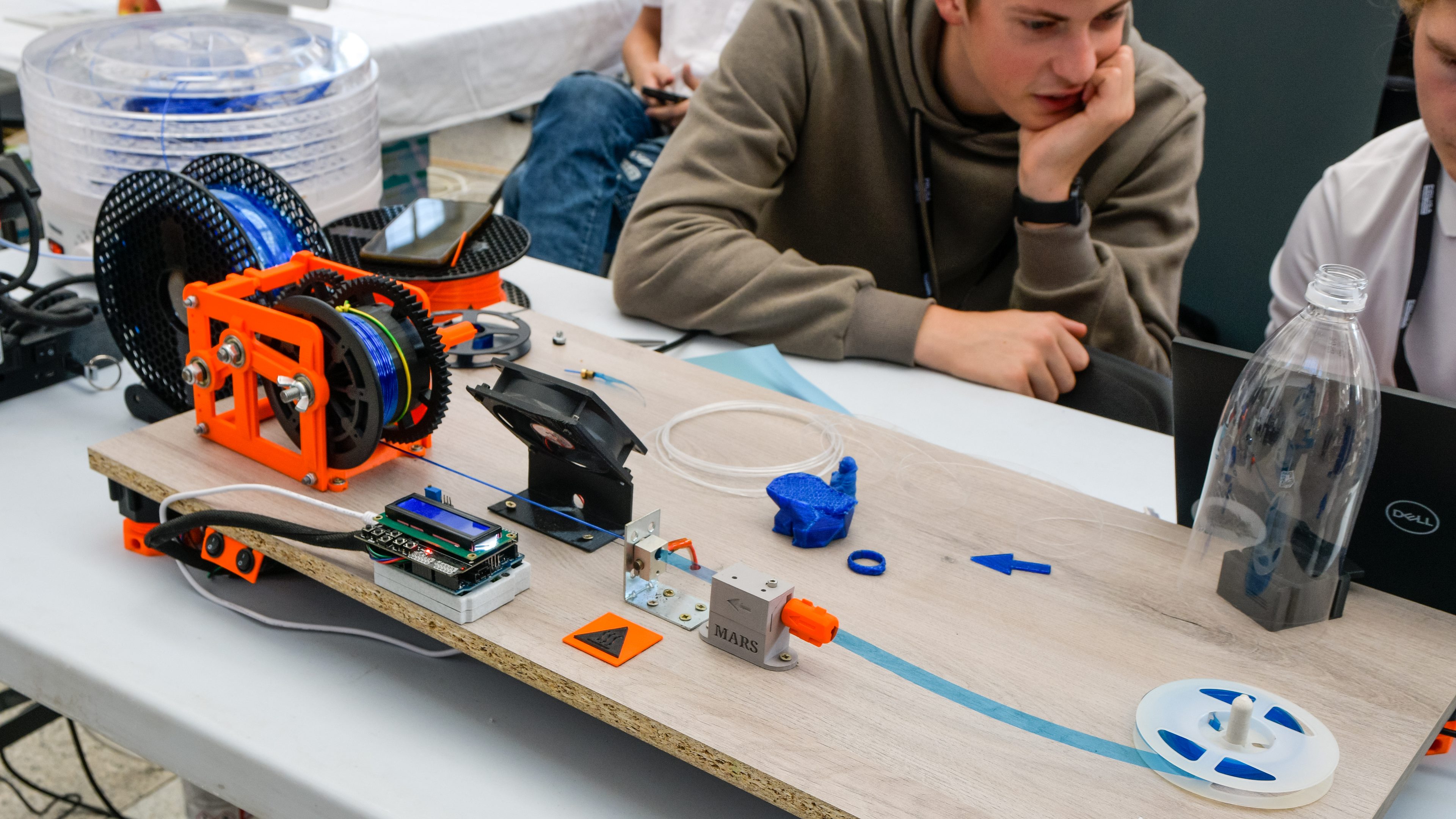


We also have several local filament producers in our country.


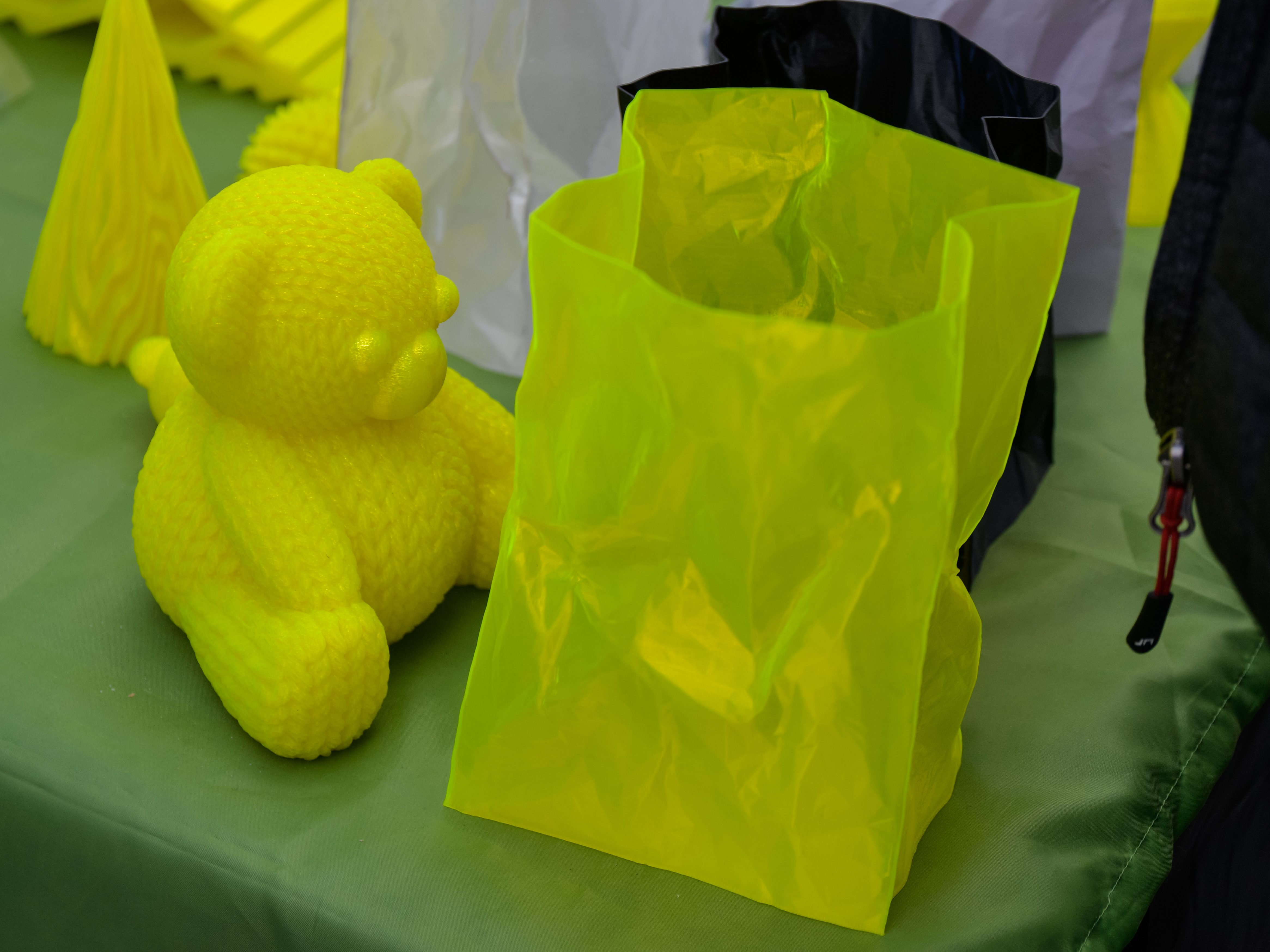
The printed model of a plastic bag looked lifelike and even the teddy bear wouldn’t have been obviously not knitted if it wasn’t for the material.
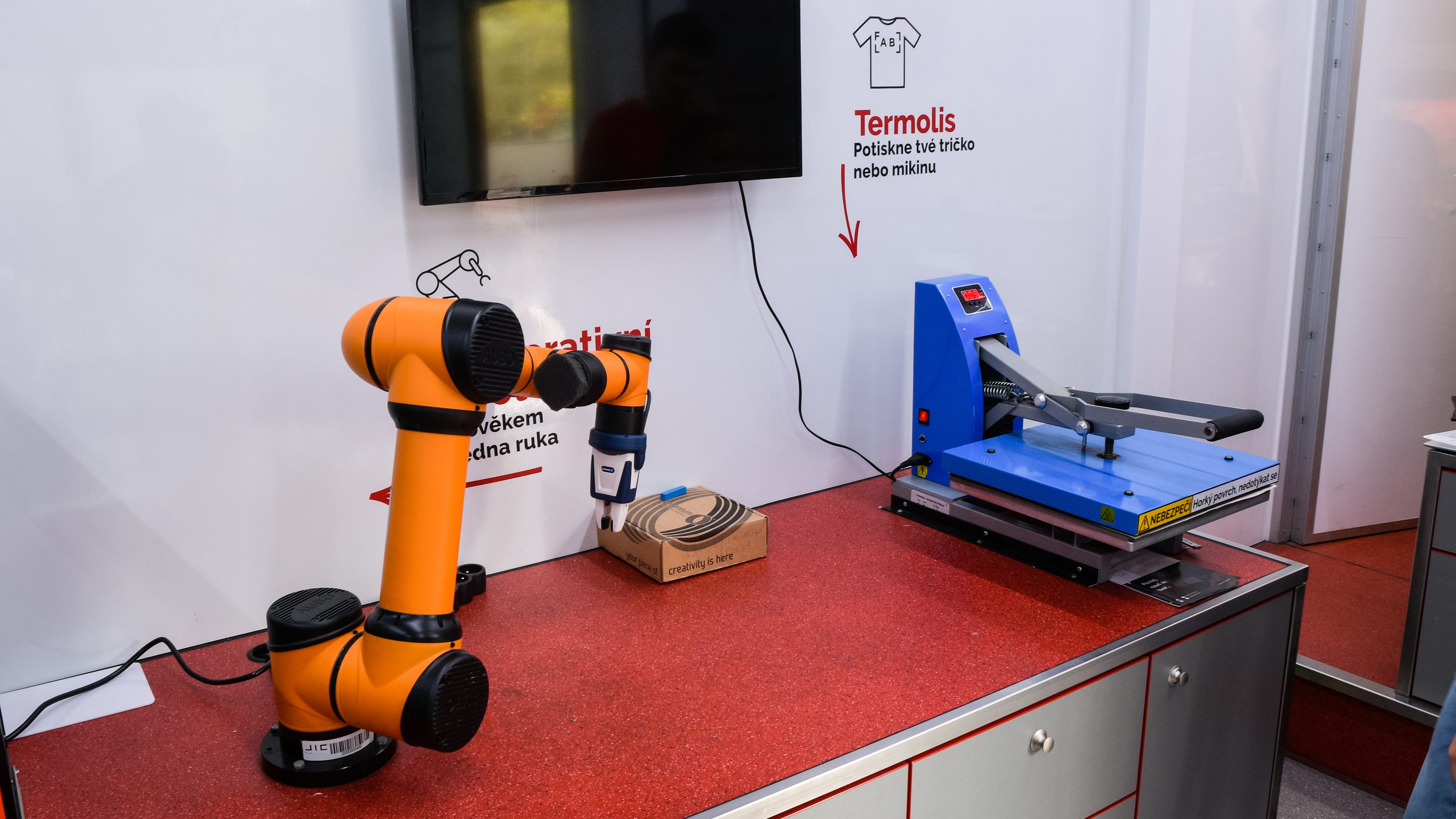
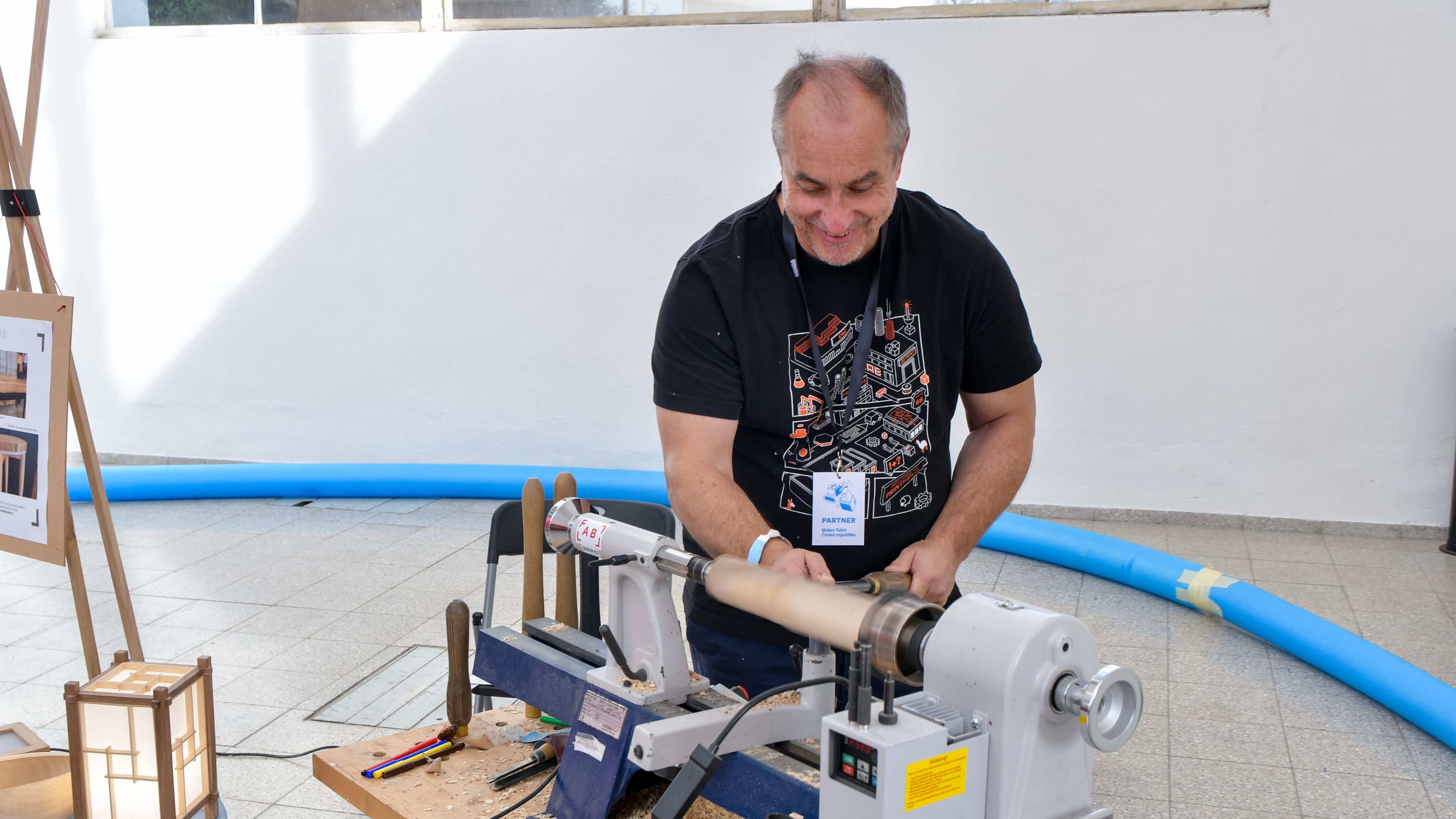
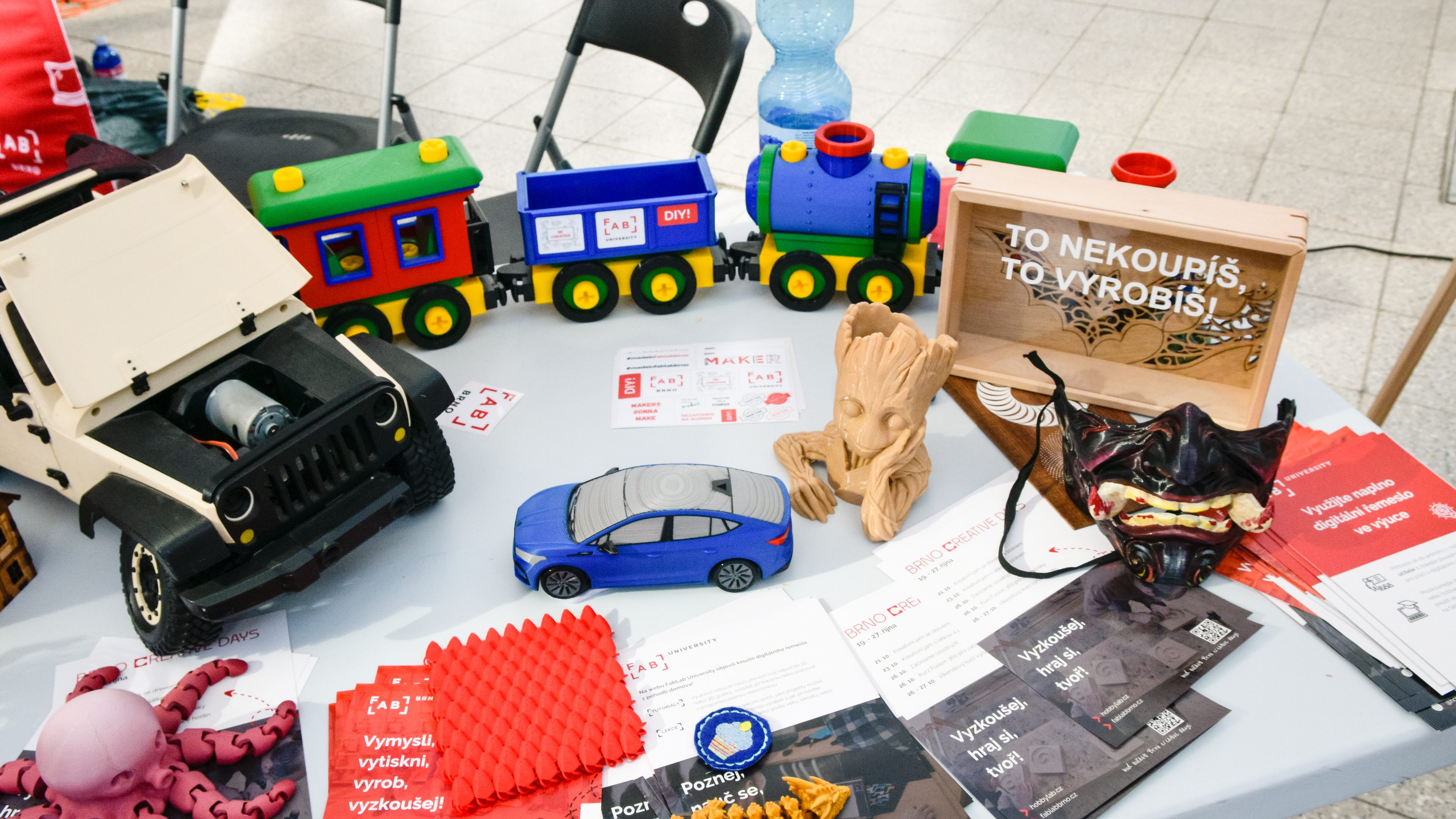
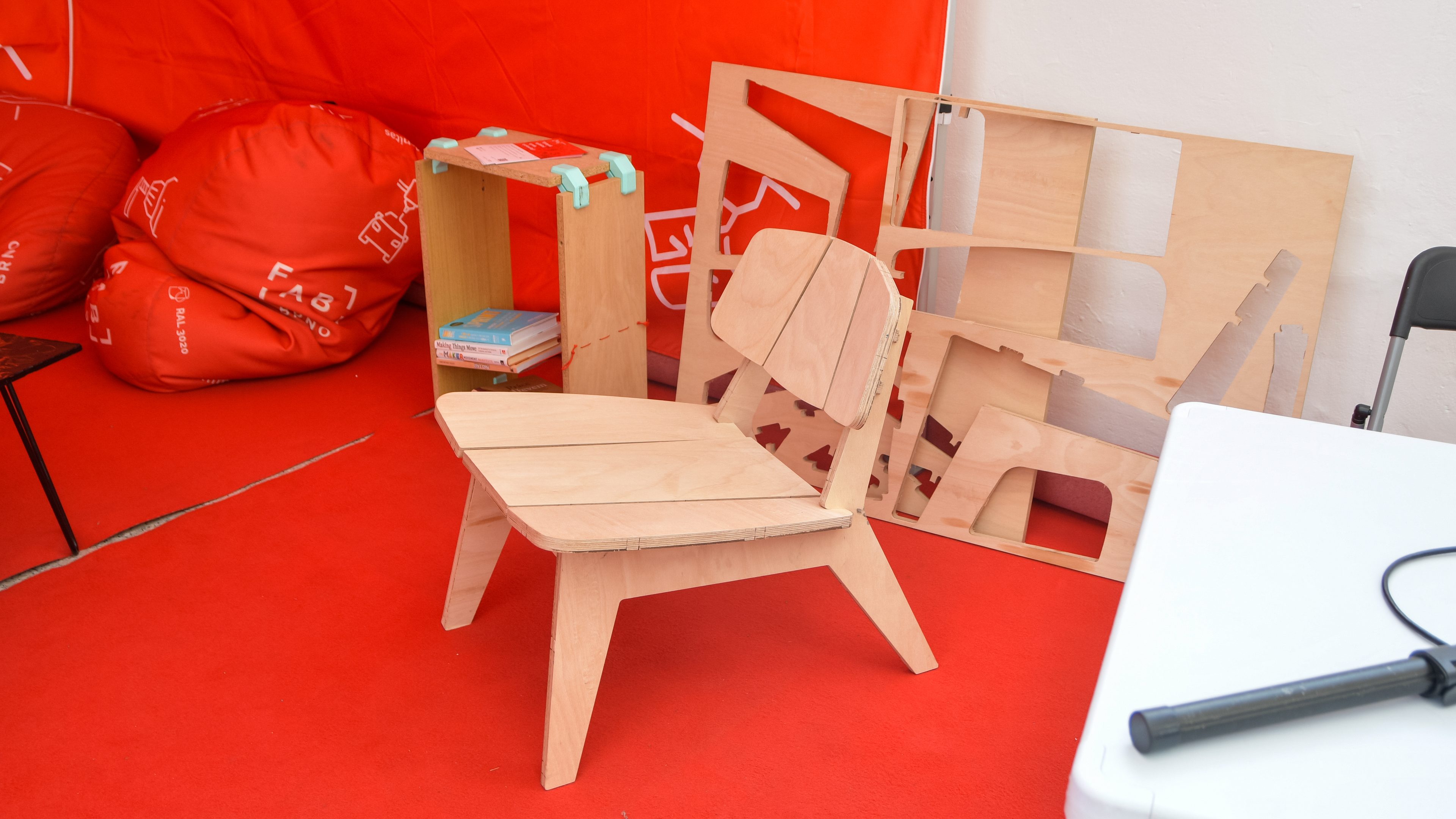
FabLab Brno is the first open-source digital workshop in Brno and the first Czech FabLab. Established in 2017, it offers more than two dozen machines on 180 m2, which are accessible to its members 24 hours a day, all year round.

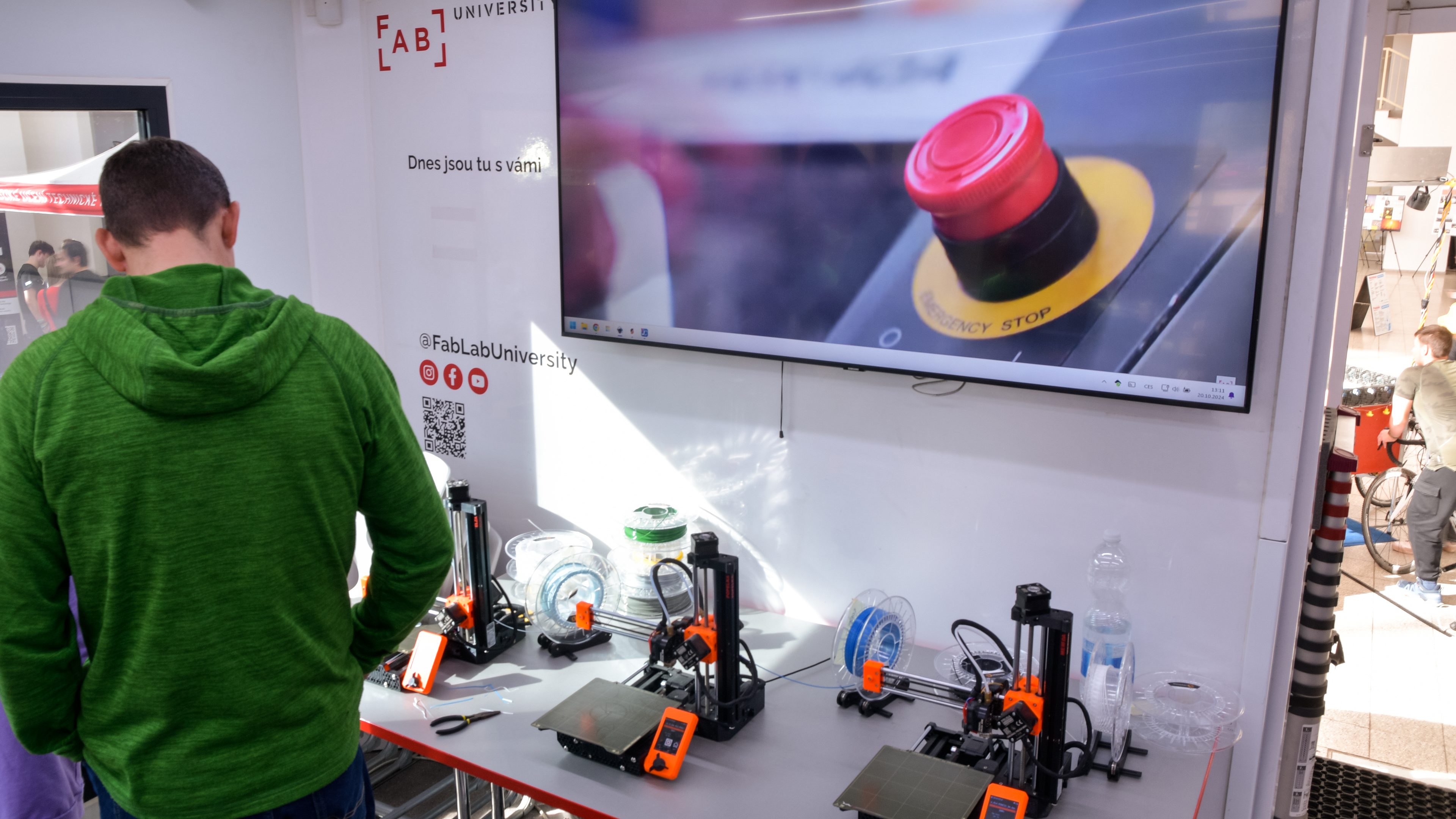

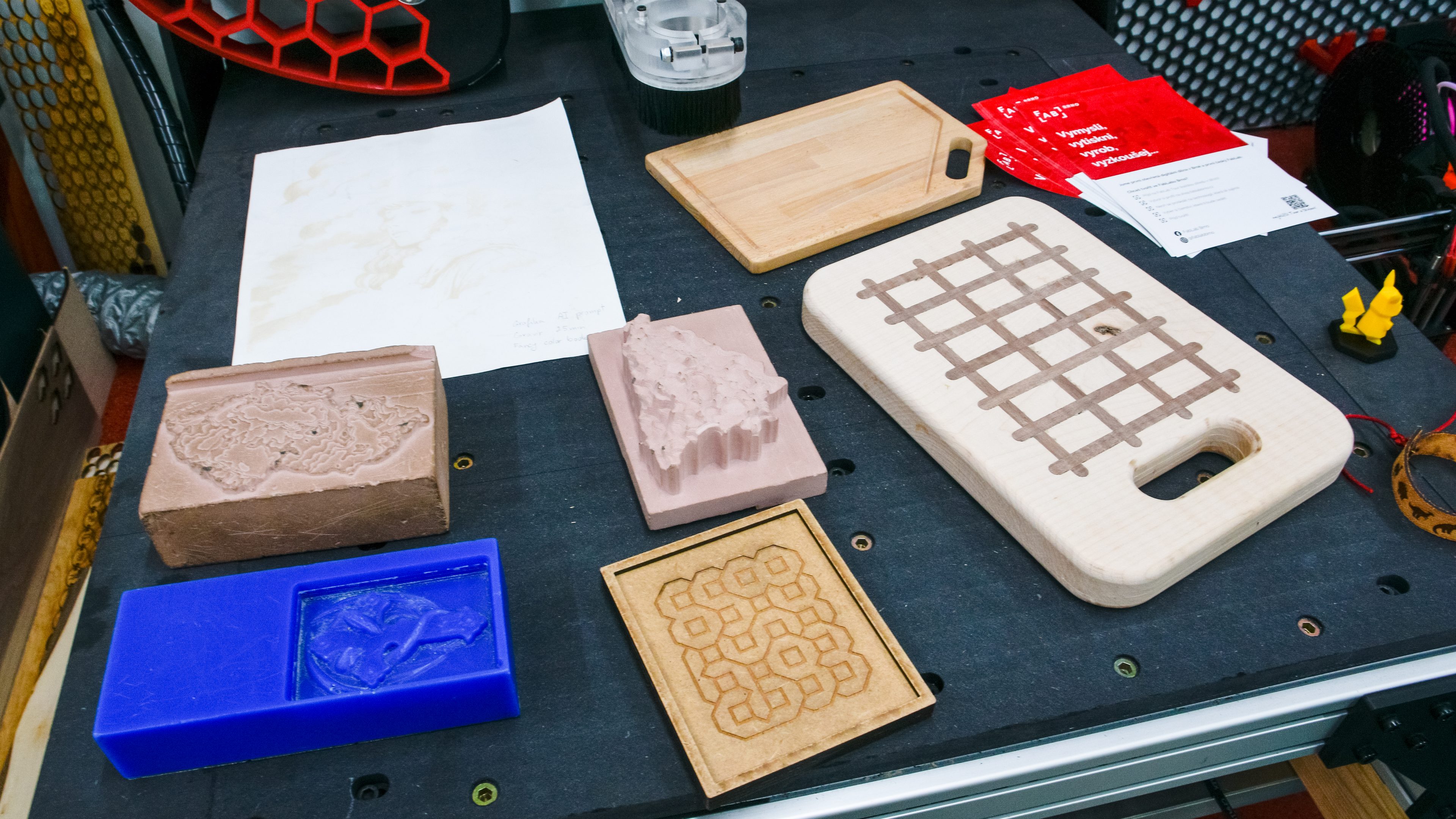




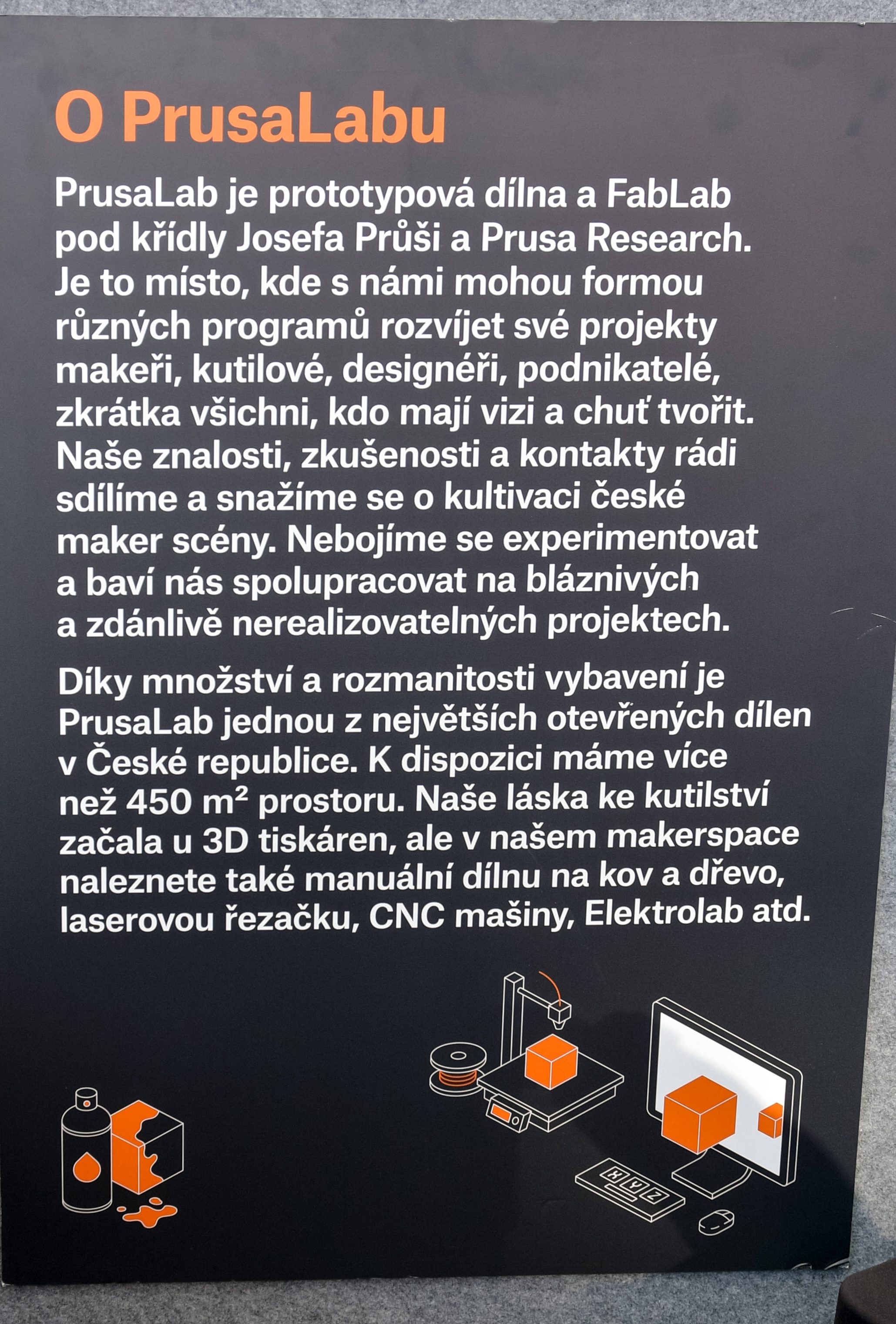
Průša has also opened a prototype workshop PrusaLab in Prague’s Holešovice. Registered members can use machines they would not normally have access to. It serves makers, tinkerers, students and entrepreneurs and helps them with their projects, and for the best projects it offers an accelerator to help with funding and prototype development.

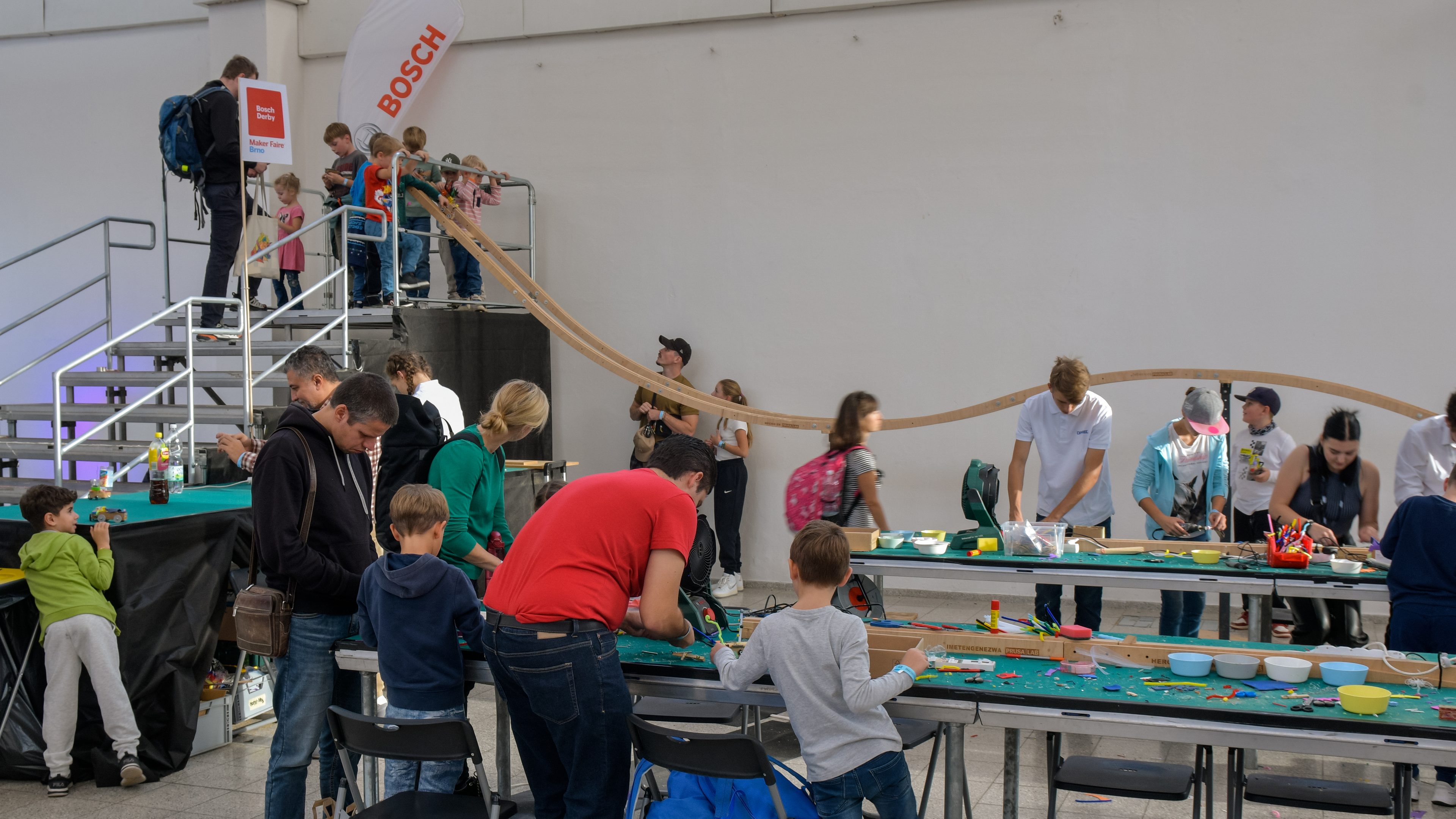
Model makers in particular probably don’t need any introduction to Dremel products, at the Dremel and Bosch stand you could make and decorate your own cars and put them on the race track. The place was packed from morning till night.